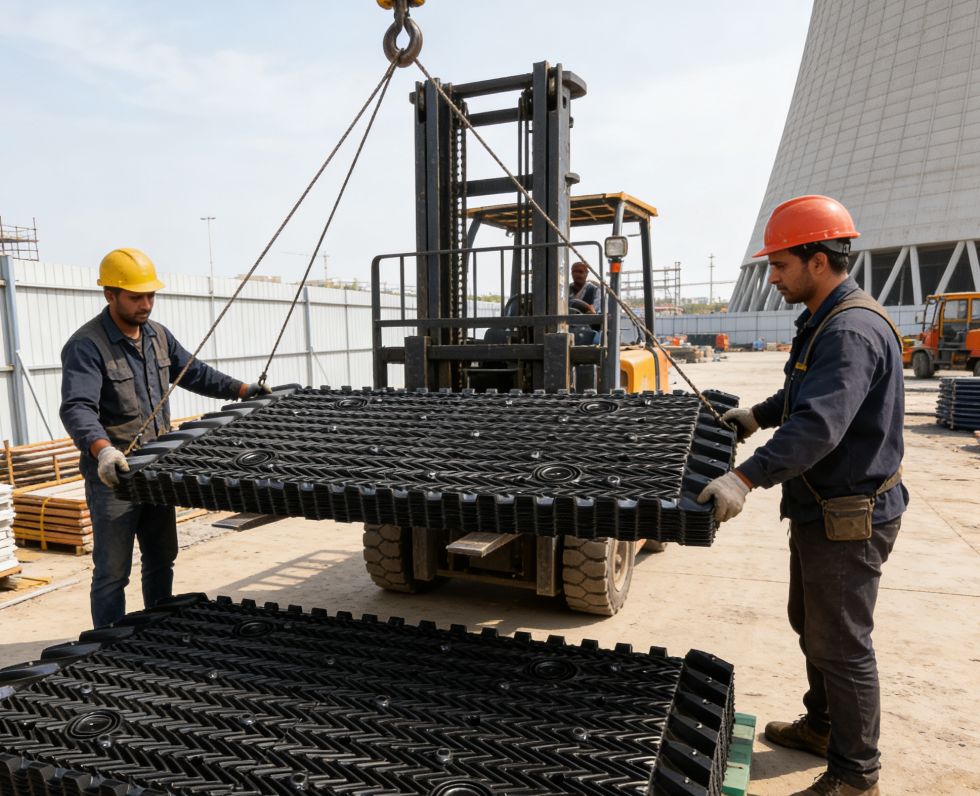
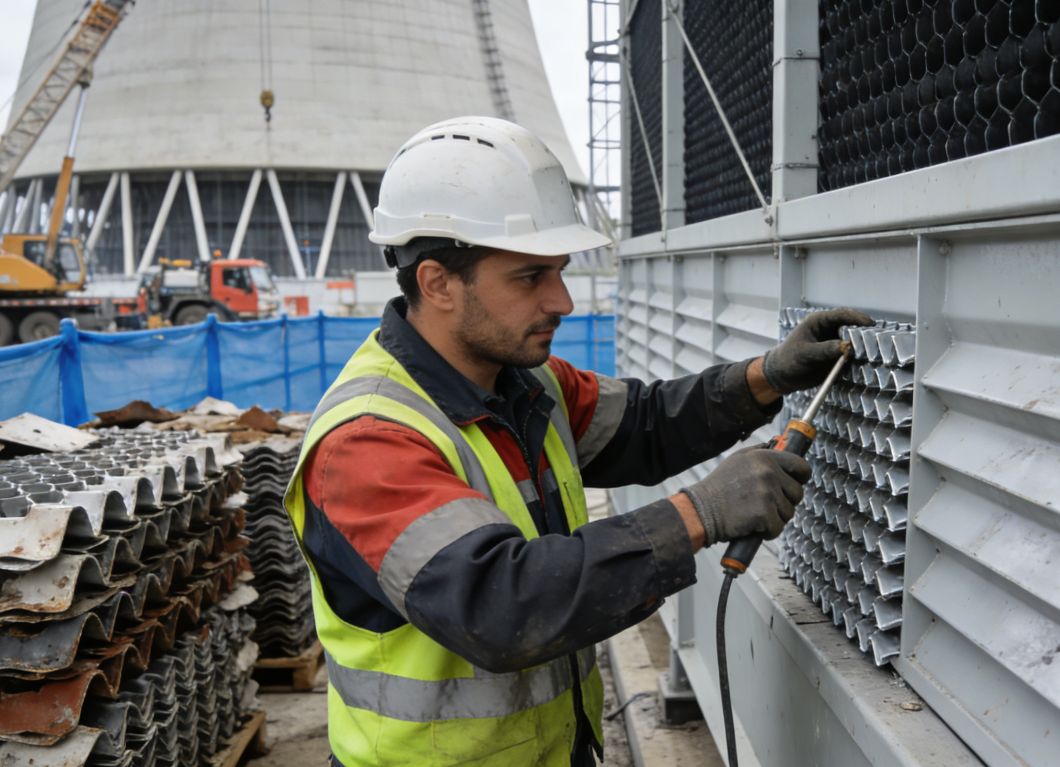
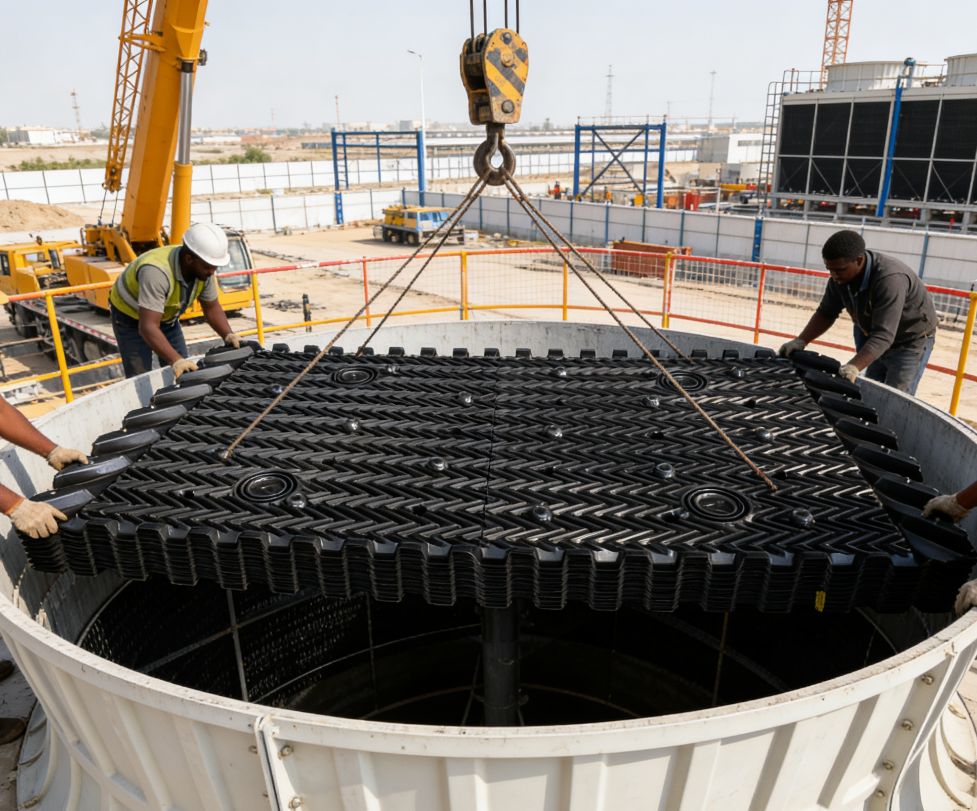
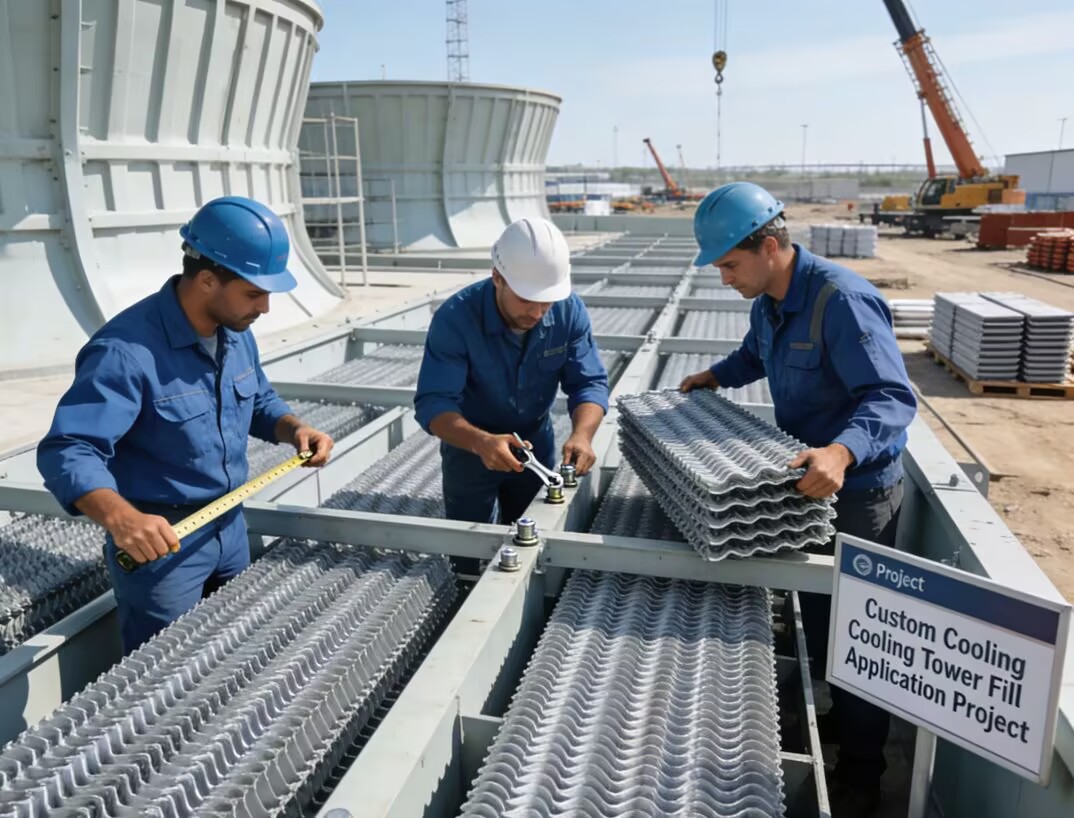
Cooling tower fill is designed to maximize contact between circulating water and airflow, making it one of the most important components inside an industrial cooling tower. However, even a well-designed cooling system can experience performance issues when the fill begins to deteriorate, clog, scale, or age. Many cooling tower problems that appear to be related to pumps, fans, or water distribution systems can often be traced back to the condition of the fill.
For engineers, maintenance managers, and procurement teams, understanding common cooling tower fill problems is essential for maintaining reliable operation. Early identification and corrective action can help prevent unnecessary downtime and support long-term cooling performance.

The purpose of cooling tower fill is to increase the surface area available for heat exchange. Water spreads across the fill while air moves through the tower, allowing heat to be released efficiently.
When the fill becomes damaged or contaminated, several operational issues may occur:
Although these symptoms may develop gradually, they can significantly affect overall system operation if left unaddressed.
Cooling tower fill clogged conditions are among the most frequently reported operational issues. Clogging usually develops when suspended solids, biological growth, dust, fibers, or process contaminants accumulate within the fill structure.
Industrial facilities using recycled water, surface water, or water containing process residues often face higher clogging risks.
In dirty-water applications, a splash fill cooling tower design may provide greater fouling tolerance than traditional film fill systems.
Scaling develops when dissolved minerals precipitate from the circulating water and attach to fill surfaces. Hard water conditions often accelerate this process.
Over time, scale deposits can narrow flow passages and reduce effective heat transfer area.
Addressing scaling early is generally easier than attempting to remove heavy mineral buildup later.
Warm, moist cooling tower environments naturally support biological activity. Algae, bacteria, slime, and biofilm can develop on fill surfaces if water treatment programs are not properly maintained.
Biological fouling often contributes directly to cooling tower fill maintenance challenges because biofilm traps additional contaminants.
Like any industrial component, fill materials gradually age due to temperature exposure, chemical contact, UV exposure, and continuous operation.
Even when operating correctly, fill materials eventually reach the end of their useful service life.
Cooling tower fill replacement may become necessary when cleaning no longer restores performance or when structural deterioration becomes widespread.
The decision should be based on actual operating condition rather than age alone.
Even high-quality cooling tower fill cannot perform effectively if water distribution is uneven.
Blocked nozzles, damaged spray systems, or improper flow rates can create localized overloading and dry areas within the fill pack.
Film Fill Cooling Tower systems provide efficient heat transfer by spreading water into thin films across structured surfaces.
However, narrow flow channels may be more sensitive to suspended solids and biological growth when water quality is poor.
Splash fill designs use larger open passages and repeatedly break water into droplets.
Because of this structure, splash fill often provides better tolerance to dirty water conditions and heavy contamination.
Cooling Tower Media with corrugated geometry can help balance heat transfer performance and fouling resistance when selected appropriately for site conditions.
A manufacturing facility in Southeast Asia experienced recurring biological fouling due to warm temperatures and high humidity.
Although the original fill design performed well initially, biological growth gradually reduced water distribution quality.
The facility improved results by strengthening water treatment practices and adjusting maintenance intervals to suit local conditions.
An industrial processing plant operating with elevated circulating water temperatures observed gradual fill deformation after extended service.
Following evaluation, the plant upgraded to a more suitable fill material capable of handling the operating environment more effectively.
This adjustment improved long-term operating stability and reduced maintenance concerns.
A textile facility operated with water containing fibers and suspended solids.
The existing film fill arrangement required frequent cleaning due to clogging.
After switching to a more suitable splash fill configuration, maintenance became easier and operational consistency improved.
Several cooling tower components help support fill operation and reduce contamination-related problems.
Maintaining these components helps reduce debris entry and supports stable cooling tower operation.
Cooling tower fill problems are often manageable when identified early. Clogging, scaling, biological fouling, aging, and water distribution issues represent the most common challenges faced by industrial cooling tower operators.
By combining appropriate fill selection, water treatment, maintenance planning, and supporting tower components, facilities can maintain reliable cooling performance and reduce long-term operational challenges.
Clogging caused by suspended solids, biological growth, and debris accumulation is one of the most frequently encountered issues.
Yes. If the structure remains in good condition, cleaning may restore performance. Replacement is generally considered when deterioration becomes significant.
Consistent water treatment, routine inspections, and proper maintenance practices help manage biological growth.
Splash fill designs are often preferred because they generally tolerate contamination and suspended solids more effectively.
Signs include recurring performance loss, structural damage, severe fouling, and situations where cleaning no longer restores effective operation.
We are professional cooling tower fills manufacturer, which can supply wide ranges of cooling tower fills with PVC, PP or CPVC materials.
The brake oil pipes we provide have multiple monitoring certifications and complete compliance documents to help your business smoothly enter the global market.
Fully automated production line, supporting individual customization. Combined with just-in-time logistics solutions, ensuring stable inventory.
A professional foreign trade technical team provides rapid response and is a trustworthy partner, offering everything from technical Q&A to market insights.

The cooling tower fill from this company has performed reliably in our systems. We appreciate the consistent quality and noticeable efficiency improvement.
CEO & Founder

As a CEO, I value partners who deliver on their promises. Their cooling tower fill is a solid product that contributes to stable operations.
CEO & Founder

We are satisfied with the performance of this cooling tower fill. It has integrated well into our existing setup with good results.
Manager

This company provides quality cooling tower fill that meets our operational needs. It's a dependable component in our infrastructure.
CEO & Founder

We are professional cooling tower fills manufacturer, which can supply wide ranges of cooling tower fills with PVC, PP or CPVC materials.

Instant Chat Support
+8615303180686
packingesale@gmail.com
Get the latest information
Scan the code to follow
Return to the top of the page