Cooling towers have been used in industrial and commercial cooling systems for many years. As industries continue to grow and environmental requirements become stricter, cooling tower technology is also developing toward higher efficiency, better water management, improved durability, and smarter operation.
In the past, many cooling tower projects mainly focused on achieving the required cooling capacity. Today, engineers and facility managers pay more attention to the complete system performance, including energy consumption, water usage, maintenance costs, and environmental impact.
Components such as cooling tower fill, water collectors, air intake systems, and monitoring equipment are continuously improving to meet new market requirements.
For companies operating in Southeast Asia, the Middle East, Japan, and Korea, understanding future cooling tower trends can help them make better decisions when upgrading or designing cooling systems.
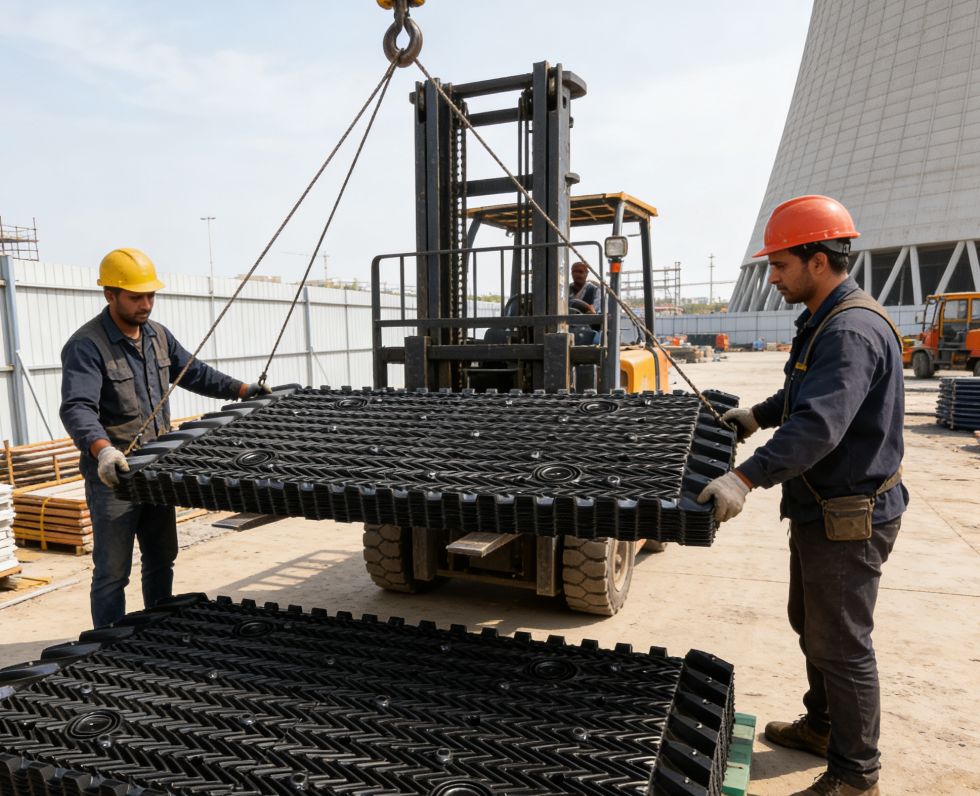
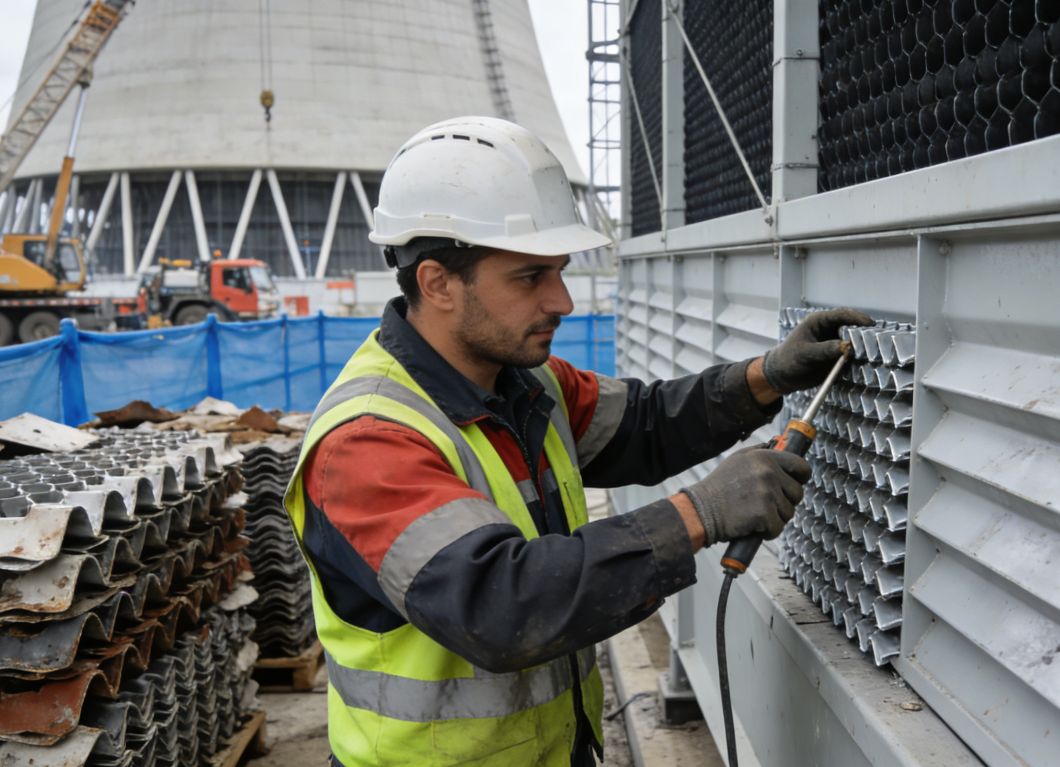
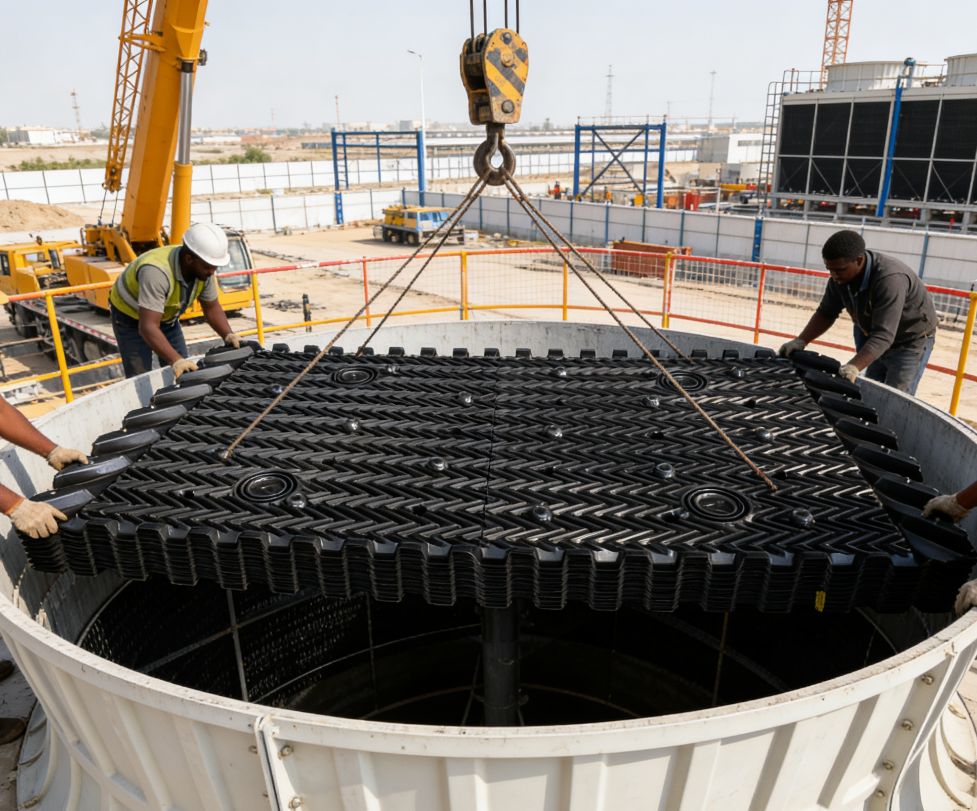
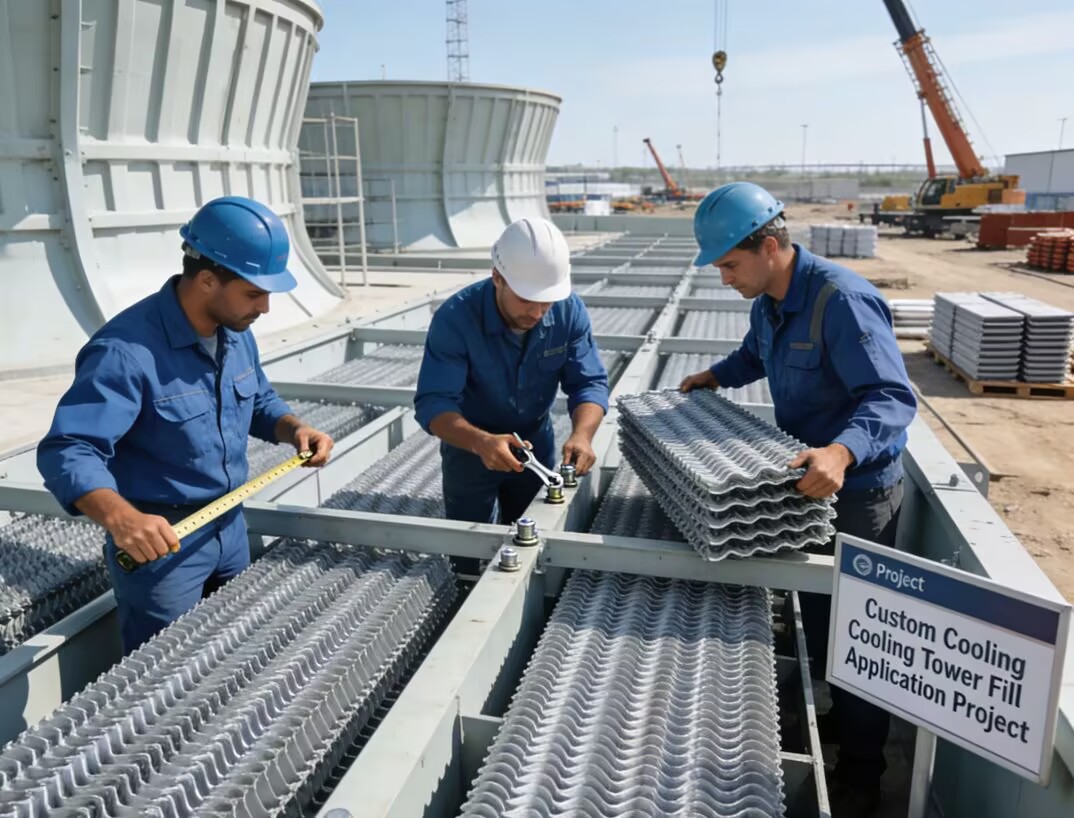
The cooling tower fill is one of the most important components affecting heat transfer performance. Future cooling tower development will continue to focus on improving fill structure design to achieve better cooling efficiency with lower operating costs.
Modern cooling tower packing designs are becoming more optimized in areas such as:
The goal is to achieve better cooling performance while maintaining reasonable fan power consumption.
Film Fill technology continues to be widely used in modern cooling towers because of its efficient heat transfer characteristics.
The corrugated structure of Film Fill creates a large contact area between water and air. Future designs are expected to further improve channel structure, airflow balance, and material performance.
A film fill cooling tower solution is likely to remain an important choice for commercial buildings and industrial cooling systems where water quality is well controlled.
Water management is becoming one of the most important topics in cooling tower operation.
Many regions, especially areas with limited water resources such as parts of the Middle East, are paying more attention to reducing unnecessary water consumption.
Future cooling tower systems will focus on:
Better system design can help companies maintain cooling performance while managing water resources more effectively.
Material technology plays an important role in cooling tower component performance.
Traditional materials such as PVC and PP continue to be widely used because of their stable performance and practical applications.
However, future cooling tower fill materials will focus more on:
PVC remains a popular material for many commercial and industrial cooling applications.
Future improvements may focus on improving durability and maintaining stable performance under different operating conditions.
PP material is becoming increasingly important for demanding industrial applications because of its higher temperature resistance.
PP cooling tower fill is often considered for projects requiring stronger material performance.
Digital technology is changing how cooling systems are operated and maintained.
Traditional cooling tower management often depends on manual inspection and operator experience. Modern systems are increasingly using sensors and digital monitoring tools.
Smart cooling tower systems can monitor:
With better data collection, operators can identify problems earlier and improve maintenance planning.
Energy efficiency has become a major concern for both industrial and commercial cooling tower users.
Cooling towers consume energy through fans, pumps, and related equipment. Improving the efficiency of each component can reduce overall operating costs.
Future cooling tower optimization may include:
Cooling towers are long-term investments. Users increasingly expect equipment to operate reliably for many years with reasonable maintenance requirements.
Future cooling tower components will focus on:
For cooling tower owners, reducing unexpected downtime is often just as important as improving cooling efficiency.
Sustainability has become an important direction for many industries.
Cooling tower manufacturers and users are paying more attention to environmental impact, including:
Future cooling tower solutions will not only focus on performance but also consider the complete life cycle of the equipment.
Although cooling towers include many components, the fill media remains one of the core elements that determines heat exchange performance.
A suitable cooling tower fill media solution needs to balance several factors:
Future cooling tower designs will continue improving fill technology to support more efficient and sustainable cooling systems.
A complete cooling tower solution depends on multiple components working together.
The cooling tower fill provides the main heat exchange surface and directly affects cooling performance.
The Air intake grille helps maintain proper airflow conditions and protects the internal cooling tower structure.
The Water Collector helps reduce water droplets leaving the cooling tower and supports water-saving operation.
Southeast Asia continues to experience strong growth in manufacturing, commercial buildings, and infrastructure projects.
Cooling tower technology in this region is moving toward solutions that provide stable performance under hot and humid climate conditions.
The Middle East faces unique cooling challenges due to high ambient temperatures and water resource concerns.
Future projects are expected to place more emphasis on water efficiency, durable materials, and reliable operation.
Japan and Korea have advanced industrial and commercial systems with strong requirements for energy efficiency and environmental performance.
Cooling solutions in these markets are increasingly focused on smart management and long-term reliability.
For companies planning new cooling systems or upgrading existing equipment, several points should be considered:
A well-designed cooling system can provide stable performance and reduce operating challenges over many years.
Cooling tower technology is moving toward higher efficiency, better water management, smarter operation, and longer service life.
As industries continue to focus on sustainability and cost control, components such as cooling tower fill, water collectors, and airflow systems will continue to improve.
By selecting suitable tower fill solutions and keeping up with technology development, companies can build cooling systems that are more reliable and efficient for future needs.
Prev Post:Cooling Tower Fill Types Explained Film Fill Splash Fill Comparison
Next Post: 无下一篇
We are professional cooling tower fills manufacturer, which can supply wide ranges of cooling tower fills with PVC, PP or CPVC materials.
The brake oil pipes we provide have multiple monitoring certifications and complete compliance documents to help your business smoothly enter the global market.
Fully automated production line, supporting individual customization. Combined with just-in-time logistics solutions, ensuring stable inventory.
A professional foreign trade technical team provides rapid response and is a trustworthy partner, offering everything from technical Q&A to market insights.

The cooling tower fill from this company has performed reliably in our systems. We appreciate the consistent quality and noticeable efficiency improvement.
CEO & Founder

As a CEO, I value partners who deliver on their promises. Their cooling tower fill is a solid product that contributes to stable operations.
CEO & Founder

We are satisfied with the performance of this cooling tower fill. It has integrated well into our existing setup with good results.
Manager

This company provides quality cooling tower fill that meets our operational needs. It's a dependable component in our infrastructure.
CEO & Founder

We are professional cooling tower fills manufacturer, which can supply wide ranges of cooling tower fills with PVC, PP or CPVC materials.

Instant Chat Support
+8615303180686
packingesale@gmail.com
Get the latest information
Scan the code to follow
Return to the top of the page