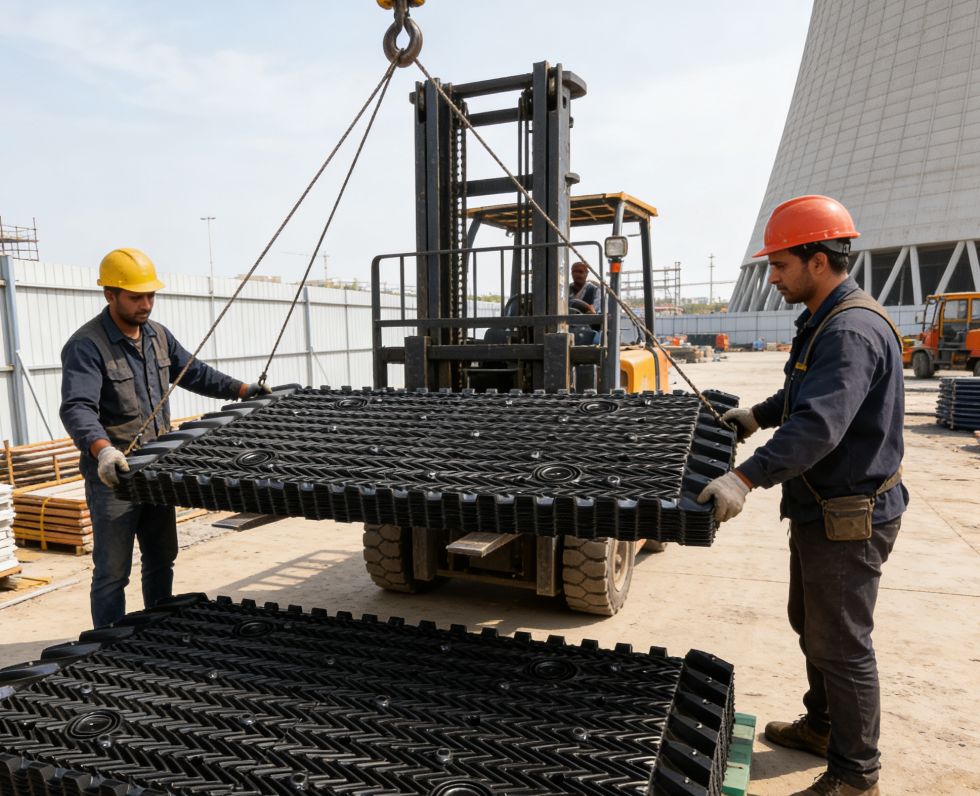
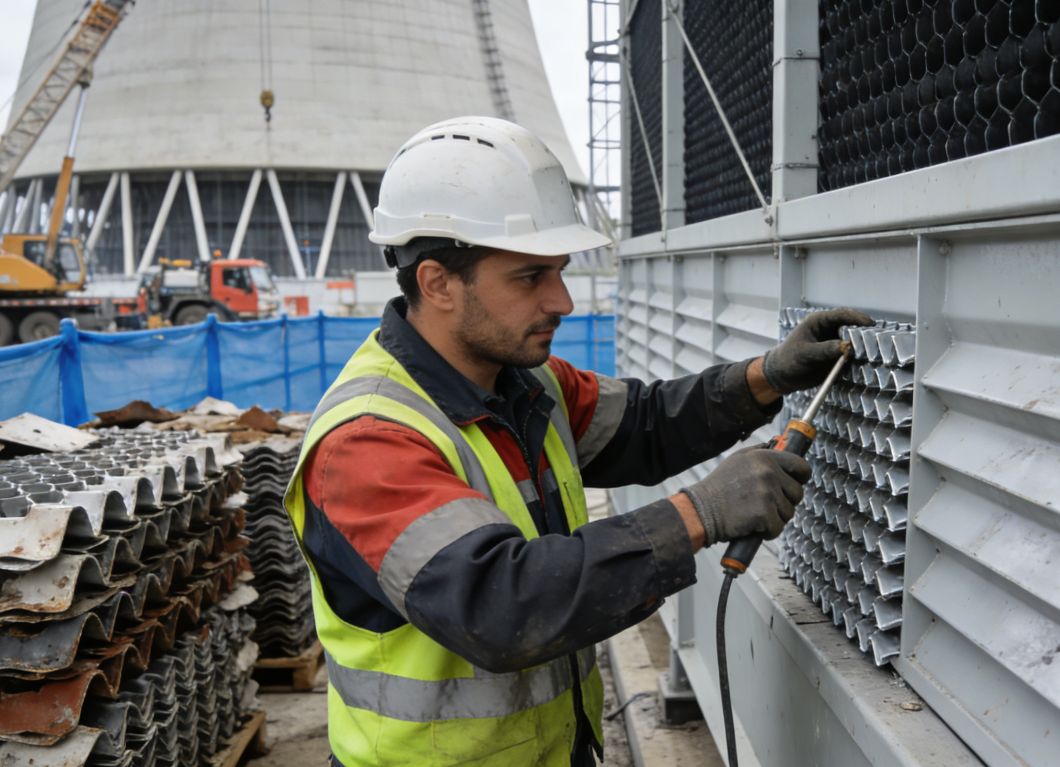
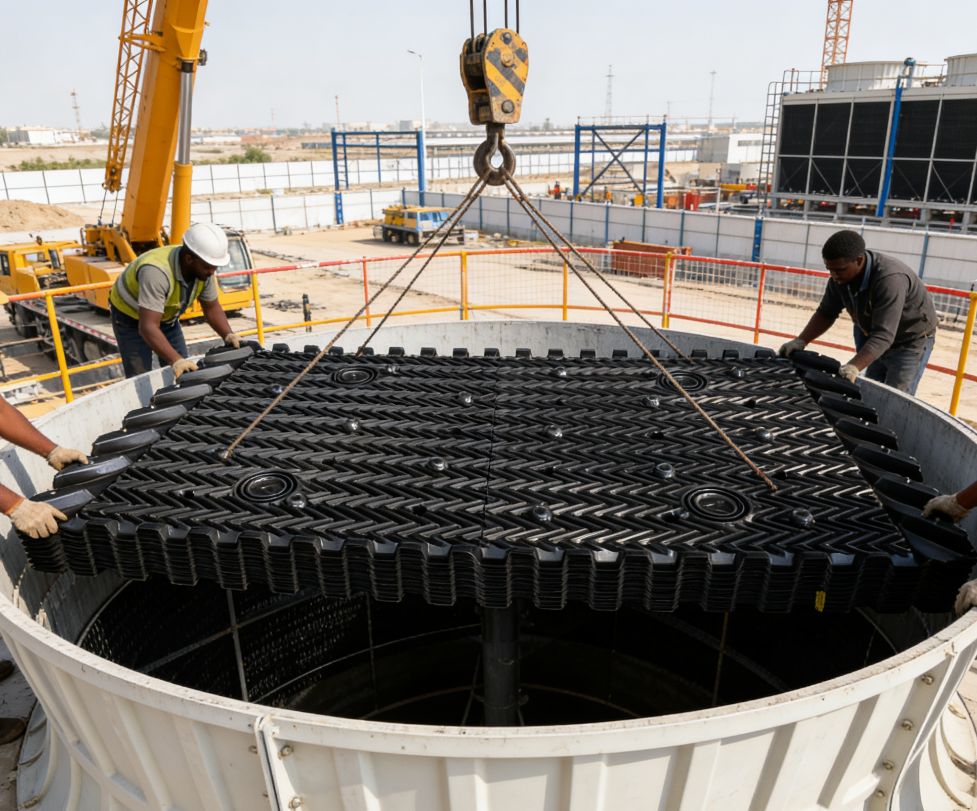
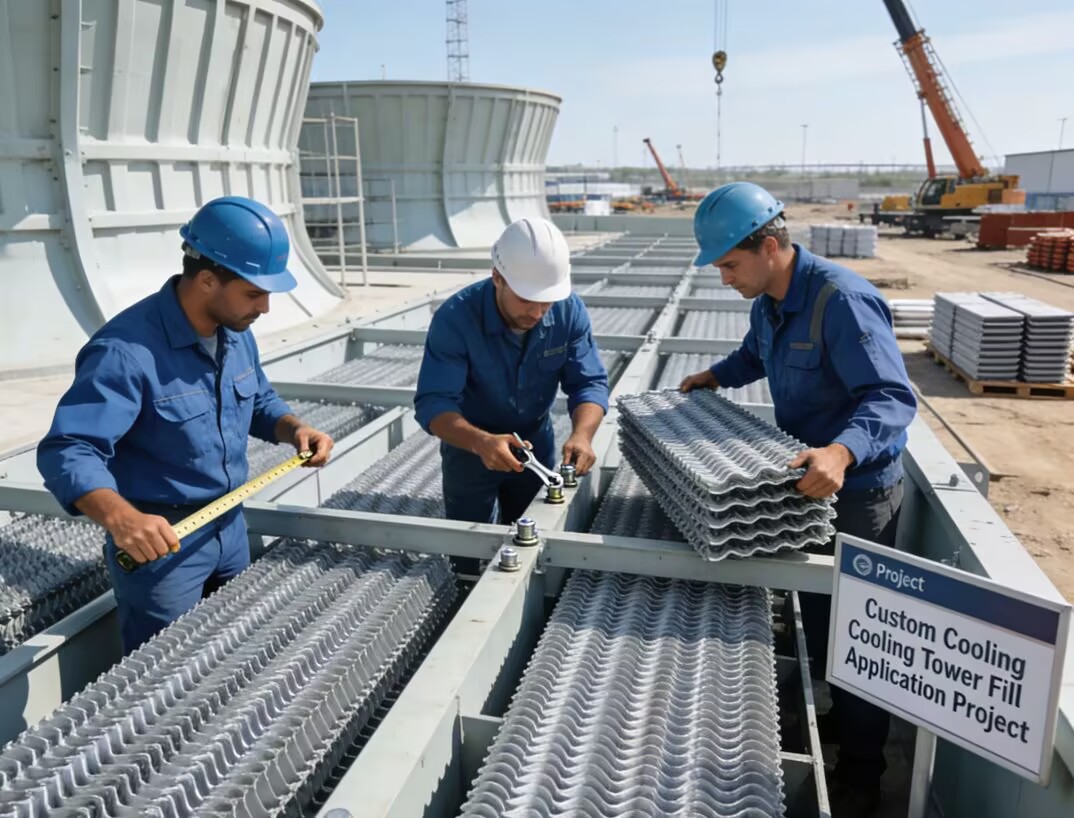
When selecting cooling tower components, many engineers focus on the fill design, size, and cooling performance. However, the material of the fill is equally important because it directly affects temperature resistance, chemical stability, service life, and overall system reliability.
Cooling towers often operate continuously under different environmental conditions. A suitable fill material can help maintain stable cooling performance, while an unsuitable material may lead to faster aging, deformation, or reduced efficiency.
The most commonly used materials for modern cooling tower fill are PVC and PP. Both materials are widely used in cooling tower applications, but they have different characteristics and suitable operating conditions.
Understanding the differences between PVC and PP helps engineers choose the right cooling tower packing solution for their projects.
Cooling tower fill works in a challenging environment. It is continuously exposed to water flow, airflow, temperature changes, and sometimes chemicals in the circulating water.
The fill material influences several important factors:
Although the design of the fill structure affects heat transfer performance, the material determines whether the fill can maintain its performance over many years of operation.
In the cooling tower industry, PVC and PP are two of the most common plastic materials used for fill production.
Both materials have advantages, and the correct choice depends on the actual application.
PVC (Polyvinyl Chloride) is one of the most widely used materials in cooling tower fill manufacturing.
It has been used in cooling systems for many years because it provides stable performance, good corrosion resistance, and practical cost advantages.
PVC cooling tower fill media is commonly used in commercial and industrial cooling applications where operating conditions are within normal ranges.
PVC cooling tower fill is commonly used in:
Although PVC is suitable for many applications, it also has some limitations.
For projects involving higher temperatures or more demanding industrial conditions, engineers may consider alternative materials such as PP.
PP (Polypropylene) is another widely used material for cooling tower fill production.
Compared with PVC, PP provides better temperature resistance and is often selected for applications with higher operating requirements.
PP cooling tower fill is commonly considered for industrial cooling systems where durability and temperature performance are important.
PP cooling tower fill is often used in:
| Comparison | PVC Cooling Tower Fill | PP Cooling Tower Fill |
|---|---|---|
| Temperature resistance | Suitable for standard operating temperatures | Better performance under higher temperatures |
| Chemical resistance | Good resistance for general applications | Better resistance for demanding environments |
| Common applications | HVAC and general industrial cooling | Chemical, power, high-temperature industries |
| Material strength | Stable performance | Higher durability for harsh conditions |
| Cost consideration | Usually more economical | Higher material performance investment |
There is no universal answer when choosing between PVC and PP. Engineers should evaluate the actual operating environment.
Commercial HVAC systems usually operate under relatively controlled conditions. PVC fill is commonly used because it provides stable performance for many building applications.
Power plants often require continuous operation and large cooling capacity. Material selection should consider temperature, water quality, and maintenance conditions.
Depending on operating conditions, both PVC and PP fill solutions may be considered.
Chemical plants may involve higher temperatures and more complex water conditions.
PP cooling tower fill is often considered for these applications because of its stronger resistance to demanding environments.
Manufacturing plants have different cooling requirements depending on production processes.
The correct fill material should be selected according to actual working conditions rather than industry category alone.
Some people believe that fill material alone determines cooling performance. In reality, cooling efficiency depends on the complete system.
Important factors include:
A high-quality material with an unsuitable design may not provide the expected result. Similarly, a good fill design requires suitable material support to maintain long-term performance.
Regular inspection helps identify aging, deformation, and blockage before they affect cooling performance.
Proper water treatment reduces scaling and biological growth, helping extend fill service life.
During cleaning or maintenance, operators should avoid damaging the fill structure.
Changes in cooling efficiency may indicate that the fill condition needs inspection.
Cooling tower performance depends on multiple components working together. When selecting fill materials, other parts should also be considered.
The cooling tower fill provides the main heat exchange area and should match the operating environment.
The Air intake grille supports proper airflow and protects the cooling tower interior.
The Water Collector helps reduce water droplets leaving the cooling tower and improves water management.
As cooling systems become more efficient, fill materials continue to develop toward better durability, temperature resistance, and environmental performance.
Future cooling tower fill development will focus on:
PVC and PP are both important materials used in cooling tower fill production. The better choice depends on project requirements, operating temperature, water quality, and maintenance conditions.
PVC cooling tower fill is commonly suitable for standard cooling applications, while PP cooling tower fill is often selected for more demanding industrial environments.
By understanding the differences between PVC and PP materials, engineers can choose the right tower fill solution and improve the long-term reliability of their cooling systems.
We are professional cooling tower fills manufacturer, which can supply wide ranges of cooling tower fills with PVC, PP or CPVC materials.
The brake oil pipes we provide have multiple monitoring certifications and complete compliance documents to help your business smoothly enter the global market.
Fully automated production line, supporting individual customization. Combined with just-in-time logistics solutions, ensuring stable inventory.
A professional foreign trade technical team provides rapid response and is a trustworthy partner, offering everything from technical Q&A to market insights.

The cooling tower fill from this company has performed reliably in our systems. We appreciate the consistent quality and noticeable efficiency improvement.
CEO & Founder

As a CEO, I value partners who deliver on their promises. Their cooling tower fill is a solid product that contributes to stable operations.
CEO & Founder

We are satisfied with the performance of this cooling tower fill. It has integrated well into our existing setup with good results.
Manager

This company provides quality cooling tower fill that meets our operational needs. It's a dependable component in our infrastructure.
CEO & Founder

We are professional cooling tower fills manufacturer, which can supply wide ranges of cooling tower fills with PVC, PP or CPVC materials.

Instant Chat Support
+8615303180686
packingesale@gmail.com
Get the latest information
Scan the code to follow
Return to the top of the page