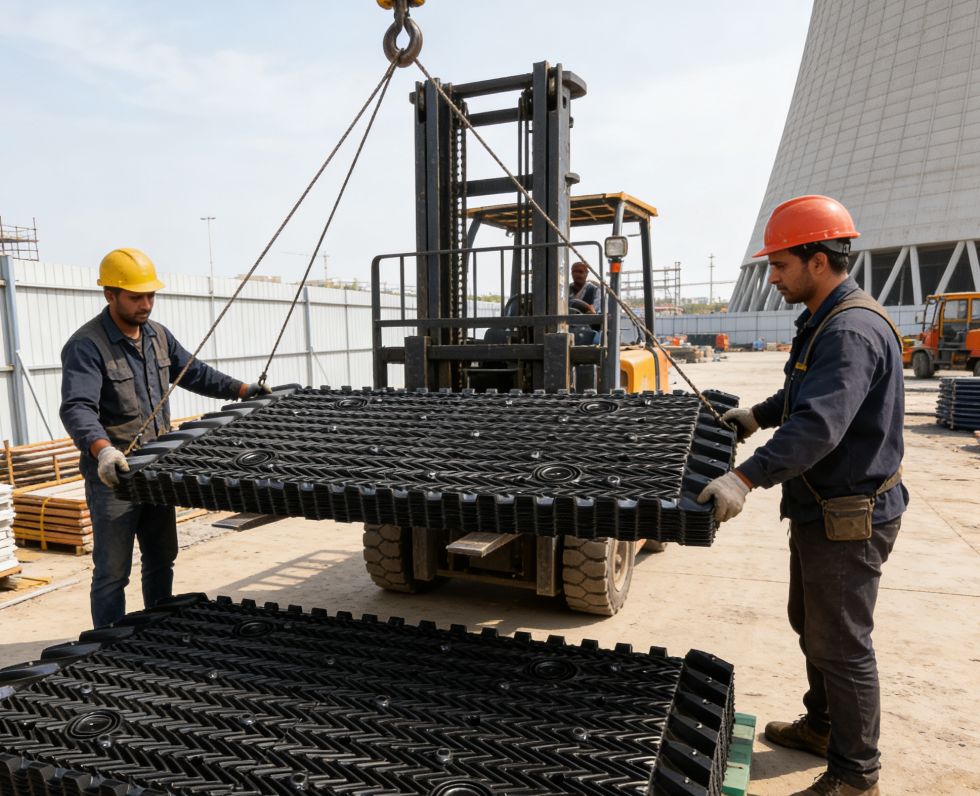
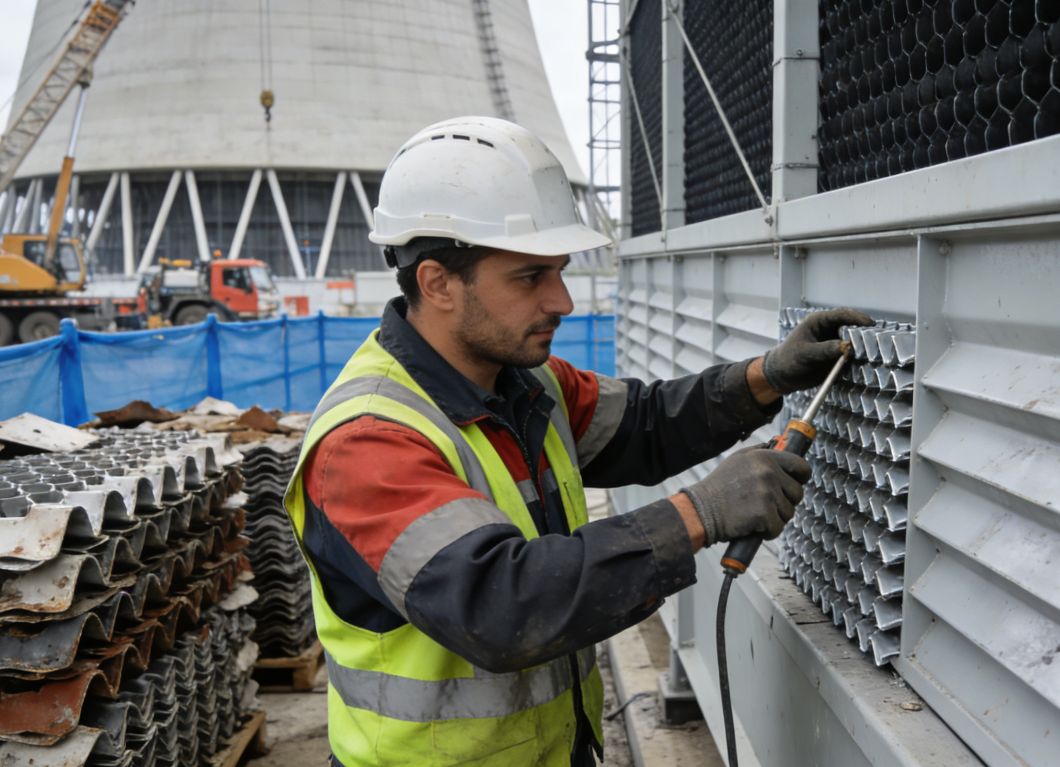
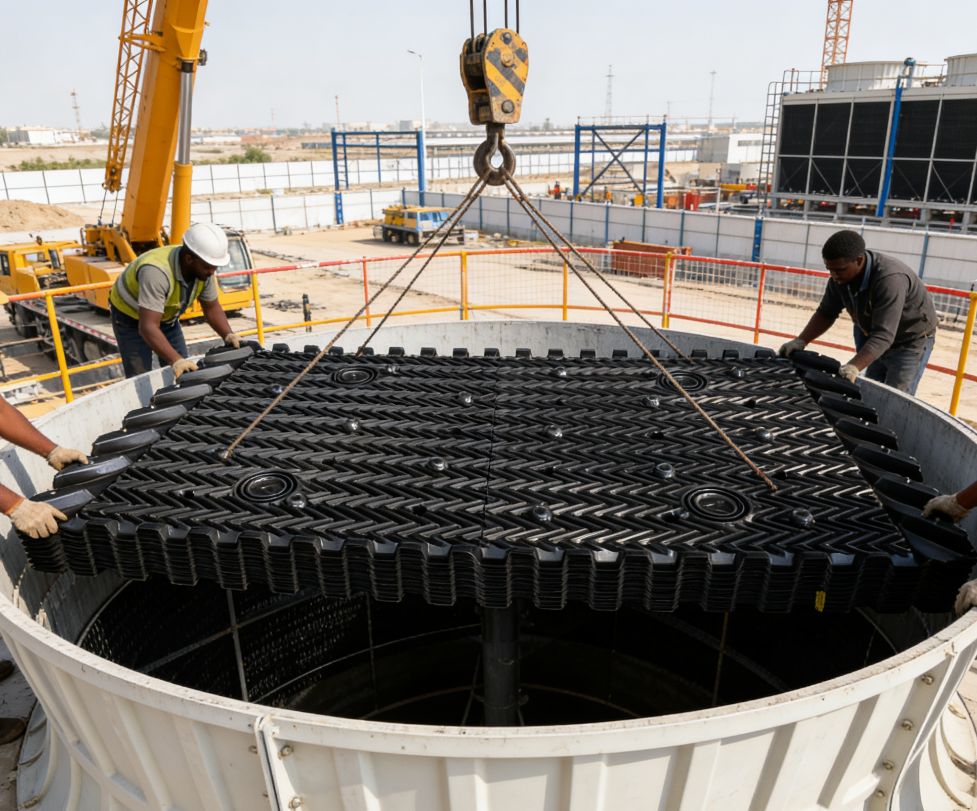
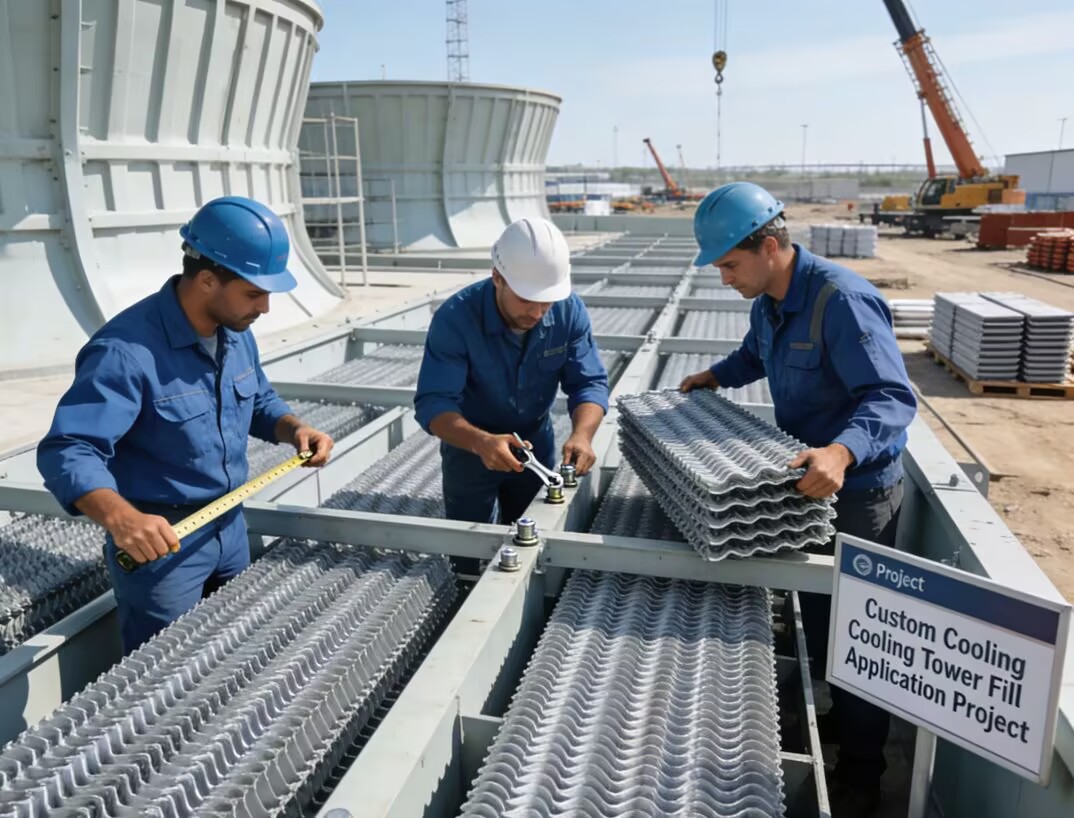
Cooling tower fill design has a direct impact on how an industrial cooling tower performs in daily operation. In the field, the difference between a stable system and a troublesome one is often not the tower shell itself, but the internal fill geometry, water distribution behavior, and how well the design matches the actual water condition.
For engineers and procurement teams, the main question is rarely whether a fill can move water downward. The real question is whether the design can keep doing that under the site’s temperature, water quality, maintenance cycle, and load variation. A practical cooling tower fill design should support long-term operation, not only short-term efficiency claims.
Cooling tower fill design refers to the shape, spacing, arrangement, and flow path created by the internal fill media. It determines how water spreads, how air passes through the pack, and how much contact area is created for heat transfer.
In simple terms, a well-designed fill helps water move in a controlled way while avoiding unnecessary blockage. A poor design may still work at first, but it can become difficult to maintain once scaling, biofilm, or suspended solids begin to appear.
That is why cooling fill selection should always be based on the real operating environment. A tower that handles clean water in a controlled plant does not need the same layout as a tower handling dirty water, fibers, or seasonal changes in water quality.
Many users focus only on material or thickness, but design usually decides how the fill behaves in service. Two fill packs made from similar material can perform very differently if the flow path, flute pattern, or packing depth is not suitable for the application.
A better design can help with water distribution, reduce dead zones, and improve resistance to clogging. It can also make cleaning easier and reduce the chance of premature replacement. In actual projects, these practical benefits often matter more than a small difference in theoretical efficiency.

film fill cooling tower systems use a structured surface that spreads water into a thin film. This design usually supports strong heat transfer because the contact area between water and air becomes larger.
Film fill is often preferred in cleaner water systems where clogging risk is lower. The flow channels are generally tighter, so the design works best when the circulating water is well controlled and the tower maintenance plan is consistent.
splash fill cooling tower systems use a more open structure that breaks water into droplets. This design is usually more tolerant of dirty water, suspended solids, and some types of biological buildup.
Splash fill is often selected for industrial users who need more operating tolerance and easier cleaning access. The thermal performance may differ from film-style systems, but in difficult water conditions the practical value is often higher.
corrugated fill combines ordered water paths with structured flow behavior. In many industrial applications, it offers a balanced option between efficiency and maintainability.
Corrugated patterns can improve wetting behavior and help distribute water more evenly across the fill surface. When the geometry is selected correctly, the fill can support good performance without becoming too sensitive to fouling.
Design affects the tower in several practical ways. First, it changes how water spreads across the fill. Second, it affects the resistance to airflow. Third, it influences how quickly deposits build up inside the pack.
If the design creates too many narrow passages, the system may clog faster. If the design is too open, the tower may be easier to maintain but less effective in heat transfer. Engineers usually look for the balance that fits the site condition rather than choosing the most aggressive design.
For that reason, the best cooling tower fill design is the one that matches the operating goal. Some towers need efficiency. Others need reliability. Many industrial users need both, but in the real world one side usually takes priority.
PVC cooling tower fill is commonly used in structured designs because it offers a practical balance between workability and cost. It is often chosen for standard systems where temperature and chemical exposure remain within a moderate range.
PVC can support film-style or corrugated layouts well, especially when the tower handles stable circulating water. In many projects, it remains a common choice for replacement and retrofitting because it is familiar and easy to specify.
PP cooling tower fill is often considered when the site faces higher temperature, stronger chemical exposure, or a more demanding operating environment. In design terms, PP gives engineers more flexibility when the system needs extra tolerance.
For some industrial towers, PP is preferred not because it is always better, but because it better fits the duty condition. That is usually the more important point in procurement and engineering decisions.
In one Southeast Asia project, a tower was running in a warm and humid climate with regular biological growth. The original fill design looked efficient on paper, but the maintenance team kept seeing uneven wetting and recurring fouling.
After inspection, the issue was linked to the combination of fill geometry and water condition. The final solution was not simply a material change. The fill design was also adjusted to better suit the site environment, which improved operating stability and reduced cleaning pressure.
This kind of case is common in tropical regions. When humidity is high and biological activity is strong, a design that works well in a dry or controlled environment may not stay practical for long.
Another site operated with elevated water temperature during long production cycles. The tower performed acceptably at startup, but during heavier load periods the fill started to deform and the water flow pattern became less stable.
After reviewing the situation, the project team selected a PP-based arrangement with a more suitable geometry. The goal was to improve operating tolerance rather than chase a theoretical maximum. That change helped the tower remain more stable under repeated thermal stress.
In high-temperature systems, design and material should be considered together. A strong material with poor geometry is still a weak solution.
In a dirty-water application, the plant originally used a film-type arrangement because of its cooling efficiency. However, suspended solids in the circulating water caused recurring blockage. Cleaning helped temporarily, but the performance problem kept returning.
After a field review, the tower was changed to a more open splash-style structure. The result was not a dramatic marketing-style improvement, but a practical one: fewer clogging complaints, more stable operation, and better maintenance planning.
This is often how real industrial decisions are made. The goal is not perfect numbers. The goal is a design that continues to work after months of normal service.
When evaluating cooling tower fill design, it helps to ask a few direct questions:
These questions usually guide the decision better than a product brochure alone. A well-matched design reduces operating stress and supports long-term reliability.
Clean-water systems can often use more structured film-type layouts. These designs help maximize water-air contact and support stronger heat exchange when fouling risk is low.
Dirty-water systems usually perform better with more open layouts. In these cases, a splash fill cooling tower arrangement may be more practical because it offers greater tolerance to suspended solids.
Some plants operate with changing water quality. In those cases, corrugated fill can be a balanced choice because it offers a middle ground between efficiency and maintainability.
If the flow channels are too narrow for the water condition, deposits may build up faster than expected. Once clogging starts, performance usually declines gradually, then more noticeably during peak load.
Poor geometry can create dry zones or overloaded zones inside the fill pack. That reduces contact area and may create uneven cooling across the tower.
A fill design that does not match the site condition may age faster. This is often seen in high-temperature or dirty-water systems where the original arrangement was too sensitive.
When the design does not match reality, the maintenance team spends more time cleaning and less time keeping the tower stable. Over time, that increases operating burden.
Fill design should always be viewed together with other internal tower components. A system with good fill but poor internal protection will still face operating issues.
These parts help reduce carryover and external contamination. In many projects, they support the fill by keeping operating conditions more stable.

Even a good design still needs proper maintenance. The most useful habit is regular inspection rather than waiting for obvious performance loss.
In field work, many problems are found before they become serious. That is usually the best time to act.

Cooling tower fill design plays a major role in industrial cooling performance. The right design can support better water distribution, reduce clogging risk, and improve long-term operation. The wrong design can create maintenance problems even if the original material quality is acceptable.
For engineering and procurement teams, the most practical approach is to match the fill structure, material, and maintenance plan to the actual duty condition. Whether the system uses film fill, splash fill, or corrugated fill, design should always be selected based on real operation rather than appearance alone.
Water distribution and flow path are usually the most important factors because they control how well the fill exchanges heat and how easily it can be maintained.
No. Film fill can provide stronger heat transfer in clean water systems, but splash fill is often more practical in dirty water or clog-prone conditions.
Yes. A design that matches the real water condition can reduce clogging, make cleaning easier, and extend service intervals.
Corrugated fill offers a useful balance between structured flow and practical maintenance, so it is often selected for industrial applications.
Check water quality, operating temperature, existing clogging history, and maintenance frequency. These factors usually determine the right direction.
We are professional cooling tower fills manufacturer, which can supply wide ranges of cooling tower fills with PVC, PP or CPVC materials.
The brake oil pipes we provide have multiple monitoring certifications and complete compliance documents to help your business smoothly enter the global market.
Fully automated production line, supporting individual customization. Combined with just-in-time logistics solutions, ensuring stable inventory.
A professional foreign trade technical team provides rapid response and is a trustworthy partner, offering everything from technical Q&A to market insights.

The cooling tower fill from this company has performed reliably in our systems. We appreciate the consistent quality and noticeable efficiency improvement.
CEO & Founder

As a CEO, I value partners who deliver on their promises. Their cooling tower fill is a solid product that contributes to stable operations.
CEO & Founder

We are satisfied with the performance of this cooling tower fill. It has integrated well into our existing setup with good results.
Manager

This company provides quality cooling tower fill that meets our operational needs. It's a dependable component in our infrastructure.
CEO & Founder

We are professional cooling tower fills manufacturer, which can supply wide ranges of cooling tower fills with PVC, PP or CPVC materials.

Instant Chat Support
+8615303180686
packingesale@gmail.com
Get the latest information
Scan the code to follow
Return to the top of the page