Cooling tower fill plays a crucial role in the efficiency and reliability of industrial cooling systems. Over time, cooling tower fill can deteriorate, leading to reduced heat transfer, increased water temperature, and higher energy consumption. Understanding when and why to replace fill is essential for maintaining long-term performance and minimizing operational costs. In this article, we explore the factors that determine fill replacement, signs of aging, and practical engineering solutions based on real-world experience.

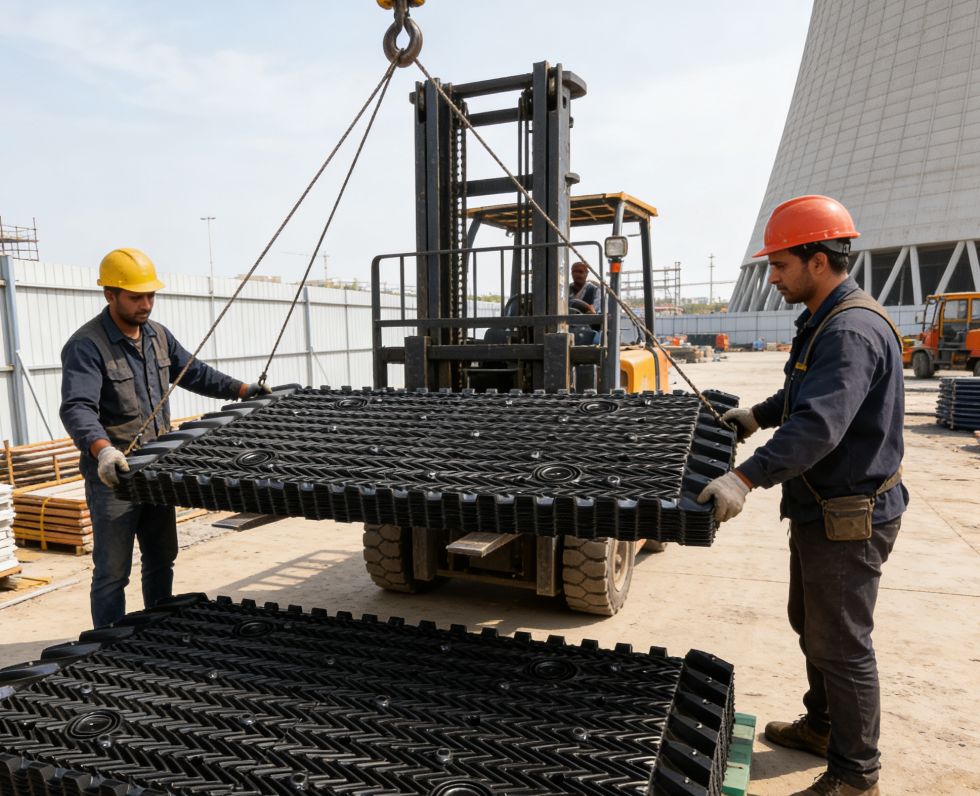
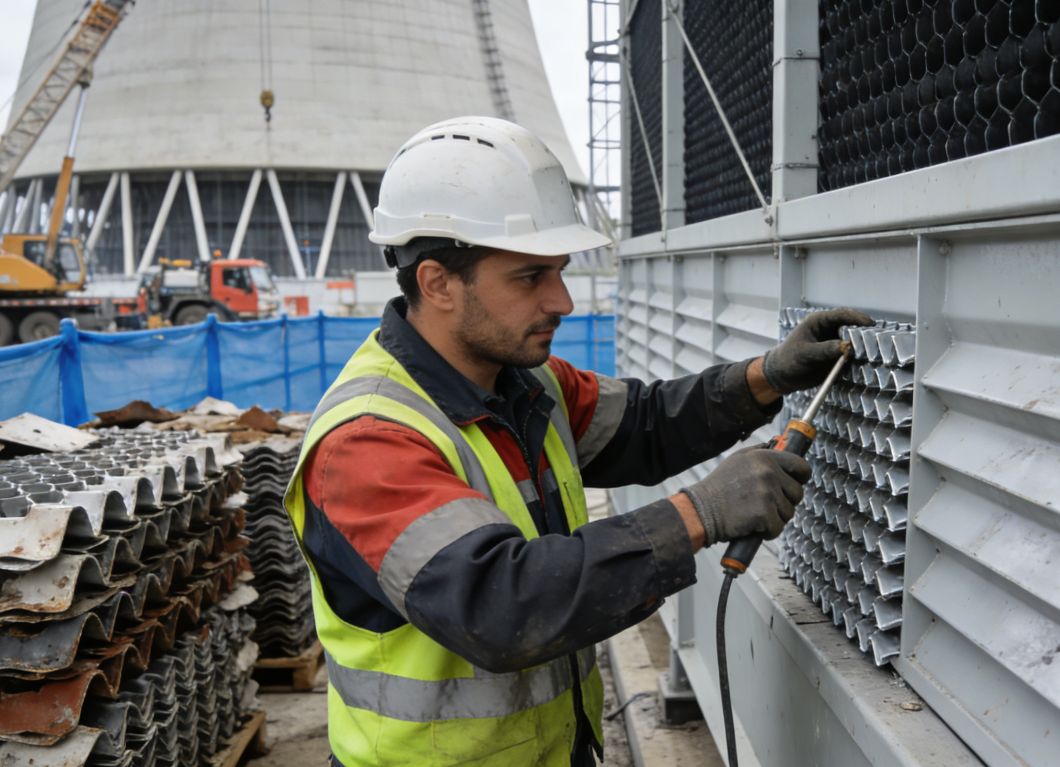
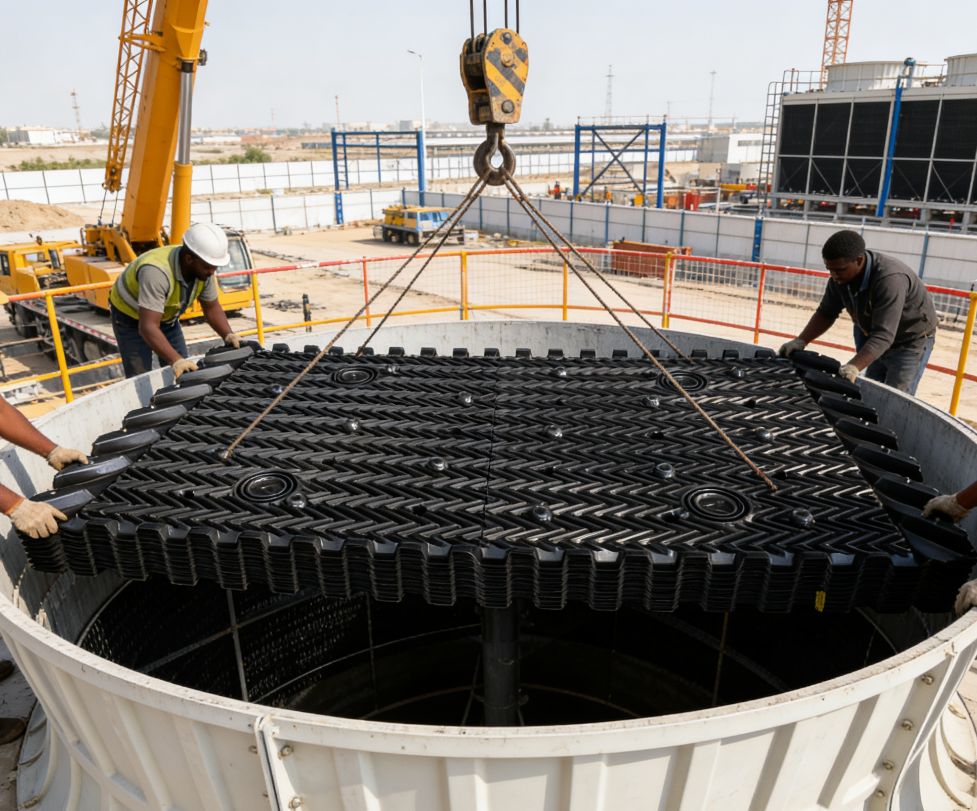
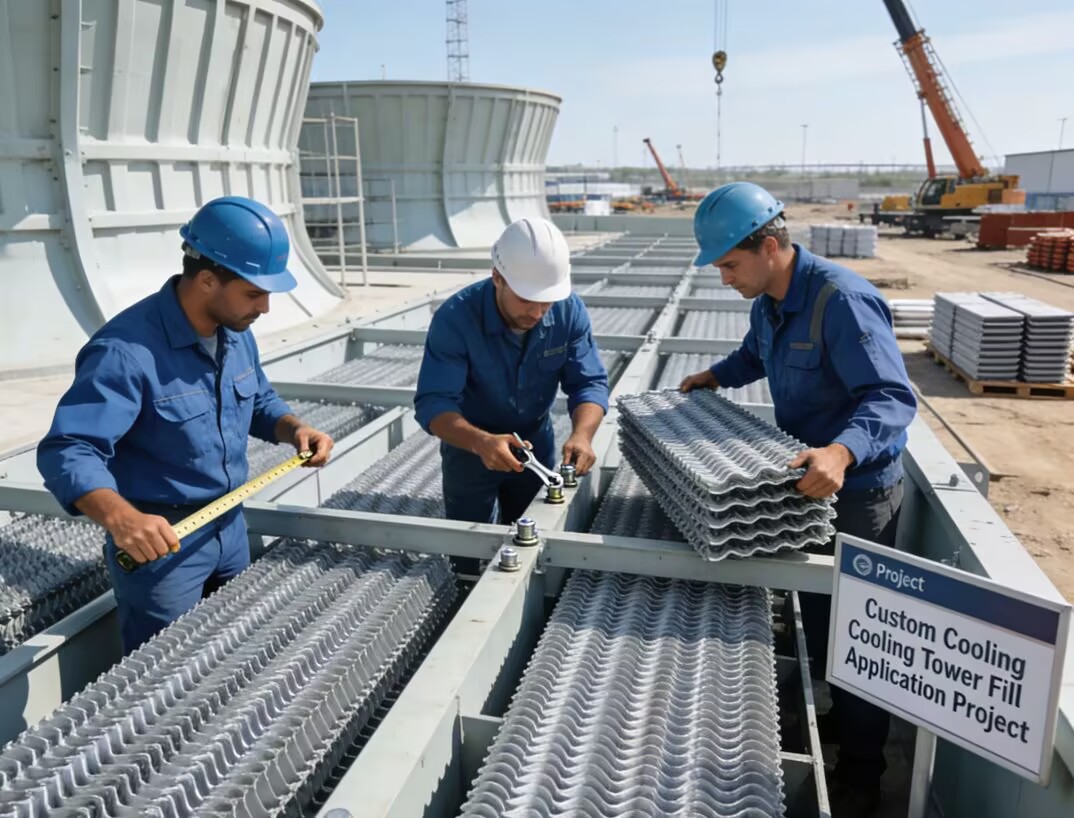
Cooling tower fill replacement refers to the process of removing old or degraded fill material and installing new fill to restore optimal thermal performance. The fill, whether film fill cooling tower, splash fill, or corrugated fill media, is responsible for creating maximum surface area for water-air contact. Over time, environmental factors, scaling, clogging, and material aging reduce the effectiveness of the fill, prompting the need for replacement.
Film fill replacement involves removing the old corrugated sheets that allow water to flow as a thin film. This type is particularly sensitive to scaling and chemical attack. Replacing aged film fill restores uniform water distribution and improves heat transfer. Proper selection of material, such as PVC or PP, can prolong service life.
Splash fill replacement focuses on removing bar or sheet layers that break water into droplets. This fill type is more tolerant of dirty water and debris but can degrade over time due to UV exposure and chemical corrosion. Replacement ensures proper turbulence and cooling efficiency.

Corrugated fill, often a hybrid between film and splash fill, provides structured surfaces for water spreading. Replacement is necessary when material deformation or biofilm buildup reduces contact area, impacting tower performance.
PVC fill is lightweight and resistant to moderate chemical exposure. However, over years of operation, UV degradation and scaling can compromise efficiency. Replacing PVC fill every 5–7 years in typical industrial conditions restores heat transfer performance.
PP fill offers higher chemical and temperature resistance. In high-temperature or highly corrosive water systems, PP fill replacement cycles are longer but should still be monitored for signs of brittleness or deformation. Proper installation and water treatment extend lifespan.
Engineering data and field experience indicate that replacing worn cooling tower fill can improve heat transfer efficiency by 10–15**. Benefits include:
These improvements are particularly noticeable in towers operating under continuous high load, hot climates, or with variable water quality.
Over 10 years of experience in Southeast Asia, the Middle East, and East Asia has revealed common scenarios where fill replacement significantly impacts performance:
We are professional cooling tower fills manufacturer, which can supply wide ranges of cooling tower fills with PVC, PP or CPVC materials.
The brake oil pipes we provide have multiple monitoring certifications and complete compliance documents to help your business smoothly enter the global market.
Fully automated production line, supporting individual customization. Combined with just-in-time logistics solutions, ensuring stable inventory.
A professional foreign trade technical team provides rapid response and is a trustworthy partner, offering everything from technical Q&A to market insights.

The cooling tower fill from this company has performed reliably in our systems. We appreciate the consistent quality and noticeable efficiency improvement.
CEO & Founder

As a CEO, I value partners who deliver on their promises. Their cooling tower fill is a solid product that contributes to stable operations.
CEO & Founder

We are satisfied with the performance of this cooling tower fill. It has integrated well into our existing setup with good results.
Manager

This company provides quality cooling tower fill that meets our operational needs. It's a dependable component in our infrastructure.
CEO & Founder

We are professional cooling tower fills manufacturer, which can supply wide ranges of cooling tower fills with PVC, PP or CPVC materials.

Instant Chat Support
+8615303180686
packingesale@gmail.com
Get the latest information
Scan the code to follow
Return to the top of the page