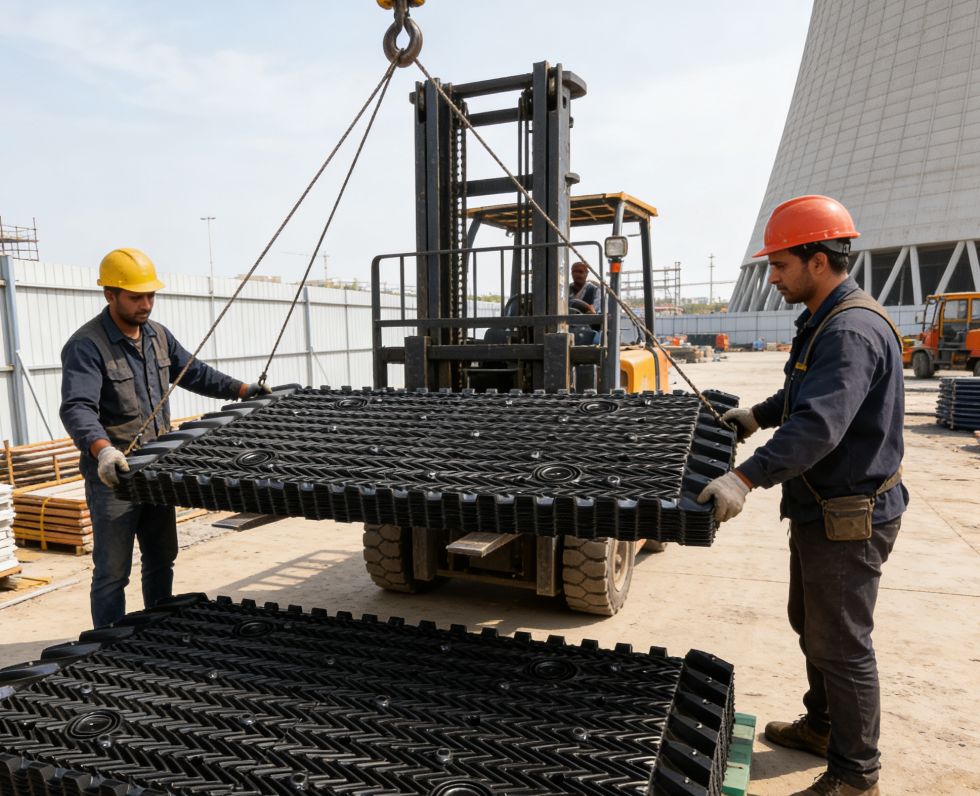
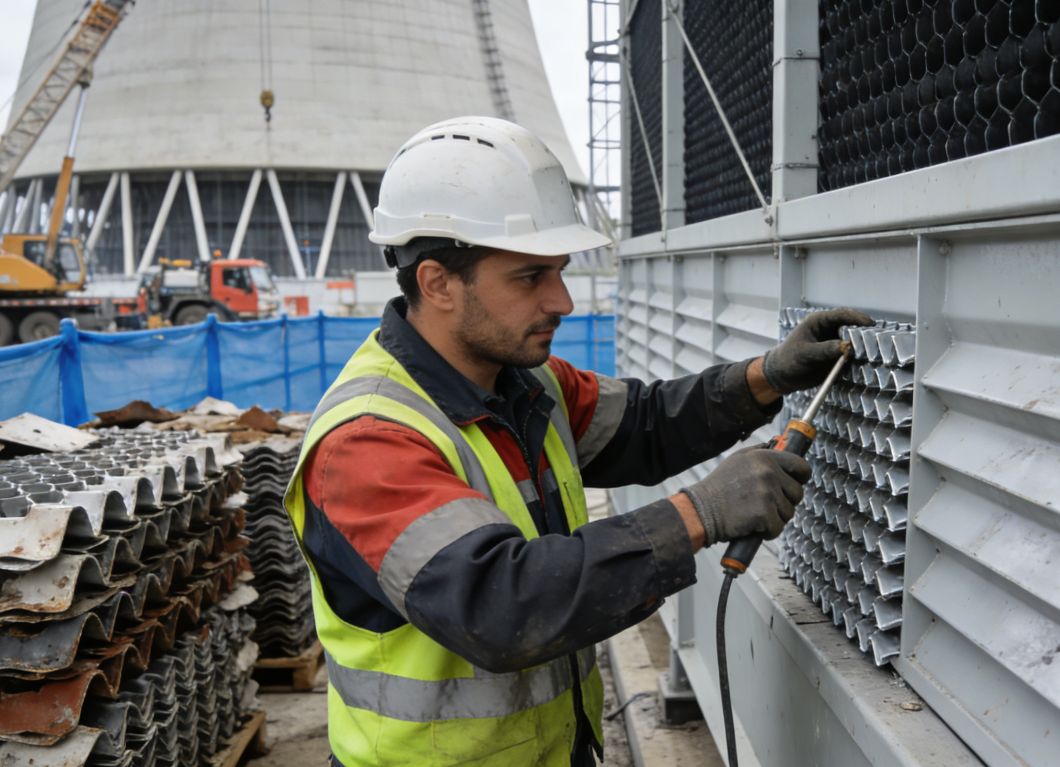
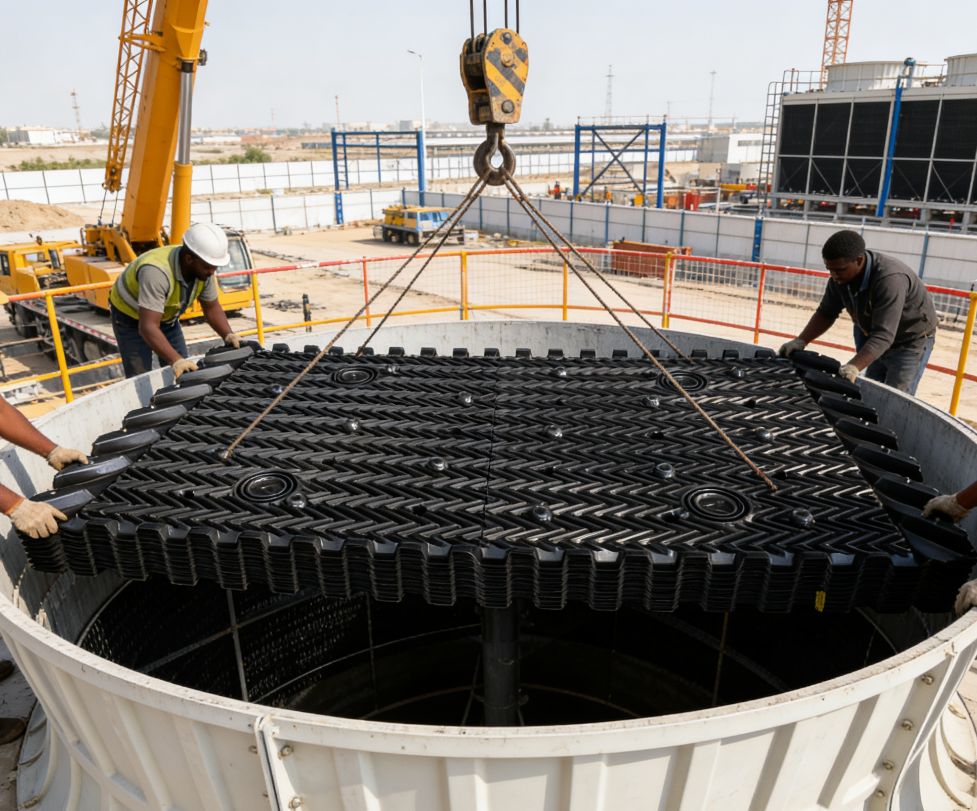
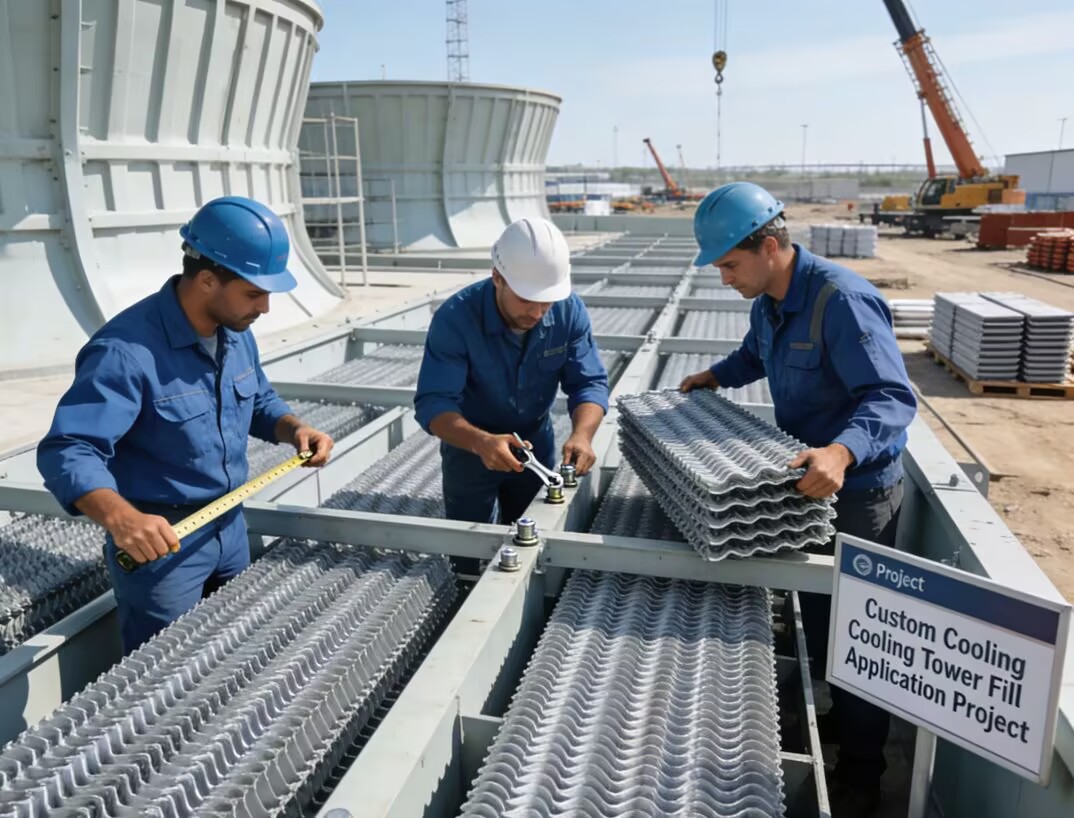
Cooling tower fill material selection is often discussed in terms of operating temperature and basic product specifications. In actual industrial projects, however, the choice of material also has a strong connection with long-term maintenance planning. A fill that matches the water condition and operating environment can help simplify routine inspection, while an unsuitable material may increase cleaning frequency and create unnecessary operational interruptions.
For engineers and procurement teams, selecting fill material should not be treated as an isolated purchasing decision. The material, fill structure, water quality, and maintenance strategy all influence one another. Looking at these factors together usually produces a more balanced solution for industrial cooling systems.

The fill is the area where water and air exchange heat. Because it remains in continuous contact with circulating water, it is exposed to minerals, suspended solids, biological activity, and changing temperatures throughout its service life.
The material used for the fill influences:
Although the cooling tower structure itself may remain unchanged for many years, the fill material should always be selected according to actual operating conditions.
PVC cooling tower fill is commonly used in industrial cooling systems because it is suitable for many standard applications. It is often selected for systems with relatively stable water quality and controlled operating temperatures.
When maintenance programs are well organized, PVC fill can support stable operation and practical cleaning procedures.
PP cooling tower fill is frequently considered for operating environments that present additional challenges. Some industrial processes expose the fill to higher temperatures or more demanding conditions, making PP a practical option in certain projects.
As with any material, selection should be based on engineering requirements rather than general assumptions.
Hard water conditions may create mineral deposits on fill surfaces. While water treatment plays the primary role in scale control, material characteristics also influence how deposits develop and how easily they can be removed during maintenance.
Warm and humid operating environments can encourage biological growth. The combination of fill structure and material affects how these deposits interact with the fill surface.
Maintenance teams often prefer systems that allow inspection and cleaning without excessive operational complexity. Material selection should therefore consider future service requirements as well as initial installation.
Material selection cannot be separated from fill geometry. The two work together to determine cooling behavior.
Film Fill Cooling Tower configurations create a thin water film across the fill surface. This design is widely used where water conditions allow stable operation and regular maintenance practices are in place.
Engineers should review both water quality and maintenance capability before selecting this arrangement.
Tower Fill arranged as splash fill generally contains a more open structure. It is often considered for systems where suspended solids or process contamination are expected.
The more open configuration can simplify maintenance under certain operating conditions.
Cooling Tower Media should always be selected according to the overall cooling system rather than by material alone.
A balanced design helps support both cooling performance and long-term maintenance planning.

Several maintenance issues can be influenced by the interaction between material and operating environment.
Understanding these risks during project planning can help avoid unnecessary operational difficulties later.
A manufacturing facility originally selected fill based mainly on available installation space. After extended operation, maintenance teams found that the existing configuration required more frequent cleaning than expected.
Further evaluation showed that water quality characteristics had not been fully considered during the original design stage. Engineers reviewed the material and fill arrangement together before selecting a more suitable replacement strategy.
The revised approach simplified maintenance planning and improved inspection efficiency.
An industrial process cooling tower operated under elevated thermal conditions throughout the year. The engineering team evaluated operating temperatures, water treatment practices, and maintenance schedules before selecting the appropriate fill material.
The project demonstrated that matching material selection with actual process requirements helps reduce long-term operational uncertainty.
A plant using recycled process water experienced recurring fouling inside the cooling tower. Maintenance activities became increasingly difficult because contamination levels varied throughout the year.
Engineers reviewed fill structure, material compatibility, and cleaning procedures together rather than treating each issue separately. This integrated approach produced a more manageable maintenance program.
Material selection is only one part of an effective maintenance strategy.
Practical recommendations include:
Consistent maintenance often provides better long-term results than reactive repairs.
The performance of fill materials is closely related to other tower components.
Maintaining these components helps create a more stable operating environment for the fill system.
If you are evaluating cooling tower fill materials for a new installation or retrofit project, technical discussions based on operating conditions, water quality, and maintenance objectives can help support a more suitable selection process.
Cooling tower fill material selection affects more than installation. It influences maintenance planning, cleaning requirements, and the long-term behavior of the entire cooling system.
By considering water quality, operating temperature, fill design, and future maintenance needs together, engineers can develop solutions that remain practical throughout the life of the project.
The material influences maintenance requirements, compatibility with operating conditions, and long-term system behavior.
No. Selection should depend on actual operating conditions and water quality.
PP may be evaluated for projects with more demanding temperature or process conditions.
A material that matches the operating environment can help simplify routine maintenance planning.
No. The best results usually come from evaluating material and structural design together.
We are professional cooling tower fills manufacturer, which can supply wide ranges of cooling tower fills with PVC, PP or CPVC materials.
The brake oil pipes we provide have multiple monitoring certifications and complete compliance documents to help your business smoothly enter the global market.
Fully automated production line, supporting individual customization. Combined with just-in-time logistics solutions, ensuring stable inventory.
A professional foreign trade technical team provides rapid response and is a trustworthy partner, offering everything from technical Q&A to market insights.

The cooling tower fill from this company has performed reliably in our systems. We appreciate the consistent quality and noticeable efficiency improvement.
CEO & Founder

As a CEO, I value partners who deliver on their promises. Their cooling tower fill is a solid product that contributes to stable operations.
CEO & Founder

We are satisfied with the performance of this cooling tower fill. It has integrated well into our existing setup with good results.
Manager

This company provides quality cooling tower fill that meets our operational needs. It's a dependable component in our infrastructure.
CEO & Founder

We are professional cooling tower fills manufacturer, which can supply wide ranges of cooling tower fills with PVC, PP or CPVC materials.

Instant Chat Support
+8615303180686
packingesale@gmail.com
Get the latest information
Scan the code to follow
Return to the top of the page