Cooling tower fill is often one of the first components engineers evaluate when an aging cooling tower begins showing signs of declining performance. Many industrial facilities assume that rising outlet water temperatures or increasing maintenance costs automatically require major tower modifications. In reality, a targeted fill upgrade can sometimes provide a practical alternative to full tower replacement.
Modern cooling systems frequently operate under conditions that differ from their original design assumptions. Production capacity may have increased, water quality may have changed, or environmental conditions may have evolved over time. In these situations, reviewing the existing fill arrangement can help determine whether a retrofit strategy is appropriate.

Most cooling towers do not experience a sudden loss of performance. Instead, efficiency tends to decline gradually due to multiple contributing factors.
Common causes include:
When these factors combine, operators may notice that the tower no longer performs as consistently as it once did.
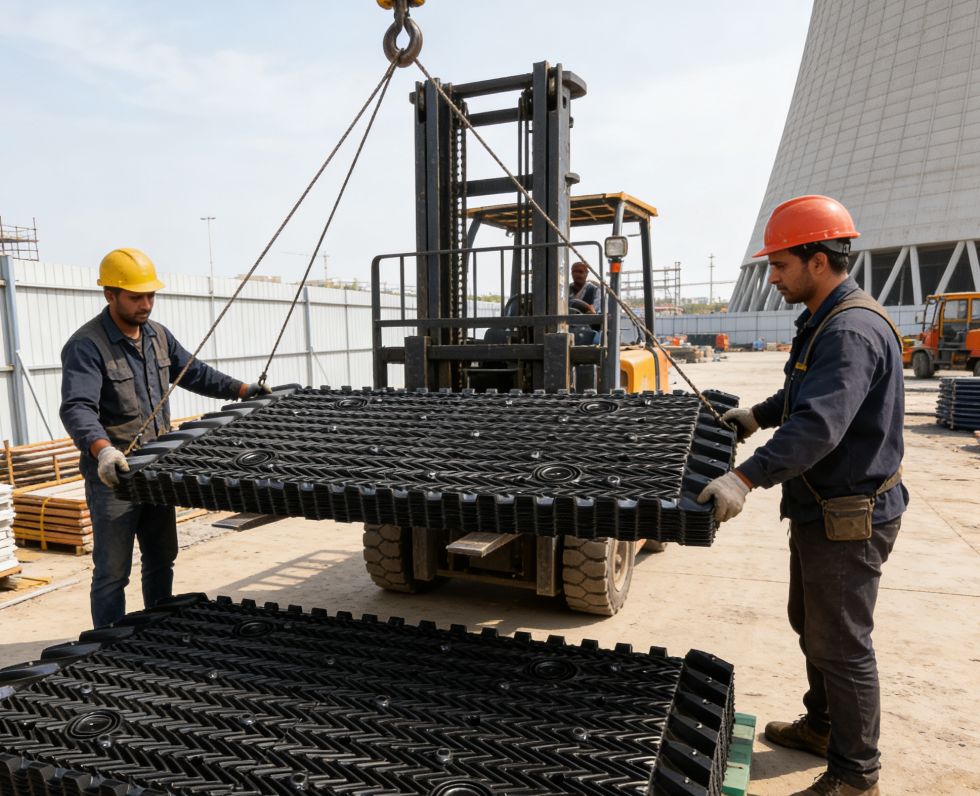
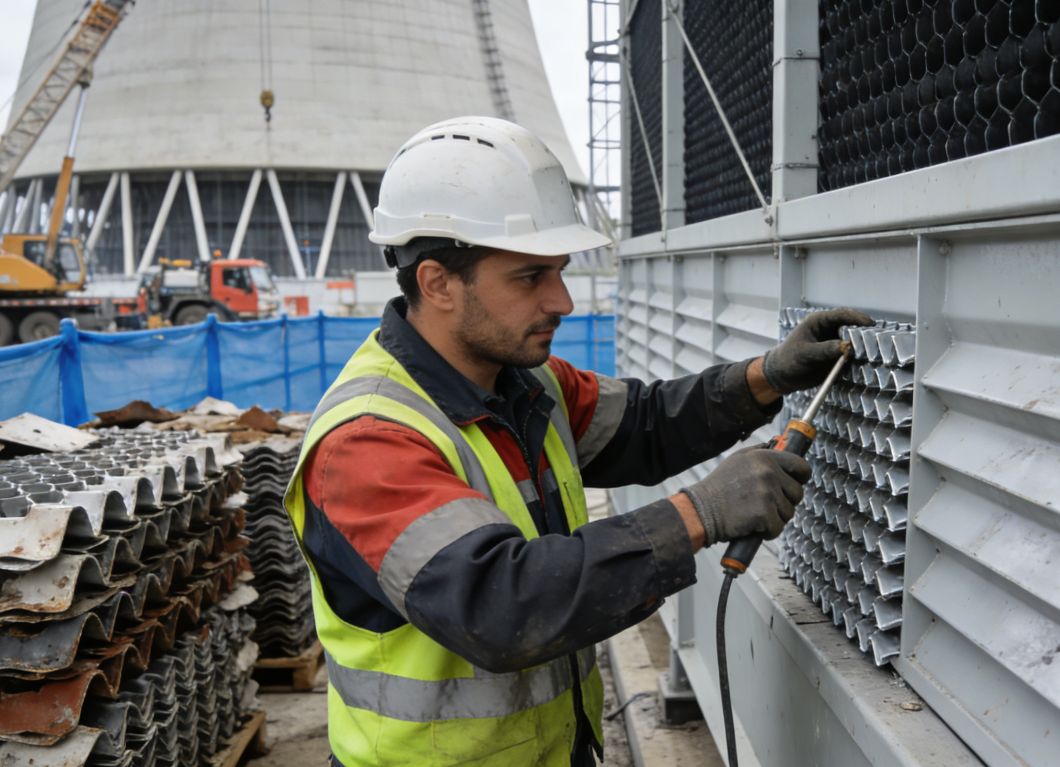
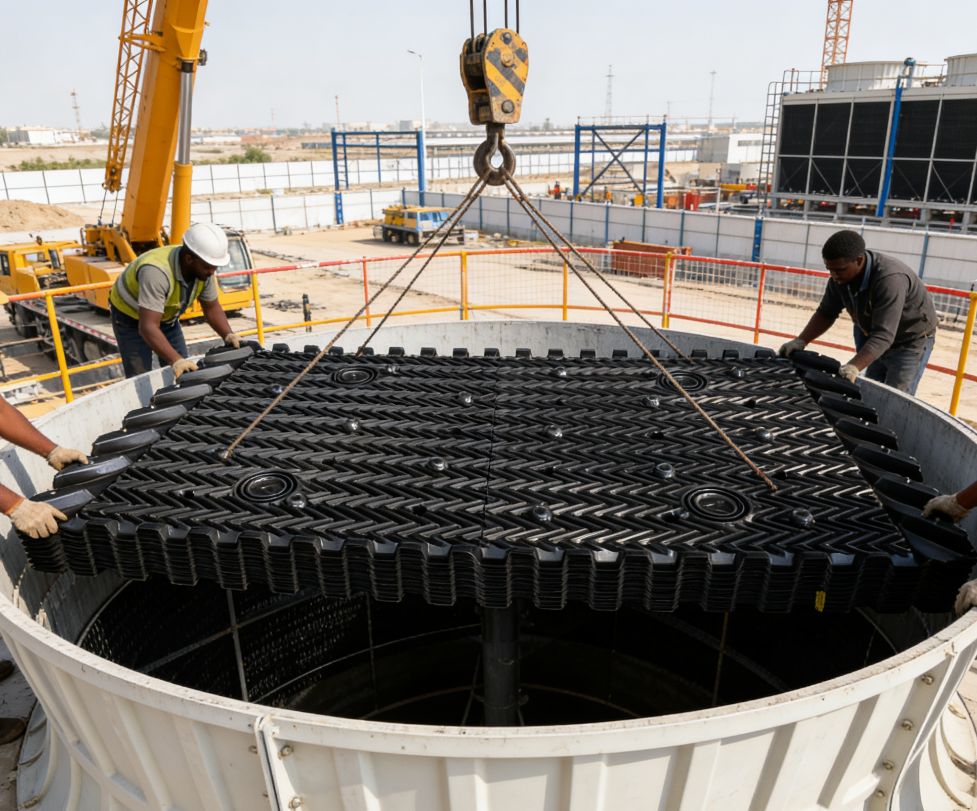
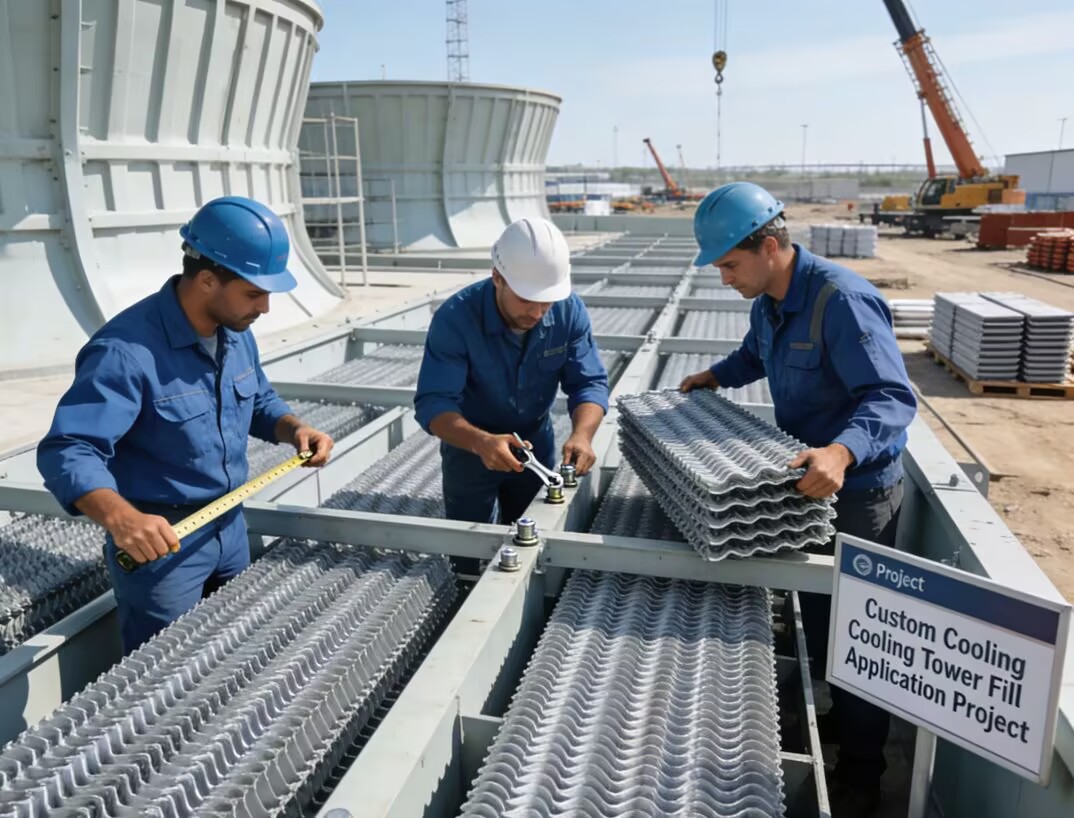
A fill upgrade involves replacing or redesigning the existing fill package while keeping the primary tower structure in service.
Rather than rebuilding the entire cooling tower, engineers focus on improving the heat transfer section by selecting a fill configuration better suited to current operating requirements.
The upgrade may involve:
Because the fill is responsible for much of the tower's thermal performance, even moderate changes can significantly influence operating behavior.
Many industrial plants expand production over time. Increased heat loads often place greater demands on the cooling system than originally anticipated.
If the existing fill was selected for lower operating requirements, a fill upgrade may help the tower adapt to the new workload.
Water sources sometimes change during the life of a facility.
A tower originally designed for relatively clean water may later operate with recycled process water or water containing more suspended solids.
In these situations, upgrading to a fill design with improved fouling tolerance may provide operational benefits.
When cleaning intervals become progressively shorter and fouling develops more rapidly, it may be appropriate to review whether the current fill configuration still matches site conditions.
Before selecting a replacement fill, engineers typically evaluate how the current fill behaves during operation.
Questions often include:
The objective is not simply to replace old material but to identify opportunities for meaningful improvement.

Film Fill Cooling Tower designs remain popular in many industrial applications because they provide extensive water-air contact area.
For facilities operating with relatively clean water, upgrading to a modern film fill configuration may support improved thermal performance while maintaining a compact arrangement.
However, water quality must be considered carefully during selection.
Splash fill upgrades are frequently considered when towers operate with challenging water conditions.
The more open structure often handles suspended solids and contamination more effectively than tighter channel configurations.
For facilities experiencing repeated cooling tower fill clogged conditions, splash fill may offer a practical alternative.
PVC cooling tower fill continues to be widely used across industrial cooling applications.
Its practicality and compatibility with many fill designs make it a common choice for retrofit projects.
When operating conditions remain within suitable ranges, PVC can provide dependable long-term service.
PP cooling tower fill is often evaluated when higher temperatures or more demanding operating conditions exist.
Material selection should always reflect actual process requirements rather than assumptions.
A chemical processing facility experienced gradual cooling performance decline despite maintaining major mechanical equipment.
Inspection revealed that the existing fill had become increasingly difficult to clean due to years of fouling and deposit accumulation.
Engineers reviewed current operating conditions and selected a replacement fill configuration better aligned with the facility's water characteristics.
Following the retrofit, maintenance planning became more predictable and cooling performance stabilized.
A manufacturing site expanded production capacity several years after the cooling tower was installed.
The original fill design had been selected for lower process loads and was no longer operating within its preferred range.
Rather than replacing the tower structure, the facility upgraded the fill package and reviewed water distribution characteristics.
The project allowed the tower to support the revised operating requirements without major structural modifications.
A facility using recycled process water experienced recurring fouling problems inside the existing fill packs.
Repeated cleaning provided temporary improvement but did not address the underlying compatibility issue.
Engineers selected a fill design offering improved tolerance to suspended solids and adjusted maintenance procedures accordingly.
The revised configuration simplified operation and reduced the frequency of severe fouling events.
A fill retrofit provides a good opportunity to inspect related cooling tower components.
Reviewing these components at the same time helps ensure the upgraded fill operates under suitable conditions.
Successful retrofit projects typically begin with understanding site-specific operating requirements.
Fill upgrades should not focus solely on immediate thermal improvements.
Engineers should also evaluate:
Considering these factors helps ensure the upgraded fill remains appropriate throughout its service life.
Cooling tower fill upgrades can provide a practical solution for facilities seeking improved cooling tower performance without replacing the entire structure. By evaluating current operating conditions, water quality, maintenance requirements, and future production plans, engineers can determine whether a targeted fill retrofit is appropriate.
When properly planned, fill upgrades can help industrial cooling systems adapt to changing requirements while supporting reliable long-term operation.
In some cases, upgrading the fill package and related components may improve performance without major structural changes.
Common situations include changing water quality, increasing production loads, recurring fouling, or aging fill materials.
No. The appropriate fill depends on water quality, maintenance practices, and operating requirements.
Not always, but reviewing distribution systems, drift eliminators, and intake components is often beneficial.
Selection typically considers water conditions, thermal requirements, maintenance expectations, and long-term operating objectives.
We are professional cooling tower fills manufacturer, which can supply wide ranges of cooling tower fills with PVC, PP or CPVC materials.
The brake oil pipes we provide have multiple monitoring certifications and complete compliance documents to help your business smoothly enter the global market.
Fully automated production line, supporting individual customization. Combined with just-in-time logistics solutions, ensuring stable inventory.
A professional foreign trade technical team provides rapid response and is a trustworthy partner, offering everything from technical Q&A to market insights.

The cooling tower fill from this company has performed reliably in our systems. We appreciate the consistent quality and noticeable efficiency improvement.
CEO & Founder

As a CEO, I value partners who deliver on their promises. Their cooling tower fill is a solid product that contributes to stable operations.
CEO & Founder

We are satisfied with the performance of this cooling tower fill. It has integrated well into our existing setup with good results.
Manager

This company provides quality cooling tower fill that meets our operational needs. It's a dependable component in our infrastructure.
CEO & Founder

We are professional cooling tower fills manufacturer, which can supply wide ranges of cooling tower fills with PVC, PP or CPVC materials.

Instant Chat Support
+8615303180686
packingesale@gmail.com
Get the latest information
Scan the code to follow
Return to the top of the page