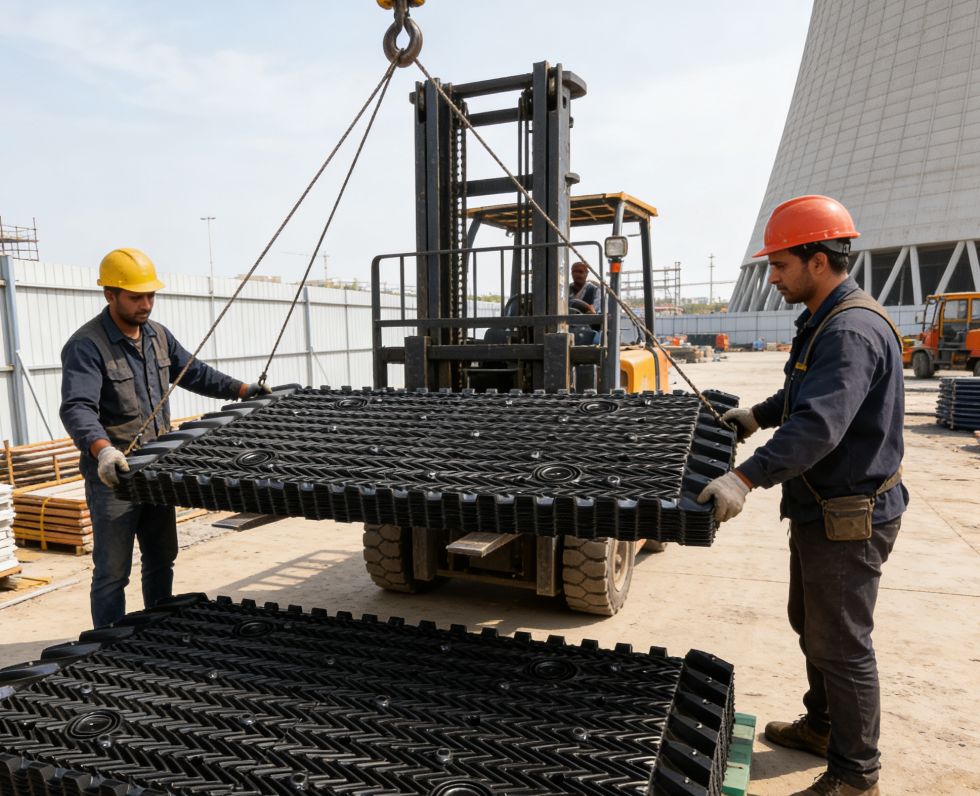
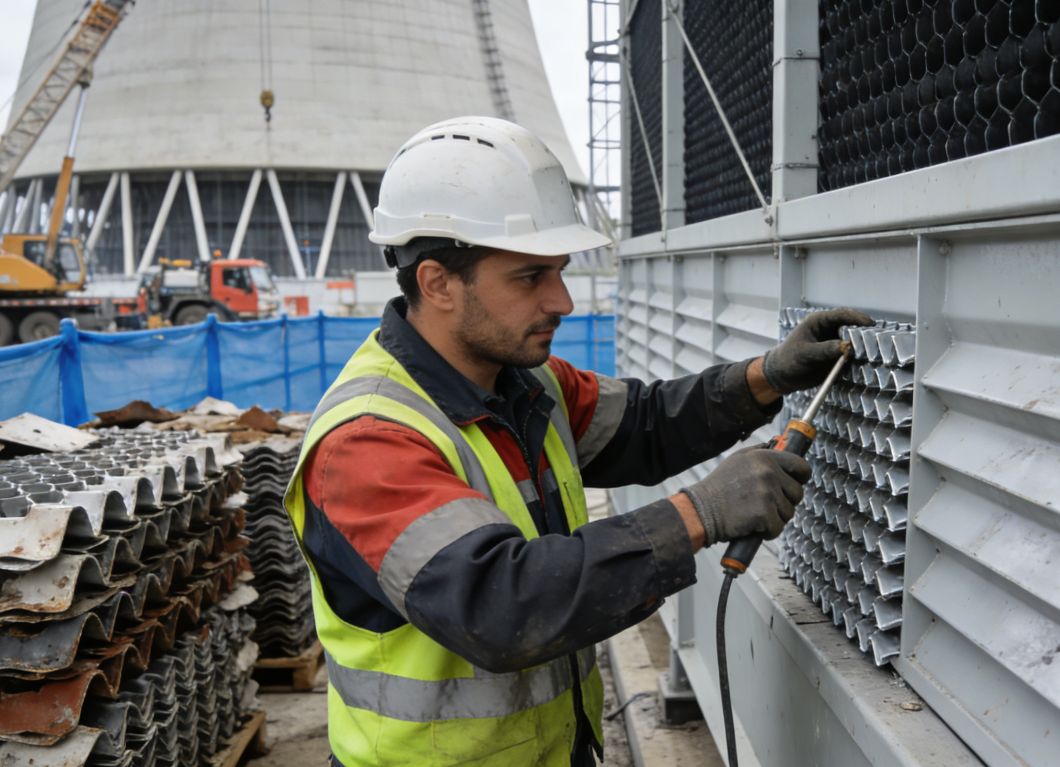
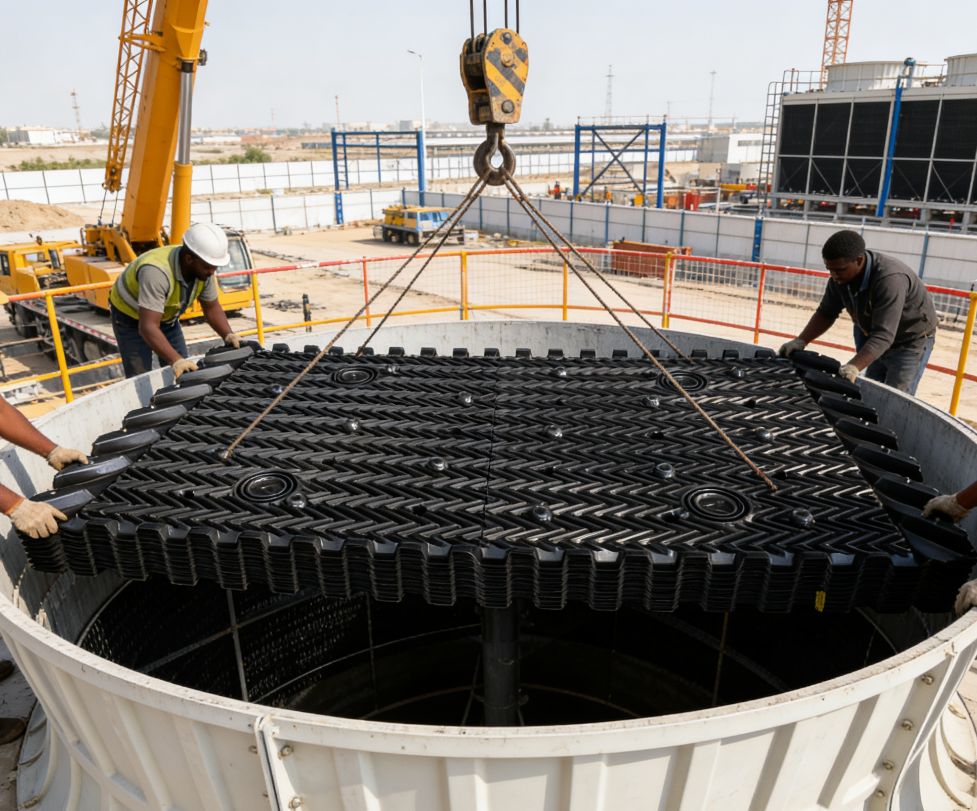
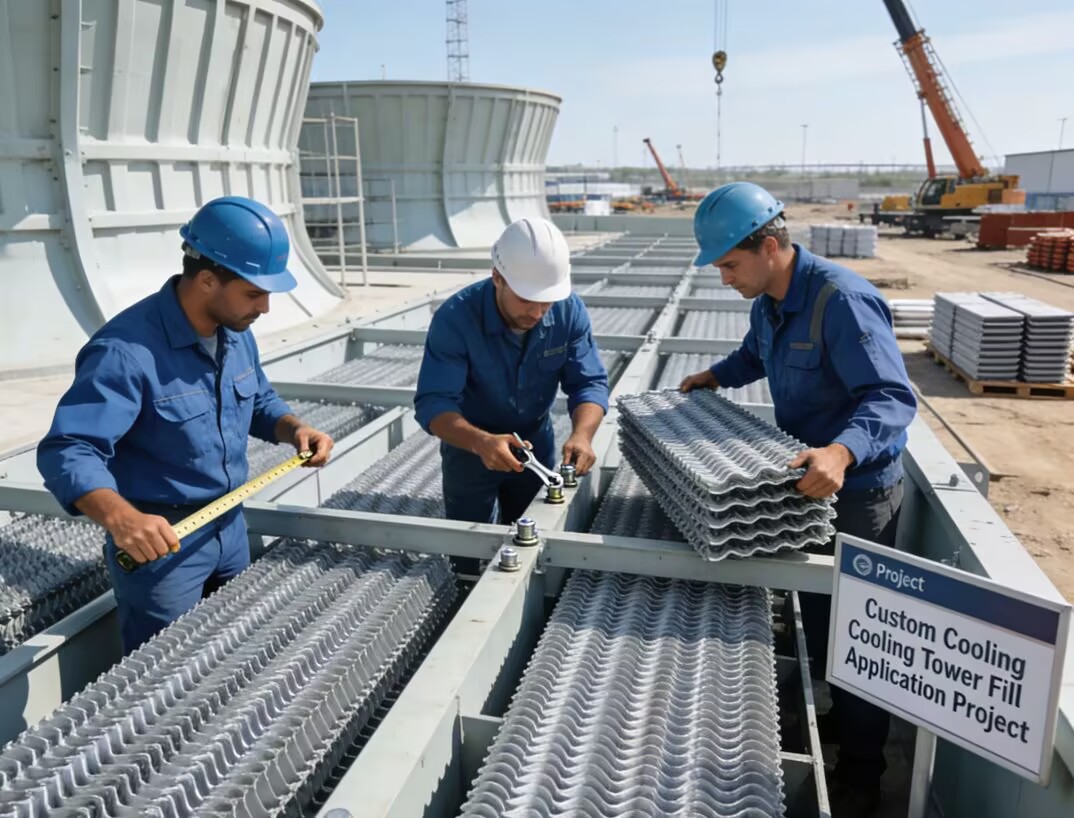
If you manage industrial cooling in Southeast Asia right now, you are probably feeling the heat – literally and figuratively. New energy regulations are kicking in, data centers are sprouting like mushrooms, and your old Tower Fill might be costing you more than you think. I have been helping plants across Thailand, Vietnam, Indonesia, and Malaysia upgrade their cooling tower fill for over a decade, and 2026 is a turning point. Let me walk you through what is actually happening on the ground and how to get your cooling tower ready.
Thailand's TISI 2134-2565 standard took full effect in April 2026. It sets Minimum Energy Performance Standards for industrial cooling equipment. I have seen facilities in the Eastern Economic Corridor scramble to replace old splash fill with modern Cooling Tower Fill just to pass inspections. The good news? Upgrading your fill media is one of the cheapest ways to improve efficiency. A proper Film Fill Cooling Tower can drop your approach temperature by 1.5-2°C, which directly cuts chiller energy use by 3-5**. In a country where electricity prices are rising, that pays back fast.
Another thing many operators forget: water conservation. Thailand's dry seasons are getting longer. A high-quality Water Collector paired with efficient Drift Eliminator can slash water loss by up to 30**. I have done retrofits in Rayong where the client saved millions of liters per year – and avoided hefty water surcharges.
Vietnam's Circular 09/2026 and Decree 48/2026 tightened rules on industrial water discharge and drift emissions. If your cooling tower sends visible mist over the fence line, you could face fines. I recently consulted for a textile plant in Binh Duong that was cited for excessive drift. We replaced their old fill with Tower Fill featuring integrated drift eliminators, and their drift loss dropped from 0.05** to under 0.002**. The local inspectors were happy, and the plant saved on makeup water.
Another trend in Vietnam: the rise of data centers. International players are setting up in Ho Chi Minh City and Hanoi. These facilities demand Cooling Tower Media with high surface area and low pressure drop. I always recommend corrugated PVC film fill for data center cooling – it gives you maximum heat transfer per cubic foot of tower volume. And do not forget about Air Inlet Louvers; proper louvers prevent debris from clogging your fill, which is a nightmare in Vietnam's dusty dry season.
Indonesia's data center market is growing at nearly 14** CAGR. Digital Edge just announced a $4.5 billion AI-ready campus in Bekasi, targeting a PUE of 1.25. For cooling tower professionals, that means one thing: high-performance Film Fill Cooling Tower is essential. I have been working with a hyperscale client in Jakarta, and we found that upgrading from standard 19mm fill to 12mm high-density film fill improved heat rejection by 18** without increasing fan power. That is huge when you are running 24/7.
But here is a warning: Indonesia's water quality varies wildly. In some areas, you get high silica or biological growth. Standard film fill can clog in months. That is where anti-clog designs and proper Mist Eliminator come in. I also suggest adding Air Intake Screens to keep leaves and insects out. A little prevention saves you from a costly fill replacement down the road.
Malaysia's Penang and Johor are becoming semiconductor hubs, and those fabs need ultra-reliable cooling. I have supplied Cooling Tower Fill to several electronics plants there, and the key is consistency. They measure approach temperature every shift. One client replaced their 7-year-old fill with new Cooling Tower Media and saw their approach drop from 4.5°C to 2.8°C – that is real energy savings.
In the Philippines, the challenge is often salt air for coastal plants. I strongly recommend using corrosion-resistant fill materials like polypropylene rather than standard PVC. Also, pay attention to Cooling Tower Intake Louvers – they should be made of UV-stabilized material to survive the tropical sun. I have seen louvers crumble after two years because someone saved a few bucks on cheap plastic. Do not make that mistake.
Let me give you a real example from a power plant in Thailand that I helped last year. They had a 500 m³/hr cooling tower with 5-year-old PVC fill that was heavily fouled. After cleaning and replacing the fill with high-efficiency film fill, plus new Demister pads, here is what changed:
The fill paid for itself in 8 months. That is not marketing hype – that is what happens when you use the right Tower Fill for your application.
High humidity, heavy rains, and biological growth are your enemies. Here is my checklist for keeping your cooling tower fill in good shape:
One more thing: do not forget about Air Inlet Grilles. In Indonesia and Malaysia, I have seen monkeys and birds pull fill sheets out of towers because the grilles were missing. That is a nightmare to repair. Spend the small money on proper intake screens.
I get asked this all the time. For clean water applications (city water, treated cooling water), film fill is almost always better. It gives you much higher surface area – typically 150-250 m²/m³ versus 30-50 for splash fill. That means you can get the same cooling duty in a smaller tower, or you can improve performance in your existing footprint. Film Fill Cooling Tower retrofits have been a game-changer for HVAC systems in Singapore and Bangkok.
However, if your water is dirty – think river water, process water with fibers, or cooling water from an open pond – splash fill may be more forgiving. But even then, modern anti-clog film fill designs with larger flute sizes can work. Talk to a supplier who understands your water chemistry before deciding.
Look, I have seen too many plant managers treat cooling tower fill as an afterthought. They run the same fill for 10 years, wondering why their electricity bills keep climbing. The truth is, fill is a consumable – like an air filter or a belt. Replacing it on schedule is not an expense; it is an investment in efficiency.
If you are in Southeast Asia and want to get ahead of the new regulations, start by inspecting your Cooling Tower Fill today. Check for clogging, warping, or biological growth. If it looks tired, it probably is. Give me a shout if you want a second opinion – I am always happy to help a fellow engineer avoid the mistakes I made early in my career.
Whether you are dealing with Thailand's MEPS, Vietnam's new decrees, or Indonesia's data center boom – we have been there. With over 15 years of hands-on experience across the region, we can help you select the right film fill, splash fill, or custom cooling tower media for your specific water and climate conditions.
Get a free consultation and a site-specific recommendation. No hard sell – just honest engineering advice.
Contact Us Here →We are professional cooling tower fills manufacturer, which can supply wide ranges of cooling tower fills with PVC, PP or CPVC materials.
The brake oil pipes we provide have multiple monitoring certifications and complete compliance documents to help your business smoothly enter the global market.
Fully automated production line, supporting individual customization. Combined with just-in-time logistics solutions, ensuring stable inventory.
A professional foreign trade technical team provides rapid response and is a trustworthy partner, offering everything from technical Q&A to market insights.

The cooling tower fill from this company has performed reliably in our systems. We appreciate the consistent quality and noticeable efficiency improvement.
CEO & Founder

As a CEO, I value partners who deliver on their promises. Their cooling tower fill is a solid product that contributes to stable operations.
CEO & Founder

We are satisfied with the performance of this cooling tower fill. It has integrated well into our existing setup with good results.
Manager

This company provides quality cooling tower fill that meets our operational needs. It's a dependable component in our infrastructure.
CEO & Founder

We are professional cooling tower fills manufacturer, which can supply wide ranges of cooling tower fills with PVC, PP or CPVC materials.

Instant Chat Support
+8615303180686
packingesale@gmail.com
Get the latest information
Scan the code to follow
Return to the top of the page