I have lost count of how many aging cooling towers I have seen. Ten years, fifteen years, sometimes twenty years old, still running but nowhere near original performance. The plant operators know something is wrong. The chillers are working harder than they used to. The water temperature coming out of the tower keeps creeping up. But replacing the whole tower seems expensive and disruptive.
The good news is that in most cases, you do not need to replace the entire cooling tower. A targeted Tower Fill retrofit can restore performance to near-original levels at a fraction of the cost of new equipment.
Cooling tower fill is not a lifetime component. Over years of operation, several factors cause performance to degrade:
Suspended solids, biological growth, and mineral scale accumulate on fill surfaces. Even a thin layer of scale reduces heat transfer efficiency significantly. As fouling builds, airflow through the fill becomes restricted, increasing fan energy consumption.
Research has shown that mineral scale layers of less than half a millimeter can reduce heat transfer by ten percent or more. In severe cases, scale can completely block fill passages, causing water to bypass the fill and rendering the cooling tower ineffective.

PVC fill becomes brittle with age. UV exposure, temperature cycling, and chemical exposure all contribute to material degradation. Cracks develop. Fill sheets warp. Support structures weaken. Eventually, sections of the fill pack can collapse, creating large channels where water and air bypass the fill.
I have seen cooling towers where entire sections of fill had collapsed, leaving large empty spaces. The water was essentially falling straight through without any heat transfer. Cooling performance was terrible, and the plant was running extra chillers to compensate.
Cooling tower fill technology has advanced significantly over the past decade. Newer fill designs offer higher heat transfer efficiency, lower pressure drop, and better fouling resistance than products from ten or fifteen years ago.
Even if your existing fill is still in decent physical condition, you may be leaving significant energy savings on the table by not upgrading to modern high-efficiency fill.
How do you know when it is time to replace your cooling tower fill? Here are the key indicators:
If the water temperature leaving your cooling tower is consistently higher than design, and you have ruled out other issues such as fan problems or low water flow, your fill is likely degraded. Compare current performance to original design or to measurements from when the fill was new.
Even a two-degree increase in leaving water temperature can increase chiller energy consumption by five to ten percent. A four-degree increase can cost ten to twenty percent more energy.
If your cooling tower fans are drawing more current than they used to for the same airflow, the fill is likely fouled. Increased pressure drop across the fill forces the fan to work harder. Some facilities report fan energy increases of thirty to fifty percent as fill fouls.
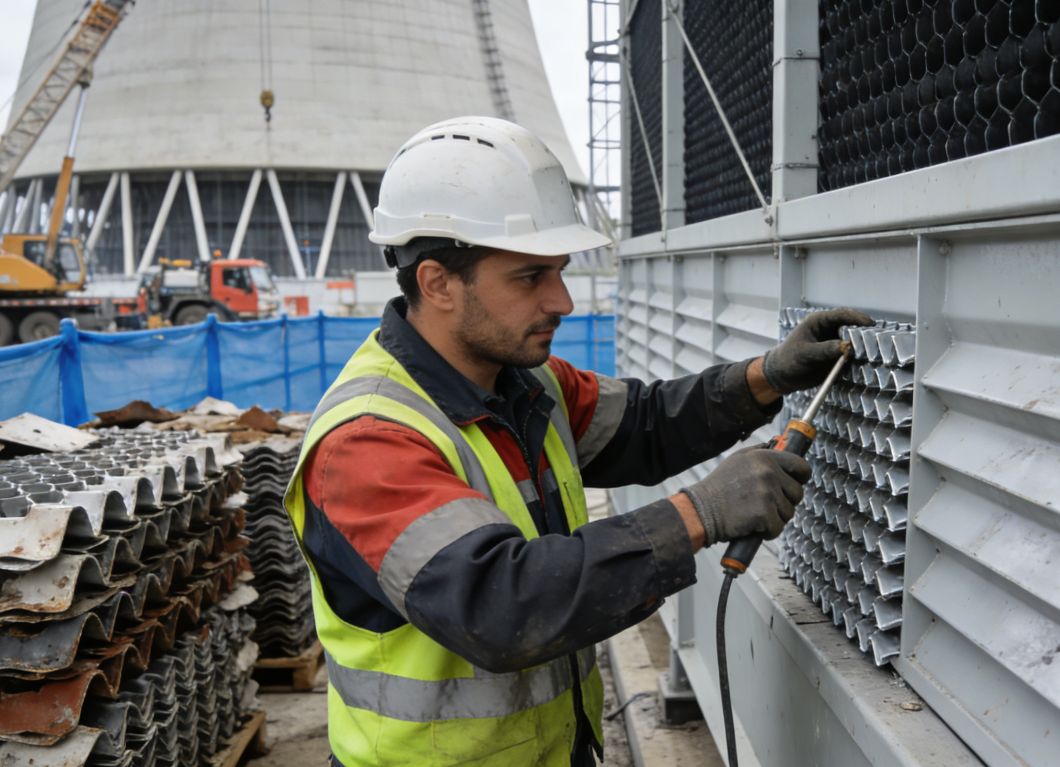
If you can see scale, biological growth, cracks, or collapsed sections when inspecting the fill, replacement is needed. Minor fouling can sometimes be cleaned, but significant physical damage or heavy scale usually requires replacement.
Even if performance has not noticeably degraded, cooling tower fill should be replaced on a schedule. For PVC fill in moderate conditions, replacement every seven to ten years is recommended. In harsh conditions, replacement every three to five years may be needed.
Let me give you realistic cost numbers for cooling tower fill retrofit projects. These are based on actual projects I have worked on across Southeast Asia and the Middle East.
A cooling tower fill retrofit includes:
For a typical industrial cooling tower, fill replacement costs range from twenty to forty percent of the cost of a new cooling tower. In many cases, the cost is even lower because the tower structure and other components remain in service.
A fill retrofit typically reduces cooling tower leaving water temperature by two to five degrees Celsius. This reduction translates directly to chiller energy savings.
For a typical chiller plant, each degree of cooling tower water temperature reduction saves approximately two to three percent in chiller energy consumption. A four-degree reduction can save eight to twelve percent in chiller energy. On a large plant, these savings can amount to hundreds of thousands of dollars annually.
Based on the projects I have worked on, cooling tower fill retrofits typically pay for themselves in twelve to twenty-four months through energy savings alone. Additional savings from reduced water consumption, lower chemical treatment costs, and extended equipment life further improve the return on investment.
One food processing plant in Thailand replaced their cooling tower fill at a cost of approximately $50,000. Annual energy savings from the project were approximately $35,000. The payback period was less than eighteen months, and the new fill was expected to last seven to ten years, providing ongoing savings for years after payback.
Here is the process I recommend for cooling tower fill retrofit projects:
Before replacing fill, conduct a thorough assessment of your cooling tower. Measure leaving water temperature, fan energy consumption, and water flow rates. Inspect the fill for fouling, scaling, and physical damage. Test water quality to understand fouling potential.
This assessment provides baseline data to measure retrofit success and helps identify whether fill replacement is the right solution.
Based on the assessment results, select the optimal cooling tower fill for your application. Consider fill type (film versus splash), material (PVC versus polypropylene), and flute geometry. Work with an experienced cooling tower fill manufacturer to ensure the selected fill is compatible with your tower and operating conditions.
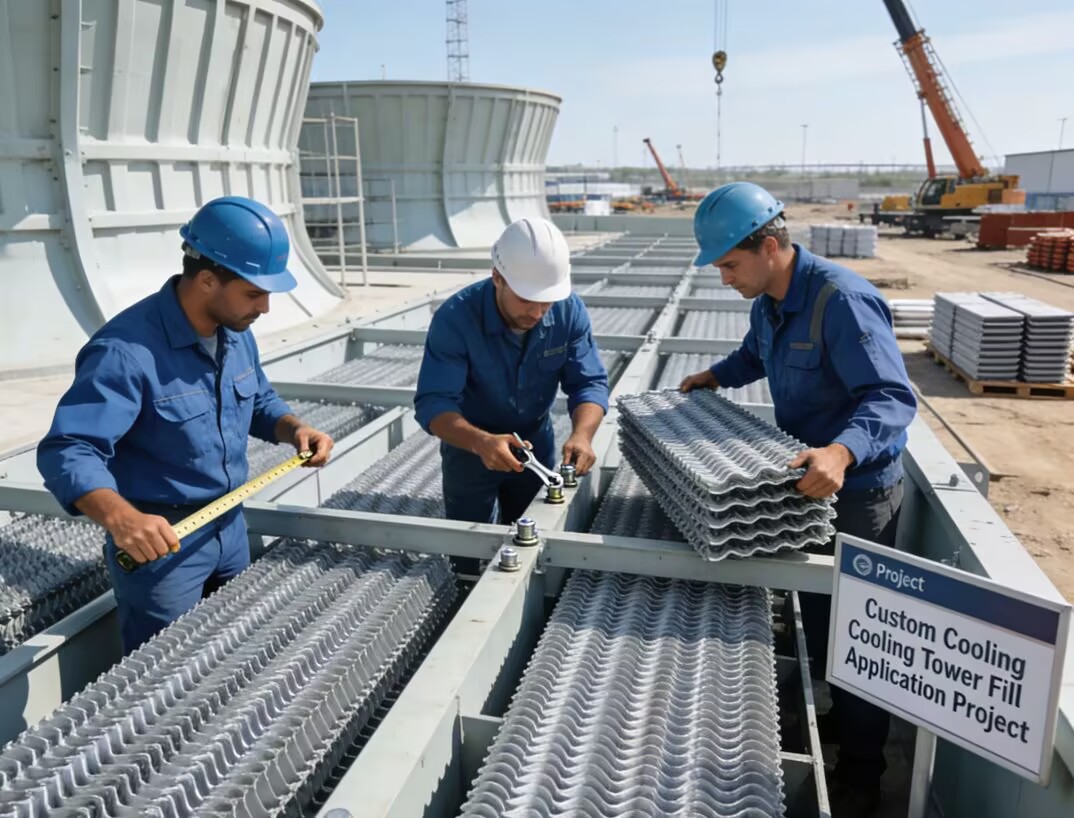
Plan the retrofit to minimize production impact. Most fill replacements can be completed in three to five days with proper planning. Schedule during a planned maintenance outage if possible, or during periods of lower cooling demand.
Order the new fill well in advance to ensure availability. I recommend ordering at least four to six weeks before the planned installation date.
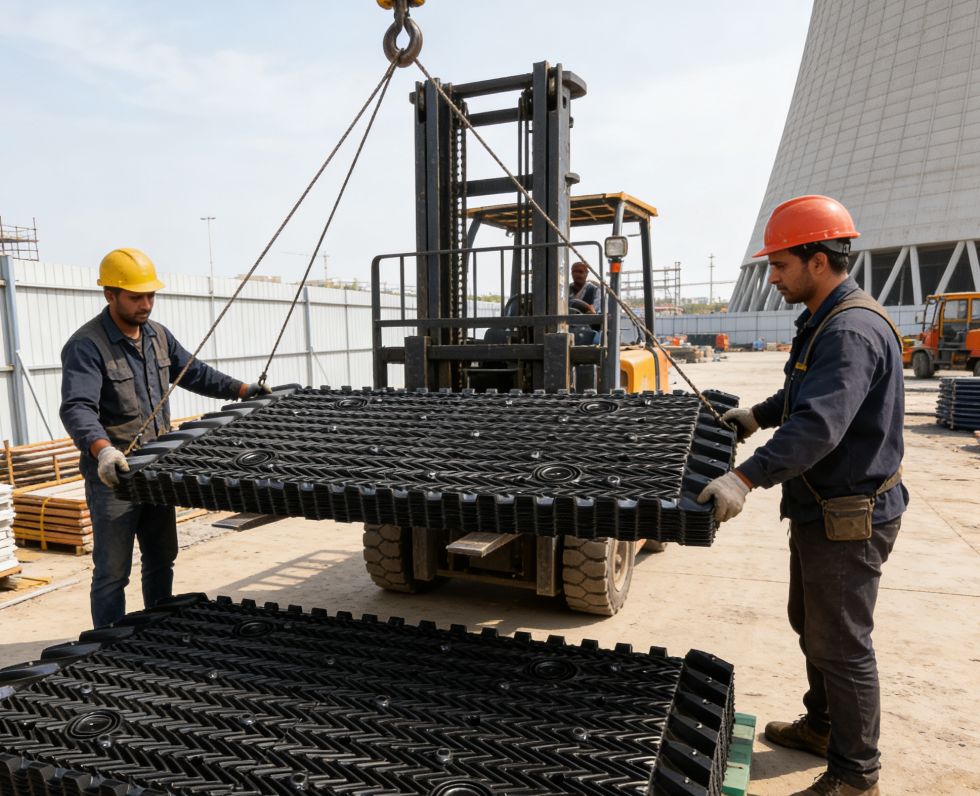
Remove the existing cooling tower fill carefully to avoid damaging the tower structure. Dispose of the old fill properly. Some fill materials can be recycled.
While the fill is removed, inspect the tower interior for other issues. Check the basin, distribution system, drift eliminators, and fans. Address any problems before installing the new fill.
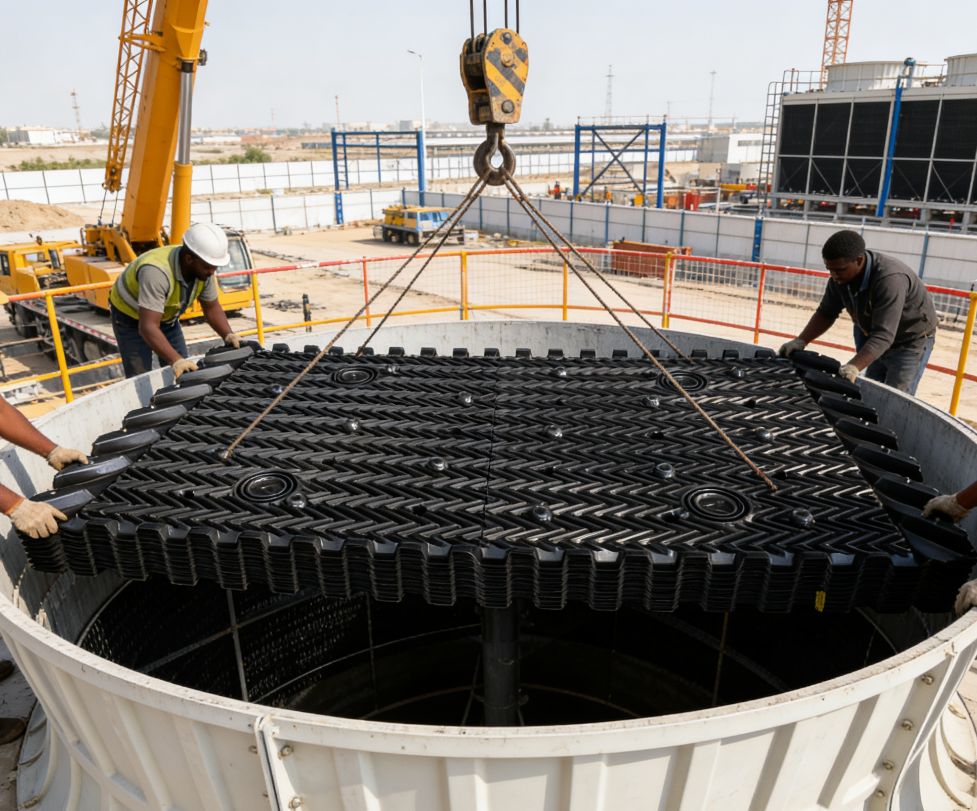
Install the new cooling tower fill following the manufacturer instructions. Ensure proper alignment, spacing, and support. Incorrect installation can reduce performance significantly.
If you do not have in-house expertise, consider hiring the cooling tower fill manufacturer to supervise installation or to provide installation services.
After installation, verify performance. Measure leaving water temperature and compare to baseline data. Check fan energy consumption. The improvement should be immediately apparent.
Document the new performance data to establish a baseline for future maintenance decisions.
A coal-fired power plant in Indonesia had been experiencing declining cooling tower performance for several years. The original fill had been in service for more than twelve years. Leaving water temperature was consistently four degrees above design.
We performed a fill retrofit using high-density polypropylene film fill designed for high-temperature operation. The installation took five days during a scheduled plant outage. After startup, leaving water temperature dropped by 3.8 degrees. Chiller energy consumption decreased by approximately eleven percent. The project payback period was sixteen months.

A petrochemical plant in Thailand had severe fouling problems with their cooling tower fill. The water contained significant suspended solids from the production process, and standard film fill was clogging every eighteen to twenty-four months.
We recommended switching from film fill to a high-performance splash fill design. The new fill had a larger open area and was much more tolerant of solids. While cooling efficiency dropped slightly, the fill life extended to more than six years. The reduction in replacement frequency and maintenance costs more than offset the small efficiency penalty.
A data center in Malaysia was expanding its cooling capacity. Rather than installing new cooling towers, we evaluated the existing towers and found that a fill upgrade could provide the additional capacity needed.
We replaced the existing fill with high-efficiency film fill with increased flute density. The upgraded towers provided approximately fifteen percent more cooling capacity within the same footprint, delaying the need for new tower installation by several years. The fill retrofit cost was less than twenty percent of the cost of new towers.
For a typical industrial cooling tower, fill replacement takes three to five days from shutdown to restart. Larger towers or towers with difficult access may take longer. Proper planning and staging of materials can minimize downtime.
Yes, the cooling tower must be drained to access the fill. However, the rest of the cooling system can often remain in operation during the replacement if alternative cooling capacity is available. In many facilities, fill replacement is scheduled during periods when chillers are not needed or when backup cooling is available.
If you have experienced maintenance staff and the tower is accessible, you can replace fill yourself. However, working with a qualified contractor or the cooling tower fill manufacturer reduces risk and ensures proper installation. The additional cost is usually justified by better performance and fewer problems.
Fill replacement addresses performance issues caused by degraded fill. However, if your cooling tower has other problems such as fan issues, distribution system problems, or structural damage, those must be addressed separately. A thorough assessment before the retrofit will identify any other issues.
To get the best return on your cooling tower fill retrofit investment, consider these additional upgrades:
While the tower is drained and accessible, replace old drift eliminators with high-efficiency models. This reduces water loss and improves Legionella safety. The incremental cost is small compared to doing the work separately later.
Clogged or misaligned spray nozzles can cause uneven water distribution, reducing fill effectiveness. Clean or replace nozzles during the retrofit. Proper water distribution ensures the new fill performs as designed.
If your tower does not have air intake louvers, or if existing louvers are damaged, install new ones. Proper louvers keep debris out of the fill, extending fill life and maintaining performance.
A fill retrofit is a good time to review your water treatment program. Proper chemical treatment will keep the new fill clean and extend its life. Work with your water treatment provider to ensure the program is optimized for your new fill.
If your cooling tower fill is more than seven years old, or if you have noticed declining performance, now is the time to evaluate a retrofit. The energy savings alone typically justify the investment, and the payback period is usually less than two years.
Do not wait until the fill fails completely. Planned replacement is less disruptive and allows you to schedule the work during a convenient downtime. Emergency replacement often costs more and causes unplanned production interruptions.
Work with an experienced cooling tower fill manufacturer to select the optimal fill for your application. Proper selection and installation are essential for achieving the expected performance improvement and ROI.
If you would like to discuss a potential cooling tower fill retrofit for your facility, contact our team. We can help you assess your current performance, estimate potential savings, and develop a retrofit plan that minimizes disruption to your operations.
If your cooling tower fill is more than seven years old or performance has declined, a targeted retrofit can restore performance and save energy. Our team can help you assess your current situation, estimate savings, and plan a cost-effective fill replacement.
Contact Us Here →We are professional cooling tower fills manufacturer, which can supply wide ranges of cooling tower fills with PVC, PP or CPVC materials.
The brake oil pipes we provide have multiple monitoring certifications and complete compliance documents to help your business smoothly enter the global market.
Fully automated production line, supporting individual customization. Combined with just-in-time logistics solutions, ensuring stable inventory.
A professional foreign trade technical team provides rapid response and is a trustworthy partner, offering everything from technical Q&A to market insights.

The cooling tower fill from this company has performed reliably in our systems. We appreciate the consistent quality and noticeable efficiency improvement.
CEO & Founder

As a CEO, I value partners who deliver on their promises. Their cooling tower fill is a solid product that contributes to stable operations.
CEO & Founder

We are satisfied with the performance of this cooling tower fill. It has integrated well into our existing setup with good results.
Manager

This company provides quality cooling tower fill that meets our operational needs. It's a dependable component in our infrastructure.
CEO & Founder

We are professional cooling tower fills manufacturer, which can supply wide ranges of cooling tower fills with PVC, PP or CPVC materials.

Instant Chat Support
+8615303180686
packingesale@gmail.com
Get the latest information
Scan the code to follow
Return to the top of the page