Over the past twenty years working across Asia and the Middle East—from the humid heat of Bangkok and Jakarta to the scorching desert conditions in Riyadh and the seasonal extremes in Busan and Osaka—I’ve seen one component make or break cooling tower performance more than any other: the fill. If you’re operating industrial HVAC or process cooling in these regions, picking the right High-Efficiency Cooling Tower Media isn’t just about thermal specs; it’s about reliability, scaling resistance, and long-term operational cost. Let me walk you through what really works in the field, without the fluff.
I still remember a project in Chonburi, Thailand, where a plastics plant swapped their original PVC fill with a generic alternative to save money. Within eight months, fouling cut their thermal efficiency by nearly 30**, and the chiller plant started short-cycling. The culprit? Inappropriate film fill design for the local hard well water and high ambient wet-bulb. A cooling tower fill isn't just "plastic sheets"—it's the heart of heat transfer. For Southeast Asia, Japan, Korea, and the Middle East, you need fill that balances surface area, clog resistance, and material durability under aggressive water chemistry.
In tropical zones like Vietnam or the Philippines, the approach to wet-bulb is minimal. A well-designed cooling tower fill must provide maximum surface exposure without creating stagnant zones. Crossflow towers with film-type fill often excel here—but only if the fill spacing allows easy cleaning. In my experience, Film Fill Cooling Tower configurations with 19mm or 26mm flute spacing give the best compromise between thermal performance and biofouling resistance when water treatment is moderate. Japan and Korea have stricter water treatment standards, so you can go with higher-density film fill (12–15mm) to maximize kW/ton.
Dubai, Kuwait, Doha – the water is tough. High TDS, silica, and calcium scaling can blind a standard tower fill within a year if you don’t choose a design that discourages scale adherence. I always suggest using Corrugated Fill with wider channels for the first stage in counterflow towers, or a hybrid fill arrangement. Also pairing with a proper Water Collector helps redistribute water evenly, reducing localized scale hotspots.
In Riyadh or Abu Dhabi, sand storms are brutal. Many operators mistakenly use very narrow film fill and suffer from clogged air passages. I always tell my clients: if your site experiences dust, consider fill with self-cleaning geometry or utilize prefilters like Air Inlet Louvers and Air Intake Screens to protect the fill media. For coastal areas in Korea or Japan, salt corrosion also matters—select PVC fill with UV stabilizers and anti-oxidant packages.
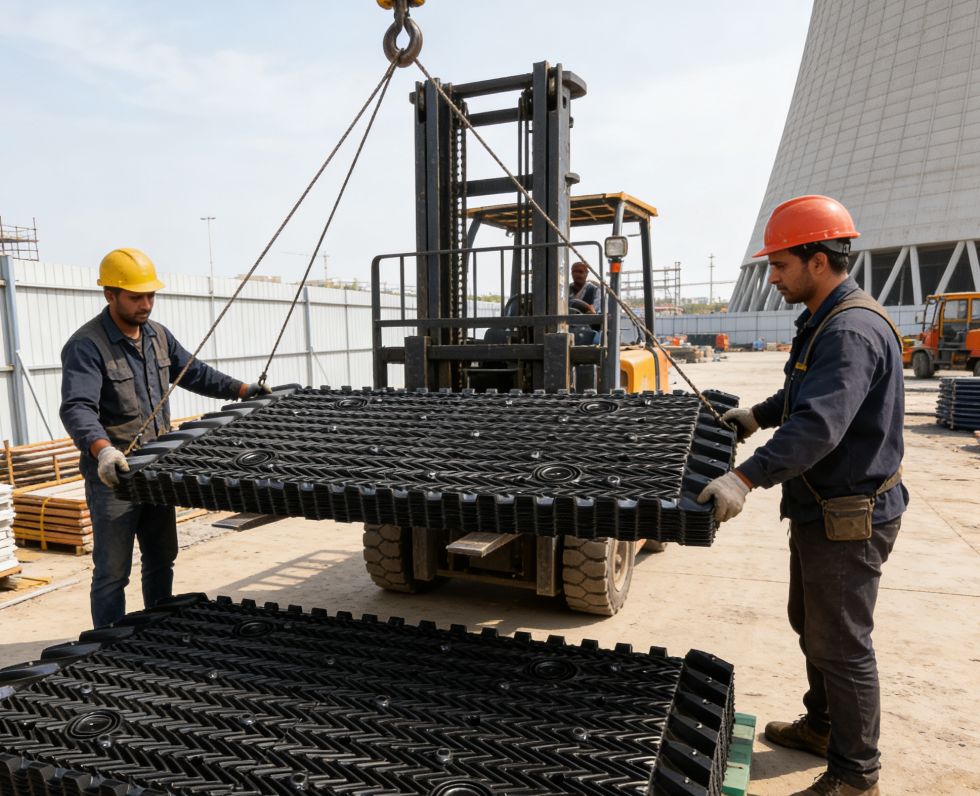
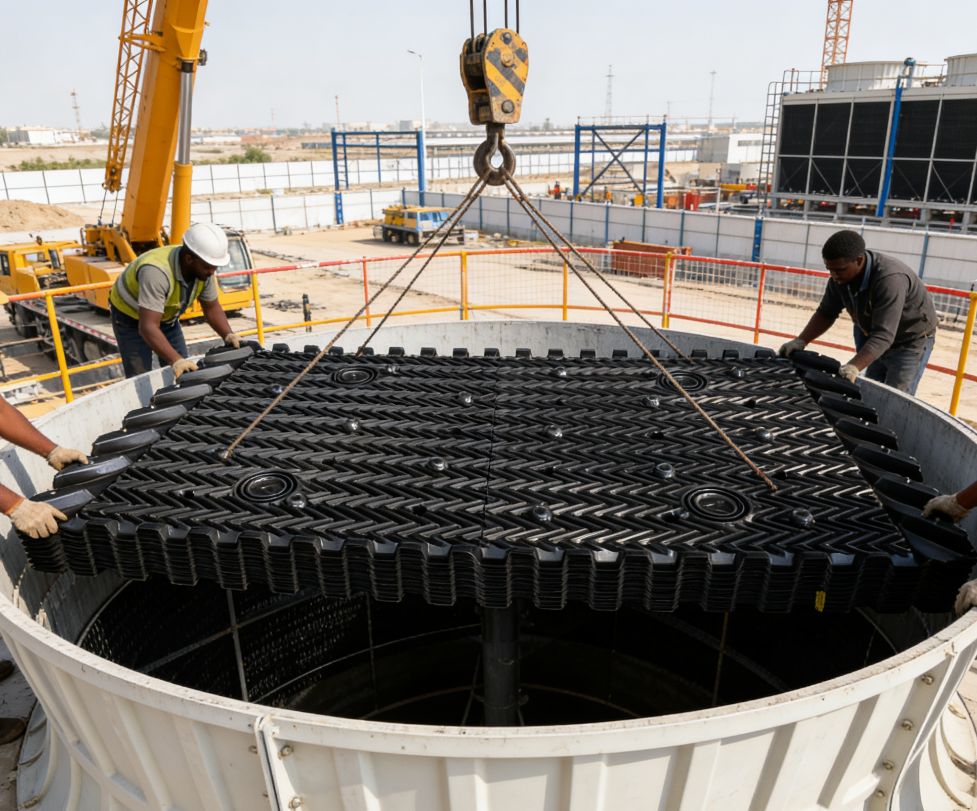
When someone asks me for the best thermal performance per cubic foot, I point them to Film Fill Cooling Tower media. It creates a thin water film over closely spaced PVC sheets, maximizing surface area. I’ve installed these in data centers near Tokyo and semiconductor fabs in Penang – they deliver consistent approach temperatures down to 5–7°F under design conditions. But remember, film fill needs proper water filtration and drift eliminators to prevent carryover. Pair it with Drift Eliminator to cut water loss and plume.
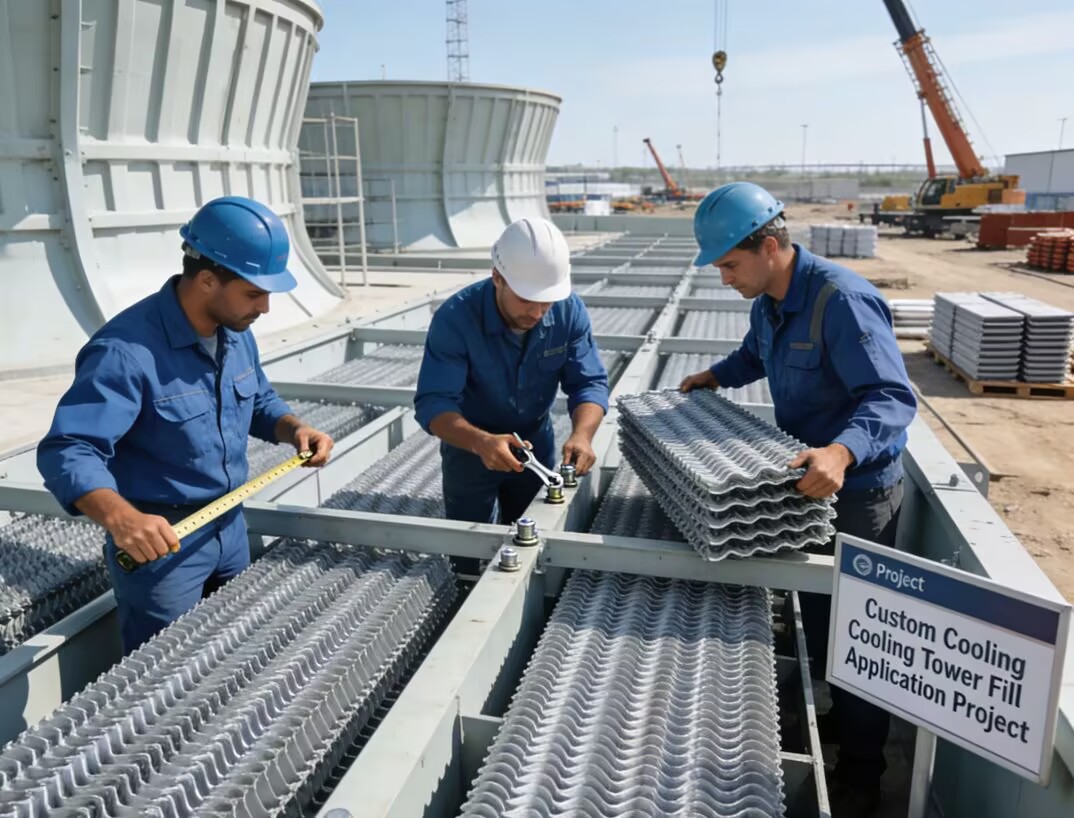
If your cooling tower handles muddy water, suspended solids, or you’re simply tired of cleaning plugged fills every six months, Corrugated Fill (sometimes called splash fill) is your best friend. It uses a structured pattern to break water droplets and promote air contact without tight channels. I’ve deployed this for steel mills in Jeddah and petrochemical plants in Ulsan – it’s nearly clog-proof. The trade-off is slightly lower thermal efficiency, but sometimes reliability wins.
Choosing the right Tower Fill also depends on tower type. Crossflow towers favor film fill with vertical flutes, while counterflow towers can use either film or splash fill. In Southeast Asia, crossflow is common for large HVAC plants because of easy access. I always recommend selecting cooling tower media that matches the original fill’s pressure drop; otherwise your fan energy skyrockets. You can check the exact specs for your upgrade on our Cooling Tower Media page.
Here’s something many contractors overlook: fill works as part of an integrated system. Adding a high-efficiency Water Collector reduces splashing loss and improves recirculation uniformity. In high-wind areas like coastal Vietnam, Cooling Tower Intake Louvers prevent wind-driven water carryover and protect fill from UV degradation. And never skip drift eliminators – especially for cooling towers near residential areas in Japan or Singapore. Proper Mist Eliminator / Demister media can cut drift losses to less than 0.001**, saving thousands in makeup water and chemical costs.
💡 Recommended product pairing for harsh Middle East conditions: Use Corrugated Fill with Air Inlet Grilles + Drift Eliminator. Check the Air Inlet Grilles to block sand ingress – makes the fill last 3–4 seasons longer.
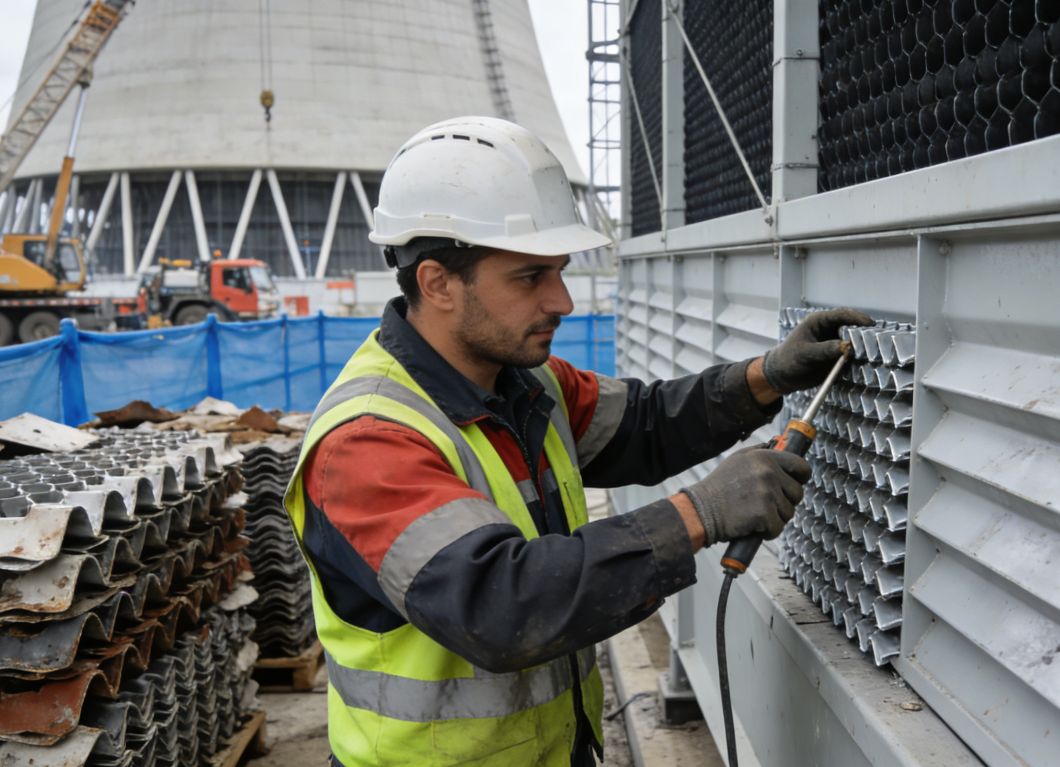
For a cooling tower in Jakarta (high bio-growth), I recommend chemical cleaning every 3 months and a full fill inspection biannually. For Middle East, scale inspection quarterly, with mild acid wash if needed. I’ve seen fill last over 12 years in a Korean power plant simply because they used automated water bleed and installed Drift Eliminator that kept the fill dry during off cycles.
Always replace damaged sections with the same manufacturer to maintain uniform airflow. Our Cooling Tower Fill range offers retrofits for all major brands – Marley, Baltimore, Evapco, and more.
They had two 500-ton crossflow towers with original film fill that clogged from airborne pollen and bird nests. After switching to Corrugated Fill combined with Air Intake Screens, we reduced cleaning frequency from monthly to twice a year. Energy consumption dropped 12** because the fan didn't have to fight static pressure from debris.
The existing fill collapsed within two years due to high inlet water temperature (55°C). We installed high-temp Film Fill Cooling Tower media and added Water Collector to equalize flow. After retrofit, approach temperature dropped by 4°C, saving roughly $45k/year in energy costs.
Frequent winter freeze damage to the fill edges. We recommended a combination of Tower Fill with improved mechanical strength and added demister pads to reduce ice formation. The fill has been running 7 years with only minor touch-ups.
I can't stress enough: generic fill that "looks similar" often fails because the exact flute geometry and material thickness are off. That’s why I trust Cooling Tower Fill Manufacturer with deep engineering support. Our factory Corrugated Fill lines are engineered for specific thermal curves, and we offer custom sizing for any basin layout. Whether you need film fill cooling tower retrofits for energy rebates or heavy-duty tower fill for process cooling, having a reliable partner saves headaches.
For our friends in Southeast Asia, I suggest keeping a spare set of Cooling Tower Media on-site during monsoon season – unexpected downtime costs far more than inventory. And if you’re dealing with strict environmental regulations in Japan or Korea, our Drift Eliminator and Demister options are tested to meet local emission standards.
| Application | Recommended Fill | Critical Accessory |
|---|---|---|
| High humidity / tropical (SEA) | Film Fill Cooling Tower media (19–26mm spacing) | Mist Eliminator + Water Collector |
| Arid / dusty (Middle East) | Corrugated Fill / hybrid film with large flutes | Air Inlet Louvers & Drift Eliminator |
| Industrial process (high temp) | High-temp Tower Fill (polypropylene or reinforced PVC) | Demister pads & Cooling Tower Intake Louvers |
| Data centers / precise control | High-density Film Fill (12mm spacing) | Water Collector & automatic water treatment |
In conclusion, spending time to pick the right cooling tower fill with the correct material, geometry, and compatible accessories will drastically reduce your operating costs and extend equipment life. I’ve personally seen well-maintained fill packs outlast two fan motor replacements. Listen to your cooling tower – regular monitoring of approach, drift, and water quality will tell you when it's time for a change. And when you do, invest in proven solutions from a manufacturer who understands local conditions.
We are professional cooling tower fills manufacturer, which can supply wide ranges of cooling tower fills with PVC, PP or CPVC materials.
The brake oil pipes we provide have multiple monitoring certifications and complete compliance documents to help your business smoothly enter the global market.
Fully automated production line, supporting individual customization. Combined with just-in-time logistics solutions, ensuring stable inventory.
A professional foreign trade technical team provides rapid response and is a trustworthy partner, offering everything from technical Q&A to market insights.

The cooling tower fill from this company has performed reliably in our systems. We appreciate the consistent quality and noticeable efficiency improvement.
CEO & Founder

As a CEO, I value partners who deliver on their promises. Their cooling tower fill is a solid product that contributes to stable operations.
CEO & Founder

We are satisfied with the performance of this cooling tower fill. It has integrated well into our existing setup with good results.
Manager

This company provides quality cooling tower fill that meets our operational needs. It's a dependable component in our infrastructure.
CEO & Founder

We are professional cooling tower fills manufacturer, which can supply wide ranges of cooling tower fills with PVC, PP or CPVC materials.

Instant Chat Support
+8615303180686
packingesale@gmail.com
Get the latest information
Scan the code to follow
Return to the top of the page