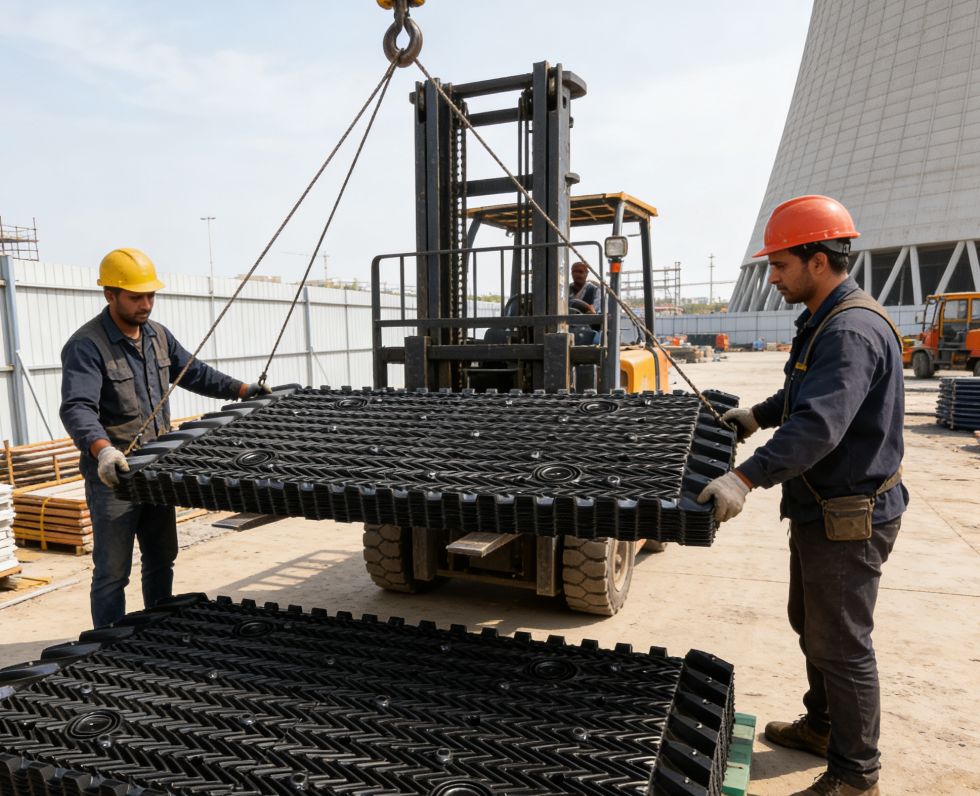
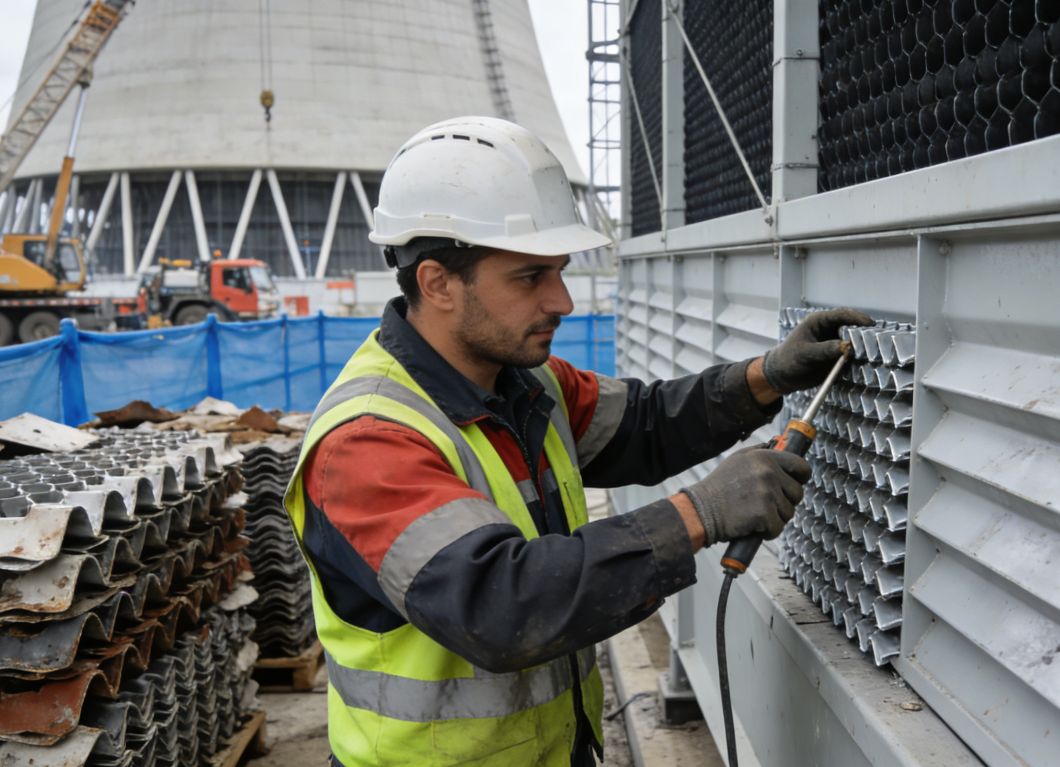
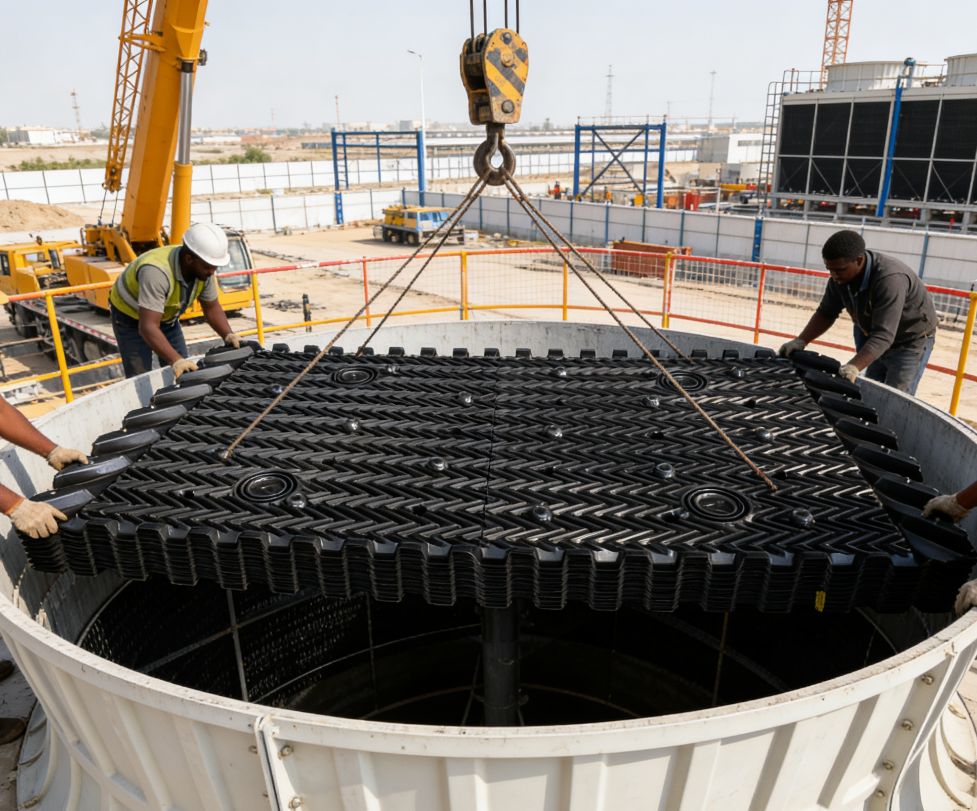
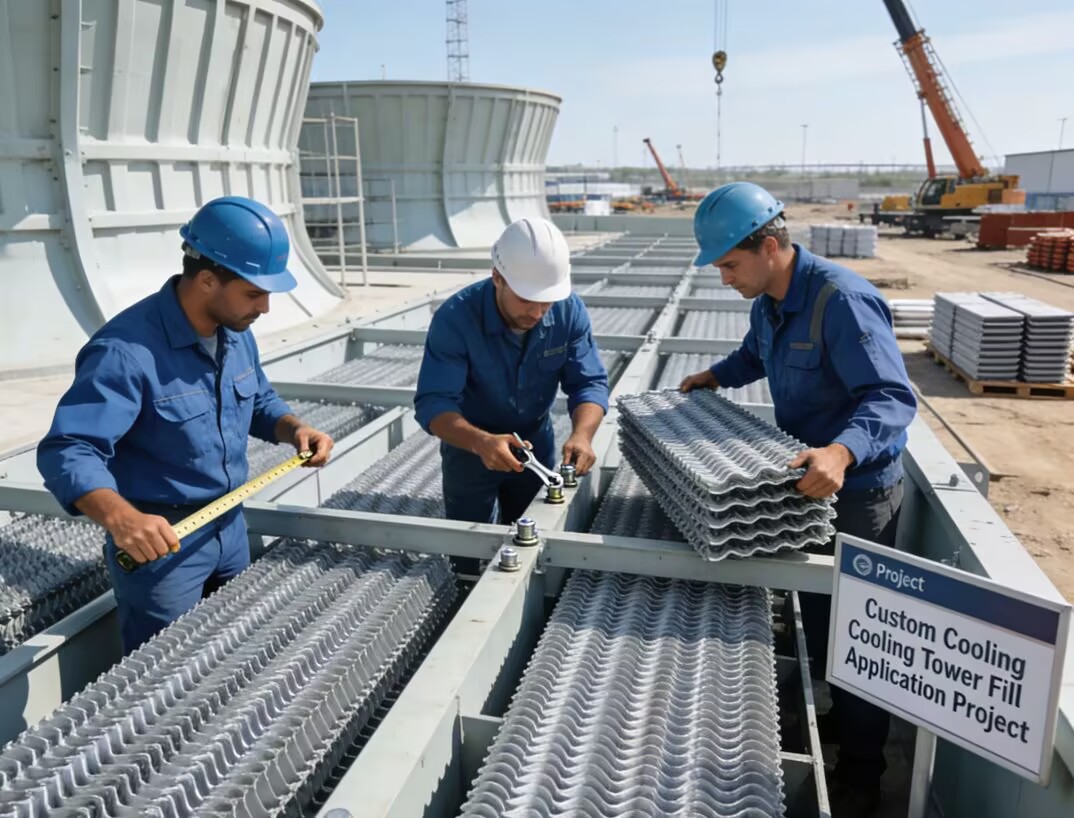
Cooling tower fill is designed for long-term continuous operation, but in real industrial environments, premature performance decline is not uncommon. Many facilities in Southeast Asia, the Middle East, and East Asia report that fill systems lose efficiency earlier than expected, even when the mechanical structure of the cooling tower is still in good condition.
In engineering practice, “failure” does not always mean physical breakage. It often refers to reduced thermal performance, increased maintenance frequency, or unstable system behavior caused by fouling, scaling, or hydraulic imbalance.
This article provides a practical engineering breakdown of why cooling tower fill systems underperform prematurely and how these issues can be prevented during design, operation, and maintenance stages.
In industrial cooling systems, premature fill failure usually refers to:
These symptoms often develop gradually rather than suddenly.

Water quality is one of the most important factors affecting fill lifespan.
High levels of suspended solids, biological growth, or mineral concentration can lead to gradual blockage inside the fill structure.
This often results in cooling tower fill clogged conditions, which reduce heat transfer efficiency over time.
Different industrial environments require different fill configurations.
Using a high-density film fill in a system with poor water quality may accelerate fouling, while overly open designs may reduce thermal efficiency.
Engineers often evaluate whether Film Fill Cooling Tower or Tower Fill configurations are more suitable for the actual operating conditions.
Improper water distribution causes localized overloading inside the fill section.
This leads to:
If airflow is not evenly distributed, certain sections of the fill may experience higher stress or reduced cooling performance.
This imbalance can gradually affect system stability and increase maintenance demand.
Many premature failures are not caused by design issues but by insufficient maintenance planning.
Common issues include:
Film Fill Cooling Tower systems provide high efficiency but require stable water quality to maintain performance.
In contaminated water environments, film surfaces may accumulate deposits faster, increasing maintenance requirements.
Tower Fill systems are generally more tolerant to suspended solids and variable water conditions.
However, they may require different design considerations for thermal efficiency balance.
Cooling Tower Media performance depends on both structural design and operating environment.
Improper selection can increase long-term degradation rate.
A chemical production facility experienced rapid decline in cooling efficiency within two years of operation.
Initial inspection suggested fill degradation, but further analysis revealed that untreated process water was introducing high suspended solids into the cooling system.
After improving filtration and adjusting maintenance frequency, fill performance stabilized without immediate full replacement.
An industrial plant operating in a dusty desert environment experienced frequent fouling in the fill section.
The root cause was not material quality but airborne dust entering the system combined with insufficient air intake protection.
After improving air intake conditions and cleaning schedules, system performance improved significantly.
A precision manufacturing plant noticed uneven degradation of fill sections across different zones of the cooling tower.
Engineering inspection identified uneven water distribution as the primary cause rather than uniform material aging.
Correcting hydraulic balance reduced further premature deterioration.
To extend cooling tower fill service life, engineers typically focus on:
A combined approach is more effective than focusing on a single factor.

If you are experiencing early performance decline in your cooling system, engineering evaluation based on water quality, airflow behavior, and fill condition can help identify root causes more accurately.
Premature failure of cooling tower fill systems is usually caused by a combination of water quality issues, hydraulic imbalance, and maintenance practices rather than a single factor.
By addressing these factors during design and operation, industrial facilities can significantly improve system stability and extend service life.
Poor water quality and fouling are the most common causes.
It depends on water quality and operating conditions.
Yes. Regular cleaning and inspection are essential.
No. Many issues can be solved through system correction.
Yes. Uneven airflow can accelerate localized degradation.
We are professional cooling tower fills manufacturer, which can supply wide ranges of cooling tower fills with PVC, PP or CPVC materials.
The brake oil pipes we provide have multiple monitoring certifications and complete compliance documents to help your business smoothly enter the global market.
Fully automated production line, supporting individual customization. Combined with just-in-time logistics solutions, ensuring stable inventory.
A professional foreign trade technical team provides rapid response and is a trustworthy partner, offering everything from technical Q&A to market insights.

The cooling tower fill from this company has performed reliably in our systems. We appreciate the consistent quality and noticeable efficiency improvement.
CEO & Founder

As a CEO, I value partners who deliver on their promises. Their cooling tower fill is a solid product that contributes to stable operations.
CEO & Founder

We are satisfied with the performance of this cooling tower fill. It has integrated well into our existing setup with good results.
Manager

This company provides quality cooling tower fill that meets our operational needs. It's a dependable component in our infrastructure.
CEO & Founder

We are professional cooling tower fills manufacturer, which can supply wide ranges of cooling tower fills with PVC, PP or CPVC materials.

Instant Chat Support
+8615303180686
packingesale@gmail.com
Get the latest information
Scan the code to follow
Return to the top of the page