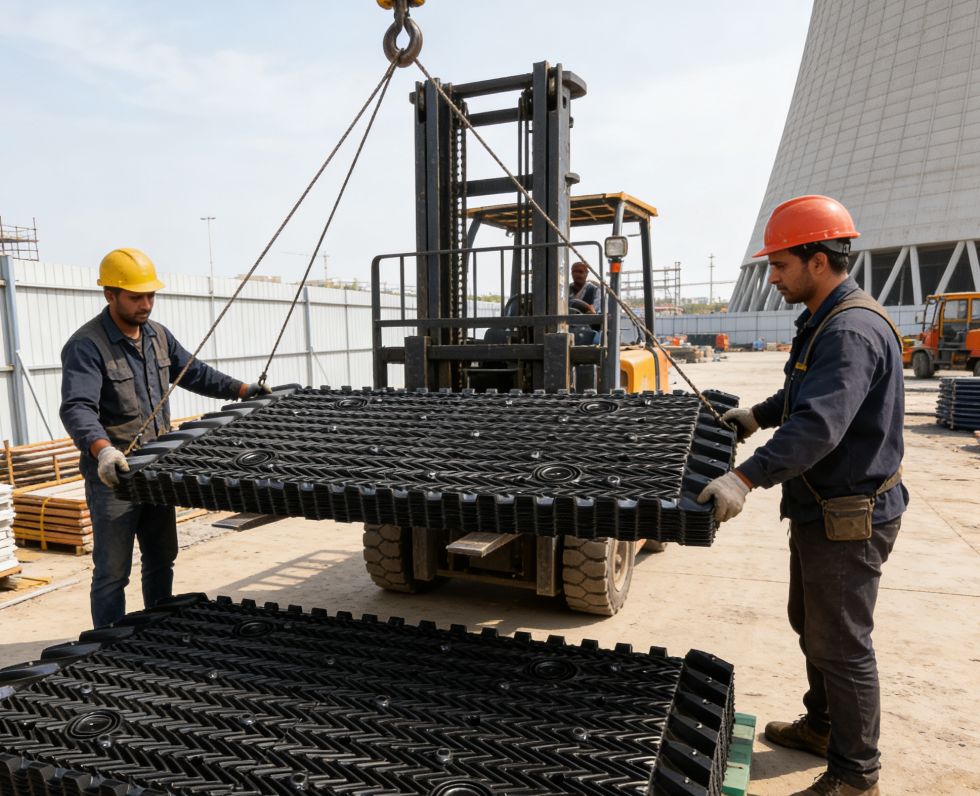
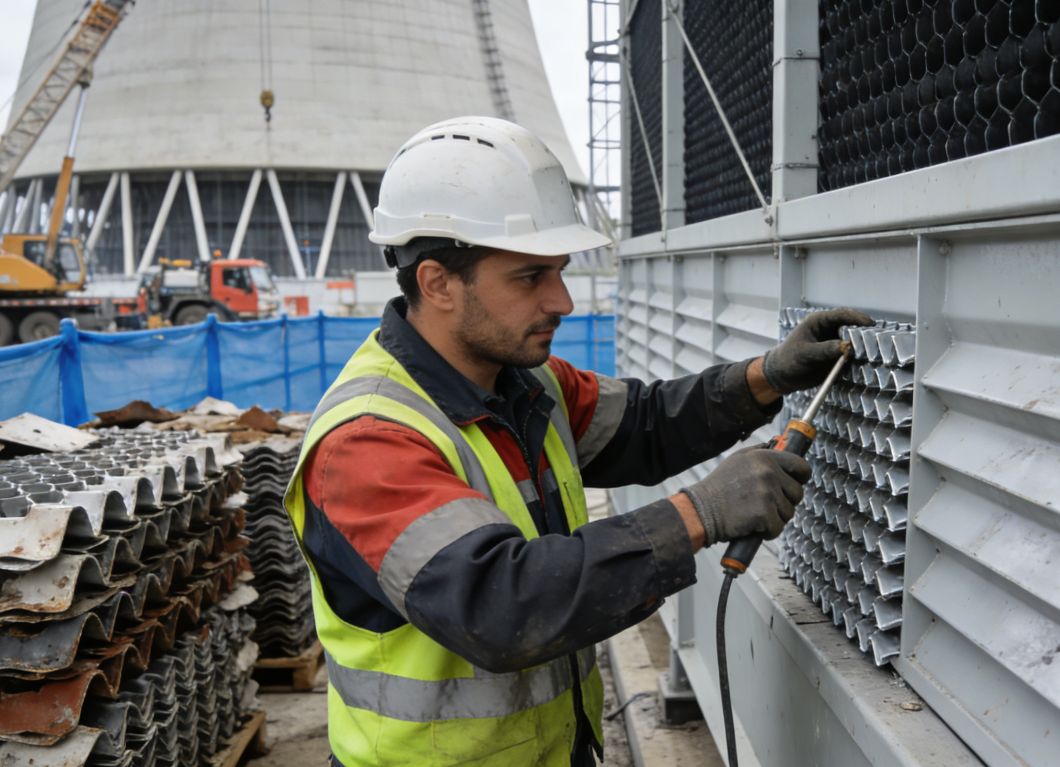
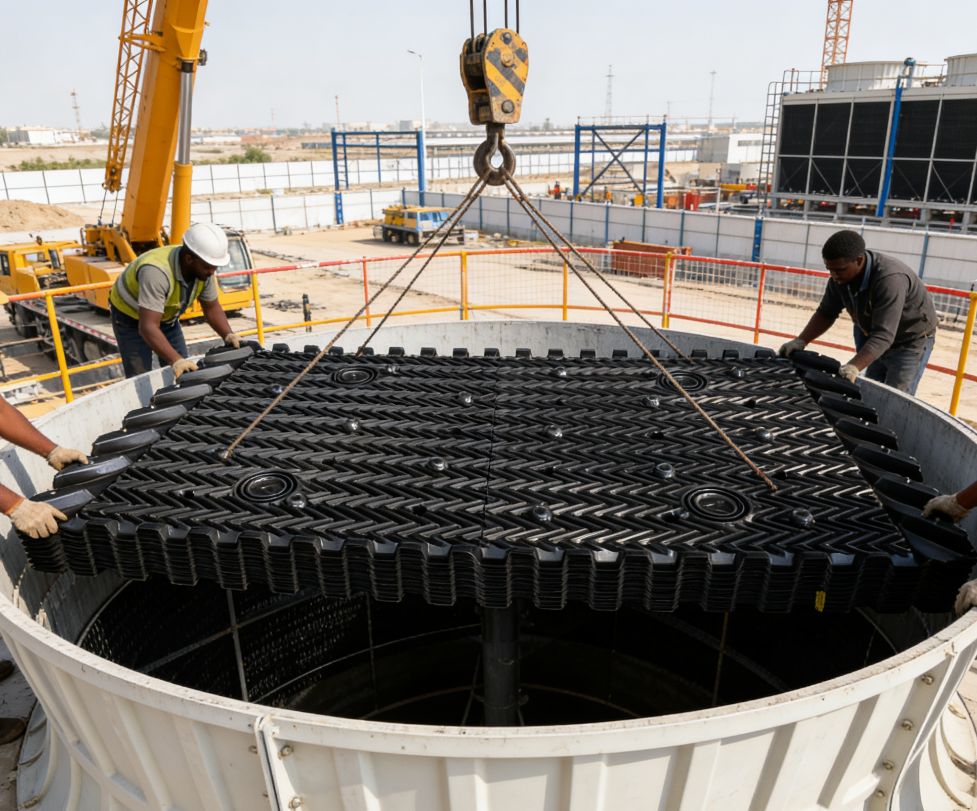
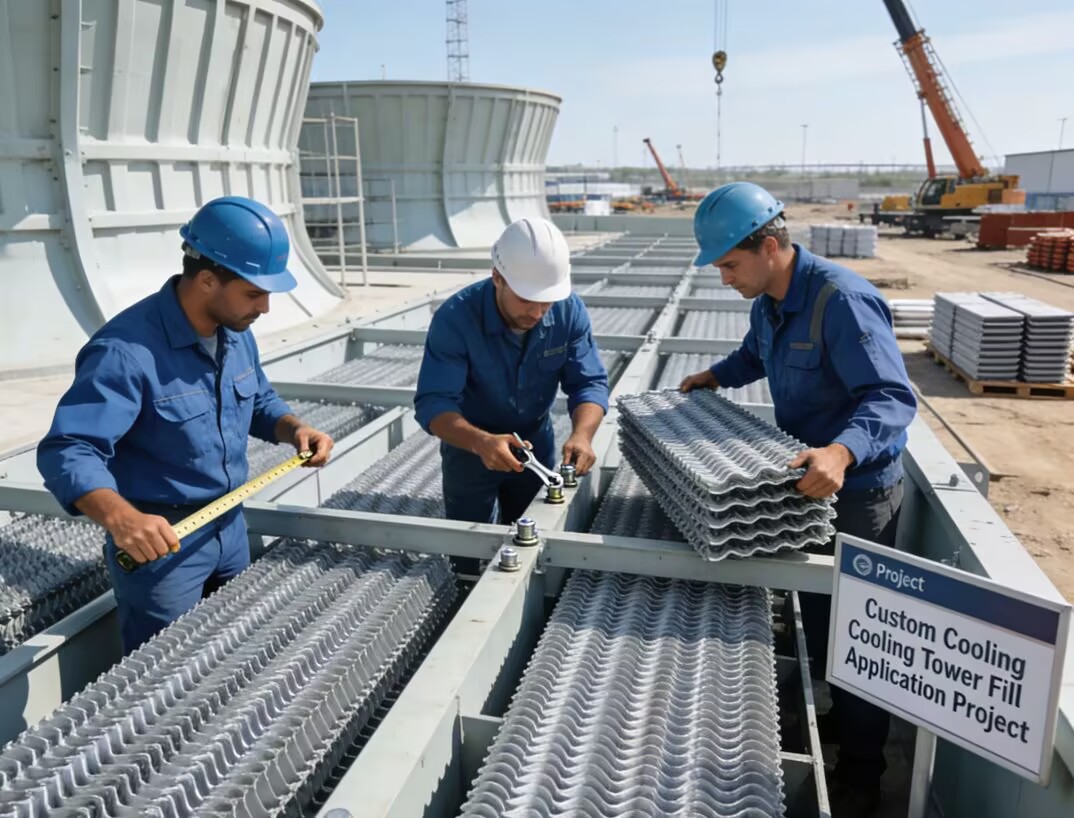
Cooling tower fill height is often discussed during cooling tower design, but in many industrial projects it receives less attention than fans, pumps, or structural components. In reality, the height of the fill pack directly influences the contact time between air and water, the internal airflow path, and the overall operating characteristics of the cooling tower.
Many engineers discover during retrofit projects that changing fill height can alter tower behavior without changing the entire cooling system. However, increasing or reducing fill height should never be viewed as a simple method to improve performance. The decision must be based on water quality, airflow capacity, tower dimensions, and maintenance requirements.
For project owners and procurement teams, understanding the relationship between fill height and system operation helps support more practical engineering decisions.
The primary function of cooling tower fill is to increase the contact area between circulating water and incoming air. Fill height determines how long water remains inside the heat exchange section before returning to the basin.
A properly designed fill section helps create:
If fill height is not matched with the overall tower design, the cooling process may become less efficient or more difficult to maintain.
As water travels through the fill pack, it forms films or droplets depending on the fill structure. Fill height influences how long this process continues inside the tower.
In many industrial systems, engineers balance thermal requirements with hydraulic characteristics to determine an appropriate fill depth.
Increasing fill height also increases the distance air must travel through the tower.
If airflow resistance becomes excessive, fan systems may work under different operating conditions than originally planned. This is one reason why simply increasing fill height does not always improve cooling performance.
Even water distribution across the fill surface is essential for effective operation.
Uneven flow may create dry areas and overloaded sections, reducing the practical benefits of the fill arrangement.
Film Fill Cooling Tower configurations rely on thin water films flowing across structured surfaces.
Fill height should be selected carefully because airflow resistance and water distribution characteristics work together within this design.
Engineers generally evaluate water quality before deciding the final arrangement.
Tower Fill configured as splash fill uses impact and redistribution of water droplets to promote heat transfer.
The more open structure often provides greater flexibility for applications involving suspended solids or recycled water.
Cooling Tower Media with corrugated geometry guides both water and air through organized flow channels.
Its effectiveness depends on balancing fill height with airflow and maintenance considerations.
Experienced engineers usually review several operating conditions before making a decision.
Considering these factors together helps reduce the possibility of future modifications.
If the fill pack does not match the overall cooling tower design, operators may observe gradual performance changes.
Many of these issues develop slowly and become more noticeable as operating conditions change.
A manufacturing plant expanded production capacity and expected the existing cooling tower to handle the additional heat load. Initial discussions focused on replacing mechanical equipment, but engineering review suggested evaluating the fill section first.
The existing fill height had been designed for lower operating conditions. After reviewing airflow and water distribution, engineers modified the fill arrangement and improved system balance.
The project demonstrated that fill geometry and tower configuration should always be considered together.
An industrial cooling tower operating in a consistently warm climate required stable thermal performance throughout the year.
The engineering team evaluated airflow behavior, fill structure, and maintenance requirements before determining the final fill arrangement.
Rather than maximizing fill height, the design focused on maintaining balanced operation under varying process conditions.
A processing facility using recycled water experienced periodic fouling inside the fill section.
Increasing fill height alone would not have solved the issue because water quality remained the primary challenge.
Engineers instead combined fill selection with maintenance planning and water management practices, creating a more sustainable operating strategy.
Fill height should also support practical maintenance activities.
Engineers often recommend:
Routine inspection helps identify developing issues before they influence overall cooling performance.
The fill section operates together with several other internal components.
Maintaining these components helps support stable airflow and effective fill operation.
If you are planning a new cooling tower installation or evaluating an existing project, technical discussions based on operating conditions, tower dimensions, and maintenance objectives can help support practical fill selection.
Cooling tower fill height is an important engineering parameter that influences airflow, water distribution, and long-term operating behavior.
Instead of treating fill height as an isolated specification, engineers should evaluate it together with water quality, tower configuration, and maintenance planning. This balanced approach supports more stable cooling system performance throughout the life of the project.
No. Fill height should match airflow capability, water quality, and overall tower design.
Because increasing fill height may also increase airflow resistance inside the tower.
Yes. Different fill arrangements may influence cleaning accessibility and inspection planning.
Yes. Water conditions influence fouling behavior and should be reviewed during the design process.
Some retrofit projects may include fill modifications, but engineering evaluation is recommended before making changes.
We are professional cooling tower fills manufacturer, which can supply wide ranges of cooling tower fills with PVC, PP or CPVC materials.
The brake oil pipes we provide have multiple monitoring certifications and complete compliance documents to help your business smoothly enter the global market.
Fully automated production line, supporting individual customization. Combined with just-in-time logistics solutions, ensuring stable inventory.
A professional foreign trade technical team provides rapid response and is a trustworthy partner, offering everything from technical Q&A to market insights.

The cooling tower fill from this company has performed reliably in our systems. We appreciate the consistent quality and noticeable efficiency improvement.
CEO & Founder

As a CEO, I value partners who deliver on their promises. Their cooling tower fill is a solid product that contributes to stable operations.
CEO & Founder

We are satisfied with the performance of this cooling tower fill. It has integrated well into our existing setup with good results.
Manager

This company provides quality cooling tower fill that meets our operational needs. It's a dependable component in our infrastructure.
CEO & Founder

We are professional cooling tower fills manufacturer, which can supply wide ranges of cooling tower fills with PVC, PP or CPVC materials.

Instant Chat Support
+8615303180686
packingesale@gmail.com
Get the latest information
Scan the code to follow
Return to the top of the page