In many cooling tower projects, people focus heavily on the fill and the fan, but the Cooling Tower Air inlet Grille is often underestimated. In real operation, air inlet conditions decide how smoothly fresh air enters the tower. Whether you call it air inlet grilles, cooling tower air inlet louvers, or air intake screens, the function is the same: guide air into the cooling tower while stopping debris, insects, and excessive splash-out.
In Southeast Asia and the Middle East, dust, rain, and strong sunlight all affect cooling tower performance. A poorly designed air inlet grille can increase airflow resistance and reduce cooling efficiency. That is why experienced engineers always check this part carefully instead of treating it as decoration.

In counterflow cooling towers, air enters from the lower side and flows upward. For this type, the Cooling Tower Air inlet Grille must allow enough airflow while preventing water splash from escaping. Vertical blade louvers are commonly used because they guide air smoothly into the tower.
Crossflow towers draw air horizontally through large side openings. Here, air inlet grilles also work as protective panels. They reduce sunlight entering the tower and help prevent algae growth inside the basin and fill area.
For power plants and heavy industries, air inlet areas are usually large. In this case, modular cooling tower intake louvers are installed to balance airflow and keep birds and debris away from internal components.
PVC is widely used for Cooling Tower Air inlet Grille because it is lightweight and corrosion resistant. In tropical regions, PVC performs well under constant moisture and sunlight exposure.
PP material is selected when chemical resistance is required, such as in wastewater treatment plants or chemical cooling systems. It also maintains good structural strength over time.
FRP is used for larger industrial towers where mechanical strength is critical. It can handle strong wind load and long-term outdoor exposure.
Fixed blade air inlet grilles are simple and reliable. They are designed to block rainwater splash while allowing stable airflow into the cooling tower.

Chevron-style louvers guide air downward before it enters the fill zone. This design reduces water drift loss and improves airflow uniformity.
Some air intake screens are combined with louvers to stop leaves and insects while keeping airflow resistance low.
A well-designed Cooling Tower Air inlet Grille reduces pressure drop at the air entrance. This means the fan does not need to work harder, and the cooling tower can maintain its design airflow rate.
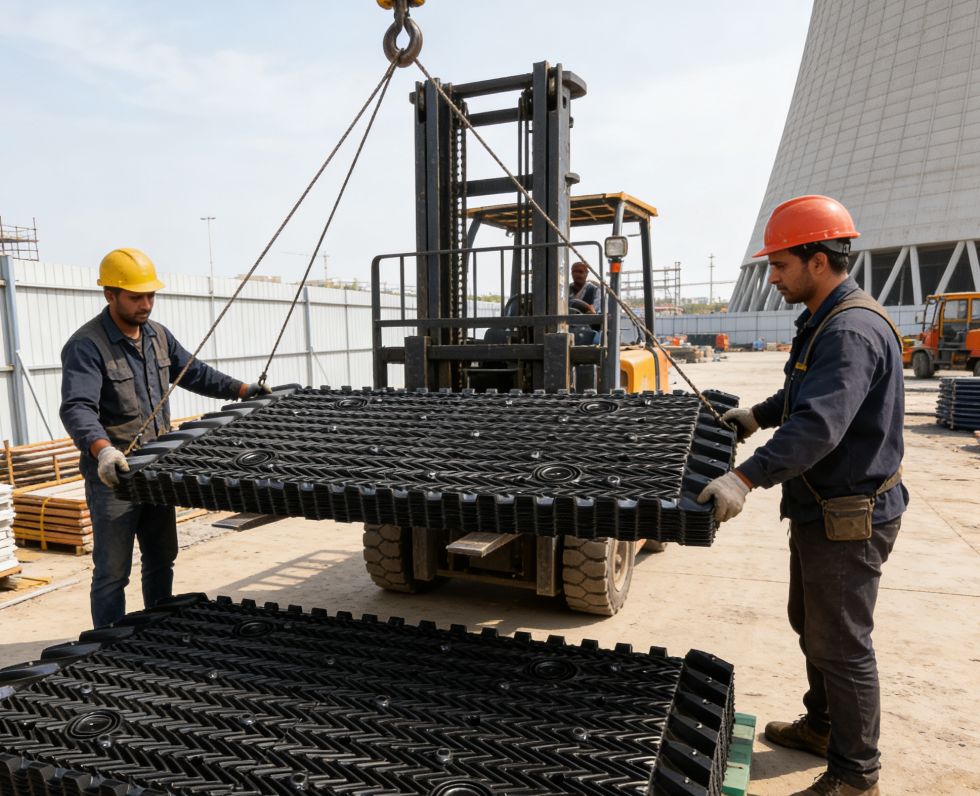
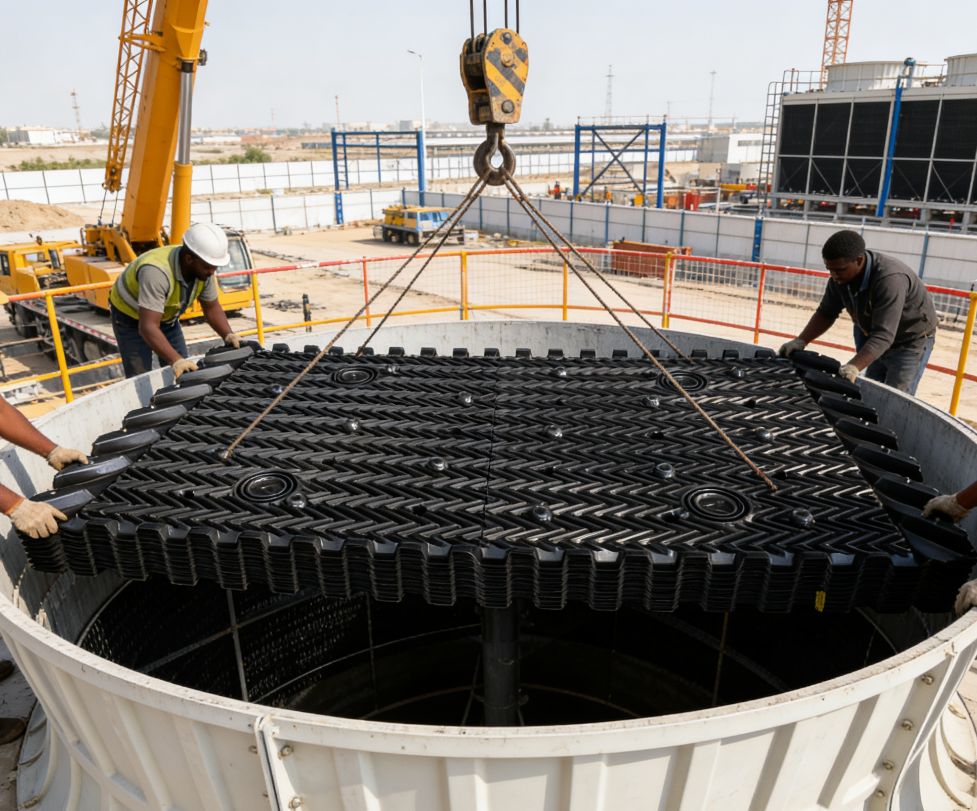
In hot climate regions, stable airflow directly improves evaporation efficiency. This indirectly supports better performance of Cooling tower Fill and Cooling Tower Media inside the tower.
Most air inlet grilles are produced as standard panels that fit common cooling tower openings. These are easy to replace during maintenance.
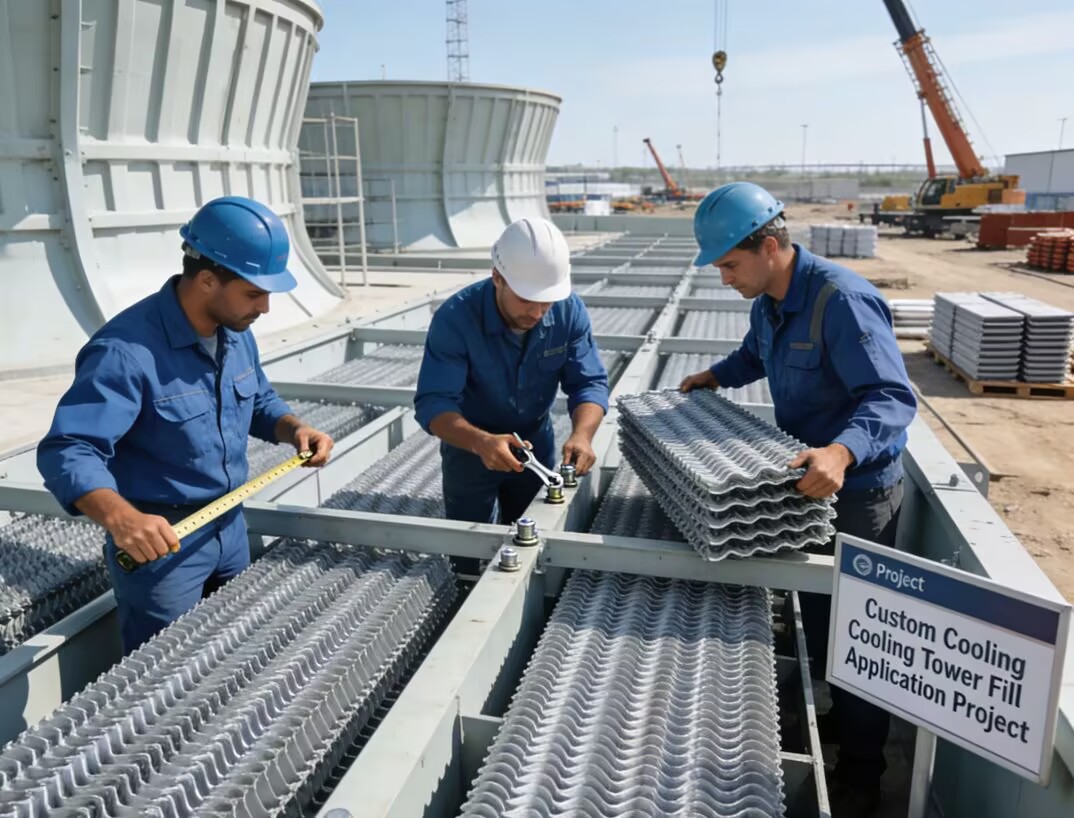
For old cooling towers or special structures, customized Cooling Tower Air inlet Grille based on drawings is often necessary. Blade angle and panel size can be adjusted to match airflow requirements.
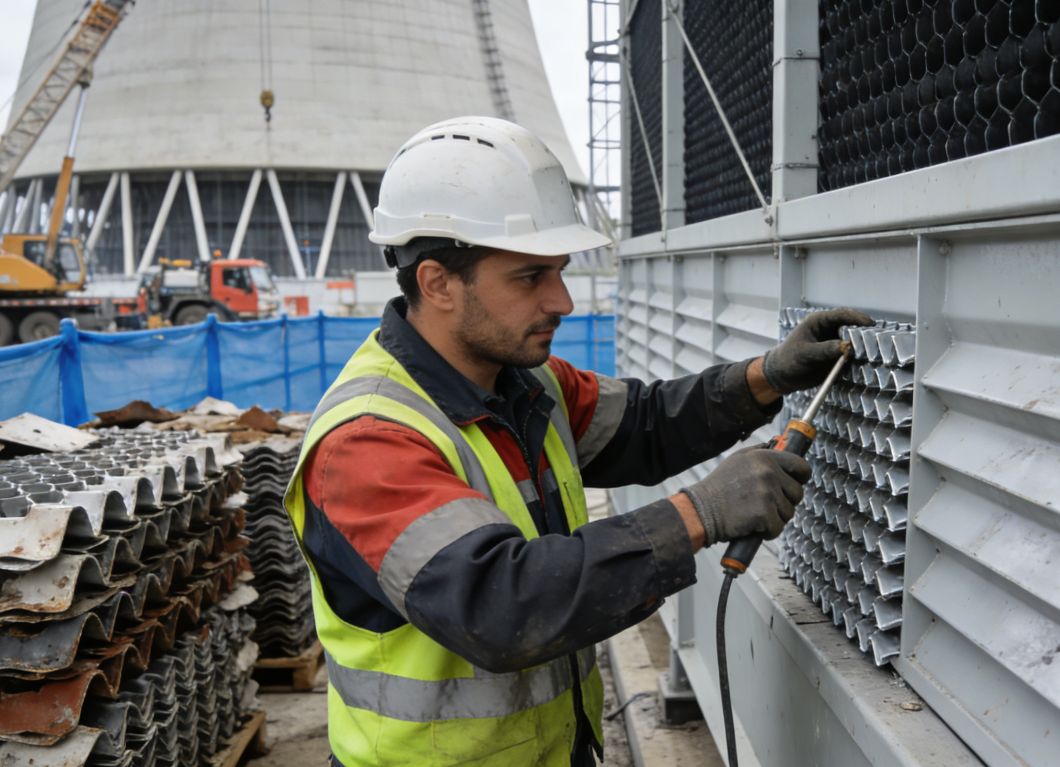
Regularly check for broken blades or blocked sections. Leaves and dust can accumulate on air intake screens and reduce airflow.
Simple water washing is usually enough to keep the Cooling Tower Air inlet Grille clean. For industrial sites, light chemical cleaning may be needed.
If panels become brittle or deformed, replacement should be planned instead of temporary repair to avoid airflow imbalance.
Air inlet grilles work together with internal parts such as:
Do not choose very dense louvers only for splash control. If airflow is restricted, cooling efficiency will drop.
High UV and humidity require materials with good aging resistance. This is especially important in Southeast Asia.
Uneven installation of Cooling Tower Air inlet Grille causes airflow imbalance and vibration inside the cooling tower.
The Cooling Tower Air inlet Grille is more than a protective panel. It directly affects airflow quality, internal cooling efficiency, and maintenance workload. Proper design and material selection help cooling towers run more stably in hot and dusty environments.
If you are unsure which type of air inlet grille suits your cooling tower, you can send us your drawings or operating conditions. We can suggest a practical solution based on real engineering experience.
Contact us for technical discussion and product support.
We are professional cooling tower fills manufacturer, which can supply wide ranges of cooling tower fills with PVC, PP or CPVC materials.
The brake oil pipes we provide have multiple monitoring certifications and complete compliance documents to help your business smoothly enter the global market.
Fully automated production line, supporting individual customization. Combined with just-in-time logistics solutions, ensuring stable inventory.
A professional foreign trade technical team provides rapid response and is a trustworthy partner, offering everything from technical Q&A to market insights.

The cooling tower fill from this company has performed reliably in our systems. We appreciate the consistent quality and noticeable efficiency improvement.
CEO & Founder

As a CEO, I value partners who deliver on their promises. Their cooling tower fill is a solid product that contributes to stable operations.
CEO & Founder

We are satisfied with the performance of this cooling tower fill. It has integrated well into our existing setup with good results.
Manager

This company provides quality cooling tower fill that meets our operational needs. It's a dependable component in our infrastructure.
CEO & Founder

We are professional cooling tower fills manufacturer, which can supply wide ranges of cooling tower fills with PVC, PP or CPVC materials.

Instant Chat Support
+8615303180686
packingesale@gmail.com
Get the latest information
Scan the code to follow
Return to the top of the page