I get asked this question more than any other. Which is better, film fill or splash fill? The honest answer is that it depends entirely on your specific application. There is no universal right answer. But after nearly twenty years in this business, I can tell you exactly what factors to consider.
Working with a reliable Cooling Tower Fill Manufacturer is essential, but you also need to understand the fundamental differences between these two fill types.
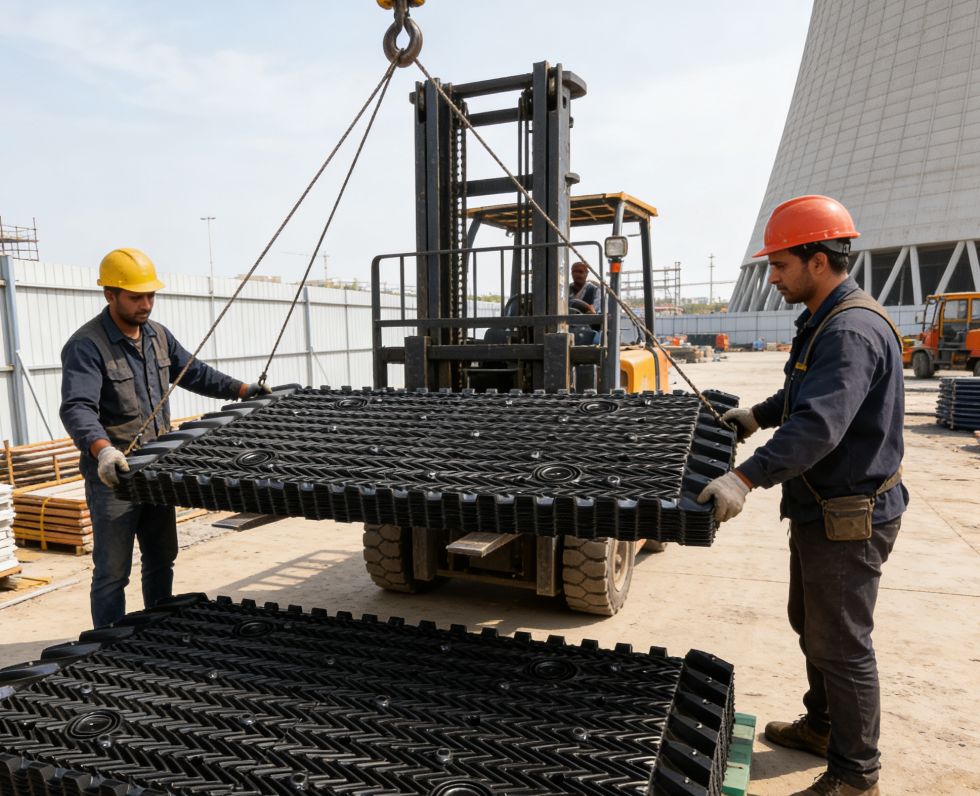
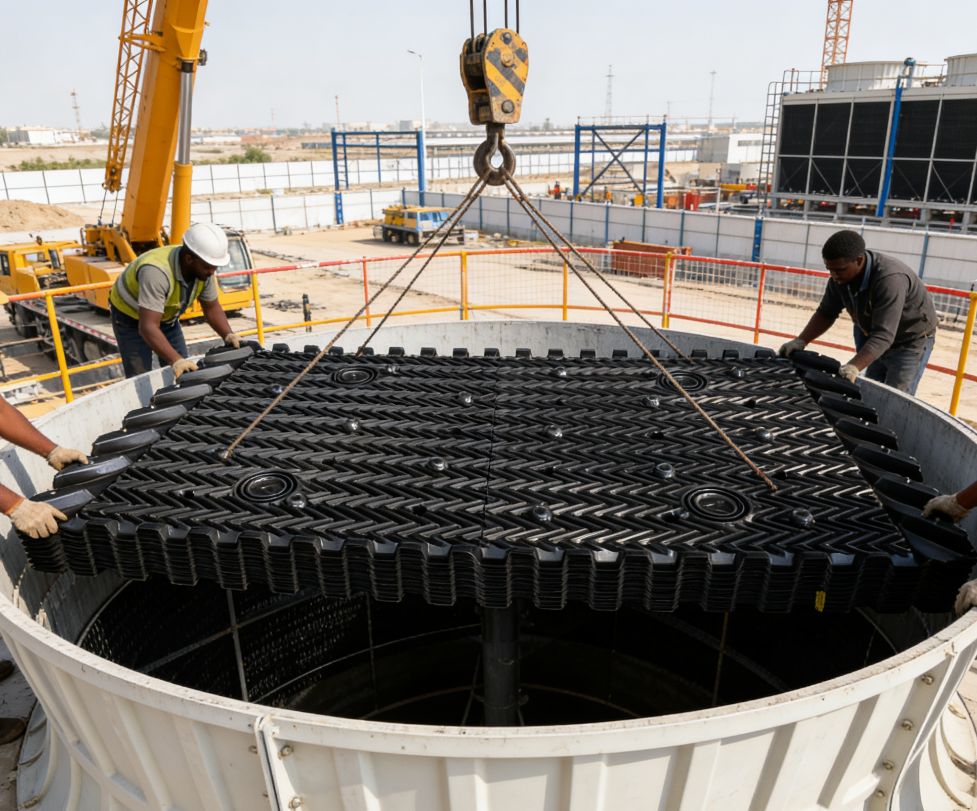
Film fill is designed to spread water into thin films across the fill surface. The water flows downward over closely spaced sheets, while air flows upward or horizontally through the gaps. The large surface area created by the thin water film promotes efficient heat transfer between the water and the air.
The key advantages of film fill are:
However, film fill has significant limitations. The narrow gaps between fill sheets, typically a few millimeters, are vulnerable to fouling. Suspended solids, biological growth, and scale can accumulate in these gaps, restricting airflow and water flow. Once fouled, film fill performance degrades rapidly.
Film fill is best suited for:
Splash fill uses a different approach. Water falls through successive layers of splash bars, breaking into droplets with each impact. The droplets have high surface area relative to their volume, promoting heat transfer through direct contact with the air stream.
The key advantages of splash fill are:
The limitations of splash fill include:
Splash fill is best suited for:
Let me give you some real numbers based on actual field measurements. In clean water applications with good water treatment, film fill typically achieves cooling efficiency fifteen to twenty percent higher than splash fill within the same tower volume. This means lower leaving water temperatures and reduced chiller energy consumption.
However, as fouling accumulates, the picture changes dramatically. Research has shown that film fill pressure loss is approximately twenty-nine percent higher than splash fill when both are clean. But when film fill becomes fouled, the pressure drop can increase by several hundred percent, far exceeding the pressure drop of splash fill under similar conditions.
Here is what I have observed in the field. In a clean application with good water treatment, film fill will outperform splash fill consistently. But introduce even moderate fouling, and the performance gap narrows. In heavily fouling applications, splash fill will actually outperform film fill because the film fill becomes blocked while the splash fill continues to function.
One power plant I worked with switched from film fill to splash fill after repeated fouling issues. Their cooling efficiency dropped by about eight percent after the switch, but their fill life increased from less than two years to more than six years. The overall cost of ownership was substantially lower with splash fill.
Before selecting cooling tower fill, you must understand your water quality. Here is what to test for:
Measure total suspended solids in the circulating water. If TSS regularly exceeds fifty parts per million, film fill is at significant risk of fouling. Above one hundred parts per million, splash fill is strongly recommended.
Calculate the Langelier Saturation Index or other scaling indices for your water. High scaling potential means calcium carbonate will deposit on fill surfaces. Film fill is more vulnerable to scale fouling than splash fill because scale accumulates in the narrow gaps.
Test for bacteria, algae, and other microorganisms. Biological growth produces biofilm that can quickly clog film fill. Facilities with recurring biological problems should consider splash fill or aggressive biocide treatment programs.
Evaluate your water treatment capability. If you have a robust treatment program with scale inhibitors, biocides, and corrosion control, film fill can perform well. If treatment is inconsistent or inadequate, splash fill is safer.
I recommend testing water quality quarterly for at least one year before selecting cooling tower fill. This gives you a complete picture of seasonal variations and the effectiveness of your treatment program.
Most power plants use clean water from rivers, lakes, or cooling ponds. Water quality is typically good, and treatment programs are robust. Film fill is the standard choice for power generation cooling towers, offering the high efficiency needed to support maximum generating capacity.
Water quality in refineries can be variable, with occasional upsets that introduce hydrocarbons or high solids. Many refineries use a combination approach, with film fill in clean services and splash fill in services prone to fouling. I have seen both approaches work well when properly implemented.
Commercial building cooling towers typically use treated city water with good quality. Film fill is standard in this sector because of its compact design and high efficiency. However, in older buildings with poor water treatment, splash fill may be more reliable.
This category includes everything from food processing to chemical manufacturing. Water quality varies widely. Each application must be evaluated individually. In my experience, about sixty percent of industrial applications are suitable for film fill, while forty percent are better served by splash fill.
Some cooling tower fill manufacturers offer hybrid designs that combine features of both film and splash fill. These products attempt to capture the efficiency of film fill with the fouling resistance of splash fill.
Typical hybrid designs use a splash zone at the top of the fill pack to break up water and remove large solids, followed by film sheets below for high-efficiency heat transfer. The splash zone protects the film section from the worst fouling.
I have installed hybrid fill in several applications with moderate fouling potential, and the results have been positive. The hybrid fill outperformed standard film fill in fouling service while achieving efficiency close to pure film fill in clean service. If you have borderline water quality, hybrid fill is worth evaluating.
Regardless of which cooling tower fill type you choose, proper installation and maintenance are essential for good performance.
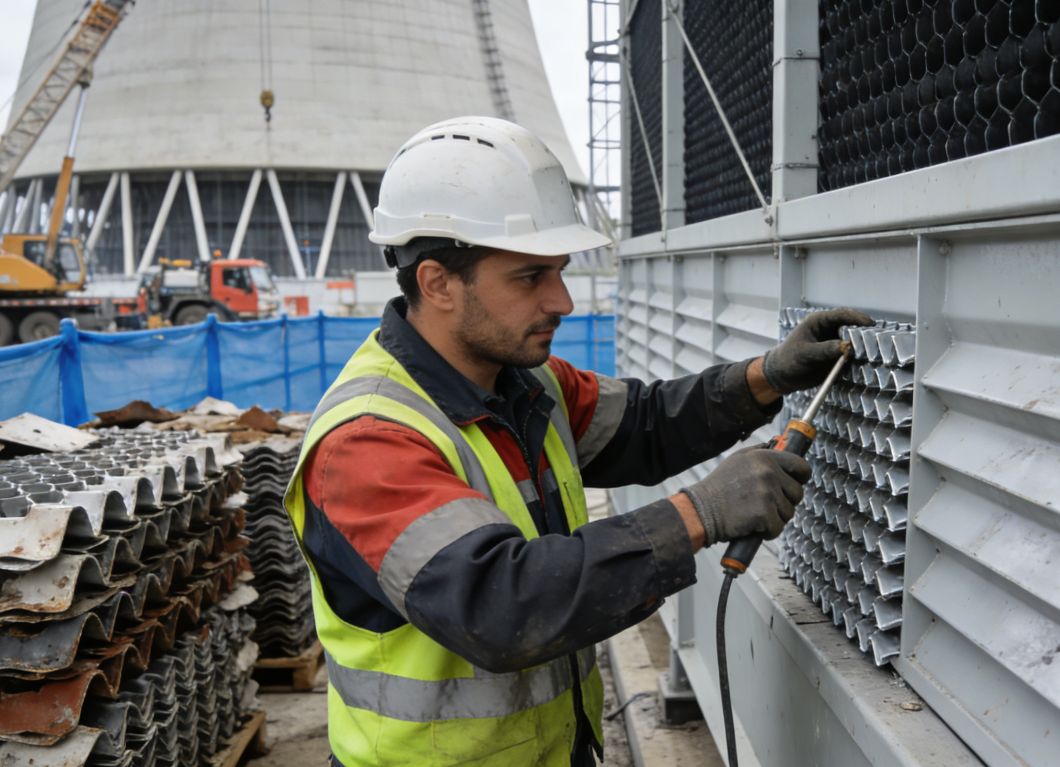
Film fill must be installed carefully to ensure proper alignment and spacing. Misaligned fill sheets can create channels where water bypasses the fill, reducing cooling efficiency. Splash fill is more forgiving during installation but still requires proper support and spacing.
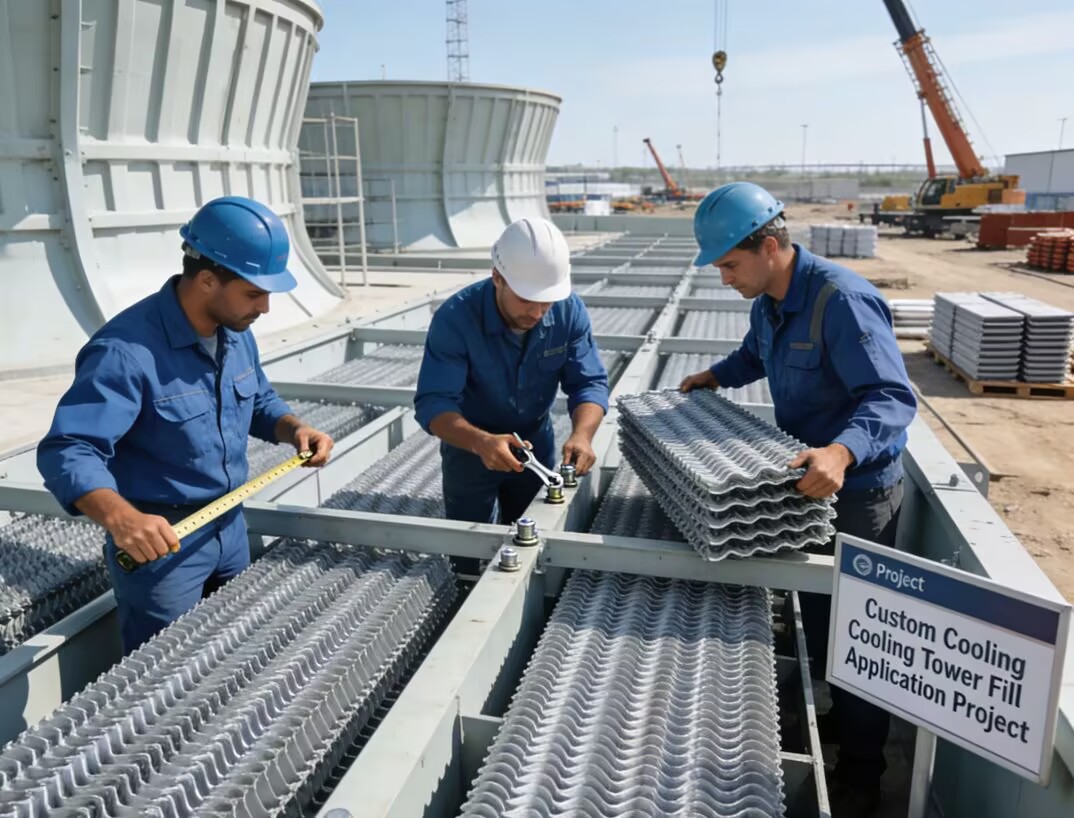
Always follow the cooling tower fill manufacturer installation instructions. If you are unsure, request on-site supervision from the manufacturer during installation. The small additional cost is worth it to avoid performance problems.
Film fill requires regular inspection and cleaning to prevent fouling. I recommend visual inspection every three months and professional cleaning at least annually in most applications. Splash fill is more tolerant of neglect but still benefits from periodic inspection and cleaning.
Signs that cooling tower fill needs attention include:
When comparing film fill and splash fill, do not focus solely on initial purchase price. The total cost of ownership over the life of the fill is what matters.
Here is a typical comparison for a medium-sized industrial cooling tower:
Film fill: Higher initial cost for the fill itself, but lower installed cost because less volume is needed. Lower fan energy consumption when clean. However, more frequent cleaning and potentially shorter life in fouling service increase operating costs.
Splash fill: Lower fill cost per unit volume, but more volume needed for equivalent cooling duty, so total fill cost may be similar. Higher fan energy consumption due to higher pressure drop. But longer life in fouling service and lower cleaning costs can offset the energy penalty.
In clean applications, film fill almost always has lower total cost of ownership. In fouling applications, splash fill often wins. The crossover point depends on water quality, cleaning frequency, and energy costs.
I have run total cost of ownership analyses for many customers. In clean water applications with good treatment, film fill total cost is typically fifteen to twenty percent lower than splash fill over a ten-year period. In poor water quality applications, splash fill total cost can be thirty to forty percent lower.
Cooling tower fill technology continues to evolve. New materials offer better fouling resistance and higher temperature tolerance. Improved flute geometries increase heat transfer efficiency without increasing fouling vulnerability.
One interesting development is the use of antimicrobial additives in fill materials. These additives inhibit biological growth on the fill surface, reducing biofilm formation and the need for chemical biocides. Early field trials have shown promising results, with significantly less biological fouling compared to standard fill.
Another trend is the integration of monitoring technology directly into the fill pack. Sensors embedded in the fill can measure pressure drop, temperature, and even biological activity, providing real-time data on fill condition. This enables predictive maintenance and early warning of performance degradation.
As cooling tower fill technology advances, the line between film and splash fill may blur. Some new designs incorporate features of both types, offering high efficiency with improved fouling resistance. I expect to see more hybrid and specialty designs in the coming years.
Here is a simple decision matrix to help you choose between film fill and splash fill. Score each factor from one to five, with higher scores favoring film fill.
Add up the scores. If the total strongly favors film fill, choose film fill. If it strongly favors splash fill, choose splash fill. If the scores are balanced, consider a hybrid design or consult with a cooling tower fill manufacturer for specific recommendations.
Remember, there is no single right answer. The best cooling tower fill for your application depends on your specific operating conditions. Take the time to assess your needs carefully before making a decision.
If you need assistance with fill selection, contact our engineering team. We have experience across all industries and can help you find the optimal solution for your cooling tower.
Choosing between film fill and splash fill requires careful analysis of your water quality, operating conditions, and maintenance capabilities. Our engineering team can help you evaluate your specific application and recommend the optimal cooling tower fill solution.
Contact Us Here →We are professional cooling tower fills manufacturer, which can supply wide ranges of cooling tower fills with PVC, PP or CPVC materials.
The brake oil pipes we provide have multiple monitoring certifications and complete compliance documents to help your business smoothly enter the global market.
Fully automated production line, supporting individual customization. Combined with just-in-time logistics solutions, ensuring stable inventory.
A professional foreign trade technical team provides rapid response and is a trustworthy partner, offering everything from technical Q&A to market insights.

The cooling tower fill from this company has performed reliably in our systems. We appreciate the consistent quality and noticeable efficiency improvement.
CEO & Founder

As a CEO, I value partners who deliver on their promises. Their cooling tower fill is a solid product that contributes to stable operations.
CEO & Founder

We are satisfied with the performance of this cooling tower fill. It has integrated well into our existing setup with good results.
Manager

This company provides quality cooling tower fill that meets our operational needs. It's a dependable component in our infrastructure.
CEO & Founder

We are professional cooling tower fills manufacturer, which can supply wide ranges of cooling tower fills with PVC, PP or CPVC materials.

Instant Chat Support
+8615303180686
packingesale@gmail.com
Get the latest information
Scan the code to follow
Return to the top of the page