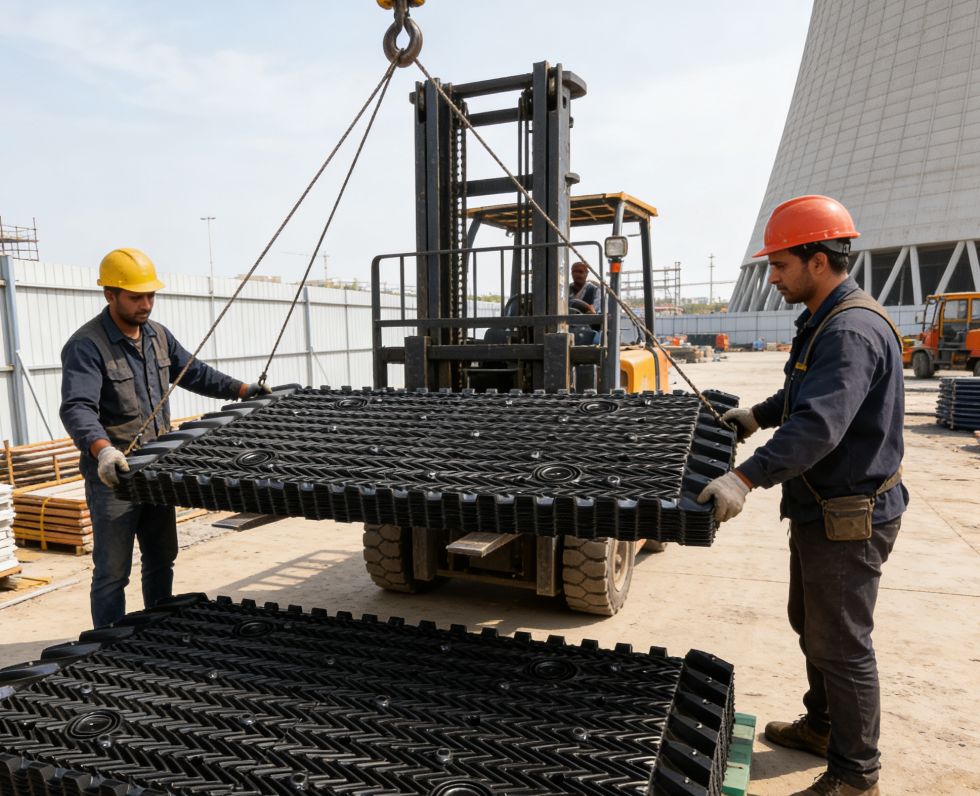
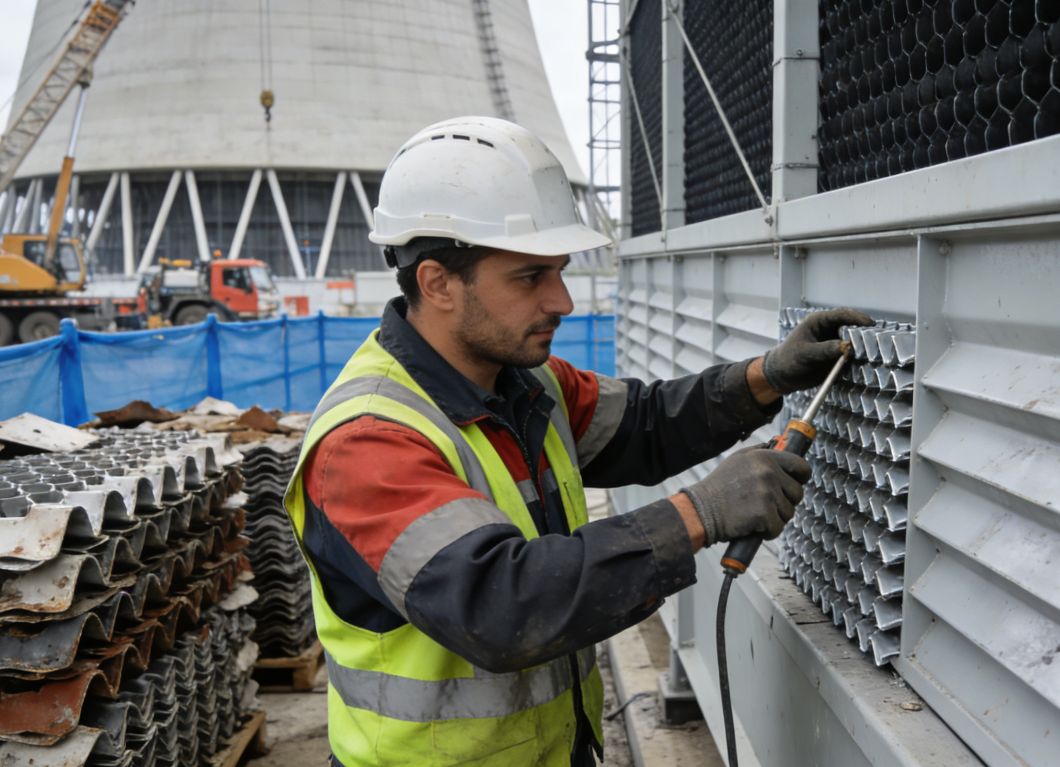
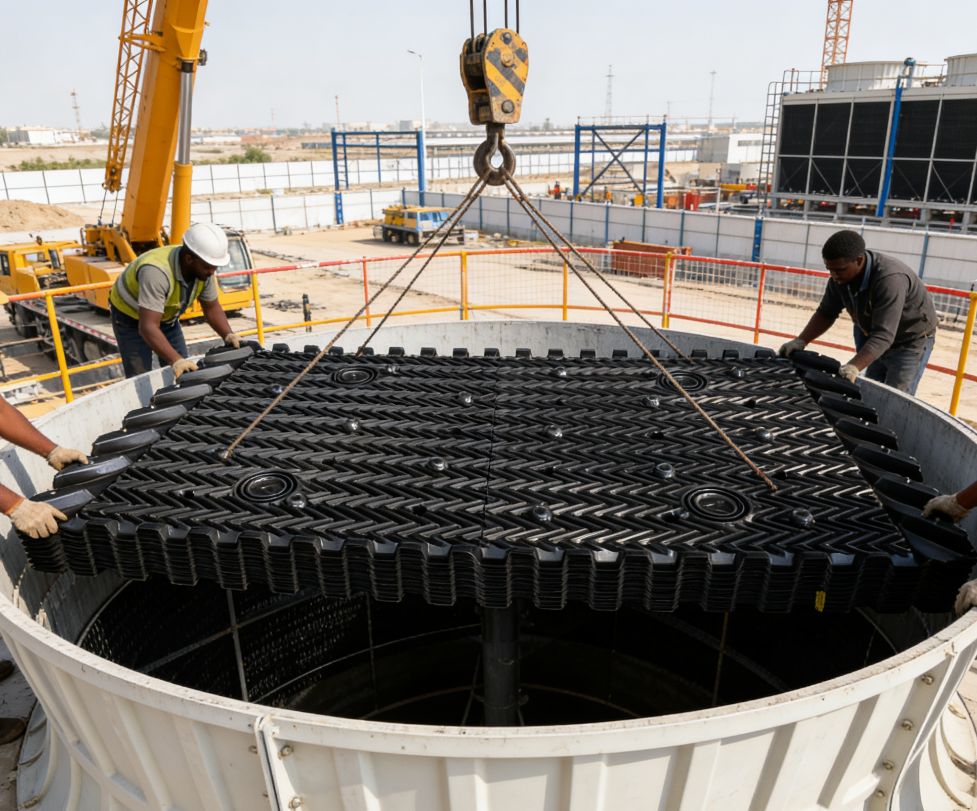
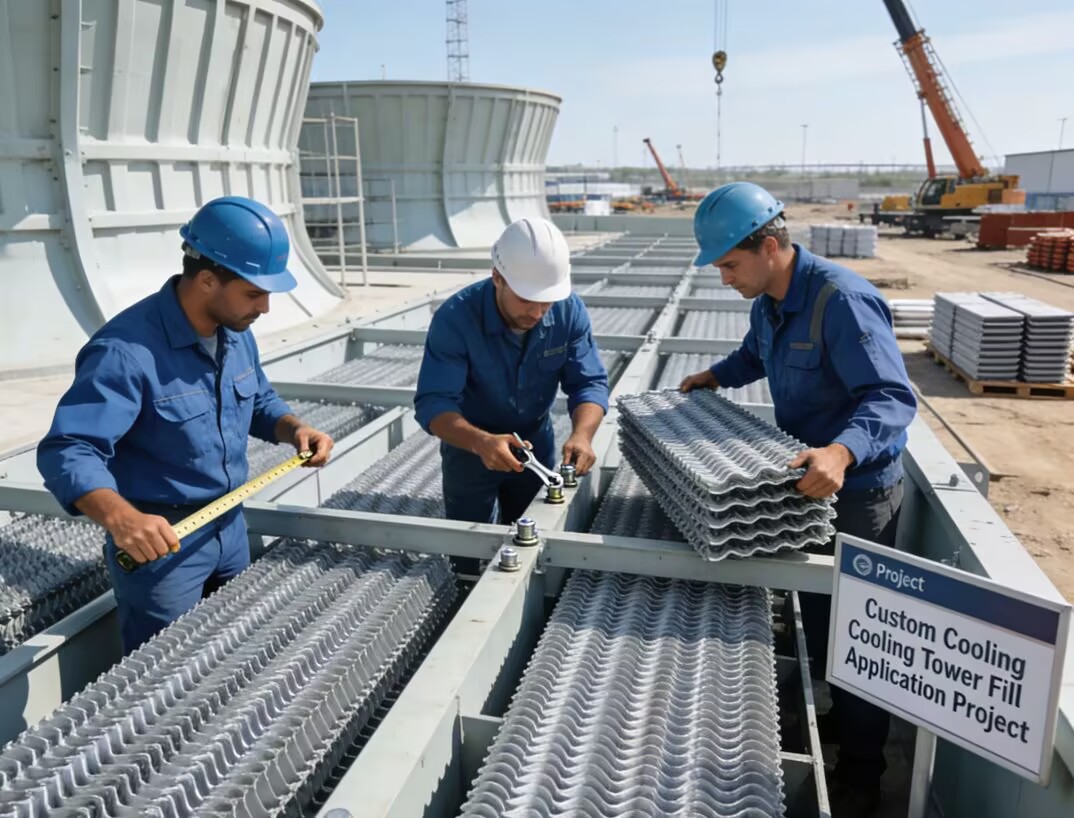
I have been working with cooling tower fill for nearly twenty years, traveling across Southeast Asia, the Middle East, Japan and Korea. Over the decades, I have watched this industry evolve from simple splash bars to sophisticated high-performance media. In 2026, the cooling tower fill market is at an interesting turning point, and I want to share what I am seeing on the ground in these key regions.
If you are looking for a reliable Cooling Tower Fill Manufacturer, you have come to the right place. This article breaks down the market trends, regional demands, and practical selection criteria for cooling tower fill in 2026.
The global cooling tower market is expanding steadily. According to recent industry data, the cooling tower market size was valued at approximately $4.59 billion in 2026 and is projected to reach nearly $5.89 billion by 2031, registering a compound annual growth rate of around 5.09 percent. The wet cooling tower fills segment is growing at an even faster pace, with projections showing a CAGR of 7.5 percent through 2033. These numbers reflect two major drivers: accelerating industrialization across emerging economies, and a massive wave of retrofit projects in mature markets.
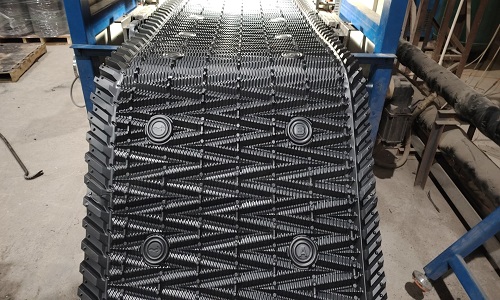
More than sixty percent of industrial cooling towers will require fill replacement within the next few years to meet new efficiency and environmental standards. This translates to over $1.2 billion in annual retrofit opportunities globally. For plant operators and facility managers, this means the time to evaluate your cooling tower fill performance is now.
So what is driving this demand? Let me break it down by region.
Southeast Asia accounted for a significant share of the global cooling tower market in 2025, and the region continues to lead in growth. The primary drivers include new power plant construction, expanding data center infrastructure, and manufacturing sector upgrades.
Indonesia, Vietnam, Thailand, and the Philippines are all investing heavily in new power generation capacity. Coal-fired and gas-fired plants remain the backbone of the region energy infrastructure, and these facilities require reliable, high-performance cooling systems. I have personally worked on projects in Indonesia where older cooling tower fill was replaced with modern film-type media, resulting in outlet water temperature reductions of three to four degrees Celsius and compressor load reductions of approximately fifteen percent.
One Indonesian power plant I consulted for had been running with the same fill pack for nearly a decade. The cooling efficiency had dropped so badly that the plant was struggling to maintain full output during peak summer months. After replacing their old fill with new high-density PVC film fill, the cooling range improved by nearly four degrees, and the plant was able to ramp production back to full capacity.
Vietnam data center market reached approximately $1.04 billion in 2025 and is projected to grow to $3.19 billion by 2031, with a compound annual growth rate exceeding twenty percent. Data centers require year-round, uninterrupted cooling, and the fill media inside cooling towers must perform flawlessly under continuous operation. Any degradation in heat transfer efficiency directly impacts IT equipment reliability.
Thailand is emerging as the premier ASEAN cooling hub. According to industry analysis, cooling providers in Thailand are increasingly specializing in cooling tower systems, water pumps, and maintenance services for data centers, manufacturing facilities, and power plants. The Thailand cooling market demands more than simple equipment sales; it requires a strategic approach to thermal management that considers local climate conditions and operational constraints.
Malaysia and Thailand are seeing significant manufacturing sector upgrades, particularly in electronics, food processing, and automotive components. These industries have demanding cooling requirements. Food processing plants need consistent cooling temperatures to maintain product quality and safety. Electronics manufacturing requires ultra-clean cooling water with precise temperature control.
In many of these facilities, traditional splash fill is no longer adequate. We are seeing increasing adoption of film fill cooling tower solutions that offer higher heat transfer efficiency within the same tower footprint. A Thai beverage manufacturer recently replaced their aging cooling tower fill with modern film-type media. The cooling capacity increased by approximately twenty percent, and monthly electricity costs dropped by tens of thousands of Thai baht.
Let me be honest about the climate challenge in Southeast Asia. The region is hot and humid year-round, with ambient temperatures frequently exceeding thirty degrees Celsius. This places extreme demands on cooling tower fill. Standard PVC fill can deform and lose structural integrity after just three to five years of continuous operation in these conditions.
For this reason, I often recommend polypropylene-based fill for Southeast Asian applications. The upfront cost is higher, but the lifecycle cost is significantly lower because the fill lasts longer and maintains its performance profile for more years. If you are operating a cooling tower in Bangkok, Jakarta, or Ho Chi Minh City, you need to think about material selection carefully.
The Middle East cooling tower market tells a different story. According to market research, the Middle East cooling tower market size is expected to reach $635 million in 2026 and is projected to grow to $855 million by 2033, registering a CAGR of 4.5 percent over the forecast period. The oil and gas sector remains the largest end-user, but power generation and desalination are growing rapidly.
The biggest challenge in the Middle East is water scarcity. Summer temperatures in Saudi Arabia regularly exceed fifty degrees Celsius, and evaporative water loss from cooling towers is enormous. Every drop of water counts, and the cost of makeup water has risen sharply.
I worked with a client in Dubai whose water costs had nearly doubled over three years. Their cooling towers were losing significant water through drift, and their existing fill was not optimized for the extreme heat conditions. We recommended a combination of high-efficiency film fill, upgraded water collectors, and low-drift eliminators. The result was a reduction in water makeup requirements of approximately fifteen percent, translating to substantial annual savings.
The 2026 standard for drift eliminators now requires drift rates of less than 0.0005 percent of circulating water flow for high-efficiency units. For counterflow towers, drift must be reduced to 0.002 percent or less of recirculated water flow. Crossflow towers must achieve 0.005 percent or less.
These tighter standards are not optional in many Middle Eastern jurisdictions. Environmental regulators are increasingly enforcing drift limits to conserve water and prevent aerosol emissions that could carry Legionella bacteria. If your cooling tower fill does not pair with properly specified drift eliminators, you risk non-compliance and potential fines.
Saudi Arabia and the United Arab Emirates are investing heavily in downstream petrochemical projects and desalination capacity. These facilities have demanding cooling requirements. Petrochemical processes require precise temperature control to maintain product quality and reaction efficiency. Desalination plants use cooling towers extensively for brine cooling and process heat rejection.
Corrosion resistance is a major concern in these applications, particularly where seawater or brackish water is used as makeup. Polypropylene and reinforced PVC fill materials are increasingly specified for these harsh environments.
Air intake louvers and screens are critical components in Middle Eastern cooling towers. Without proper air intake louvers, sand and dust can accumulate inside the cooling tower fill, leading to fouling, reduced heat transfer efficiency, and accelerated wear. I have seen cooling tower fill that had to be replaced after just two years because the plant had inadequate air intake screens and the fill became completely clogged with fine sand particles.
Properly specified air intake louvers can extend cooling tower fill life by several years in desert environments. This is a small upfront investment that pays large dividends over time.
The Japan cooling tower market is distinct from Southeast Asia and the Middle East in several important ways. According to market data, Japan cooling tower market size reached approximately $191.4 million in 2025 and is expected to grow to $268.8 million by 2034, registering a CAGR of 3.85 percent. Japan places extremely high emphasis on energy efficiency, long-term stable operation, and precision engineering.
Japanese customers are among the most demanding in the world. When they visit a manufacturing facility, they will photograph the cleanliness of the factory floor and scrutinize every detail of the quality control process. However, once a Japanese customer approves a supplier, the relationship can last for decades.
The Japanese market has a strong preference for film fill cooling tower solutions. Film-type fill offers higher heat transfer efficiency than traditional splash fill, and the energy savings of fifteen to twenty percent are highly persuasive in a country where electricity costs are among the highest in Asia.
Noise control is another critical consideration in Japan. Many cooling towers are located near residential areas, and noise regulations are strict. The selection of fill media, fan systems, and drift eliminators must all be coordinated to meet acoustic requirements.
Japanese facilities also place a premium on maintenance accessibility. Modular cooling tower media that can be quickly removed and reinstalled is highly valued because it minimizes downtime during maintenance and replacement operations.
The Korea cooling tower market is heavily influenced by the semiconductor and heavy chemical industries. Korean semiconductor fabs operate around the clock, and any interruption in cooling system performance can result in millions of dollars in lost production.
Korean customers are price-sensitive but also quality-conscious. They will compare multiple suppliers and negotiate aggressively on price, but they will not sacrifice quality for a small discount. The Korean market is highly competitive, with strong local manufacturers, but international suppliers can succeed by offering better value rather than just lower prices.
Corrosion resistance is a major concern in Korean industrial applications, particularly in coastal facilities where salt-laden air can accelerate degradation of metal components and certain fill materials. PVC and polypropylene-based fill are standard, but reinforced formulations are sometimes specified for extreme environments.
The Korean market also has growing demand for air intake screens and louvers to prevent debris ingress. Many Korean industrial facilities are located in areas with significant seasonal dust and pollen, and proper intake screening is essential for maintaining cooling tower fill cleanliness and performance.
One of the most common questions I receive from customers is whether to choose film fill or splash fill. Let me give you a practical answer based on real-world experience.
Film fill cooling tower media is designed to maximize water-air contact area by spreading water into thin films across the fill surface. This results in superior heat transfer efficiency within a given fill volume. Film fill typically offers cooling efficiency improvements of fifteen to twenty percent compared to traditional splash fill in clean water applications.
Film fill is the right choice when:
Splash fill breaks water into droplets through successive layers of splash bars. It is less efficient than film fill in terms of heat transfer per unit volume, but it offers superior resistance to fouling and clogging.
Splash fill is the better choice when:
Research has shown that film-type filling has approximately twenty-nine percent higher pressure loss than splash-type filling. This means film fill requires more fan energy to move air through the tower, but the higher heat transfer efficiency typically more than offsets this penalty in clean water applications.
In fouling-prone applications, however, the pressure drop across film fill can increase dramatically as deposits accumulate, eventually exceeding the pressure drop of properly maintained splash fill while delivering poorer cooling performance. This is why water quality assessment is so critical before selecting fill type.
Beyond the film-versus-splash decision, material selection is equally important.
PVC is the most common cooling tower fill material. It offers good chemical resistance, reasonable cost, and adequate thermal performance. Standard PVC fill is suitable for most industrial applications with water temperatures up to approximately fifty degrees Celsius. However, PVC can soften and deform at higher temperatures, so it is not recommended for applications with sustained water temperatures above fifty-five degrees.
Polypropylene fill offers better high-temperature resistance than PVC, withstanding sustained temperatures up to eighty degrees Celsius in some formulations. PP also has excellent chemical resistance and is less prone to degradation in aggressive water chemistries. The trade-off is higher material cost.
For Middle Eastern applications and for certain industrial processes with elevated water temperatures, polypropylene fill is often the better long-term investment despite the higher upfront cost.
Some cooling tower fill manufacturers offer reinforced PVC formulations with UV stabilizers and flame retardants. These are important considerations for outdoor installations in high-sunlight regions like the Middle East and Southeast Asia, where UV degradation can shorten fill life significantly.
Flame retardancy is also a regulatory requirement in many jurisdictions. Cooling tower fill must meet local fire codes, and non-compliant fill can result in failed inspections and potential liability.
Several trends are shaping the future of cooling tower fill. First, modular and easy-install designs are gaining popularity because they reduce downtime during replacement projects. Facilities cannot afford weeks of cooling tower outage, so fill that can be installed quickly is highly valued.
Second, smart monitoring is becoming more common. Sensors that measure pressure drop across the fill, outlet water temperature, and fan energy consumption can provide early warning of fill degradation or fouling. This allows predictive maintenance rather than reactive replacement.
Third, sustainability is driving demand for fill that reduces water consumption and energy use. High-efficiency film fill, properly paired with water collectors and drift eliminators, can significantly reduce both water makeup requirements and fan energy consumption.
Finally, material science continues to advance. New polymer formulations offer better thermal stability, UV resistance, and flame retardancy than older materials. These improvements extend fill life and reduce total cost of ownership.
If you are planning a cooling tower upgrade or new installation in 2026, I encourage you to evaluate your options carefully. The right cooling tower fill can pay for itself within two years through energy savings alone, and the benefits continue for the life of the fill.
For more information about cooling tower fill products and selection guidance, contact our team. We have extensive experience across Southeast Asia, the Middle East, Japan and Korea, and we can help you find the right solution for your specific application.
Cooling tower fill typically lasts five to ten years under normal operating conditions, depending on water quality, operating temperature, and maintenance practices. In harsh environments with poor water quality or high temperatures, fill life may be as short as three to five years. In clean applications with good water treatment, quality fill can last ten years or more.
Key indicators include increased outlet water temperature, higher fan energy consumption, visible fouling or scaling on the fill surface, and physical degradation such as warping, cracking, or collapse of fill sheets. If you notice any of these signs, it is time to evaluate your cooling tower fill condition.
Yes, in most cases cooling tower fill can be replaced independently. This is often the most cost-effective approach when the tower structure and other components are still in good condition. Fill replacement typically costs a fraction of full tower replacement and can restore cooling performance to near-original levels.
These terms are often used interchangeably. Cooling tower fill and cooling tower media both refer to the material inside the cooling tower that facilitates heat transfer between water and air. The fill increases the surface area available for heat exchange, improving cooling efficiency.
Whether you call it cooling tower fill, cooling tower media, or tower fill, the fundamental function is the same: maximizing water-air contact to reject heat from the circulating water system.
Here is a quick reference guide for cooling tower fill selection by region:
Whether you are operating in Southeast Asia high humidity, Middle East extreme heat, or precision-focused Japan and Korea markets, selecting the right cooling tower fill is critical for efficiency and cost control. Our team has decades of regional experience and can help you choose the optimal fill media for your specific climate and water conditions.
Contact Us Here →We are professional cooling tower fills manufacturer, which can supply wide ranges of cooling tower fills with PVC, PP or CPVC materials.
The brake oil pipes we provide have multiple monitoring certifications and complete compliance documents to help your business smoothly enter the global market.
Fully automated production line, supporting individual customization. Combined with just-in-time logistics solutions, ensuring stable inventory.
A professional foreign trade technical team provides rapid response and is a trustworthy partner, offering everything from technical Q&A to market insights.

The cooling tower fill from this company has performed reliably in our systems. We appreciate the consistent quality and noticeable efficiency improvement.
CEO & Founder

As a CEO, I value partners who deliver on their promises. Their cooling tower fill is a solid product that contributes to stable operations.
CEO & Founder

We are satisfied with the performance of this cooling tower fill. It has integrated well into our existing setup with good results.
Manager

This company provides quality cooling tower fill that meets our operational needs. It's a dependable component in our infrastructure.
CEO & Founder

We are professional cooling tower fills manufacturer, which can supply wide ranges of cooling tower fills with PVC, PP or CPVC materials.

Instant Chat Support
+8615303180686
packingesale@gmail.com
Get the latest information
Scan the code to follow
Return to the top of the page