The Importance of Airflow in Cooling Tower Performance
When engineers discuss cooling tower performance, the conversation often focuses on heat exchange efficiency, water distribution, and the structure of the Cooling Tower Fill. While these components are extremely important, another factor plays an equally critical role in determining overall cooling efficiency — airflow management. The incorporation of High-Efficiency Cooling Tower Media can further enhance the performance of cooling towers by optimizing heat exchange efficiency and airflow distribution.
Cooling towers operate by bringing large volumes of air into contact with warm circulating water. As air moves upward through the tower structure, it absorbs heat from the water and carries that heat away through evaporation. For this process to work effectively, the airflow entering the tower must be stable, evenly distributed, and free from major obstructions.
This is where Air Inlet Louvers become an essential part of the cooling tower design. These specially designed airflow control components are installed at the air intake openings of the tower and help regulate how air enters the cooling system.
What Are Cooling Tower Air Inlet Louvers
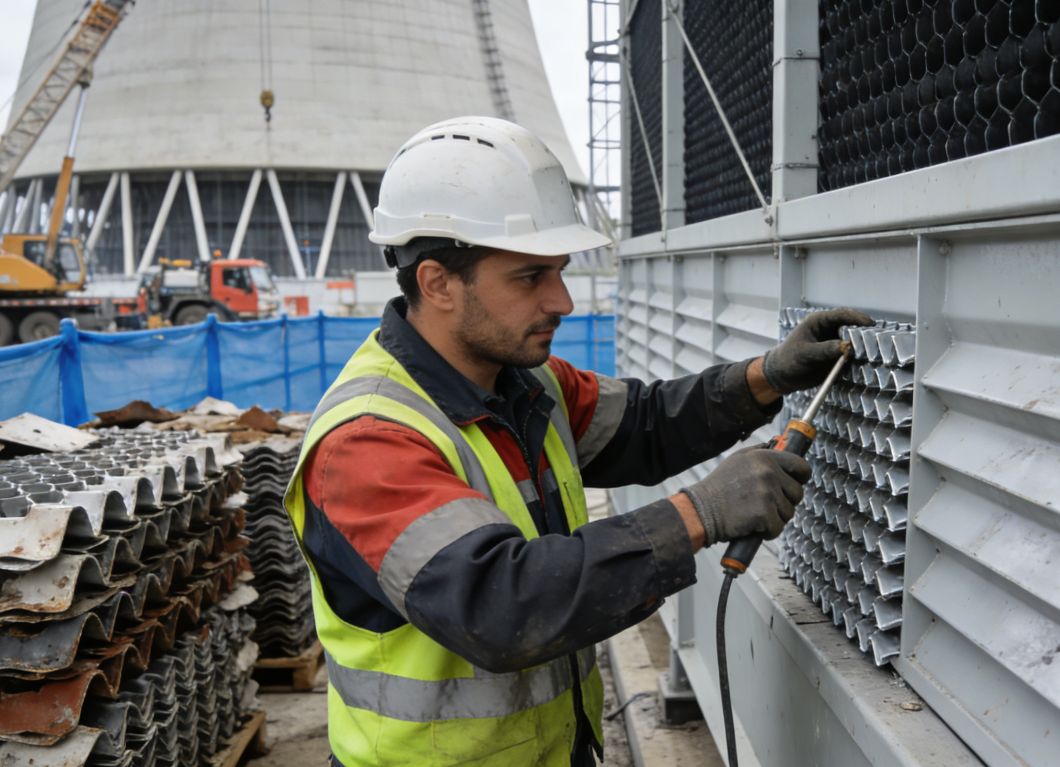
Air inlet louvers are structural panels installed at the lower sides of a cooling tower. Their main purpose is to guide outside air smoothly into the tower while protecting internal components from environmental debris. These louvers typically consist of angled blades or slats that allow airflow to pass through while blocking larger particles such as leaves, dust, and debris.
In many modern cooling towers, the louvers are designed to balance airflow resistance with environmental protection. This means they must allow sufficient air volume to enter the tower without creating excessive pressure drop that could reduce cooling efficiency.
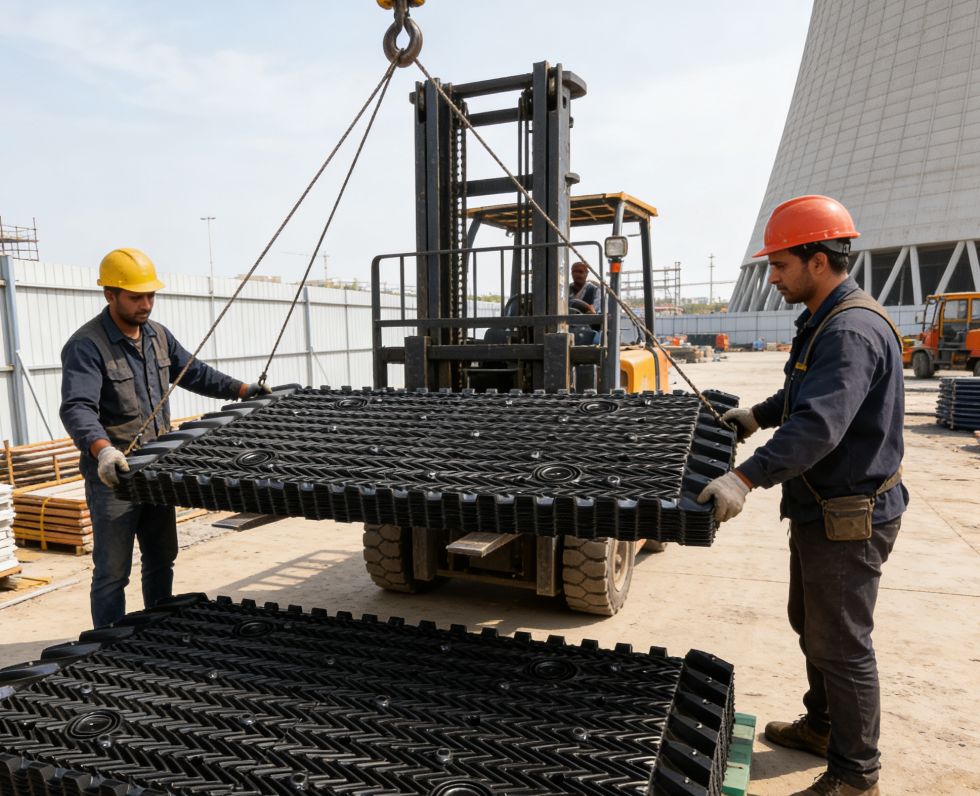
For large industrial towers, properly designed louvers help ensure that airflow enters evenly across the tower’s intake area. This balanced airflow allows water flowing through the Film Fill Cooling Tower structure to interact efficiently with moving air, maximizing heat transfer performance.
How Louvers Improve Cooling Efficiency
One of the biggest challenges in cooling tower design is maintaining uniform airflow distribution. If airflow enters unevenly, certain sections of the tower may receive insufficient air, reducing the effectiveness of heat exchange in those areas.
Air inlet louvers help solve this issue by directing air inward at controlled angles. The angled blades guide air smoothly toward the interior of the tower, reducing turbulence and helping create a more uniform airflow pattern.
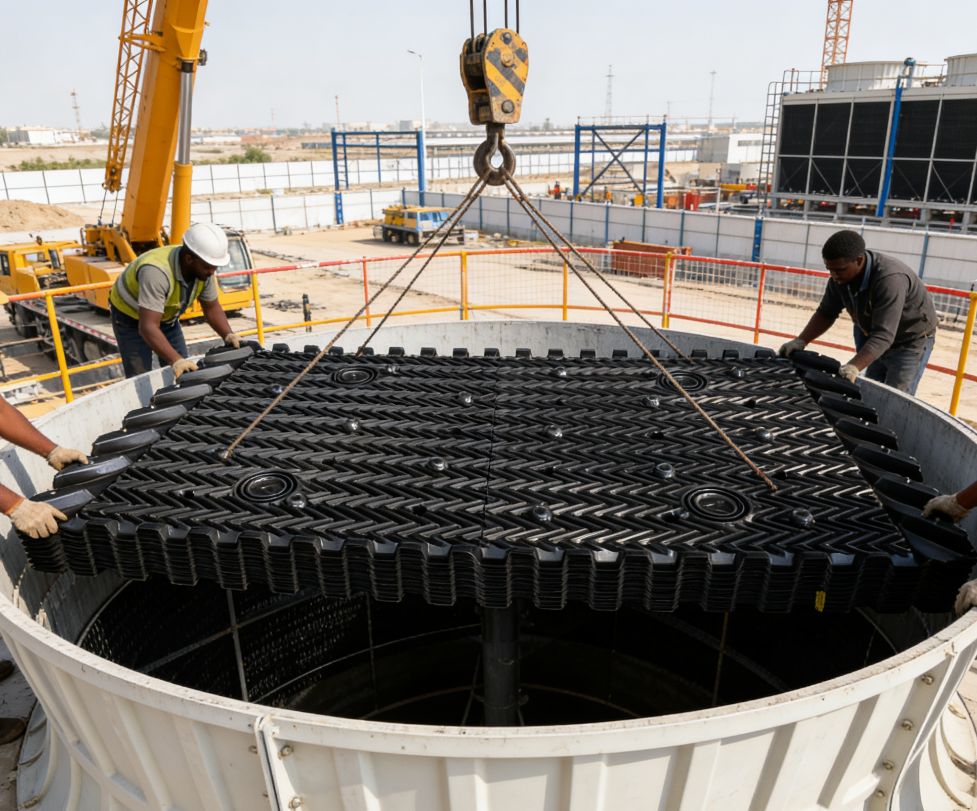
When airflow is evenly distributed, water flowing over the Cooling Tower Media can form thin films across the fill surfaces. This increases the contact area between water and air, allowing heat to dissipate more efficiently.

Protecting Internal Cooling Tower Components
Another important function of air inlet louvers is protecting internal cooling tower components from external contamination. Cooling towers are often installed outdoors, where wind can carry leaves, insects, dust, and other debris into the system.
Without proper intake protection, this debris could accumulate inside the tower and block water distribution systems or clog fill structures. Over time, this buildup may reduce cooling performance and increase maintenance requirements.
Air inlet louvers act as the first line of defense against these environmental factors. By preventing large debris from entering the tower, they help keep internal components clean and maintain stable system performance.
In addition to louvers, many cooling towers also use protective structures such as Air Intake Screens. These screens provide an additional filtration layer, helping block smaller particles that may pass through the louvers.
Coordination With Other Cooling Tower Components
Cooling towers are complex systems where multiple components must work together to achieve optimal performance. Air inlet louvers play a key role in managing airflow at the tower entrance, but their effectiveness also depends on how they interact with other tower structures.
For example, airflow entering through the louvers must pass through the fill section before exiting the tower. During this process, water droplets may become entrained in the airflow. To prevent water loss, systems often include devices such as Mist Eliminator units installed above the fill media.
These eliminators force airflow to change direction several times, causing water droplets to separate from the air stream and return to the tower basin. When airflow management components such as louvers and eliminators are properly designed, cooling towers can operate efficiently while minimizing water loss.
Material Selection for Air Inlet Louvers
The materials used to manufacture air inlet louvers must withstand continuous exposure to moisture, temperature changes, and sometimes chemical treatments used in cooling water systems. PVC and polypropylene are commonly used materials because they offer excellent corrosion resistance and long service life.
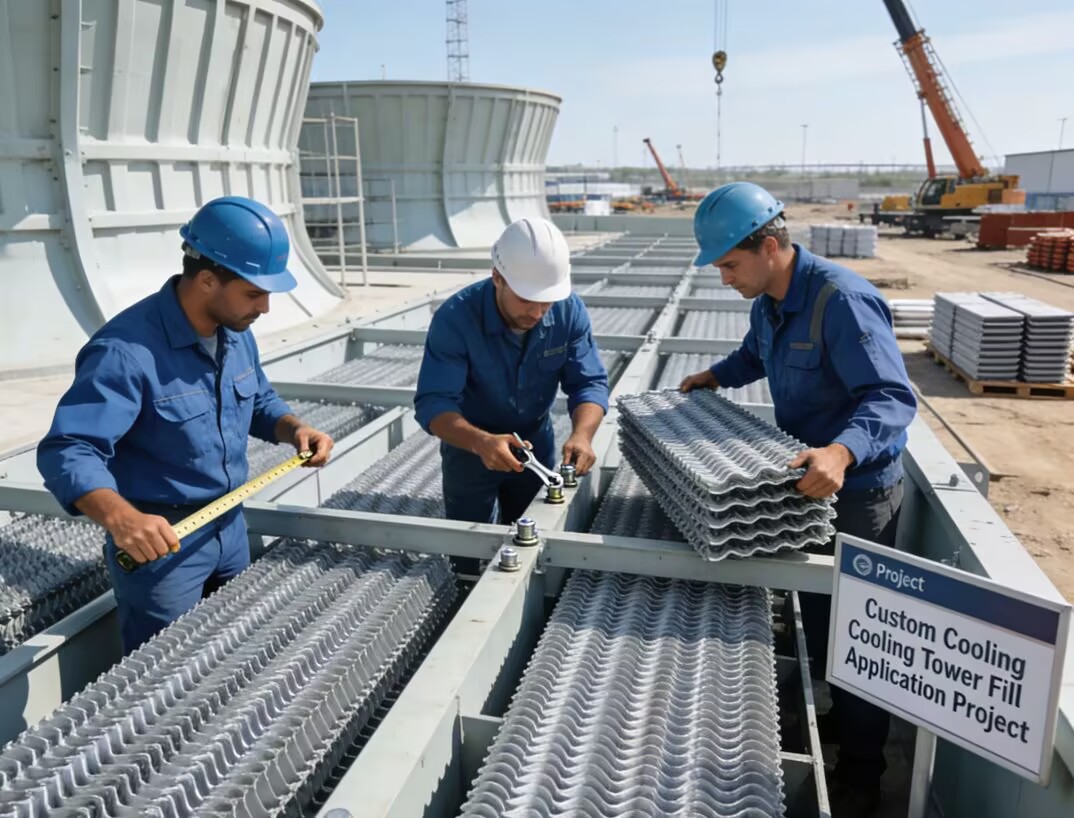
Lightweight plastic louvers also provide structural flexibility, allowing them to be manufactured in various sizes and configurations to match different cooling tower models. This flexibility makes it easier for engineers to design customized airflow solutions for both new installations and tower retrofits.
Why Proper Airflow Design Matters for Cooling Towers
Although air inlet louvers may appear simple at first glance, their impact on cooling tower performance should not be underestimated. Proper airflow control helps maintain stable heat exchange conditions, protects internal components, and improves overall system reliability.
For industries operating large cooling systems, even small improvements in airflow efficiency can lead to significant energy savings and improved operational stability. This is why experienced cooling tower engineers always consider airflow design as a critical part of the overall tower structure.
By combining well-designed air inlet louvers with high-performance fill media and effective drift elimination systems, modern cooling towers can deliver reliable cooling performance for demanding industrial applications.
If your cooling tower is experiencing airflow imbalance, debris accumulation, or reduced cooling performance, upgrading air inlet louvers can significantly improve system efficiency and operational stability.
You can send us your cooling tower dimensions, structural drawings, or photos of your existing intake system. Our engineering team will review your project and recommend suitable airflow control components for your cooling tower.
Contact Us Here