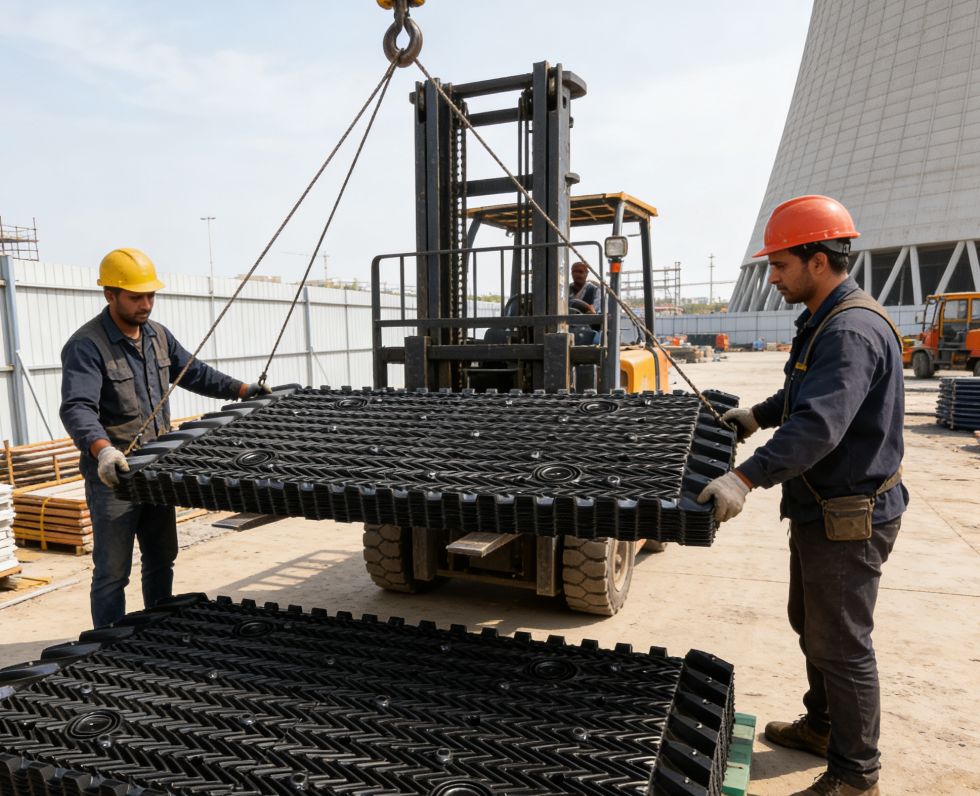
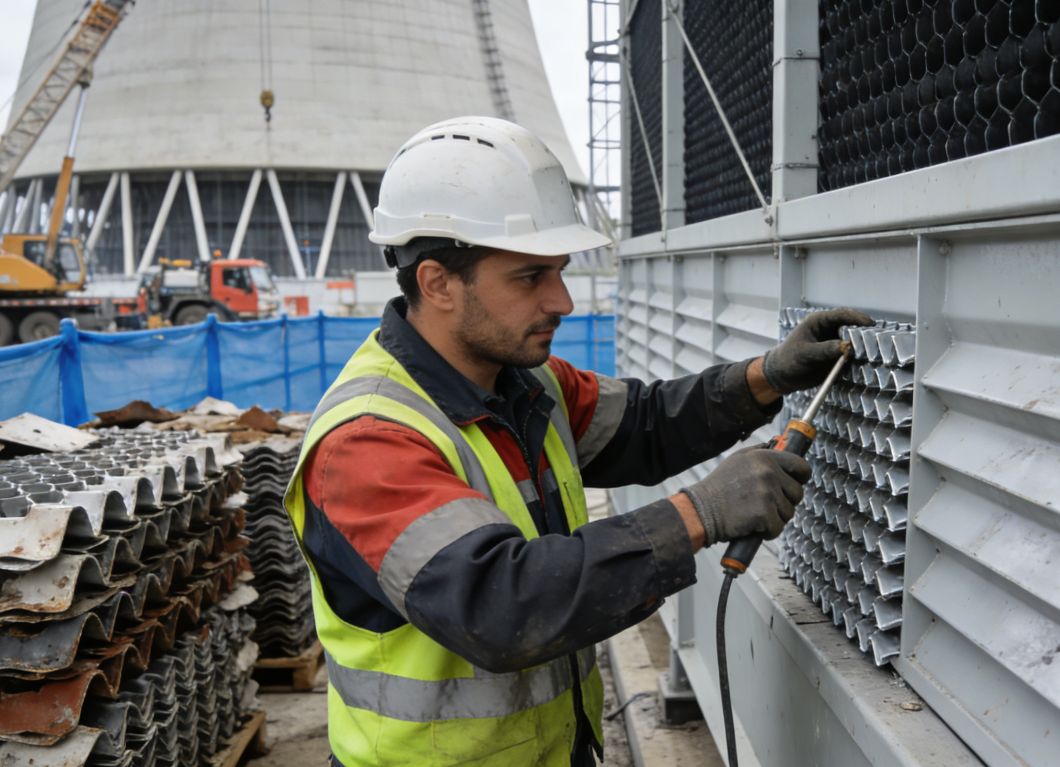
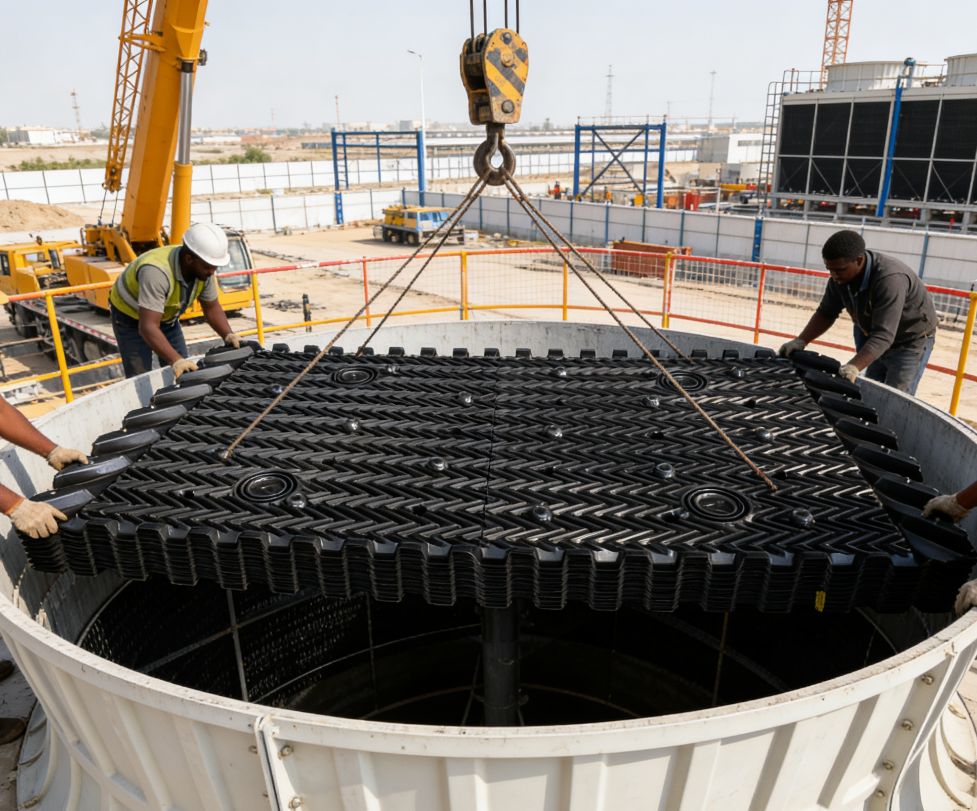
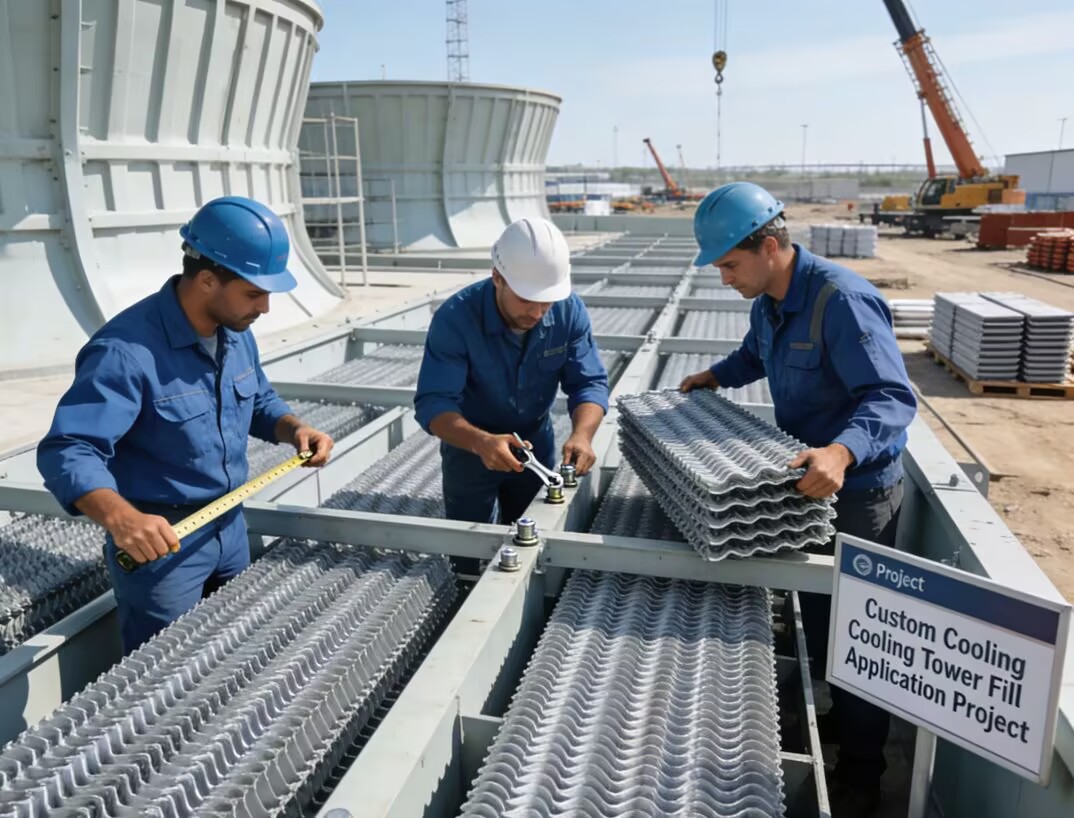
I remember my first trip to Saudi Arabia. The heat hit me like a wall when I stepped out of the airport. Fifty degrees Celsius in the shade. Within minutes, I understood what cooling towers in the Middle East are up against. The combination of extreme heat and severe water scarcity makes cooling tower operation in this region uniquely challenging.
Selecting the right Tower Fill is just the beginning. In the Middle East, every component of your cooling system must be optimized for water conservation and extreme conditions.
The Middle East cooling tower market is estimated to be valued at $635 million in 2026 and is expected to reach $855 million by 2033, growing at a compound annual growth rate of 4.5 percent. The oil and gas sector remains the largest end-user, but power generation, desalination, and petrochemicals are all growing rapidly.
Water scarcity is the defining constraint for cooling tower operations across the region. In many Middle Eastern countries, the cost of makeup water has risen sharply in recent years, and environmental regulations around water use are tightening. Every liter of water lost to evaporation or drift is expensive, and in some locations, simply not available.
I worked with a petrochemical facility in Saudi Arabia where water costs had doubled in three years. Their cooling towers were losing significant water through drift, and the existing fill was not optimized for the extreme heat conditions. We implemented a comprehensive water conservation strategy that reduced makeup water requirements by nearly twenty percent.
In arid climates, maximizing the cooling effect per unit of evaporated water is critical. High-efficiency cooling tower fill with optimized flute geometry can achieve better cooling with less water consumption.
Film fill is the preferred choice for most Middle Eastern applications because it offers superior heat transfer efficiency compared to splash fill. With clean, treated water typical in the region, film fill can achieve approach temperatures that splash fill cannot match, reducing the cooling load on downstream chillers and saving energy.
However, not all film fill is created equal for Middle Eastern conditions. Look for fill with:
Polypropylene-based fill is often the best choice for Middle Eastern applications. The high-temperature resistance of PP ensures the fill maintains structural integrity even when water temperatures rise during extreme summer conditions. The additional cost is justified by longer life and better performance.
Drift eliminators are arguably the most important water conservation component for Middle Eastern cooling towers. Drift is the water that escapes from the cooling tower as fine droplets entrained in the exhaust air. Even a small drift rate adds up to significant water loss over time.
The 2026 standard for drift eliminators has tightened considerably. High-efficiency drift eliminators now achieve drift rates of less than 0.0005 percent of circulating water flow. For counterflow towers, the standard requires drift of 0.002 percent or less. Crossflow towers must achieve 0.005 percent or less.
These numbers matter. On a cooling tower circulating ten thousand gallons per minute, a drift rate of 0.01 percent would lose one gallon per minute, or more than five hundred thousand gallons per year. At 0.001 percent, the loss drops to fifty thousand gallons per year. The difference is substantial, both in water cost and in environmental impact.
When selecting drift eliminators for Middle Eastern applications, look for:
Water collectors work alongside drift eliminators to capture water that would otherwise be lost. While drift eliminators target fine droplets in the exhaust air, water collectors capture larger droplets that fall within the tower.
High-efficiency water collectors can reduce water loss by an additional five to ten percent compared to standard designs. In the Middle East, where every drop counts, this is a worthwhile investment.
I installed high-efficiency water collectors on a cooling tower in Dubai and measured the water savings carefully. Over one year, the water collectors reduced makeup requirements by approximately eight percent. The payback period was less than eighteen months, and the water savings continue year after year.
Water collectors also help maintain water quality by reducing the amount of water that falls to the basin without contacting the fill. This improves overall system efficiency and reduces the load on water treatment systems.
One challenge that is unique to the Middle East is dust and sand. The region experiences frequent dust storms, and even on calm days, fine sand particles are present in the air. Without proper protection, this dust enters the cooling tower and accumulates in the fill.
Air intake louvers are the first line of defense. Properly designed air intake louvers use a series of vanes to separate dust and sand from the incoming air stream. The dust falls out before it reaches the fill, keeping the cooling tower media clean.
I have seen cooling towers in the Middle East where inadequate air intake louvers led to severe fill fouling within two years. The fill became so clogged with sand that airflow was significantly restricted, and cooling performance dropped dramatically. Replacing the fill and installing proper air intake louvers solved the problem, and the fill has now been in service for more than five years with minimal fouling.
When selecting air intake louvers for Middle Eastern conditions, consider:
Air intake screens provide additional protection by blocking larger debris such as leaves, birds, and insects. While screens alone cannot stop fine dust, they are an important complement to louvers.
Water in many Middle Eastern locations is hard, with high concentrations of calcium and other minerals. When this water evaporates in the cooling tower, the minerals remain behind and can deposit on the fill surface as scale.
Scale is a serious problem for cooling tower fill. Even a thin layer of scale reduces heat transfer efficiency significantly. Research has shown that mineral scale layers of less than half a millimeter can reduce heat transfer by ten percent or more. As scale accumulates, the effect compounds.
Water treatment is essential for controlling scale in Middle Eastern cooling towers. Scale inhibitors added to the circulating water prevent calcium carbonate from precipitating on fill surfaces. Proper water treatment programs also control biological growth and corrosion.
Some facilities are now using non-chemical water treatment technologies. One case study showed an eighty percent reduction in chemical usage with scale-free cooling tower fill after more than one year of operation. These technologies are worth evaluating if chemical treatment costs are high or if environmental regulations restrict chemical discharge.
If scale does form on cooling tower fill, professional cleaning may restore performance. However, if scale has penetrated the fill material or if the fill is physically damaged, replacement is necessary.

Warm temperatures in the Middle East create ideal conditions for Legionella bacteria growth in cooling towers. Legionella can cause serious respiratory illness, and cooling tower outbreaks have led to facility shutdowns, fines, and lawsuits in many countries.
Proper drift eliminators are the primary defense against Legionella transmission. By capturing water droplets before they leave the tower, drift eliminators prevent bacteria from being aerosolized and released into the surrounding area.
In addition to drift eliminators, Legionella prevention requires:
In 2026, several jurisdictions are enacting new cooling tower safety regulations. Florida HB 1377, for example, establishes registration, reporting, inspection, and maintenance requirements for cooling towers to prevent Legionella. Similar regulations are likely to spread to other regions.
If you operate cooling towers in the Middle East, it is essential to have a comprehensive Legionella prevention plan that includes proper drift eliminators, water treatment, and regular testing.
Water temperatures in Middle Eastern cooling towers can be extreme. During summer months, the cooling water returning from condensers may exceed fifty degrees Celsius, and in some industrial applications, temperatures can reach sixty or seventy degrees.
Standard PVC fill is not suitable for sustained high-temperature operation. PVC begins to soften at around fifty-five degrees and can deform, leading to collapse of the fill pack and complete loss of cooling performance.
For high-temperature applications, polypropylene fill is the better choice. PP fill can withstand sustained water temperatures up to eighty degrees Celsius in many formulations. Some specialty materials can handle even higher temperatures.
I replaced the fill on a Middle Eastern refinery cooling tower where water temperatures regularly reached sixty-five degrees. The previous PVC fill had warped and collapsed within two years. The new polypropylene fill has been in service for more than six years with no signs of degradation.
If your cooling tower operates at elevated temperatures, do not compromise on fill material. The extra cost of PP fill is small compared to the cost of replacing failed fill every two years and the energy penalty from degraded cooling performance.
A large petrochemical facility in Saudi Arabia was experiencing cooling tower performance issues. The plant had six cooling towers, each with more than ten years of operation. The fill was heavily fouled with scale and biological growth, and many fill sheets were cracked or missing.
We performed a comprehensive assessment of each tower, including water quality testing, thermal performance evaluation, and fill condition inspection. Based on the findings, we recommended a complete fill replacement using high-density polypropylene film fill with UV stabilizers and flame retardants.
We also upgraded the drift eliminators to high-efficiency models with certified drift rates below 0.0005 percent. New air intake louvers were installed to reduce dust ingress. Finally, we worked with the plant water treatment provider to optimize chemical dosing for scale and biological control.
The results were dramatic. Cooling tower outlet temperatures dropped by an average of three degrees Celsius. Chiller energy consumption decreased by approximately twelve percent. Water makeup requirements dropped by fifteen percent due to reduced drift and improved concentration cycles. The total project cost was recovered within eighteen months through energy and water savings alone.
Four years later, the new fill remains in excellent condition with minimal fouling, thanks to the improved water treatment and air intake protection.
While local regulations vary, best practice for water conservation is drift eliminators with certified drift rates below 0.0005 percent of circulating water flow. This level of efficiency significantly reduces water loss and minimizes Legionella transmission risk.
With proper water treatment and air intake protection, high-quality polypropylene fill should last seven to ten years in Middle Eastern conditions. PVC fill may last only three to five years. Regular inspections are essential to identify degradation before performance is compromised.
No. Standard PVC fill is not suitable for sustained water temperatures above fifty-five degrees Celsius. For high-temperature applications, use polypropylene or specialty high-temperature materials.
Proper air intake louvers with high dust separation efficiency are the most effective defense. Regular cleaning of louvers and screens is also important. In extreme dust conditions, some facilities install additional pre-filters.
On a typical industrial cooling tower, upgrading from standard drift eliminators to high-efficiency models can reduce drift water loss by sixty to eighty percent. The actual savings depend on tower size, water flow rate, and operating hours.
To optimize cooling tower operations in the Middle East:
Water is precious in the Middle East. Every component of your cooling system should be optimized to conserve it while maintaining reliable operation. With the right equipment and practices, you can achieve both goals.
If you need assistance with cooling tower fill selection or water conservation strategies for Middle Eastern conditions, contact our team. We have extensive experience across Saudi Arabia, UAE, Qatar, Kuwait, Oman, and Bahrain.
Extreme heat and water scarcity demand specialized cooling tower components. Our high-efficiency tower fill, drift eliminators, water collectors, and air intake louvers are designed for Middle Eastern conditions. We serve Saudi Arabia, UAE, Qatar, Kuwait, Oman, and Bahrain.
Contact Us Here →We are professional cooling tower fills manufacturer, which can supply wide ranges of cooling tower fills with PVC, PP or CPVC materials.
The brake oil pipes we provide have multiple monitoring certifications and complete compliance documents to help your business smoothly enter the global market.
Fully automated production line, supporting individual customization. Combined with just-in-time logistics solutions, ensuring stable inventory.
A professional foreign trade technical team provides rapid response and is a trustworthy partner, offering everything from technical Q&A to market insights.

The cooling tower fill from this company has performed reliably in our systems. We appreciate the consistent quality and noticeable efficiency improvement.
CEO & Founder

As a CEO, I value partners who deliver on their promises. Their cooling tower fill is a solid product that contributes to stable operations.
CEO & Founder

We are satisfied with the performance of this cooling tower fill. It has integrated well into our existing setup with good results.
Manager

This company provides quality cooling tower fill that meets our operational needs. It's a dependable component in our infrastructure.
CEO & Founder

We are professional cooling tower fills manufacturer, which can supply wide ranges of cooling tower fills with PVC, PP or CPVC materials.

Instant Chat Support
+8615303180686
packingesale@gmail.com
Get the latest information
Scan the code to follow
Return to the top of the page