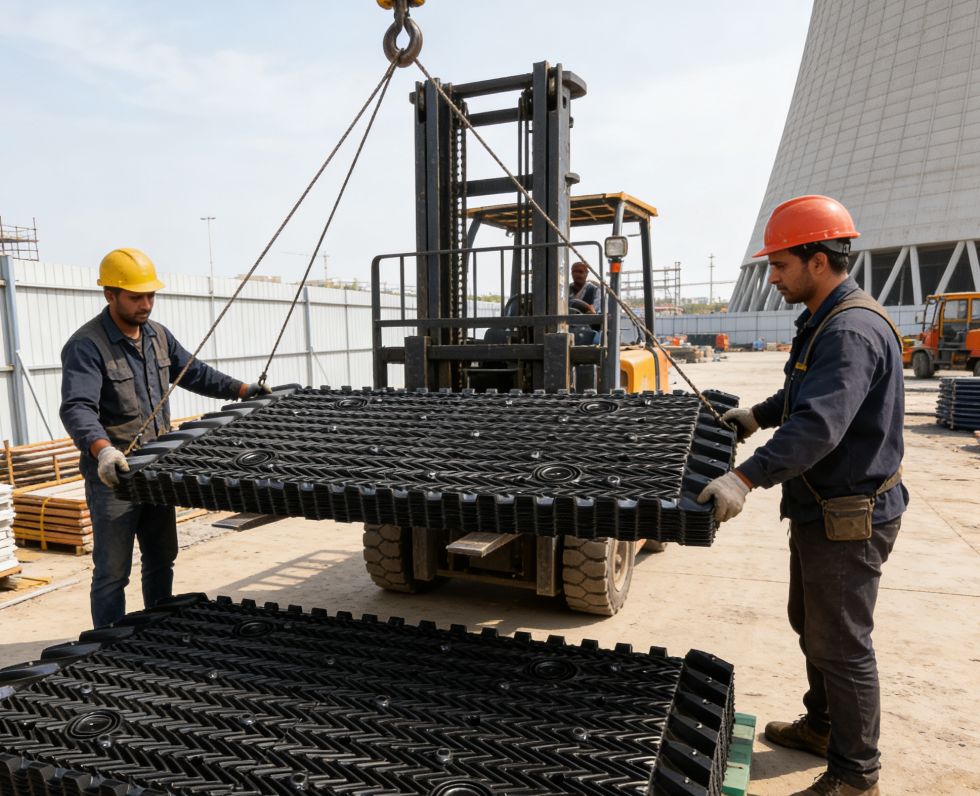
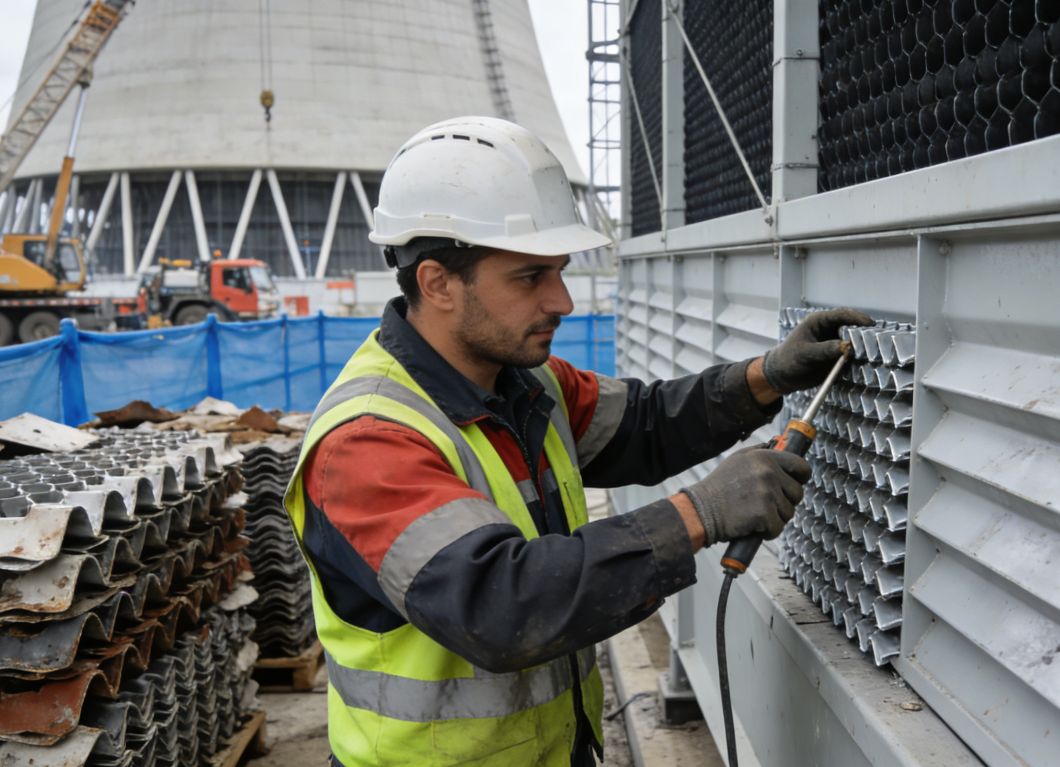
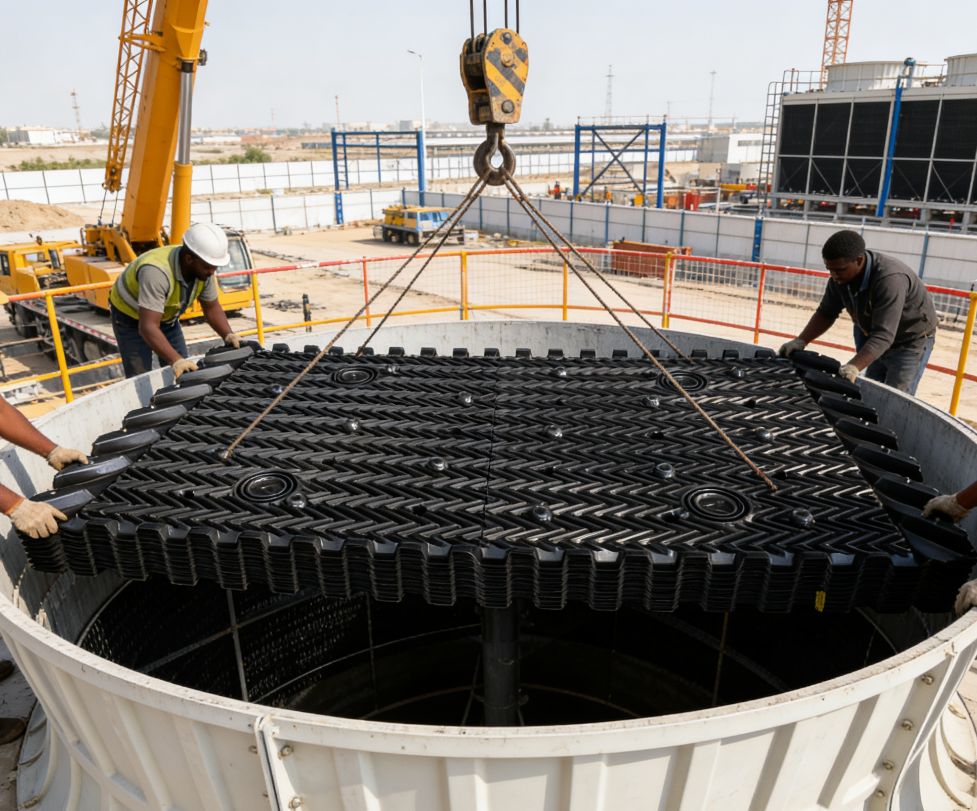
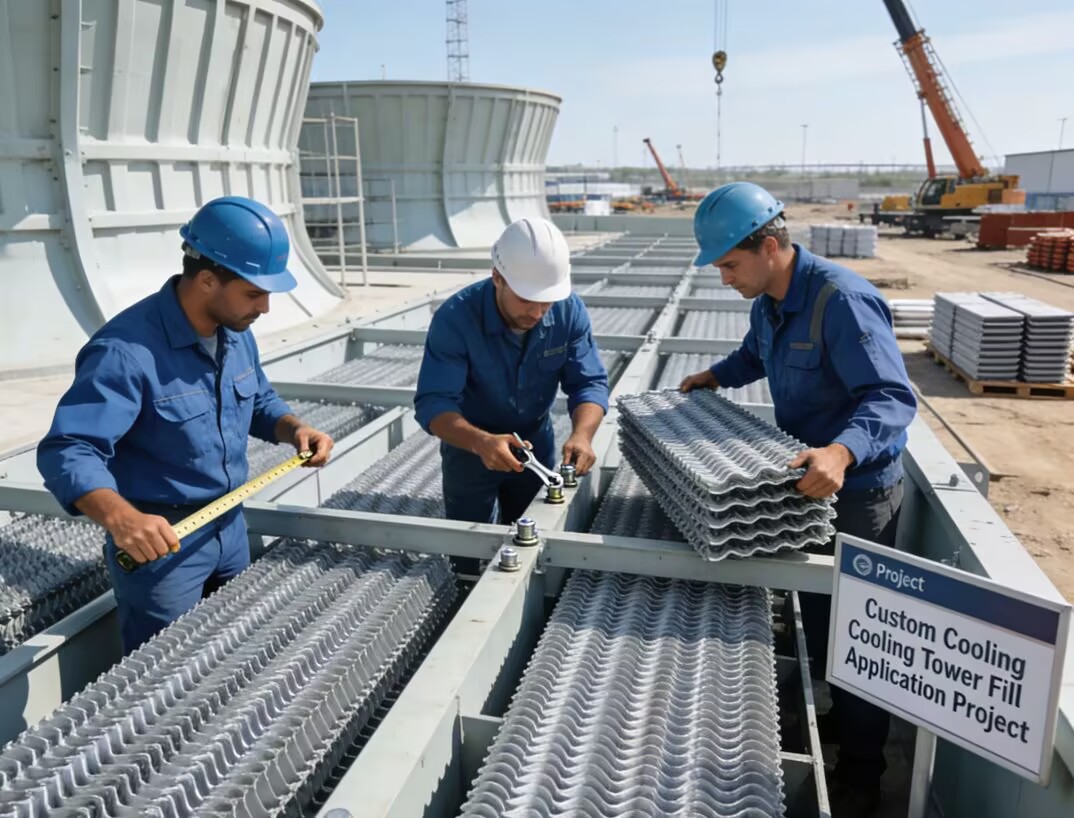
Cooling tower fill is not only a thermal component, but also a practical operating choice that affects water distribution, maintenance effort, and long-term tower stability. In industrial systems, the fill material can determine how the tower handles heat transfer, scaling, clogging, temperature changes, and cleaning frequency. For engineers and procurement teams, this is usually where performance differences begin.
In many facilities, the tower itself looks normal from the outside, but the internal condition tells a different story. If the wrong fill material is used, the system may age faster, require more cleaning, or become less tolerant of changing water quality. That is why fill material selection should always be based on the actual working condition, not just on basic product description.
The material used in a cooling tower fill influences how the tower behaves under real operating conditions. Heat transfer is important, but it is not the only concern. The fill must also resist deformation, support stable water flow, and remain usable under the local water condition.
When the material is not suitable, the result is often gradual. The tower may still run, but the operator begins to notice higher approach temperatures, more frequent cleaning, and unstable performance during heavy load periods. In that sense, cooling tower fill material is directly connected to operating reliability.
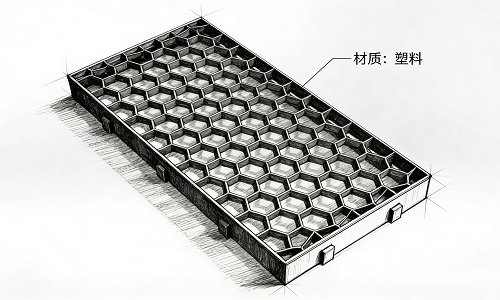
Different materials are formed into different structures. Some support thin film flow more effectively, while others are better suited to splash action. That is why a film fill cooling tower can perform differently from a system that uses a more open splash-style arrangement.
The way water spreads across the surface affects contact time with air. A stable spread pattern usually supports more consistent cooling, while poor spread creates dry zones and uneven thermal behavior.
Fill material must hold its shape under real water temperature and chemical conditions. If the material softens, warps, or becomes brittle, the tower can lose efficiency even if the original design was correct.
This is especially important in industrial plants that operate with fluctuating temperature, chemical treatment, or intermittent process changes. The material must fit the duty, not only the catalog specification.
Some materials are easier to clean, while others hold deposits more easily. A material that looks efficient in theory may create more maintenance work in practice if the water quality is not stable.
For maintenance teams, the real question is not only “how efficient is the fill?” but also “how often will this fill need attention?”
PVC cooling tower fill is widely used in industrial towers because it offers a practical balance between cost, workability, and cooling performance. It is commonly formed into structured sheet packs, including cooling tower fill media and other internal fill layouts.
PVC is often suitable for standard working conditions where water temperature is stable and chemical exposure is not extreme. In many projects, it remains a practical option because it is familiar to engineers and easy to integrate into existing tower designs.
However, PVC still has limits. If the water temperature becomes too high or the system is exposed to harsher chemical conditions, the material may age faster than expected. That is why the operating environment should always be reviewed before final selection.
PP cooling tower fill is often chosen for more demanding operating conditions. In practice, many engineers prefer it when the tower must handle higher temperatures, stronger chemical exposure, or a more aggressive water environment.
PP is not a universal solution, but it does offer a useful option when standard PVC is too limited for the duty. In industrial projects where long-term tolerance matters more than simple initial cost, PP can be a more suitable material choice.
For procurement teams, the important point is to compare material behavior under actual operation, not only under short-term test conditions.
Corrugated fill is widely used because its structure helps guide water into a controlled path while keeping the fill pack organized. In many towers, corrugated surfaces improve wetting behavior and support efficient air-water contact.
The geometry of corrugated fill also affects how easily deposits collect. A well-designed corrugated pattern can support cooling performance while still remaining practical for maintenance. In field work, this balance is often more important than chasing a purely theoretical efficiency value.
Cooling tower operation is influenced by more than just temperature. Material choice affects the way the fill responds to flow rate, water quality, seasonal changes, and cleaning cycles.
When the material is matched correctly, the tower usually runs with steadier temperature control and fewer abnormal maintenance events. When the material is mismatched, the system may still operate, but the stability becomes less predictable.
For example, a material that handles clean circulating water well may not perform the same way in a system with suspended solids or biological growth. This is why industrial users should treat fill material as part of the whole water-side strategy.
In many projects, the choice between a film fill cooling tower and a splash arrangement depends on water quality and operating priorities. Film fill supports strong heat transfer because water forms a thin layer, but that same structure can be less tolerant of dirty water.
A tower fill using splash-type behavior is often more suitable where water carries more debris or where clogging risk is higher. The open structure usually makes maintenance easier, although thermal efficiency may differ from film-type designs.
In simple terms, a cleaner system can usually take advantage of more structured fill. A dirtier system often needs a more tolerant design.
In one Southeast Asia project, the tower served a plant with warm ambient conditions and strong biological activity. The original fill performed well at the beginning, but over time the maintenance team noticed more fouling and uneven water distribution.
After inspection, the issue was not only water treatment. The material and fill geometry were also contributing to the problem. The tower was later upgraded to a more suitable fill arrangement with better tolerance for the site condition. The result was more stable operation and less frequent manual cleaning.
This type of case is common in humid regions. When the air is warm and moisture is high, the internal condition of the tower can change faster than expected. The fill material must be selected with that reality in mind.
Another project involved a process with elevated water temperature during longer production cycles. The previous fill material began to lose shape over time, and performance gradually declined. The problem became more visible during peak load periods.
After reviewing the operating condition, the team selected a PP-based solution. The purpose was not to chase a marketing claim, but to use a material better aligned with the real process duty. That adjustment helped the tower maintain more stable operation under the same working environment.
For engineers, this kind of decision is often more useful than replacing the entire tower. The right internal material can solve a practical performance issue without unnecessary system changes.
In a dirty-water application, the original film-style arrangement clogged too quickly. The plant was dealing with suspended solids that entered the tower even after routine filtration. Cleaning was possible, but the maintenance burden was not sustainable.
After reviewing the site, the system was changed to a more tolerant fill structure. The goal was not maximum theoretical efficiency, but reliable cooling under poor water conditions. That shift reduced clogging pressure and improved daily operation.
In dirty-water systems, the best fill is often the one that stays usable longer, not the one with the best brochure performance.

When selecting cooling tower fill material, engineers usually review several practical questions:
These questions are often more useful than comparing product names alone. A fill can only perform well when it matches the duty condition.
Clean-water systems often support more efficient structured fill arrangements. In these cases, the project may benefit from a film-based layout with stable distribution and good wetting behavior.
Dirty-water systems usually need a more open structure. If clogging has been a recurring problem, a more tolerant fill arrangement can reduce cleaning frequency and improve operating reliability.
High temperature systems often place more stress on the fill body. In those cases, PP may be considered more carefully because the material is often better suited for tougher operating conditions.
If the fill material cannot tolerate the operating temperature, the structure may deform. Once that happens, water distribution becomes uneven and cooling consistency drops.
Some materials and designs hold mineral deposits more easily. Over time, scale reduces open area and affects heat transfer.
In systems with suspended solids, a fill with narrow channels may clog faster than expected. This can make maintenance more frequent and less predictable.
Even when the tower is well maintained, material aging still happens. UV exposure, chemical contact, and temperature stress all contribute to gradual deterioration.
Good maintenance begins with understanding the material. The same cleaning method is not always suitable for every fill type.
In many towers, the fill is blamed for poor performance when the real issue is poor water distribution or dirty intake air. A full inspection saves time and avoids unnecessary replacement.
Fill performance is connected to other internal parts. A complete review may include:
These parts help support stable operation by controlling carryover, airflow, and contamination entry. When they are in poor condition, even a good fill material may not perform properly.
Cooling tower fill material has a direct impact on how the tower operates over time. It affects heat transfer, clogging resistance, cleaning effort, and the tower’s ability to remain stable under real industrial conditions. The right material is not simply the one with the strongest claim, but the one that fits the water quality, temperature, and maintenance plan of the site.
For procurement teams and engineers, the most practical approach is to match the fill structure and material to the actual working environment. Whether the system uses PVC cooling tower fill, PP cooling tower fill, film fill, splash fill, or corrugated fill, the final choice should support long-term operation rather than short-term appearance.
Yes. The material influences water spread, resistance to heat, fouling behavior, and maintenance frequency, all of which affect cooling performance.
It depends on the operating condition. PVC is often suitable for standard service, while PP is often considered for more demanding temperature or chemical conditions.
Yes. If the structure is too narrow or the material is not suitable for the water condition, clogging can occur more easily.
That change is usually considered when the system has dirty water, suspended solids, or repeated clogging problems that film fill cannot handle well.
Check water quality, distribution, and maintenance history. In many cases, the problem is not only the fill itself but the operating condition around it.
We are professional cooling tower fills manufacturer, which can supply wide ranges of cooling tower fills with PVC, PP or CPVC materials.
The brake oil pipes we provide have multiple monitoring certifications and complete compliance documents to help your business smoothly enter the global market.
Fully automated production line, supporting individual customization. Combined with just-in-time logistics solutions, ensuring stable inventory.
A professional foreign trade technical team provides rapid response and is a trustworthy partner, offering everything from technical Q&A to market insights.

The cooling tower fill from this company has performed reliably in our systems. We appreciate the consistent quality and noticeable efficiency improvement.
CEO & Founder

As a CEO, I value partners who deliver on their promises. Their cooling tower fill is a solid product that contributes to stable operations.
CEO & Founder

We are satisfied with the performance of this cooling tower fill. It has integrated well into our existing setup with good results.
Manager

This company provides quality cooling tower fill that meets our operational needs. It's a dependable component in our infrastructure.
CEO & Founder

We are professional cooling tower fills manufacturer, which can supply wide ranges of cooling tower fills with PVC, PP or CPVC materials.

Instant Chat Support
+8615303180686
packingesale@gmail.com
Get the latest information
Scan the code to follow
Return to the top of the page