Why Film Fill Cooling Tower Designs Are Widely Used Today
In many modern industrial cooling systems, the internal structure of the cooling tower plays a decisive role in determining overall efficiency. One of the most widely used designs today is the Film Fill Cooling Tower. This design has become popular across industries because it significantly increases the heat exchange surface area while maintaining a compact tower structure.
Cooling towers rely on contact between warm circulating water and airflow to remove heat from industrial processes. Film fill structures help maximize this contact by spreading water into very thin layers across specially designed surfaces. As air flows through these channels, evaporation occurs more efficiently, resulting in faster cooling and improved energy performance.

How Film Fill Structures Improve Heat Transfer
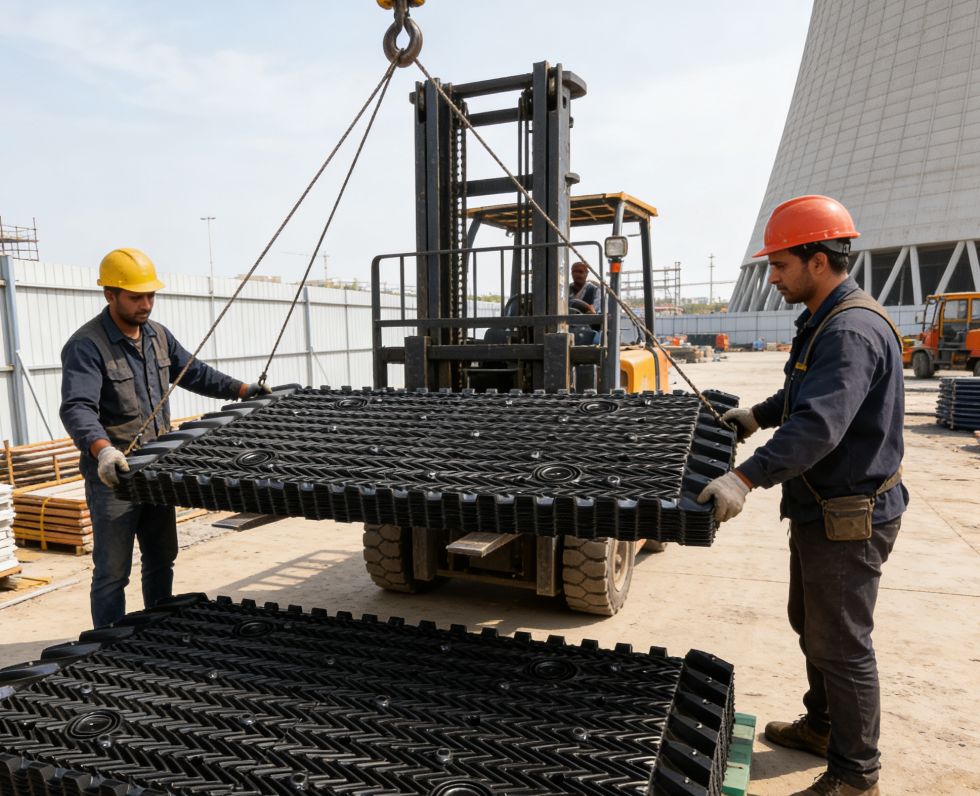
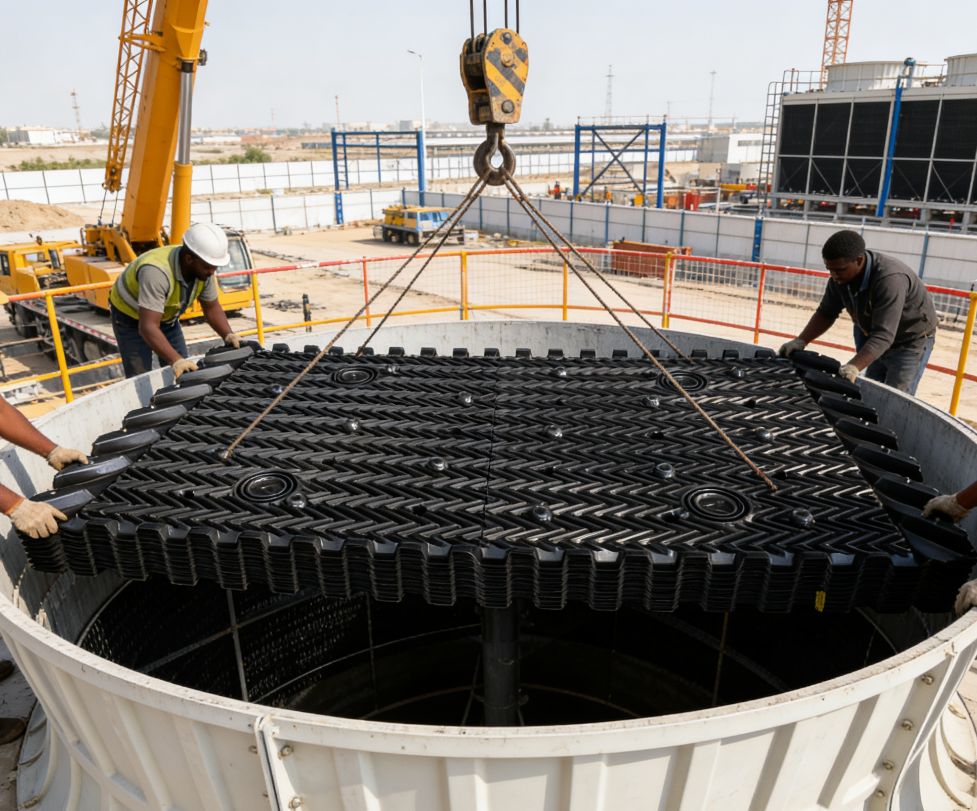
Film fill technology works by guiding water across thin sheets that are arranged in a corrugated pattern. These sheets create multiple channels where air and water interact. When water flows across the surface, it forms a thin film layer rather than droplets. This greatly increases the contact surface between water and air, which is essential for efficient heat transfer.
Compared with traditional splash fill systems, film fill designs often provide higher cooling efficiency because they maintain consistent water distribution across the entire fill surface. This allows the tower to operate with greater thermal performance even under heavy load conditions.
Materials Used In Modern Cooling Tower Media
Most film fill products are manufactured from durable PVC materials. PVC is lightweight, corrosion-resistant, and capable of withstanding the humid environment inside cooling towers. These properties make PVC an ideal material for long-term operation in industrial cooling applications.
High-quality Cooling Tower Media is typically designed with optimized spacing between sheets to ensure stable airflow and water distribution. Proper sheet spacing helps prevent clogging while maintaining efficient heat exchange performance.
Supporting Components Inside Cooling Towers
While fill media plays a major role in cooling performance, other tower components also contribute to system efficiency. For example, devices such as Drift Eliminator help capture water droplets that may be carried upward by airflow.
Drift eliminators reduce water loss and help protect surrounding equipment from moisture. When combined with efficient film fill structures, they ensure that cooling towers operate with minimal water waste and improved environmental performance.
Airflow Management In Cooling Towers
Another factor that influences cooling tower efficiency is airflow distribution. Properly designed Air Inlet Louvers help guide outside air into the tower while preventing debris from entering the system.
Stable airflow ensures that air passes evenly through the fill media, allowing the entire surface area of the fill to participate in heat exchange. Without proper airflow management, some sections of the tower may experience reduced cooling efficiency.
Why Many Industrial Facilities Choose Film Fill Systems
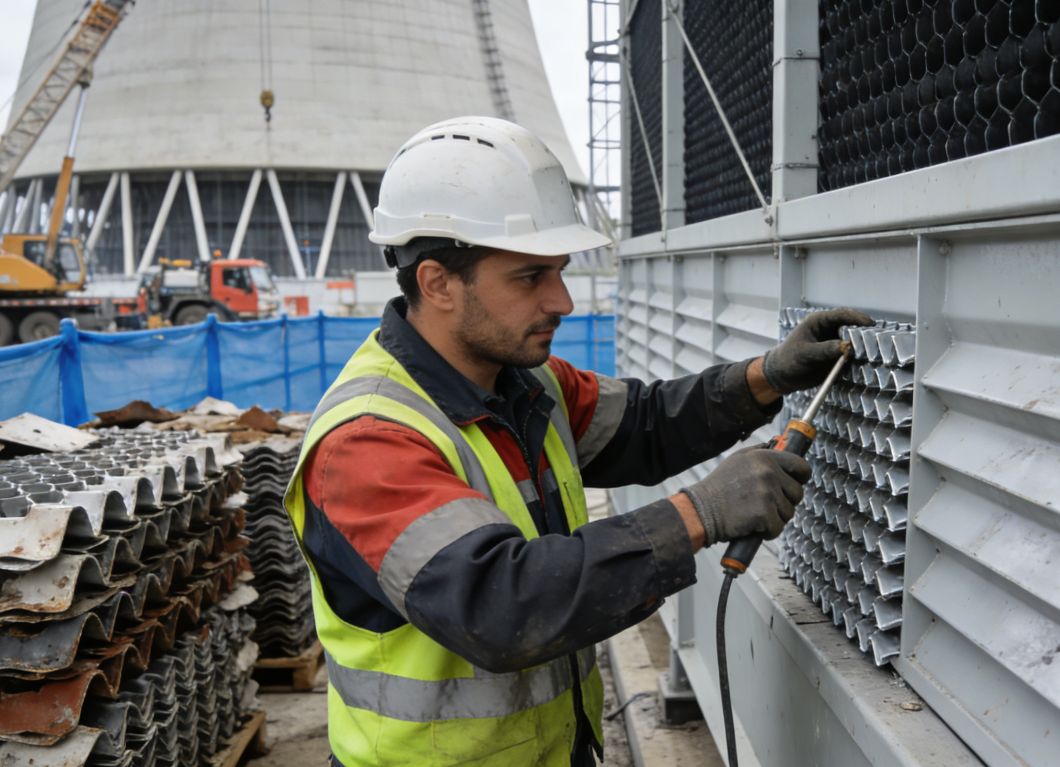
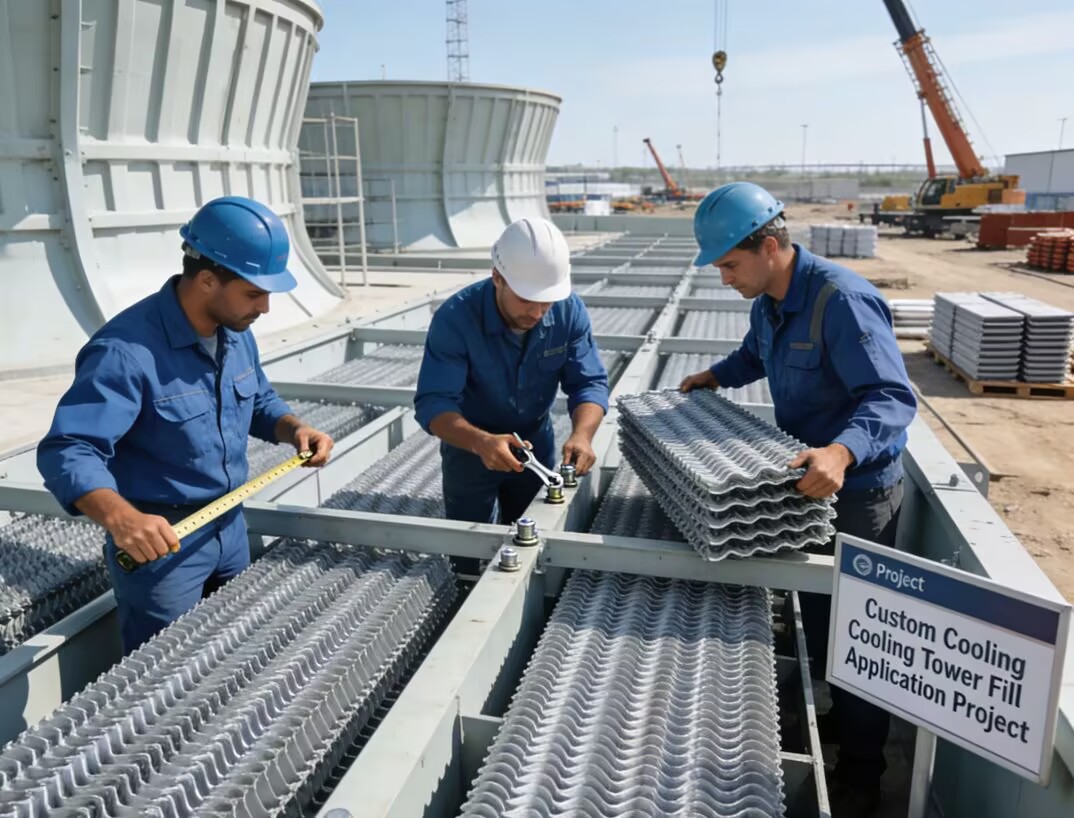
Across Southeast Asia and many other regions, industrial facilities are increasingly upgrading their cooling towers with film fill technology. This upgrade often improves cooling capacity while reducing operating costs. In many retrofit projects, replacing older packing with modern film fill media has significantly enhanced system performance.
Because of its efficient structure and durable material, film fill has become one of the most reliable solutions for industrial cooling towers in sectors such as power generation, chemical production, manufacturing, and HVAC systems.
If you are planning to upgrade your cooling tower packing or looking for high-efficiency film fill structures, our engineering team can provide professional support for your project.
You can send us your cooling tower drawings, photos, or technical specifications. Our engineers will help recommend suitable fill materials and configurations based on your operating conditions.
Contact Us Here