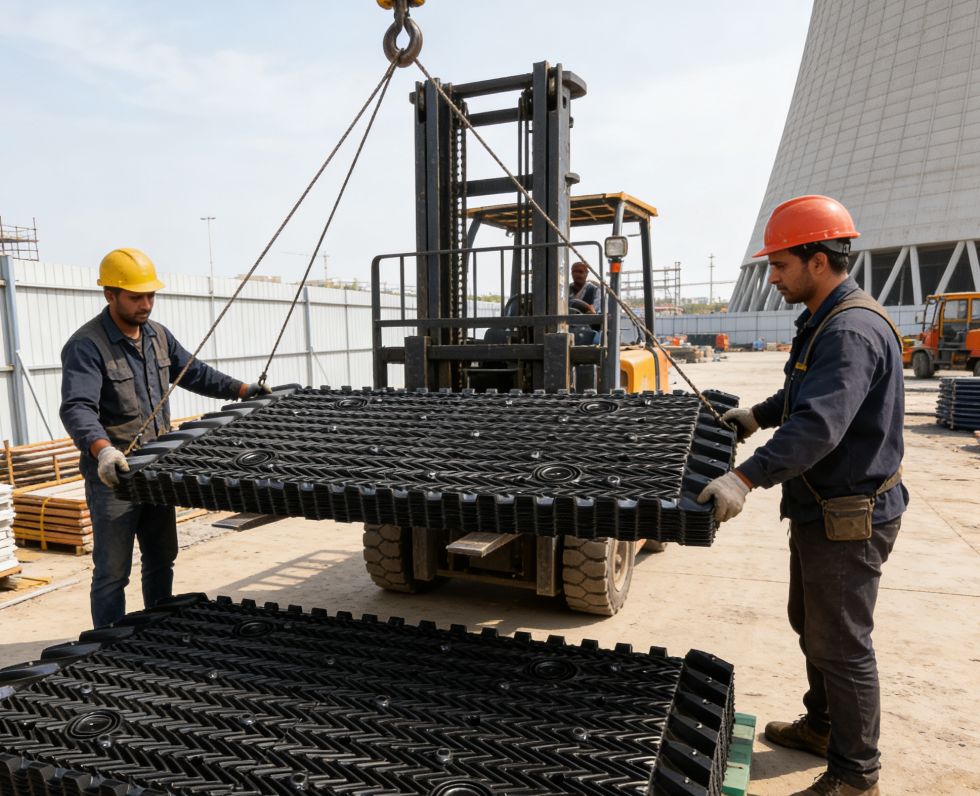
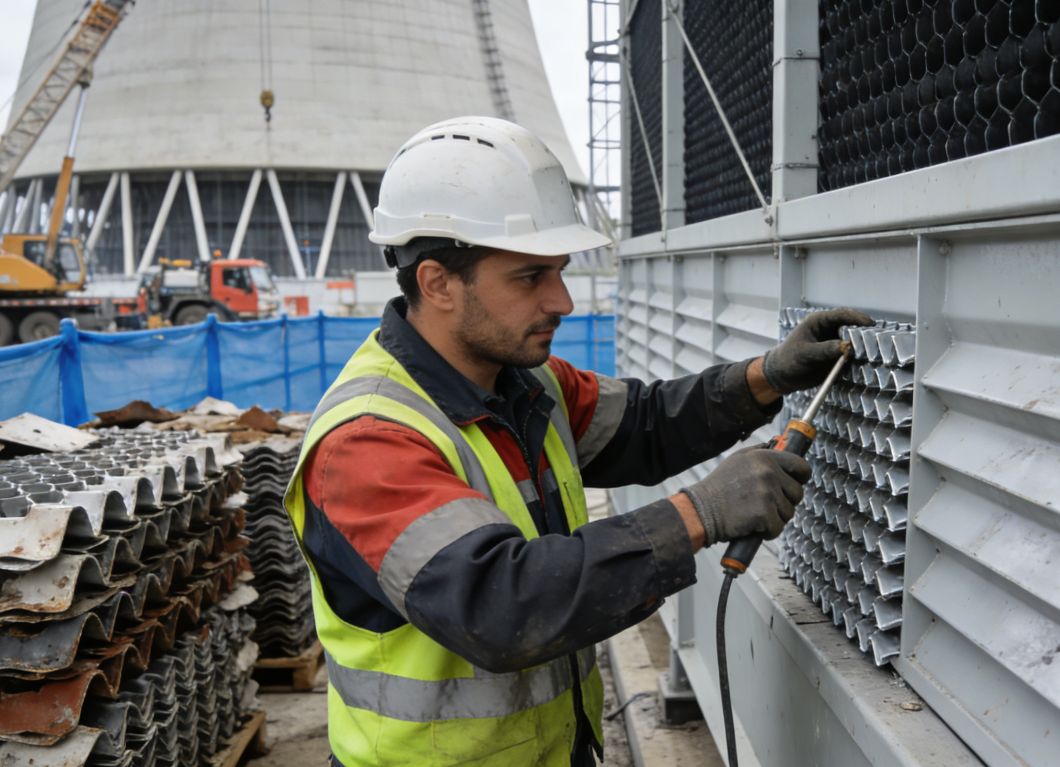
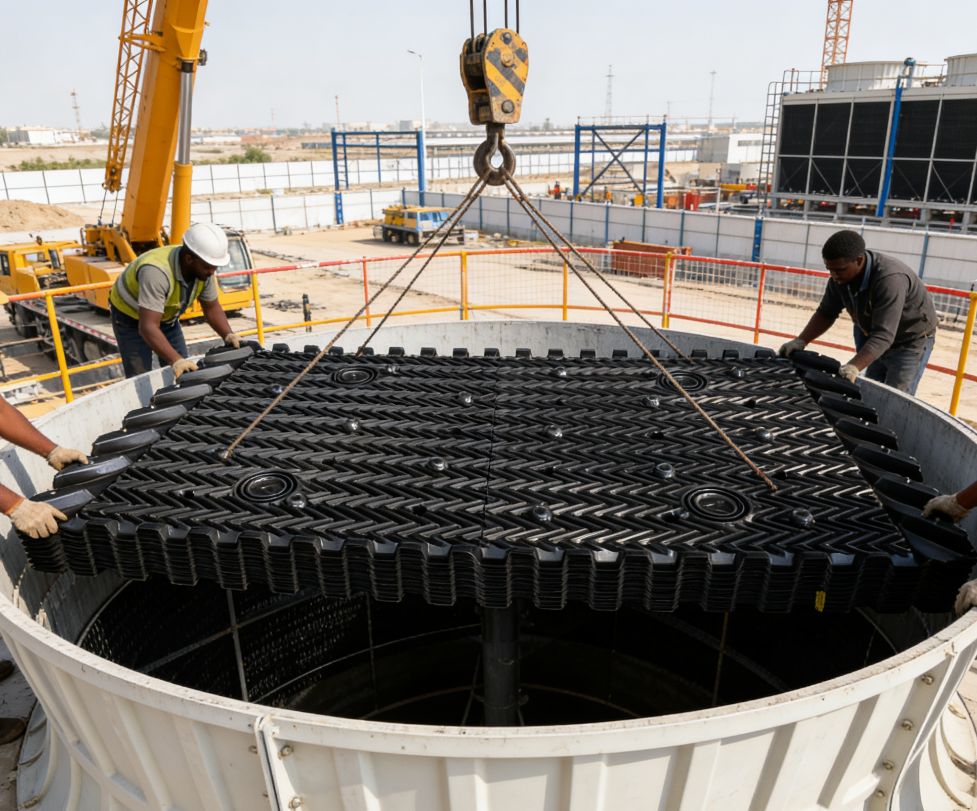
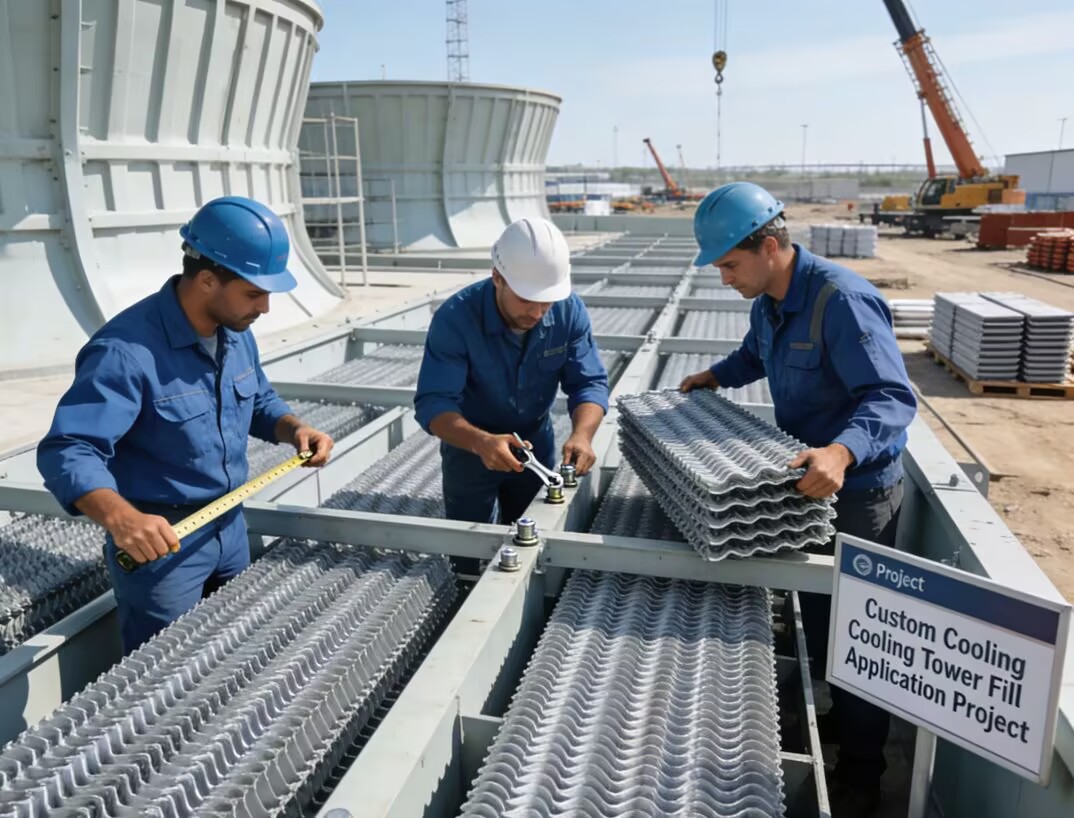
If you operate a cooling tower, Legionella is not just an environmental concern – it is a serious liability. I have helped facilities across healthcare, hospitality, and industrial sectors implement Legionella risk management plans. And one of the most important components of that plan is often overlooked: drift eliminators. The right Cooling Tower Fill Manufacturer products paired with high-quality drift eliminators are your first line of defense against Legionella aerosolization.

Cooling towers are perfect homes for Legionella bacteria if not well-maintained[reference:68]. Legionella bacteria thrive in warm, stagnant water and can cause Legionnaires' disease – a severe and sometimes deadly form of pneumonia[reference:69]. Drift carries these bacteria out of the cooling tower and into the air, where they can be inhaled. Drift eliminators are literally the last barrier between contaminated water and human lungs.
ASHRAE Standard 188 now establishes minimum legionellosis risk management requirements for commercial buildings, and states are rapidly adopting enforcement mechanisms[reference:70]. New Jersey's Bill S2188 requires certain facilities to implement ASHRAE 188-aligned water management plans with a compliance deadline of September 2026. Many other jurisdictions are following. If you are not already compliant, you will be soon.
Drift is the fine water droplets that escape from the cooling tower fan stack. Even a well-maintained tower loses some water to drift – typically 0.01-0.05** of circulation flow. That might not sound like much, but on a 10,000 gallons per minute system, 0.05** is 5 gallons per minute – 7,200 gallons per day. If that water contains Legionella, every droplet is a potential infection vector.
High-efficiency drift eliminators reduce drift to 0.001** or less – a 95-98** reduction. The 2025 standard for drift eliminators reduces allowable drift to 0.0005** or less. For healthcare facilities and other high-risk applications, I recommend targeting even lower – 0.0002** or less. The extra cost is justified by the risk reduction.
A drift eliminator is essentially a series of zigzag blades that force air to change direction. Droplets hit the blades and drain back into the tower. The efficiency of this process depends on blade spacing, material, and installation quality. A single missing or misaligned blade creates a path for drift. If your drift eliminators are old, cracked, or missing sections, they may be doing almost nothing.
The 2025 Cooling Tower Safety Checklist recommends performing periodic Legionella risk assessments, implementing enhanced water treatment programs, ensuring proper water circulation, and maintaining cooling towers clean regularly[reference:71]. Specific requirements include testing your system every 3-6 months, adhering to ASHRAE 188, the CDC Toolkit, and local health regulations, and maintaining complete records of treatment and testing[reference:72].
Cooling towers require disinfection and cleaning regularly, particularly during warmer months when microbes grow faster. Deep cleaning is recommended at least twice a year[reference:73]. If you are not already doing these things, start now.
Not all drift eliminators are equal for Legionella control. Here is what I recommend based on field experience. First, blade-type eliminators are better than mesh pads. Mesh pads can clog with biofilm, actually creating a growth surface for bacteria. Blade-type eliminators have smooth surfaces that are easy to clean. Second, choose polypropylene over PVC. PP has better high-temperature resistance and does not degrade as quickly in chlorinated water. Third, look for eliminators with documented drift rates at your specific air velocity. A drift rate of 0.001** at 400 fpm might be 0.005** at 600 fpm. Know your operating conditions.
Fourth, ensure proper installation. Gaps between eliminator sections are common failure points. Use foam seals or overlapping joints to eliminate gaps. Fifth, plan for regular inspection and cleaning. Even the best eliminators need attention. Inspect annually for damage or sagging. Replace any damaged sections immediately.
I worked with a 400-bed hospital in the Northeast that had an aging cooling tower with original drift eliminators from the 1990s. The hospital's infection control team was concerned about Legionella risk, especially after a local outbreak traced to a cooling tower. We replaced the old eliminators with new high-efficiency polypropylene blade-type eliminators, tested to 0.0003** drift at the hospital's operating air velocity. The upgrade cost was $18,000. The hospital also implemented quarterly Legionella testing and automated biocide injection. Two years later, no positive Legionella tests have been detected. The hospital's risk assessment team cited the drift eliminator upgrade as a critical control measure in their ASHRAE 188 water management plan.
Your cooling tower fill creates droplets of a certain size. High-efficiency film fill tends to create finer droplets than splash fill or older film fill. If you upgrade to high-efficiency fill but keep old eliminators, the fine droplets may pass right through. I have seen this mistake many times. When you replace fill, replace eliminators at the same time. Match eliminator efficiency to fill type. For high-efficiency film fill, use high-efficiency eliminators with tighter blade spacing. When ordering new fill, ask the supplier for eliminator recommendations. Many offer matched sets that are tested together.
Do not assume that because you cannot see visible mist, your drift eliminators are working. Droplets smaller than 20 microns are invisible to the naked eye but can still carry bacteria. You need certified drift test data, not visual inspection. Also, do not ignore basin biofilm. Even with good drift eliminators, if your basin has biofilm, the water being aerosolized may still contain bacteria. Maintain the whole system, not just the drift eliminators.
Do not use chemical treatments as a substitute for good drift elimination. Even if you kill bacteria in the water, the dead cells can still be aerosolized and cause respiratory irritation. Prevention through drift control is better than cure.
New York Local Law 159 of 2025 increases the required frequency of Legionella monitoring. Facilities must incorporate monthly Legionella culture testing during cooling tower operation. In New Jersey, Senate Bill S2188 requires certain facilities to implement ASHRAE 188-aligned water management plans, with compliance deadlines in 2026. The Centers for Medicare & Medicaid Services requires hospitals to have water management plans that specifically address Legionella. If your facility is in healthcare, you are already subject to these requirements.
Even if you are not in a regulated sector, consider the liability. Cooling tower-related Legionella outbreaks have resulted in multi-million dollar lawsuits and criminal charges in severe cases. The cost of drift eliminator upgrades is trivial compared to the potential legal liability.
Here is what I recommend for any facility operating cooling towers. First, if your drift eliminators are more than 10 years old, replace them. Material degrades over time. Second, if you cannot document the drift rate of your current eliminators, replace them. Third, if you see visible mist from the fan stack, replace your eliminators immediately – they are not working. Fourth, integrate eliminator inspection into your monthly cooling tower checklist. Fifth, keep spare eliminator sections on hand for emergency replacement.
Legionella risk management is not optional. It is a legal requirement in many jurisdictions and a moral imperative everywhere. Drift eliminators are a small investment in safety. Do not overlook them.
We supply high-efficiency drift eliminators tested to 0.0005** drift or lower. Certified to meet ASHRAE 188 and local health regulations. Free Legionella risk assessment for your facility.
Contact Us Here →We are professional cooling tower fills manufacturer, which can supply wide ranges of cooling tower fills with PVC, PP or CPVC materials.
The brake oil pipes we provide have multiple monitoring certifications and complete compliance documents to help your business smoothly enter the global market.
Fully automated production line, supporting individual customization. Combined with just-in-time logistics solutions, ensuring stable inventory.
A professional foreign trade technical team provides rapid response and is a trustworthy partner, offering everything from technical Q&A to market insights.

The cooling tower fill from this company has performed reliably in our systems. We appreciate the consistent quality and noticeable efficiency improvement.
CEO & Founder

As a CEO, I value partners who deliver on their promises. Their cooling tower fill is a solid product that contributes to stable operations.
CEO & Founder

We are satisfied with the performance of this cooling tower fill. It has integrated well into our existing setup with good results.
Manager

This company provides quality cooling tower fill that meets our operational needs. It's a dependable component in our infrastructure.
CEO & Founder

We are professional cooling tower fills manufacturer, which can supply wide ranges of cooling tower fills with PVC, PP or CPVC materials.

Instant Chat Support
+8615303180686
packingesale@gmail.com
Get the latest information
Scan the code to follow
Return to the top of the page