Power plants are one of the industries with the highest requirements for cooling system stability. During electricity generation, a large amount of heat is produced and must be removed continuously to maintain safe and efficient operation.
Cooling towers play an important role in this process by transferring heat from circulating water into the atmosphere. Inside the cooling tower, the fill media is one of the key components that directly affects heat exchange performance.
A properly selected cooling tower fill can help improve water and air contact, maintain stable cooling performance, and support long-term operation in power plant environments.
However, selecting suitable cooling tower packing for power plants is not as simple as choosing a standard product. Engineers need to consider water quality, operating temperature, tower design, and maintenance conditions.
In a power plant cooling system, hot water generated during the production process is sent to the cooling tower. Inside the tower, water passes through the fill area while air moves through the structure.
The heat is transferred from water to air mainly through evaporation and direct heat exchange. After cooling, the water returns to the power plant equipment for reuse.
The cooling process depends on several important components:
Among these components, the fill system provides the main contact area between air and water. This is why cooling tower fill selection is an important part of power plant cooling design.
Compared with commercial HVAC systems, power plant cooling towers usually operate under more demanding conditions. They often run continuously for long periods and handle large volumes of circulating water.
Common challenges include:
Power plants usually require cooling systems to operate reliably throughout the year. Any unexpected cooling problem may affect production efficiency and equipment safety.
Power plant cooling towers often process much larger water volumes compared with commercial applications. The fill design needs to provide stable performance under high water loading conditions.
Depending on the water source and treatment system, circulating water may contain minerals, suspended solids, or biological contaminants.
If unsuitable tower fill is selected, problems such as clogging, scaling, and reduced airflow may occur over time.
Some power generation applications involve high-temperature water circulation. The selected material needs to maintain structural stability under continuous heat exposure.
There is no single cooling tower fill design that fits every power plant. Engineers usually evaluate several factors before making a decision.
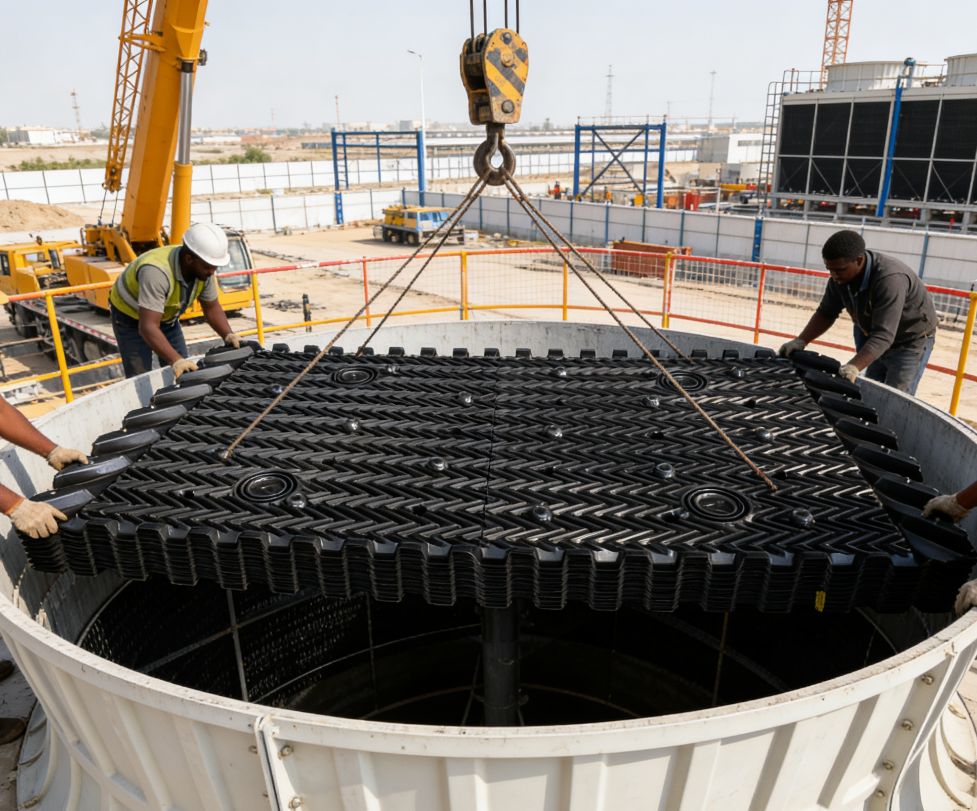
Film Fill is widely used in many modern cooling tower applications because of its efficient heat transfer characteristics.
The structure of film fill creates a large contact surface between water and air. Water spreads into a thin layer along the fill sheets, allowing effective heat exchange.
A film fill cooling tower solution can be suitable for power plants where:
Splash fill works by breaking falling water into smaller droplets. This design is often considered for applications where water quality conditions are more challenging.
Splash fill may be suitable for:
The choice between film fill and splash fill depends on the actual operating environment.
Material selection is another important consideration for power plant cooling tower projects.
PVC is widely used in many cooling tower applications because it provides stable performance and good corrosion resistance.
PVC cooling tower fill can be suitable for normal operating temperatures and well-controlled cooling water systems.
Polypropylene (PP) is often selected for applications requiring higher temperature resistance and stronger durability.
For power plants operating in hot regions such as the Middle East or tropical areas of Southeast Asia, PP material may provide additional advantages under demanding conditions.
The design of cooling tower fill media influences how effectively the cooling tower performs.
Engineers usually consider:
A good fill design provides sufficient contact time between air and water. This helps improve cooling capacity without unnecessary energy consumption.
In power plants, preventing blockage is often a priority. A suitable fill structure should balance heat transfer efficiency and maintenance requirements.
Because power plant cooling towers operate continuously, fill materials should have enough structural strength to maintain their shape during long-term use.
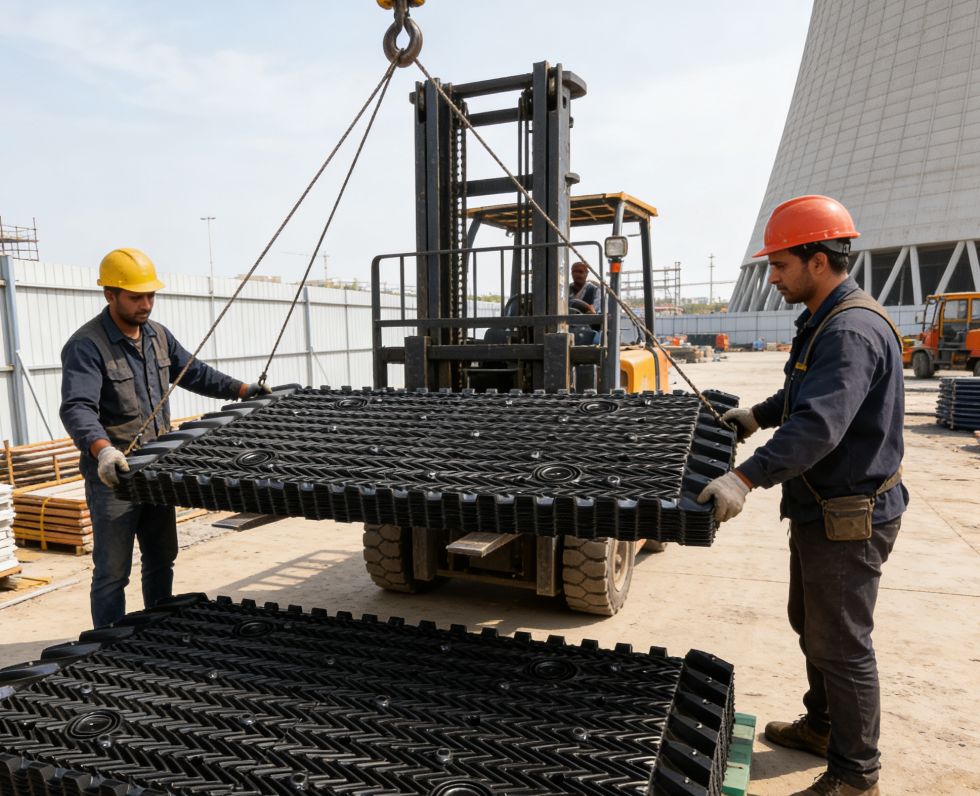
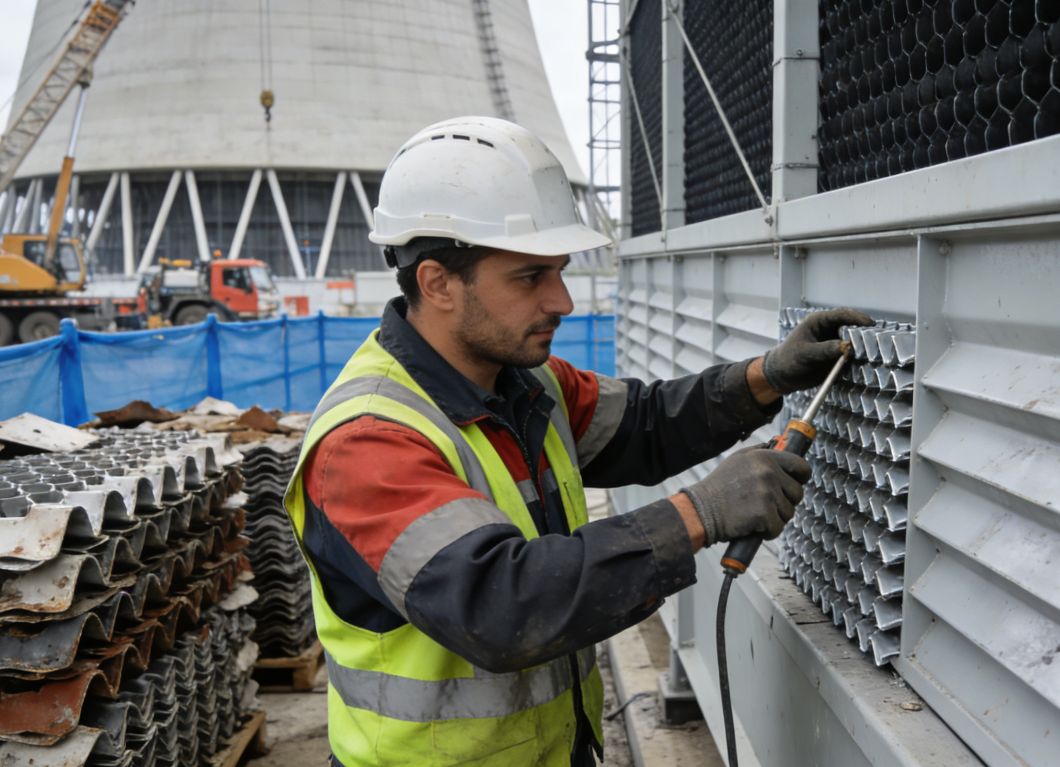
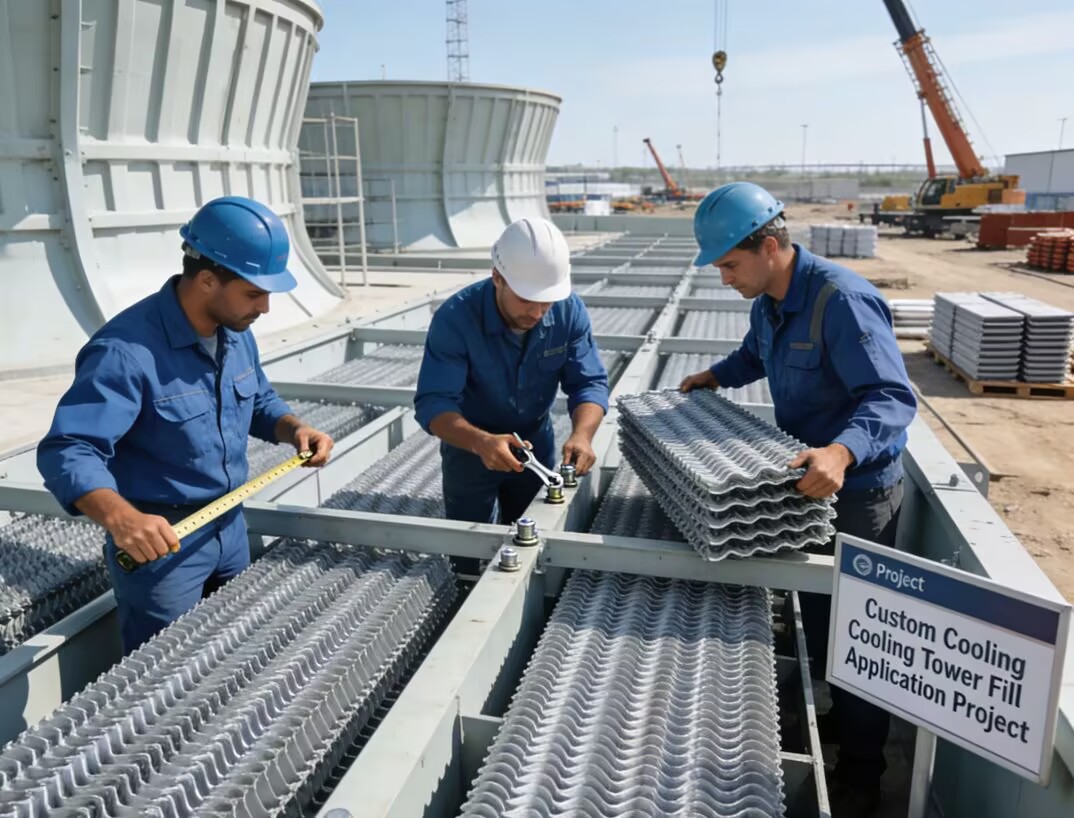
Many power plants do not replace the entire cooling tower. Instead, they improve performance by replacing old or damaged fill media.
A cooling tower fill replacement project usually includes:
Replacing outdated fill can be an effective way to improve an existing cooling tower without major structural modification.
Besides selecting suitable fill media, several other factors also influence cooling tower performance.
Good water treatment helps reduce scaling, corrosion, and biological growth inside the cooling system.
Regular inspection helps identify problems before they affect production.
Stable airflow is essential for effective heat exchange. Blocked air paths can reduce cooling performance.
A complete cooling tower solution includes more than just fill media. Other components also contribute to system performance.
The cooling tower fill is the core heat exchange component and should be selected according to power plant operating conditions.
The Air intake grille helps control airflow entering the cooling tower and protects internal areas from external particles.
The Water Collector helps reduce water loss caused by droplets leaving the cooling tower with airflow.
Power generation industries in different regions have different cooling requirements.
Countries in Southeast Asia are developing more industrial projects, increasing demand for reliable cooling systems. High temperature and humidity conditions require cooling tower components with stable performance.
The Middle East has many power and energy projects operating in hot climates. Cooling systems need to handle high ambient temperatures and continuous operation.
Japan and Korea have advanced manufacturing and energy industries with strict requirements for equipment reliability and efficiency.
Power plant cooling systems require reliable performance because cooling directly affects the stability of electricity production. Choosing the right cooling tower fill is an important step in improving heat transfer efficiency and reducing maintenance problems.
The best solution depends on actual project conditions, including water quality, temperature, cooling tower type, and operating environment.
By selecting suitable cooling fill products and maintaining the complete cooling system properly, power plants can achieve more stable and efficient operation over the long term.
We are professional cooling tower fills manufacturer, which can supply wide ranges of cooling tower fills with PVC, PP or CPVC materials.
The brake oil pipes we provide have multiple monitoring certifications and complete compliance documents to help your business smoothly enter the global market.
Fully automated production line, supporting individual customization. Combined with just-in-time logistics solutions, ensuring stable inventory.
A professional foreign trade technical team provides rapid response and is a trustworthy partner, offering everything from technical Q&A to market insights.

The cooling tower fill from this company has performed reliably in our systems. We appreciate the consistent quality and noticeable efficiency improvement.
CEO & Founder

As a CEO, I value partners who deliver on their promises. Their cooling tower fill is a solid product that contributes to stable operations.
CEO & Founder

We are satisfied with the performance of this cooling tower fill. It has integrated well into our existing setup with good results.
Manager

This company provides quality cooling tower fill that meets our operational needs. It's a dependable component in our infrastructure.
CEO & Founder

We are professional cooling tower fills manufacturer, which can supply wide ranges of cooling tower fills with PVC, PP or CPVC materials.

Instant Chat Support
+8615303180686
packingesale@gmail.com
Get the latest information
Scan the code to follow
Return to the top of the page