A cooling tower is designed to operate for many years, but some internal components gradually lose performance due to continuous operation, water quality problems, and environmental conditions. Among these components, the cooling tower fill is one of the parts that requires regular inspection and possible replacement.
The fill media inside a cooling tower is responsible for creating contact between water and air. When the fill becomes damaged, blocked, or aged, the cooling efficiency of the entire system may decrease.
Many engineers do not replace the entire cooling tower when performance declines. Instead, replacing the old fill with suitable new cooling tower fill can be a practical solution to restore cooling performance.
Understanding when and how to replace cooling tower packing helps facility managers reduce unexpected downtime and maintain stable operation.
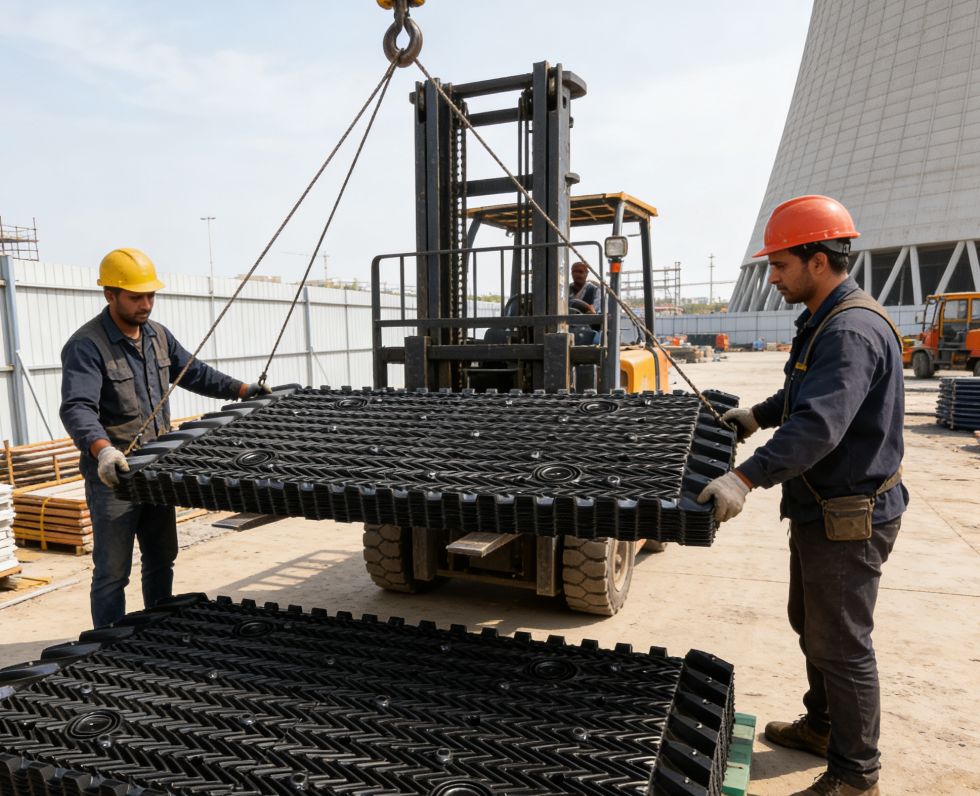
Cooling tower fill replacement refers to removing old or damaged fill media and installing new fill material inside an existing cooling tower structure.
Over time, the original fill may experience:
When these problems become serious, the cooling tower may no longer operate at its original design capacity.
A replacement project usually focuses on improving the internal heat exchange area without making major changes to the cooling tower structure.
Many cooling tower owners only consider replacement after a serious performance problem appears. However, experienced engineers usually monitor several warning signs before failure occurs.
One of the most common signs is that the cooling tower cannot reduce water temperature as effectively as before.
Possible reasons include:
If the cooling tower requires more operating time or higher fan speed to achieve the same cooling result, the fill condition should be checked.
During maintenance inspections, engineers may find:
Physical damage can affect airflow and water distribution, reducing the overall efficiency of the cooling tower.
When dirt, minerals, or biological growth accumulate inside the fill, airflow resistance may increase.
Higher pressure drop can force fans to work harder, which may increase energy consumption.
A good cooling tower fill should allow water to spread evenly. If some areas receive too much water while others remain dry, heat exchange performance may decrease.
Water quality is one of the biggest factors affecting cooling tower fill life.
Untreated circulating water may contain:
These substances can accumulate inside the fill structure and reduce performance over time.
Continuous exposure to high-temperature water can accelerate material aging.
For demanding applications, engineers often consider materials such as PP because of their improved temperature resistance.
Some industrial cooling systems operate in environments where water contains chemical substances. Material compatibility should be considered during fill selection.
Even high-quality fill materials have a service life. After years of operation, plastic materials may become weaker due to temperature, sunlight, and chemical exposure.
Regular inspection helps determine whether replacement is necessary.
Engineers usually check the following areas:
The first step is checking the physical condition of the fill.
Look for:
Comparing current cooling performance with original operating data can help identify whether fill efficiency has decreased.
Important measurements include:
Uneven water distribution may indicate problems with the fill structure or water distribution system.
Replacing old fill does not always mean choosing exactly the same product. In many cases, upgrading to a more suitable design can improve cooling tower performance.
The two main categories of cooling tower fill are film fill and splash fill.
Film Fill is widely used in modern cooling towers because it provides a large heat transfer surface area.
A film fill cooling tower replacement solution is often selected when:
Splash fill may be more suitable for applications where water contains more impurities or where easy maintenance is important.
Material selection should match the operating environment.
PVC is commonly used for many standard cooling applications because of its stable performance and practical cost.
PP cooling tower fill is often considered for higher temperature applications or more demanding industrial environments.
A professional replacement project usually follows several steps.
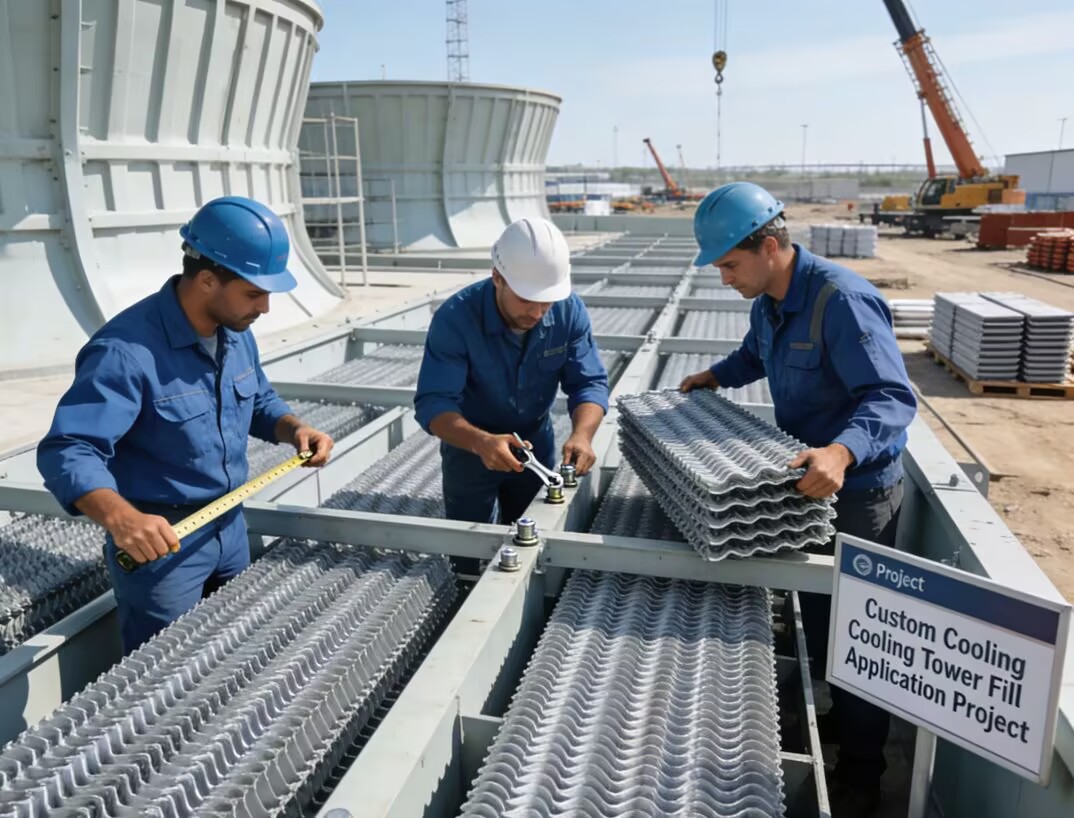
Before replacement, engineers need to confirm:
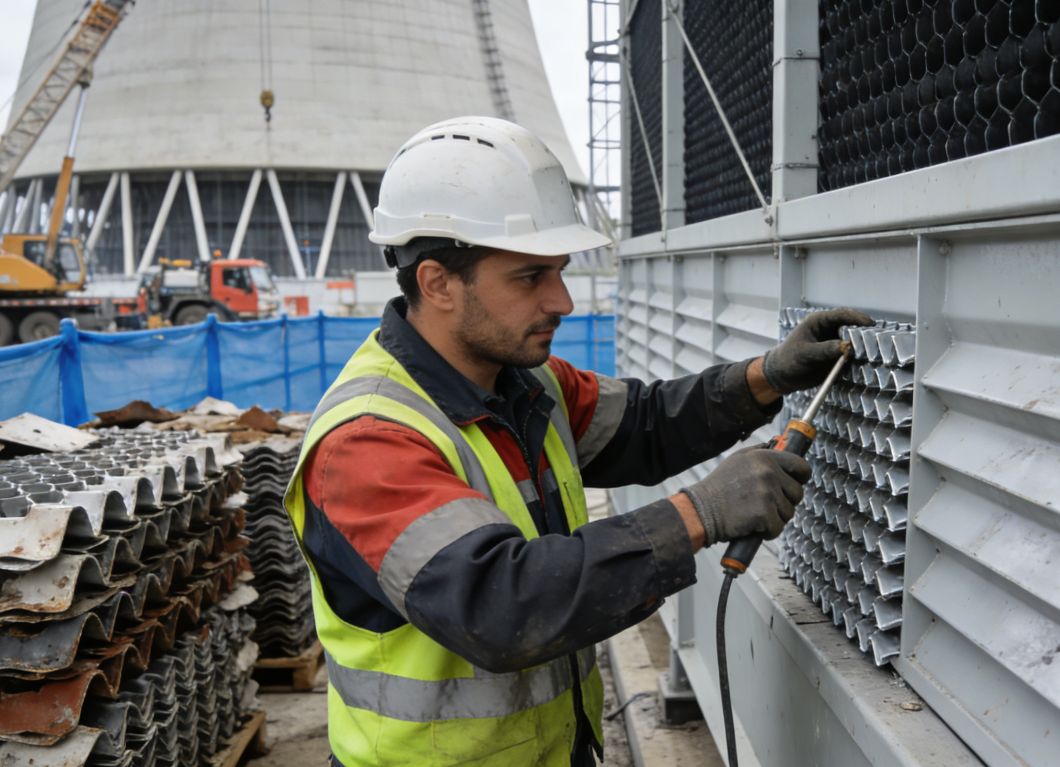
Damaged fill sections are carefully removed to avoid affecting other cooling tower components.
Before installing new fill, internal areas should be cleaned to remove dirt and deposits.
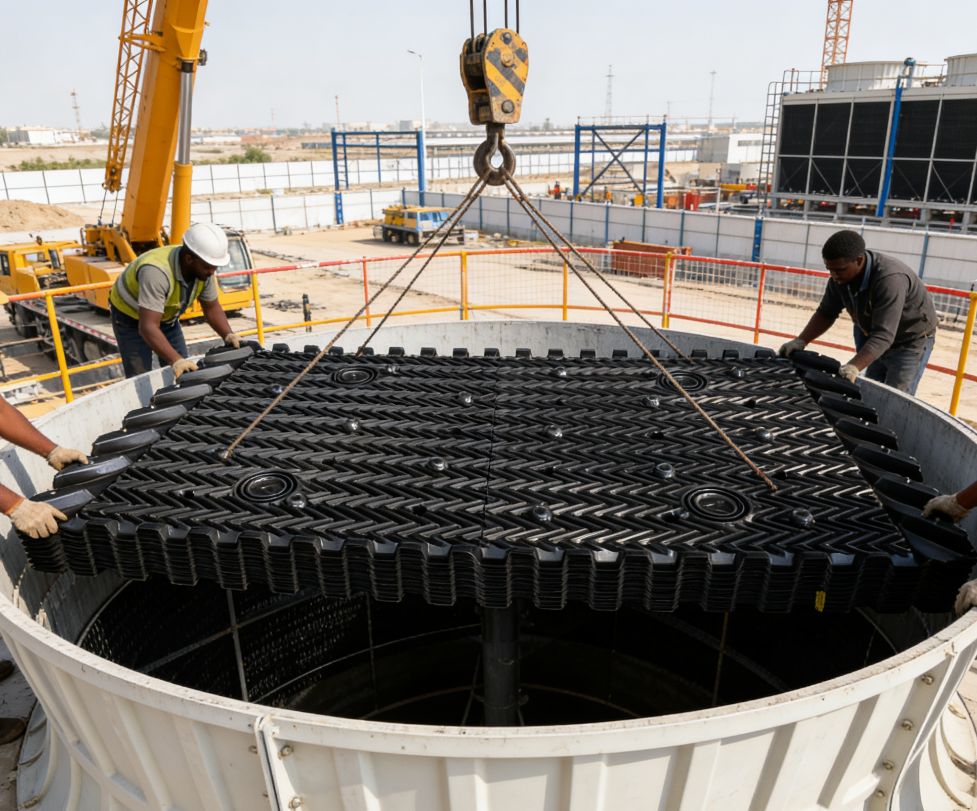
The new fill should be installed according to the correct arrangement to ensure proper airflow and water distribution.
After installation, engineers should check operating conditions and confirm that the cooling tower is working properly.
A well-planned fill replacement project can provide several improvements:
For many industrial facilities, replacing cooling tower fill is a more practical option compared with rebuilding the entire cooling tower.
Power plants often operate cooling towers continuously. Regular fill inspection and replacement help maintain reliable cooling performance.
Chemical industries may experience more demanding water and temperature conditions. Proper replacement planning is important for stable operation.
Commercial buildings may replace aging fill to improve cooling efficiency and reduce energy consumption.
Factories depend on cooling systems for production stability. A suitable fill replacement solution helps reduce unexpected downtime.
During a cooling tower fill replacement project, engineers usually inspect other internal components to ensure the complete system works efficiently.
The cooling tower fill is the main heat exchange component and should be selected based on actual operating conditions.
The Air intake grille helps maintain proper airflow and protects internal components from external materials.
The Water Collector helps reduce water loss caused by droplets carried away with airflow.
There is no fixed replacement schedule because service life depends on operating conditions.
Factors affecting replacement time include:
Instead of replacing according to a fixed number of years, many engineers recommend regular inspection and replacement based on actual performance.
Cooling tower fill replacement is an important maintenance activity that can help restore cooling performance and improve system reliability.
The right replacement solution depends on many factors, including cooling tower design, water quality, operating temperature, and industrial application.
By selecting suitable cooling fill products and following proper replacement procedures, industrial users can keep their cooling systems operating efficiently for many years.
We are professional cooling tower fills manufacturer, which can supply wide ranges of cooling tower fills with PVC, PP or CPVC materials.
The brake oil pipes we provide have multiple monitoring certifications and complete compliance documents to help your business smoothly enter the global market.
Fully automated production line, supporting individual customization. Combined with just-in-time logistics solutions, ensuring stable inventory.
A professional foreign trade technical team provides rapid response and is a trustworthy partner, offering everything from technical Q&A to market insights.

The cooling tower fill from this company has performed reliably in our systems. We appreciate the consistent quality and noticeable efficiency improvement.
CEO & Founder

As a CEO, I value partners who deliver on their promises. Their cooling tower fill is a solid product that contributes to stable operations.
CEO & Founder

We are satisfied with the performance of this cooling tower fill. It has integrated well into our existing setup with good results.
Manager

This company provides quality cooling tower fill that meets our operational needs. It's a dependable component in our infrastructure.
CEO & Founder

We are professional cooling tower fills manufacturer, which can supply wide ranges of cooling tower fills with PVC, PP or CPVC materials.

Instant Chat Support
+8615303180686
packingesale@gmail.com
Get the latest information
Scan the code to follow
Return to the top of the page