Most plant managers focus on heat transfer when selecting cooling tower fill. That is important, but pressure drop is equally critical for your operating costs. The resistance that fill creates against airflow directly affects fan energy consumption. Using High-Efficiency Cooling Tower Media with low pressure drop can save thousands of dollars per year in electricity. Let me explain why this matters and how to choose fill that balances pressure drop and heat transfer.
Pressure drop is the resistance air experiences as it passes through the fill. Think of it like a filter – the more tightly packed the fill, the harder the fan has to work to push air through. Pressure drop is measured in Pascals (Pa) or inches of water gauge. A typical film fill might have a pressure drop of 10-30 Pa at design air velocity. Splash fill often has higher pressure drop, 20-50 Pa, because the water droplets create more turbulence.

Why does this matter? Fan power is proportional to the cube of airflow. A small increase in pressure drop requires a significant increase in fan power to maintain the same airflow. Specifically, if pressure drop increases by 10**, fan power must increase by about 10** to maintain the same airflow. Over a year of continuous operation, that extra power adds up fast.
Let me give you an example. A cooling tower with a 100 HP fan running 8,000 hours per year at $0.10/kWh costs about $60,000 annually in electricity. If a higher-pressure-drop fill increases fan power by 10**, that is an extra $6,000 per year. Over the five-year life of the fill, that is $30,000 in extra energy costs – often more than the fill itself costs. So paying a little more for low-pressure-drop fill can be a great investment.
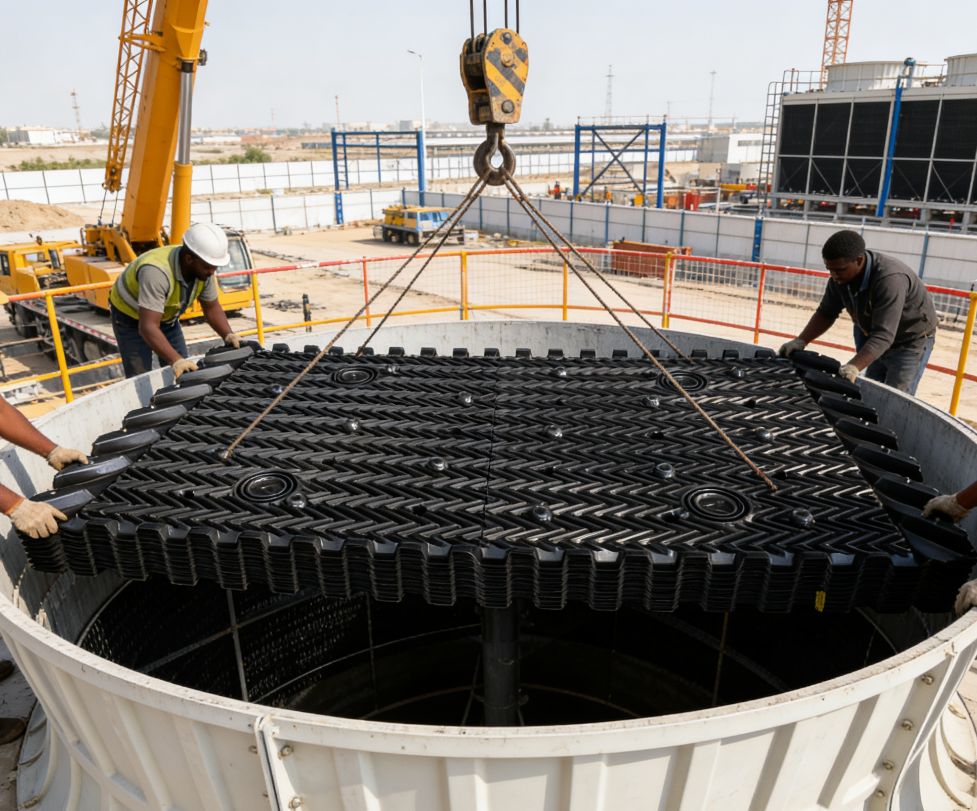
There is no free lunch. Fill with very low pressure drop (like wide-flute film fill) has less surface area, so heat transfer is lower. Fill with very high surface area (like tight-flute film fill) has higher pressure drop. Your job is to find the sweet spot for your application.
For applications where energy cost is the primary concern – like data centers running 24/7 – you want the fill with the lowest pressure drop that still meets your cooling demand. That often means wider flute spacing, even if it means a slightly larger tower footprint. For applications where space is tight or cooling demand is extreme, you may accept higher pressure drop to get more cooling capacity from the same tower.
I always tell clients to calculate the lifecycle cost. Multiply the pressure drop difference by the fan power cost over the expected fill life. You will often find that spending an extra $5,000 on lower-pressure-drop fill saves $20,000 in energy over five years.
As fill fouls with scale, biological growth, or debris, pressure drop increases. A clean fill might have 15 Pa pressure drop. A fouled fill might have 30 Pa or more. That doubling of pressure drop requires significantly more fan power. This is why you see fan amperage creep up over time – the fan is working harder to push air through dirty fill.
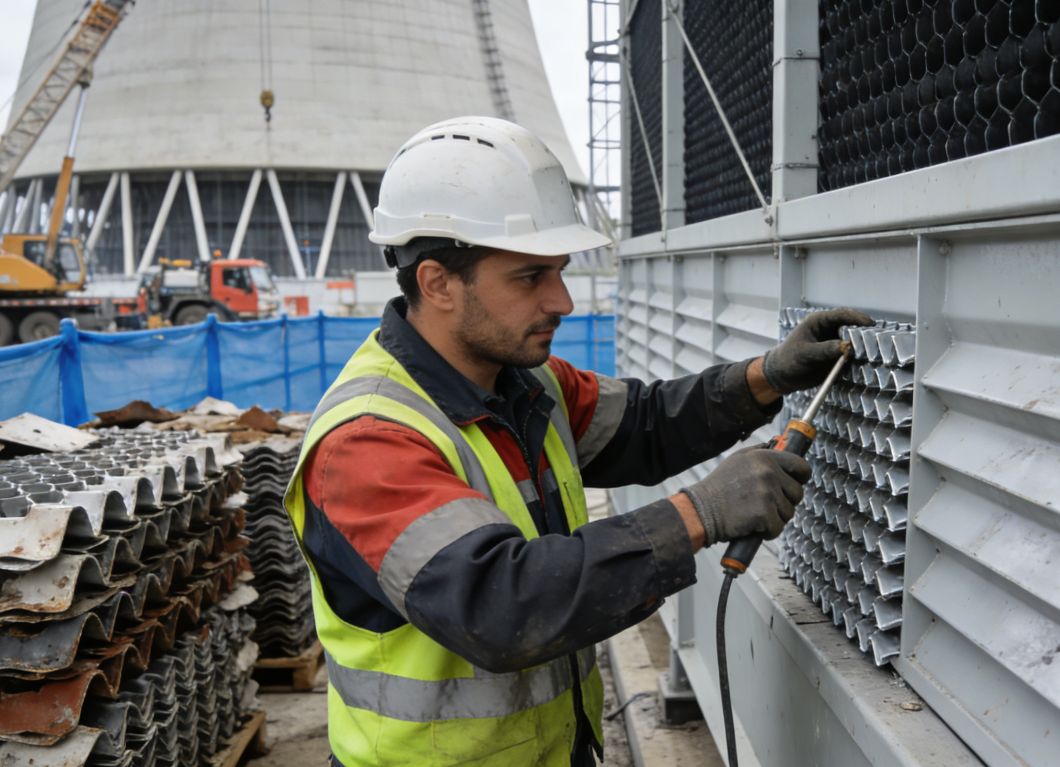
When you replace old fill with new clean fill, you not only improve heat transfer but also reduce pressure drop. Many of my clients are surprised to see fan amperage drop by 10-15** after a fill replacement. That energy saving alone often justifies the replacement cost.

If low pressure drop is your priority, look for:
I have used a product called "low-drag" film fill in several data centers. The pressure drop is about 30** lower than standard film fill, with only a 5-10** reduction in heat transfer. For those facilities, the energy savings far outweighed the need for slightly more fill volume.
You can measure pressure drop with a simple manometer or differential pressure gauge. Install pressure taps above and below the fill (or before and after the fill section). The difference is the fill pressure drop. Measure it when the fill is new to establish a baseline. Then measure annually. A significant increase indicates fouling and suggests it is time to clean or replace the fill.
If you do not have pressure taps installed, you can estimate pressure drop from fan amperage. As pressure drop increases, fan amps increase proportionally (assuming constant air density). Tracking fan amps is a proxy for fill condition.
Do not overlook pressure drop when selecting cooling tower fill. It is not as exciting as heat transfer coefficients, but it directly hits your electricity bill. Balance the two based on your operating profile, and you will save money.
We can help you select low-pressure-drop fill that balances heat transfer with energy savings. Free pressure drop analysis and energy savings calculation for your tower.
Contact Us Here →We are professional cooling tower fills manufacturer, which can supply wide ranges of cooling tower fills with PVC, PP or CPVC materials.
The brake oil pipes we provide have multiple monitoring certifications and complete compliance documents to help your business smoothly enter the global market.
Fully automated production line, supporting individual customization. Combined with just-in-time logistics solutions, ensuring stable inventory.
A professional foreign trade technical team provides rapid response and is a trustworthy partner, offering everything from technical Q&A to market insights.

The cooling tower fill from this company has performed reliably in our systems. We appreciate the consistent quality and noticeable efficiency improvement.
CEO & Founder

As a CEO, I value partners who deliver on their promises. Their cooling tower fill is a solid product that contributes to stable operations.
CEO & Founder

We are satisfied with the performance of this cooling tower fill. It has integrated well into our existing setup with good results.
Manager

This company provides quality cooling tower fill that meets our operational needs. It's a dependable component in our infrastructure.
CEO & Founder

We are professional cooling tower fills manufacturer, which can supply wide ranges of cooling tower fills with PVC, PP or CPVC materials.

Instant Chat Support
+8615303180686
packingesale@gmail.com
Get the latest information
Scan the code to follow
Return to the top of the page