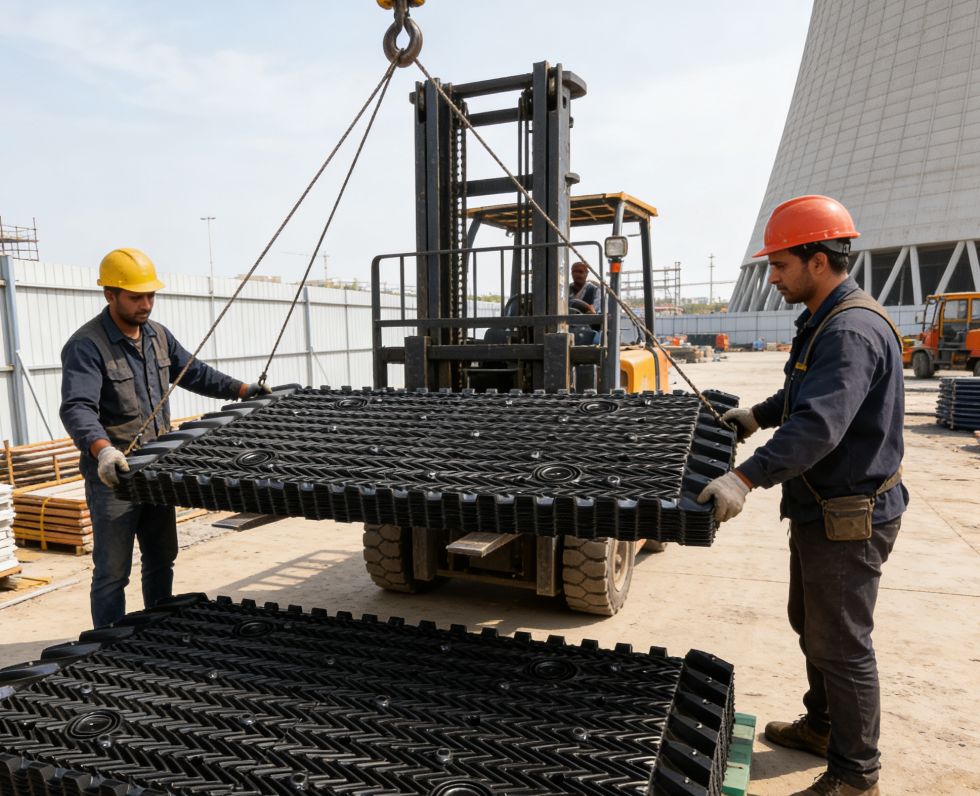
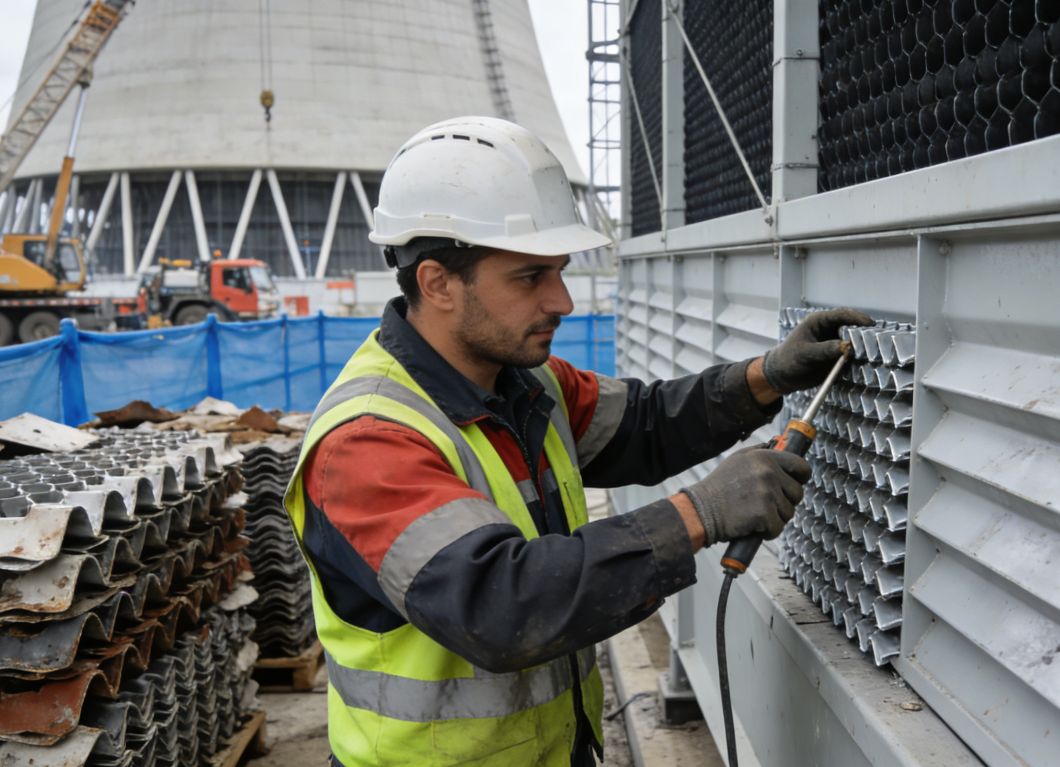
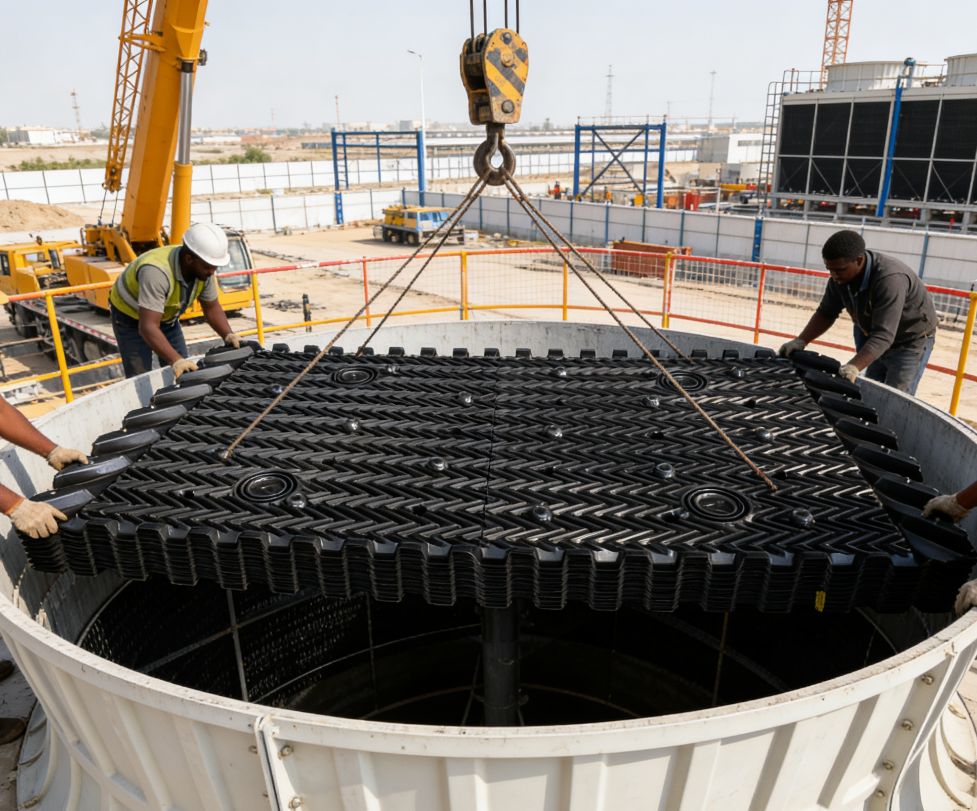
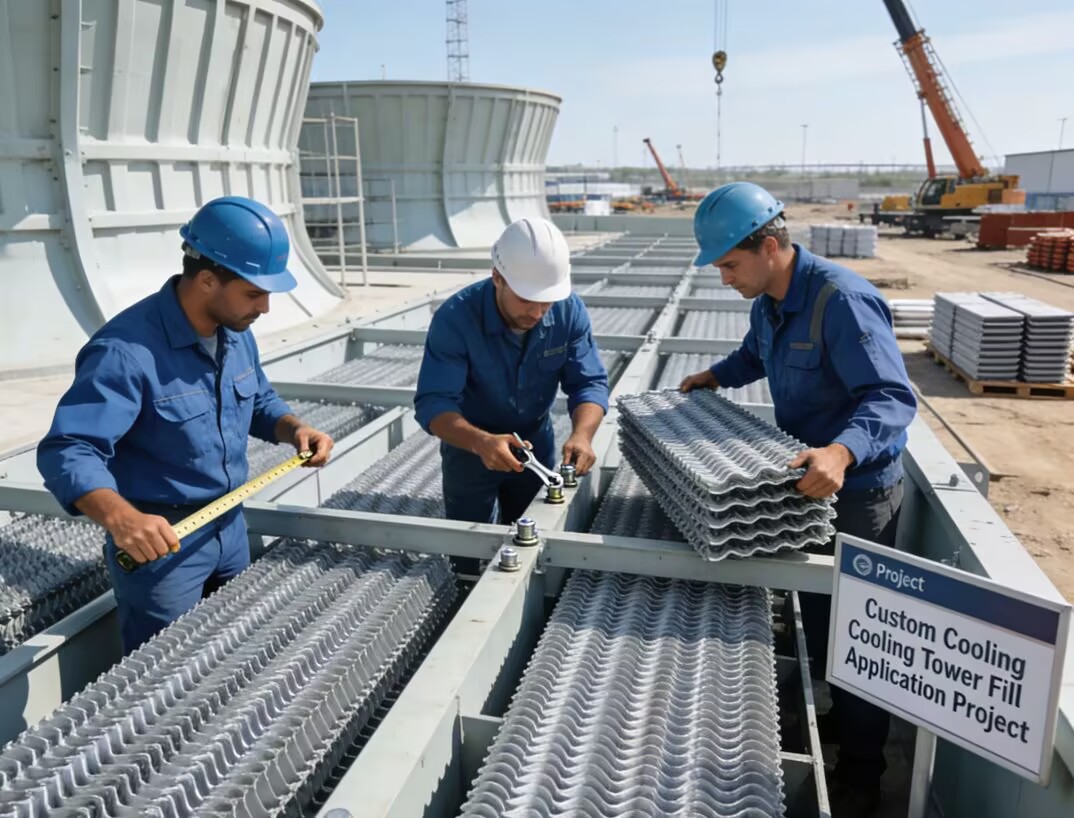
When I specify cooling tower fill for a client, the first big decision is material: PVC or polypropylene. Both have their place, but the differences are significant. I have seen plants save money by choosing PP when they should have used PVC, and vice versa. Let me give you a straight comparison so you can make the right choice for your application. High-Efficiency Cooling Tower Media is available in both materials, and each has distinct advantages.

PVC (polyvinyl chloride) is the most common cooling tower fill material. It is inexpensive, easy to manufacture, and performs well in typical conditions. Standard PVC fill costs about 30-40** less than polypropylene. For most HVAC and industrial applications with clean water and moderate temperatures (below 45°C), PVC is perfectly adequate.
But PVC has limitations. It degrades under UV exposure – direct sunlight will make it brittle in 2-3 years unless UV stabilizers are added. It has lower temperature resistance, typically maxing out at 50-55°C before softening. And it is less chemically resistant than PP, particularly to acids and some biocides.
If you choose PVC, always specify UV-stabilized for outdoor towers. The cost premium is small, and the life extension is significant. Unstabilized PVC in direct sunlight will fail in under two years.
PP (polypropylene) is the upgrade. It costs more – typically 40-60** more than PVC – but it offers several advantages. PP can handle water temperatures up to 70°C without softening. It has excellent UV resistance, even without additives. It is more chemically resistant, tolerating a wider pH range (4-10). And it is generally more durable, with a typical life of 7-10 years versus 5-8 years for PVC.
I recommend PP for:
I worked with two similar power plants in Saudi Arabia. Plant A used UV-stabilized PVC fill. Plant B used polypropylene. Both had the same water quality and operating conditions. After five years, Plant A's PVC fill was showing signs of brittleness and had to be replaced at year six. Plant B's PP fill was still in good condition at year eight, with no signs of degradation. Plant B spent more upfront but paid less over the decade. For hot, sunny climates, PP is often cheaper in the long run.
If your cooling water regularly exceeds 50°C, do not use standard PVC. At 55°C, PVC begins to soften and can deform under its own weight. I have seen fill packs collapse in high-temperature applications because the specifier chose PVC to save money. The resulting downtime and emergency replacement cost far more than the material upgrade.
PP can handle up to 70°C continuous, with some specialty grades rated for 80°C. If your process has heat exchanger outlet temperatures above 60°C, PP is not optional – it is required.
PVC is resistant to many chemicals but vulnerable to strong acids, ketones, and some chlorinated solvents. PP has broader chemical resistance, particularly to acids and bases. If your water treatment program uses aggressive biocides or if your process can contaminate the cooling water with chemicals, PP is safer.
One client in a fertilizer plant had PVC fill failing every 18 months due to ammonia contamination. They switched to PP fill, and the same fill was still going strong after 5 years. The material upgrade paid for itself in reduced replacement labor alone.
Both PVC and PP are combustible, but they behave differently in a fire. PVC is self-extinguishing to some extent – it chars and releases hydrogen chloride gas, which can suppress flames. PP burns more readily and drips flaming material. For applications with strict fire codes, some specifiers prefer PVC with flame-retardant additives. However, both materials require fire protection per NFPA 214.
If fire safety is a primary concern, look for fill that meets ASTM E84 Class 1 or Class 2 flame spread ratings. Both PVC and PP can be formulated to achieve these ratings with appropriate additives.
Here is a simple way to decide: Calculate the total cost of ownership over 10 years. PVC is cheaper upfront but may require replacement at year 6 or 7. PP costs more upfront but may last 10 years. If your conditions are mild, PVC wins. If your conditions are harsh, PP wins.
I use this rule of thumb: If your water temperature averages below 45°C, your tower is shaded or has UV protection, and your water chemistry is well-controlled, choose PVC. If any of those factors are unfavorable, choose PP.
The bottom line: Do not automatically take the cheaper option. Consider your operating conditions and expected fill life. I have seen too many plants buy PVC when they should have bought PP, only to spend more on replacements and downtime. Choose wisely.
We help you compare total cost of ownership based on your water temperature, chemistry, and climate. Free material recommendation with no obligation.
Contact Us Here →We are professional cooling tower fills manufacturer, which can supply wide ranges of cooling tower fills with PVC, PP or CPVC materials.
The brake oil pipes we provide have multiple monitoring certifications and complete compliance documents to help your business smoothly enter the global market.
Fully automated production line, supporting individual customization. Combined with just-in-time logistics solutions, ensuring stable inventory.
A professional foreign trade technical team provides rapid response and is a trustworthy partner, offering everything from technical Q&A to market insights.

The cooling tower fill from this company has performed reliably in our systems. We appreciate the consistent quality and noticeable efficiency improvement.
CEO & Founder

As a CEO, I value partners who deliver on their promises. Their cooling tower fill is a solid product that contributes to stable operations.
CEO & Founder

We are satisfied with the performance of this cooling tower fill. It has integrated well into our existing setup with good results.
Manager

This company provides quality cooling tower fill that meets our operational needs. It's a dependable component in our infrastructure.
CEO & Founder

We are professional cooling tower fills manufacturer, which can supply wide ranges of cooling tower fills with PVC, PP or CPVC materials.

Instant Chat Support
+8615303180686
packingesale@gmail.com
Get the latest information
Scan the code to follow
Return to the top of the page