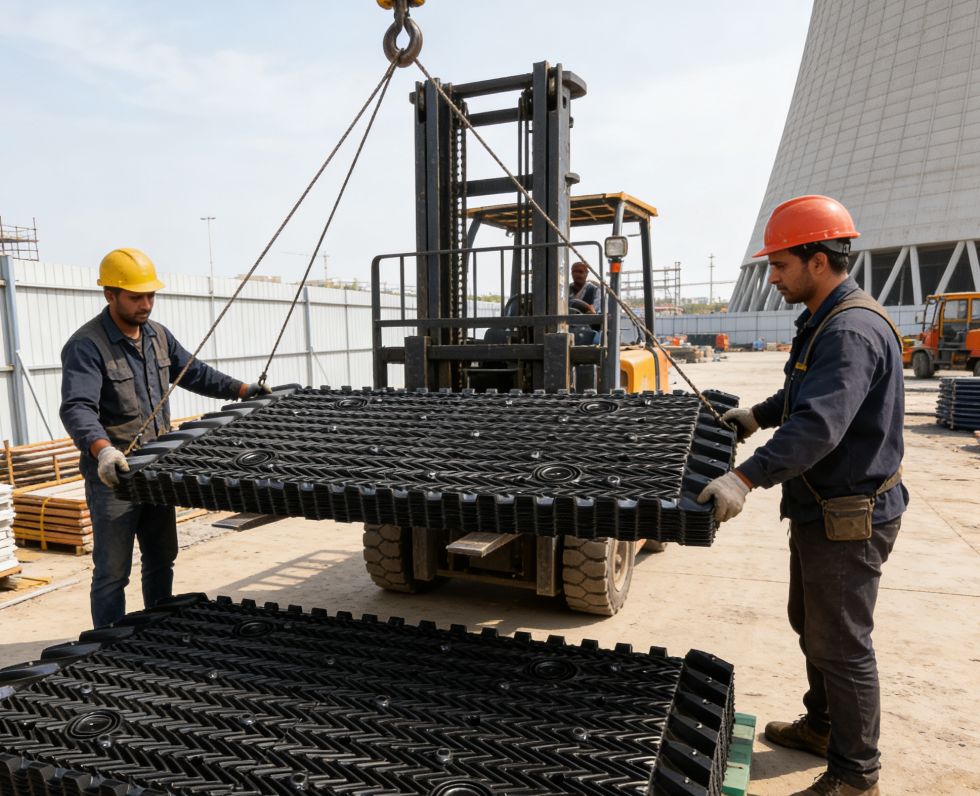
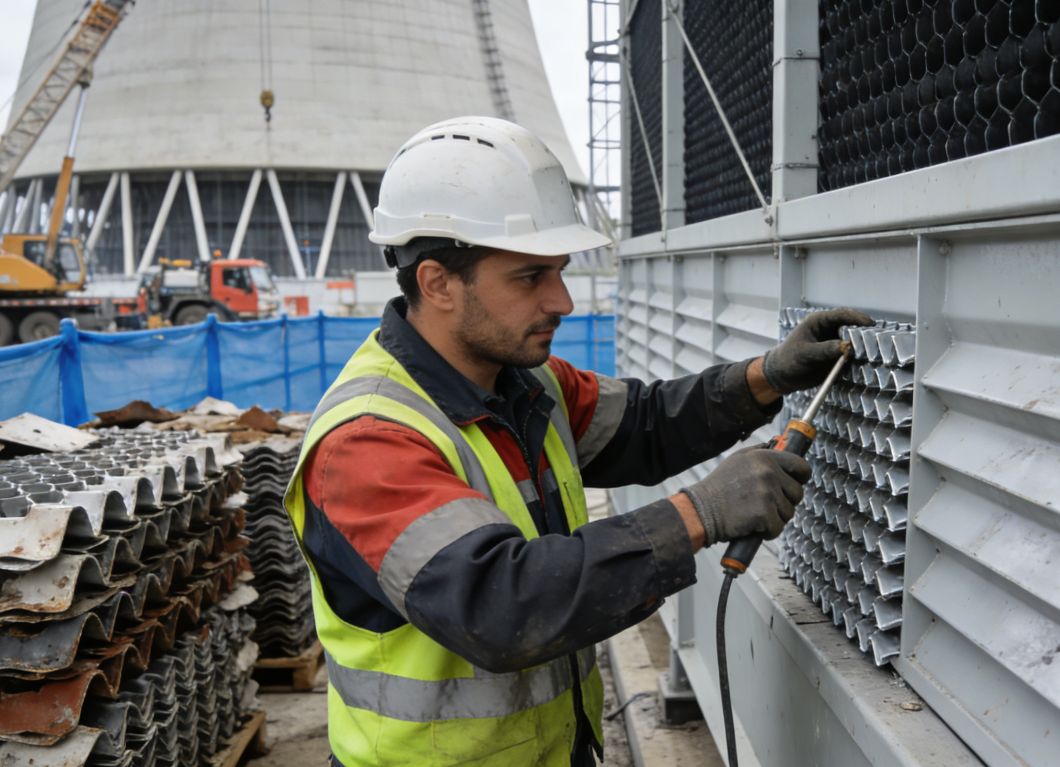
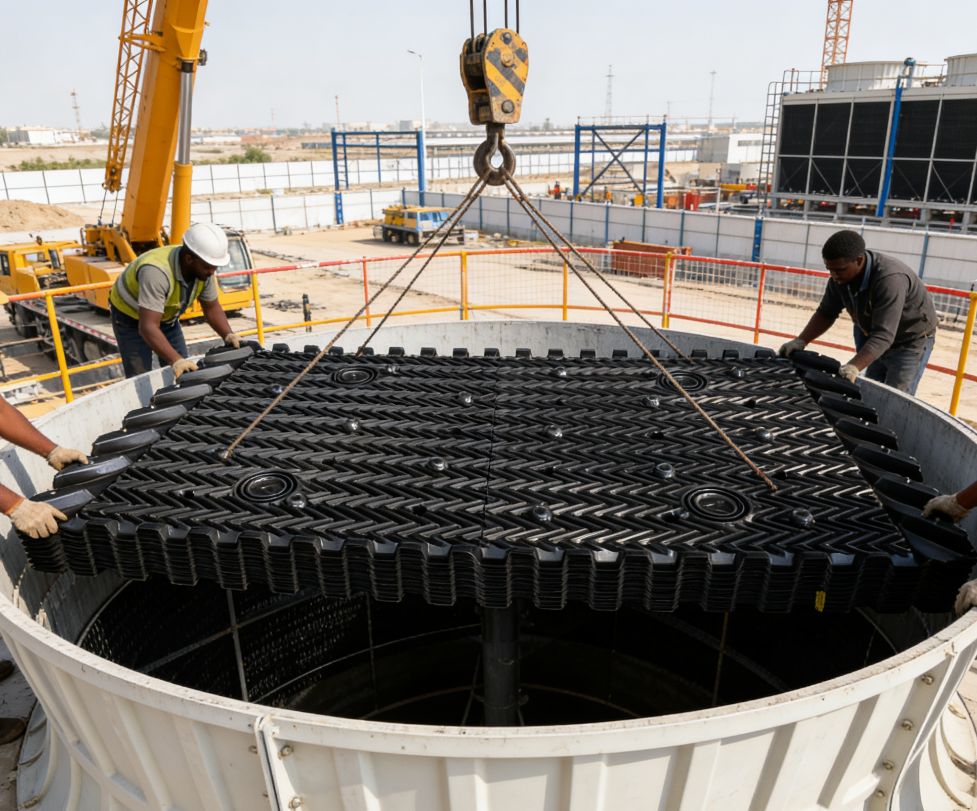
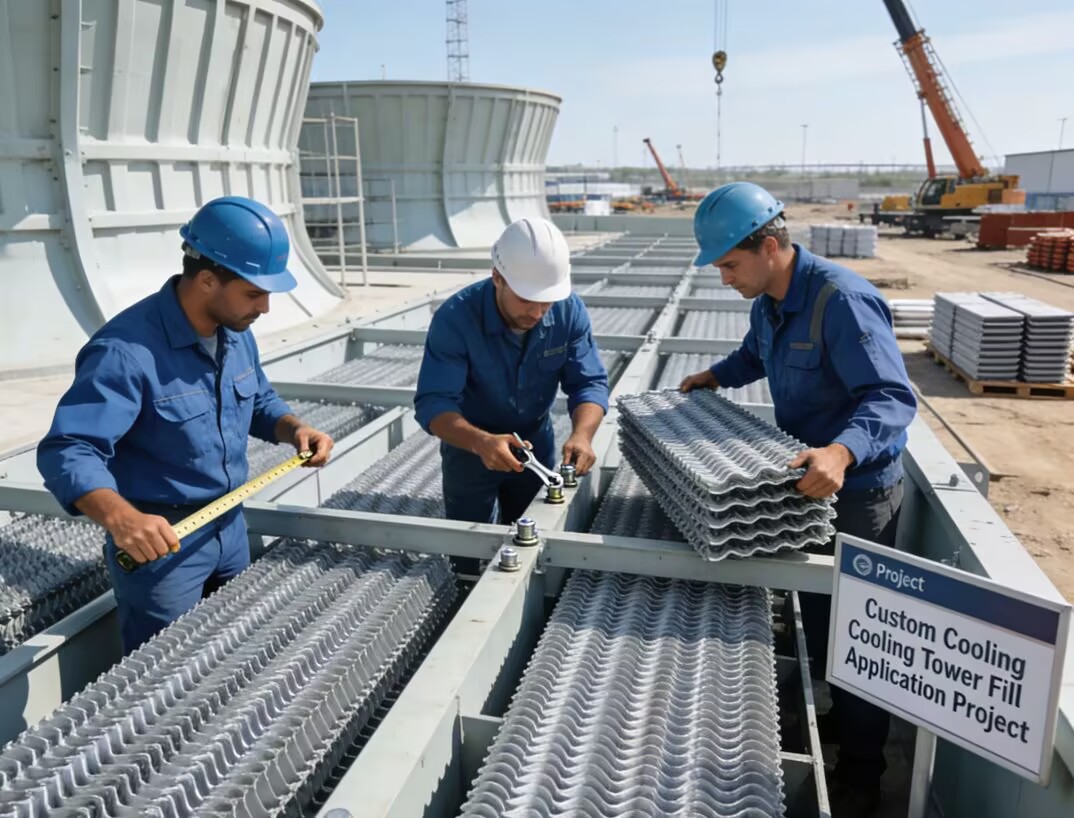
Some industrial processes produce very hot cooling water – well above the 45°C typical of HVAC systems. If your cooling tower sees water temperatures above 50°C, standard PVC fill may fail prematurely. I have seen fill packs collapse, sheets warp, and performance degrade in months rather than years. In this guide, I will help you select the right Tower Fill for high-temperature applications, based on what I have learned from steel mills, power plants, and chemical facilities.
For cooling tower fill, any water temperature above 45°C is high. At 45-50°C, standard PVC starts to soften. At 50-55°C, the risk of deformation increases significantly. Above 55°C, PVC fill is almost certain to fail over time. Polypropylene fill can handle up to 70°C continuously, and some specialty materials go higher.
If your tower regularly sees inlet water temperatures above 50°C, you need to specify high-temperature fill. Do not let a supplier talk you into standard PVC to save money – it will cost you more in the long run.
A steel mill in India had cooling water returning from the rolling mill at 55-60°C. They installed standard PVC fill. Within 18 months, the fill had collapsed under its own weight. The plant lost production for two weeks while they replaced it. The new fill was polypropylene. Five years later, it was still in good condition. The upfront cost difference was about 40**, but the PVC fill would have needed replacement every 18 months, making PP far cheaper over time.
Polypropylene (PP) is the most common high-temperature fill material. Look for grades with high heat deflection temperature (HDT). Standard PP has HDT around 50-55°C. Higher-grade PP can reach 70°C. Ask the supplier for the specific HDT of their material.
For applications above 70°C, you may need PVDF (polyvinylidene fluoride) or other engineering plastics. These are expensive – often 3-5 times the cost of PVC – and rarely needed for cooling towers. Most industrial cooling water is below 70°C.
Another option is metal fill, typically stainless steel. Metal fill is almost indestructible and can handle very high temperatures, but it is heavy, expensive, and has lower heat transfer efficiency than plastic film fill. I have only seen metal fill used in very specialized applications like geothermal cooling.
High-temperature fill needs more than just a different material. The design itself may need to change:
When I specify fill for a high-temperature application, I always ask for a detailed engineering drawing showing how the fill will be supported. Do not assume the standard support system is adequate.
Even with the right material, you can extend fill life by operating smarter:
Do not treat high-temperature fill like standard fill. Inspect it more often. I recommend:
If you see any signs of deformation, plan for replacement. Do not wait – a collapsed fill pack in a high-temperature tower can cause a cascade of failures.
A chemical plant in Texas had cooling water returning from a reactor at 65°C. They were using standard PVC fill and replacing it every 2 years at a cost of $80,000 each time. We switched them to high-temperature polypropylene fill with bonded packs and additional supports. The new fill cost $120,000 but lasted 8 years. Over that period, they saved $200,000 in replacement costs and avoided multiple production outages. The ROI was clear.
The plant manager told me later: "I wish we had done this years ago. We thought we were saving money with cheaper fill, but we were paying for it in maintenance and downtime."
If your process water runs hot, do not cut corners on cooling tower fill. The right material and design will cost more upfront but save you money and headaches over the life of the fill. And if you are not sure what temperature your fill actually sees, install a thermometer. Data is your friend.
We supply polypropylene and specialty high-temperature fill rated for water up to 70°C. Free application review and material recommendation based on your actual operating temperatures.
Contact Us Here →We are professional cooling tower fills manufacturer, which can supply wide ranges of cooling tower fills with PVC, PP or CPVC materials.
The brake oil pipes we provide have multiple monitoring certifications and complete compliance documents to help your business smoothly enter the global market.
Fully automated production line, supporting individual customization. Combined with just-in-time logistics solutions, ensuring stable inventory.
A professional foreign trade technical team provides rapid response and is a trustworthy partner, offering everything from technical Q&A to market insights.

The cooling tower fill from this company has performed reliably in our systems. We appreciate the consistent quality and noticeable efficiency improvement.
CEO & Founder

As a CEO, I value partners who deliver on their promises. Their cooling tower fill is a solid product that contributes to stable operations.
CEO & Founder

We are satisfied with the performance of this cooling tower fill. It has integrated well into our existing setup with good results.
Manager

This company provides quality cooling tower fill that meets our operational needs. It's a dependable component in our infrastructure.
CEO & Founder

We are professional cooling tower fills manufacturer, which can supply wide ranges of cooling tower fills with PVC, PP or CPVC materials.

Instant Chat Support
+8615303180686
packingesale@gmail.com
Get the latest information
Scan the code to follow
Return to the top of the page