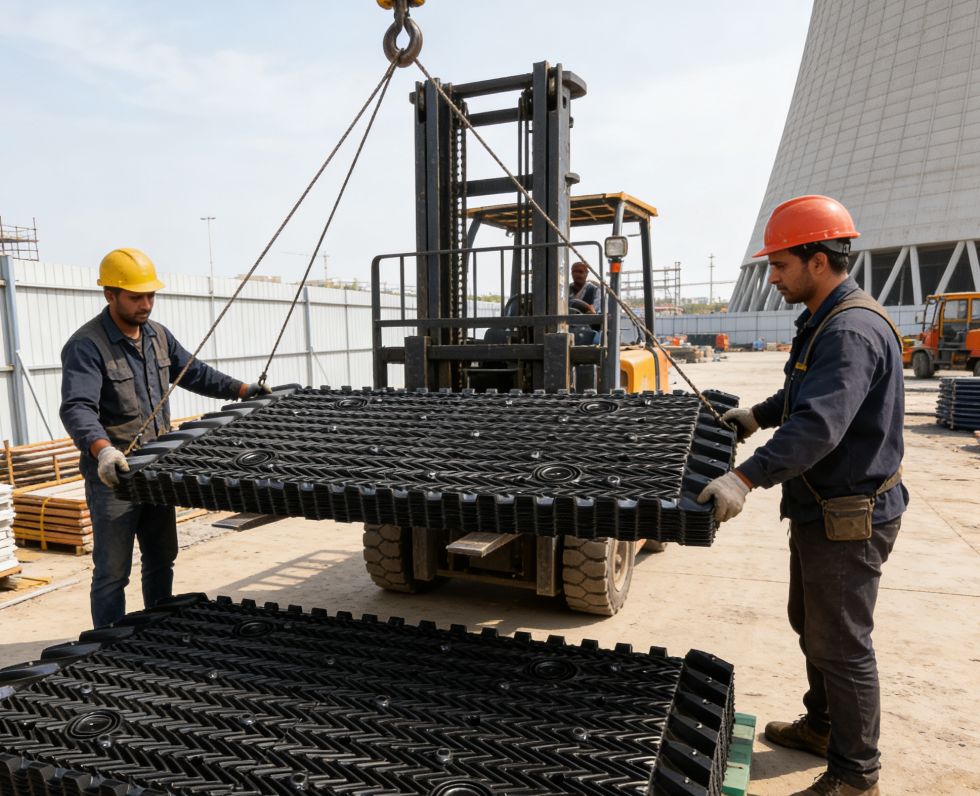
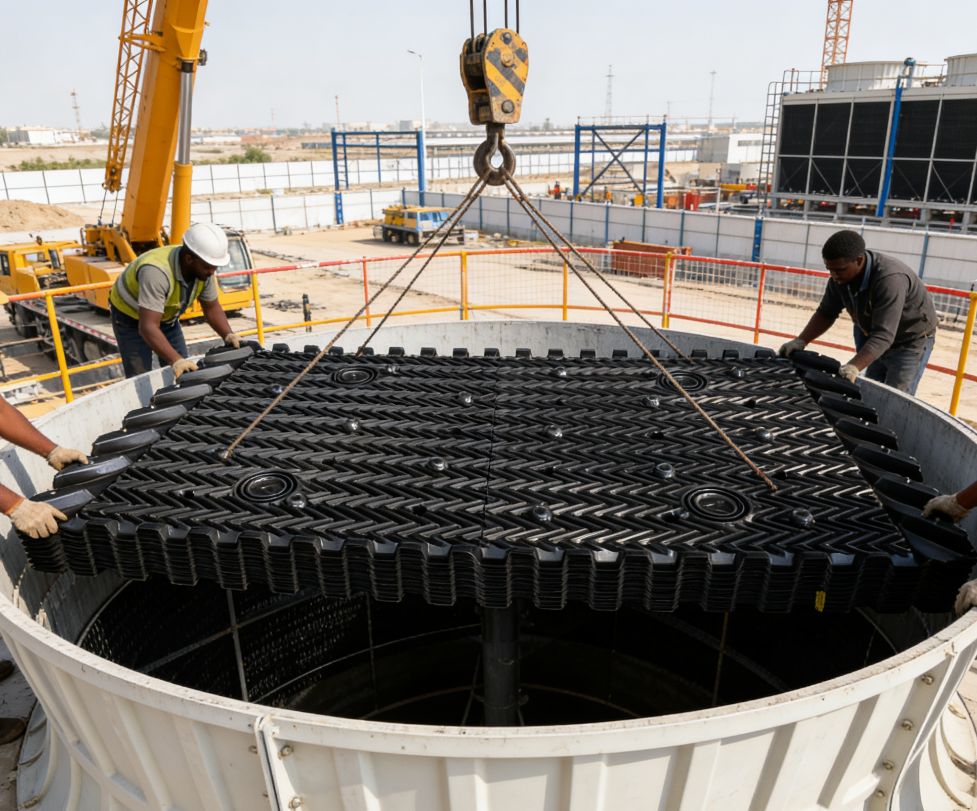
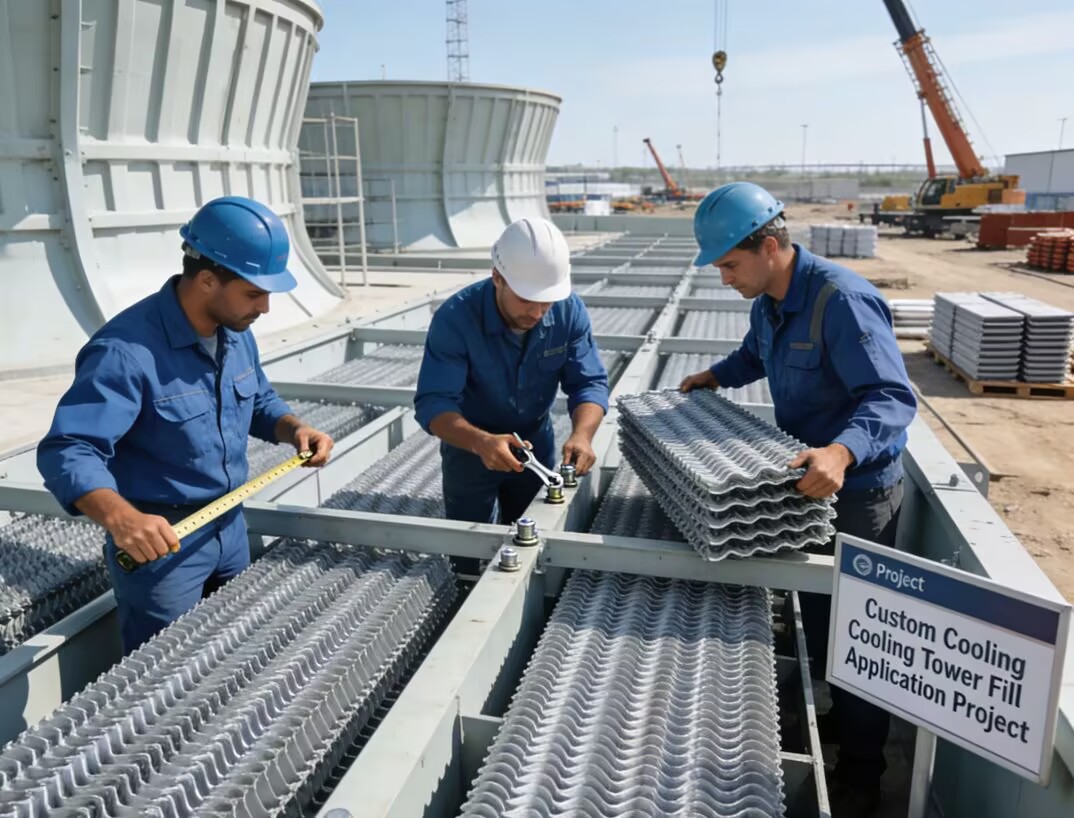
Cooling tower fill performance is strongly influenced by water quality, especially in long-term industrial operation. While many engineers focus on mechanical structure and airflow, water chemistry often determines how quickly the fill ages, clogs, or loses efficiency.
In industrial plants across Southeast Asia, the Middle East, and East Asia, water conditions vary significantly due to seasonal changes, industrial processes, and local supply sources. These variations directly impact cooling tower stability and maintenance frequency.
This article explains how water quality affects fill lifespan, what failure mechanisms are most common, and how engineers can design more stable systems through proper water management.
Cooling towers operate in continuous contact with circulating water. As water passes through the fill section, impurities gradually accumulate inside the structure.
Water quality influences:
Even a well-designed cooling tower fill can experience reduced performance if water quality is not properly controlled.
Suspended solids are one of the most common causes of fill blockage.
Over time, particles accumulate inside the fill channels and reduce airflow and water passage.
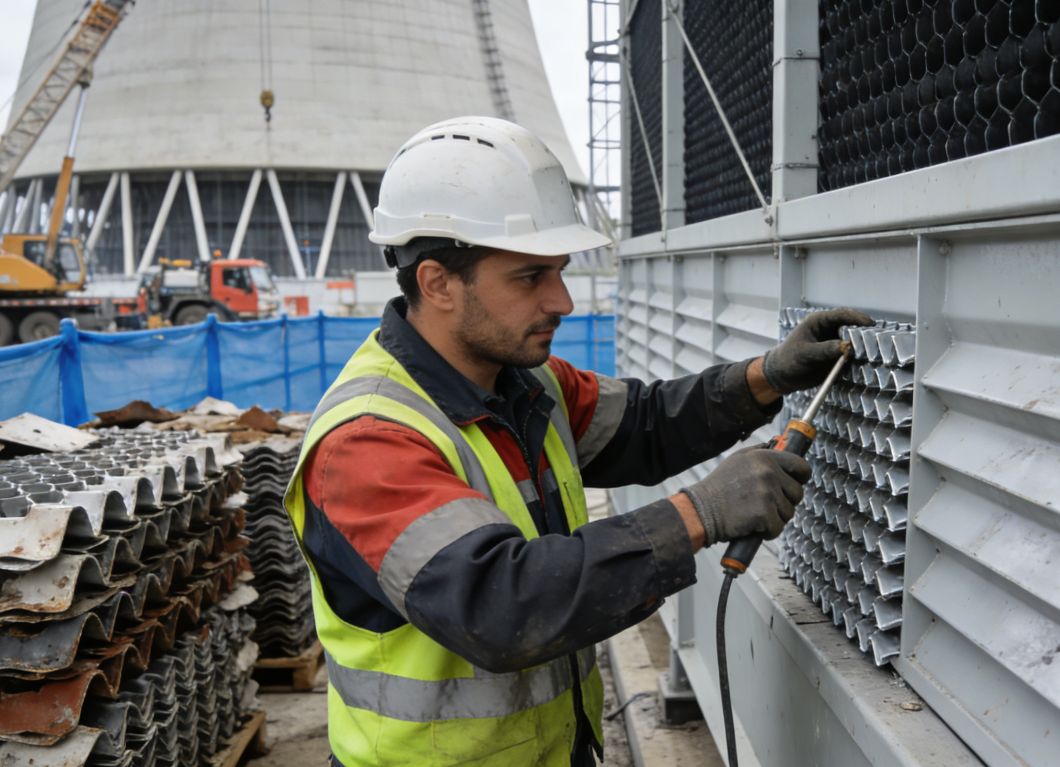
This can eventually lead to cooling tower fill clogged conditions.
Water with high mineral content can form scale deposits on fill surfaces.
These deposits reduce heat transfer efficiency and gradually increase pressure drop across the system.
Warm water environments can promote algae and biofilm growth inside the fill structure.
This affects water distribution and reduces effective heat exchange area.
Improper dosing of treatment chemicals can accelerate material degradation or increase fouling risk.
Balanced chemical control is essential for stable long-term operation.
Film Fill Cooling Tower systems rely on thin water films for heat exchange.
They are highly efficient but more sensitive to water quality changes.
Even small amounts of scaling or biofilm can significantly reduce performance.
Tower Fill systems are more tolerant to suspended solids due to their open structure.
However, long-term scaling can still affect performance if water treatment is insufficient.
Cooling Tower Media selection should always consider expected water quality conditions.
Different environments require different structural and material choices.
A manufacturing facility experienced gradual performance decline in its cooling system over two years.
Initial assumptions pointed to aging fill material, but inspection revealed high suspended solids in the circulating water.
After improving filtration and adjusting water treatment procedures, system performance stabilized without immediate full replacement.
An industrial cooling tower operating in a high-temperature desert environment experienced rapid scaling inside the fill section.
The root cause was high mineral concentration combined with insufficient chemical control.
After optimizing water treatment strategy, scaling rate decreased and maintenance intervals improved.
A precision production plant experienced uneven fouling inside the cooling tower.
Engineering analysis showed inconsistent water treatment levels during different operating cycles.
Standardizing chemical dosing improved system stability and reduced maintenance variation.
These evaluation methods help identify early signs of performance decline.
Engineers typically adjust maintenance plans based on water conditions:
If you are evaluating cooling system performance issues, engineering analysis of water quality, airflow balance, and cooling tower fill condition can help identify root causes more accurately.
Water quality is one of the most critical factors affecting cooling tower fill lifespan. Suspended solids, scaling, biological growth, and chemical imbalance can all reduce system efficiency over time.
A stable cooling system requires coordinated control of water treatment, maintenance planning, and proper fill selection.
It influences fouling, scaling, and biological growth inside the fill structure.
Suspended solids and scaling are the most common causes of performance loss.
Yes. Proper treatment significantly reduces fouling and scaling.
Yes. It requires cleaner water conditions for stable performance.
Yes. Water quality varies by process and location, requiring customized treatment plans.
We are professional cooling tower fills manufacturer, which can supply wide ranges of cooling tower fills with PVC, PP or CPVC materials.
The brake oil pipes we provide have multiple monitoring certifications and complete compliance documents to help your business smoothly enter the global market.
Fully automated production line, supporting individual customization. Combined with just-in-time logistics solutions, ensuring stable inventory.
A professional foreign trade technical team provides rapid response and is a trustworthy partner, offering everything from technical Q&A to market insights.

The cooling tower fill from this company has performed reliably in our systems. We appreciate the consistent quality and noticeable efficiency improvement.
CEO & Founder

As a CEO, I value partners who deliver on their promises. Their cooling tower fill is a solid product that contributes to stable operations.
CEO & Founder

We are satisfied with the performance of this cooling tower fill. It has integrated well into our existing setup with good results.
Manager

This company provides quality cooling tower fill that meets our operational needs. It's a dependable component in our infrastructure.
CEO & Founder

We are professional cooling tower fills manufacturer, which can supply wide ranges of cooling tower fills with PVC, PP or CPVC materials.

Instant Chat Support
+8615303180686
packingesale@gmail.com
Get the latest information
Scan the code to follow
Return to the top of the page