Modern industrial facilities are now placing far greater demands on cooling tower systems than they did only a few years ago. As production schedules become longer and manufacturing equipment generates more heat, cooling systems must operate continuously while maintaining stable outlet water temperatures under increasingly difficult conditions.
Because of this trend, online searches for tower fill, Cooling Tower Media, and Corrugated Fill continue increasing among factory owners, contractors, and industrial engineers searching for more reliable cooling solutions.
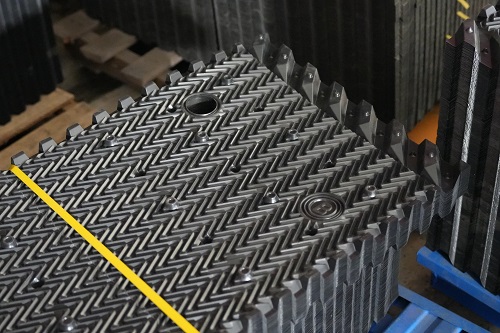
In industries such as petrochemical processing, HVAC systems, food manufacturing, data centers, power generation, steel production, and commercial refrigeration, cooling tower stability directly affects production efficiency and operating costs.
When cooling tower performance begins decreasing, the effects can quickly spread throughout the entire facility. Equipment temperatures rise, energy consumption increases, and production systems may become unstable during heavy operating periods.
Because of this, more industrial users are now paying closer attention to the internal structure of the cooling tower itself, especially the fill material responsible for the heat exchange process.
Many people outside the cooling industry assume the fan is the most important component inside a cooling tower. In reality, experienced engineers understand that the fill section often has an even greater effect on long-term thermal performance.
The primary job of tower fill is to maximize the contact area between circulating water and airflow. The larger and more stable this contact area becomes, the more efficiently heat can be removed from the system.
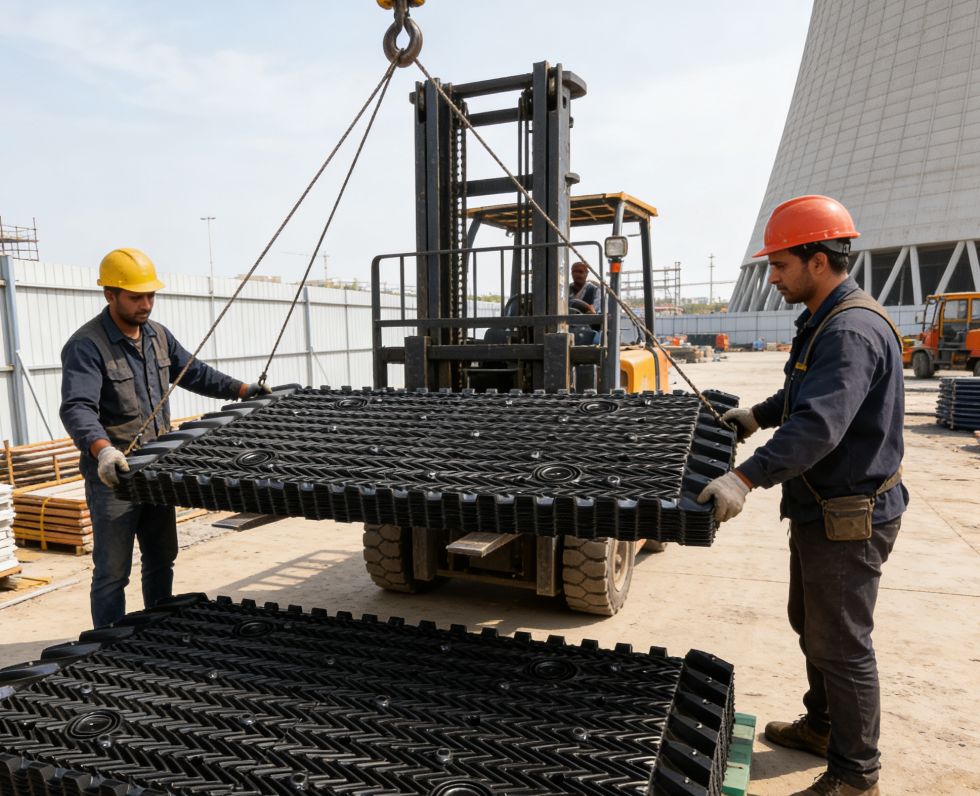
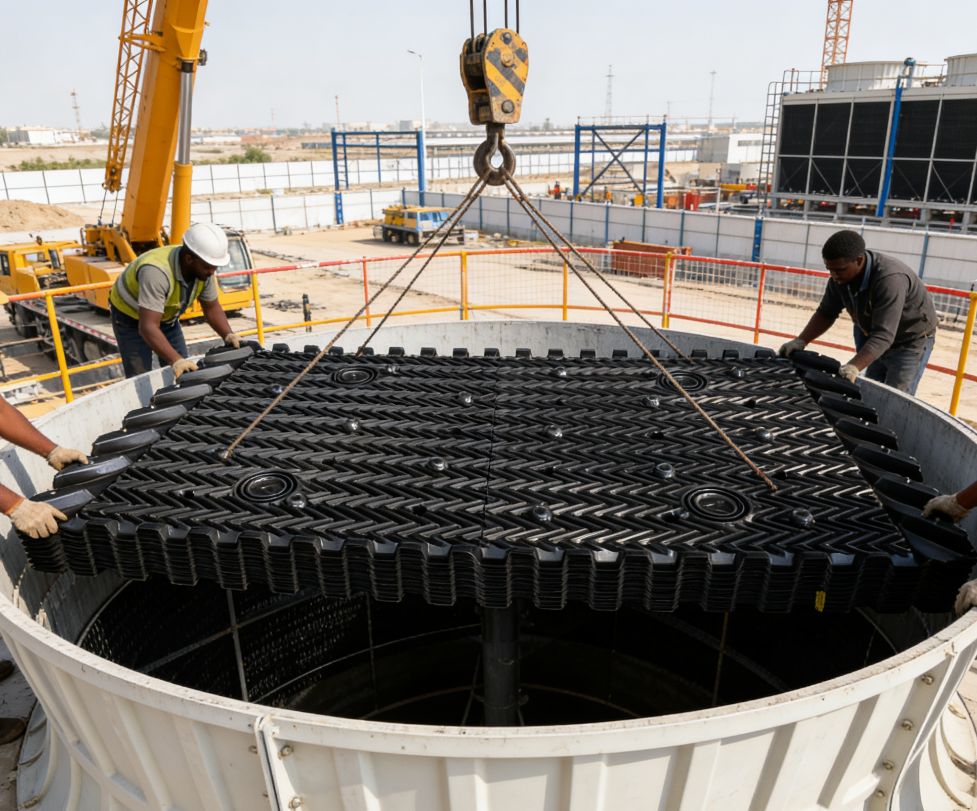
Modern Tower Fill systems are designed to distribute water evenly while maintaining stable airflow channels throughout the cooling tower.
When airflow and water remain properly balanced, evaporative cooling efficiency improves significantly. This allows the cooling tower to maintain lower outlet water temperatures while reducing unnecessary fan energy consumption.
For industrial facilities operating continuously, even small improvements in cooling efficiency can create noticeable long-term energy savings.
One of the biggest developments in modern cooling tower technology is the growing use of Corrugated Fill structures.
Traditional splash-type fill systems still exist in some applications, but corrugated sheet designs have become far more common because they provide larger effective heat exchange surfaces while improving airflow organization.
Corrugated channels help guide airflow more evenly throughout the fill section. At the same time, water forms thin films across the surface of the fill sheets, creating highly efficient heat transfer conditions.
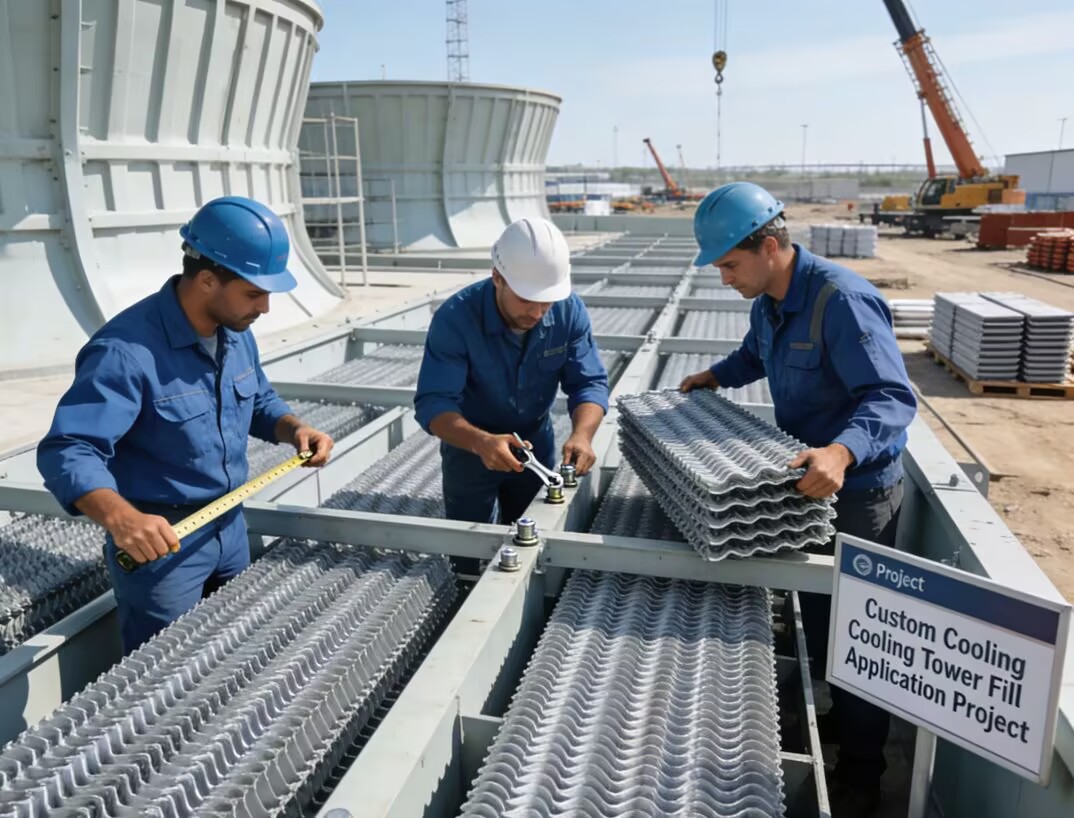
Modern cooling tower fill systems are now commonly engineered with optimized flute spacing designed to balance airflow resistance, cooling efficiency, and anti-clogging capability.
This becomes especially important in industrial environments where cooling water may contain suspended particles, mineral buildup, or inconsistent water quality.
Wider flute spacing can often improve long-term operational stability by reducing the risk of clogging inside the fill section.
Many industrial operators focus heavily on the initial purchase price of cooling tower components. However, experienced engineers usually pay closer attention to long-term operational value.
Low-quality fill material may appear acceptable during installation, but continuous exposure to heat, moisture, vibration, and sunlight can eventually cause structural deformation.
Once the fill structure becomes distorted, airflow channels inside the cooling tower become unstable. Water distribution may also become uneven, reducing effective heat transfer performance.
High-quality CoolingTowerMedia helps maintain stable airflow organization while supporting proper water film formation throughout the cooling process.
Stable airflow is extremely important because even small disruptions inside the fill section can reduce cooling efficiency during continuous operation.
When cooling efficiency decreases, fan systems often work harder to maintain the same outlet water temperature. Over time, this increases electricity consumption and operational cost.
Although newer fill materials continue appearing in the market, PVC film fill remains one of the most widely used cooling tower solutions in industrial and commercial applications.
Modern PVC materials provide an excellent balance between thermal efficiency, durability, and installation cost.
For HVAC systems, commercial buildings, manufacturing plants, and many industrial cooling applications, PVC-based fill systems continue providing highly reliable thermal performance.
Many industrial facilities still prefer Film Fill Cooling Tower solutions because they offer strong heat transfer efficiency while maintaining relatively simple maintenance requirements.
Properly designed PVC film fill structures can operate efficiently for long periods when combined with proper water treatment and maintenance management.
Although PVC remains extremely popular, demand for PP fill media is also increasing steadily in specialized industrial environments.
Polypropylene materials generally provide stronger resistance to higher temperatures and aggressive chemical exposure.
This makes polypropylene fill structures especially attractive for petrochemical facilities, heavy industrial systems, and cooling applications involving higher operating temperatures.
However, selecting the correct fill material always depends on the actual operating environment, water quality, thermal load, and maintenance conditions inside the cooling system.
Modern cooling tower upgrades increasingly focus not only on the fill itself, but also on airflow management throughout the entire tower system.
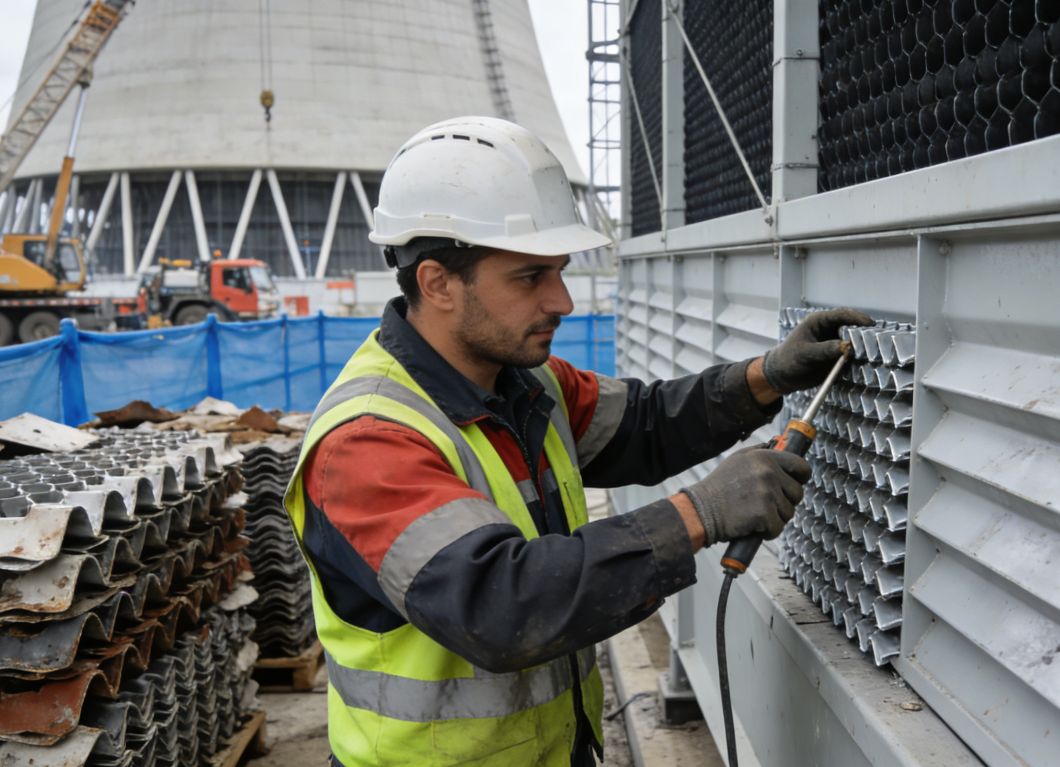
Products such as Air Inlet Louvers, Air Inlet Grilles, and Air Intake Screens help stabilize intake airflow while reducing debris entry into the cooling tower.
This becomes especially useful in outdoor industrial environments where airborne dust, leaves, insects, and contaminants can affect airflow stability and reduce cooling efficiency.
For facilities located near coastal areas or dusty industrial zones, proper intake protection can significantly improve long-term system reliability.
Rising water costs are also changing how industrial cooling systems are designed and operated.
More facilities are now investing in advanced drift reduction technology designed to minimize visible water loss while maintaining stable airflow performance.
Modern Drift Eliminator, Mist Eliminator, and Demister systems help reduce water carryover while improving environmental performance around the cooling tower.
From an engineering perspective, drift reduction is not only about water savings. It also helps reduce surrounding moisture buildup and minimizes contamination risks for nearby industrial equipment.
Several years ago, many industrial buyers focused mainly on reducing initial equipment cost. Today, maintenance downtime has become an even greater concern.
Factories operating continuous production schedules cannot easily afford unexpected cooling tower shutdowns. Even short interruptions may create serious production losses.
Because of this, more industrial operators are now prioritizing long-term reliability, easier cleaning capability, and stronger anti-clogging performance when selecting cooling tower fill systems.
Experienced engineers increasingly recommend investing in reliable fill structures capable of maintaining stable airflow and cooling efficiency over long operating periods.
Looking ahead, industrial cooling tower systems will continue moving toward stronger energy efficiency, easier maintenance, improved airflow management, and better water conservation performance.
As industrial production continues expanding worldwide, demand for advanced tower fill, optimized Cooling Tower Media, and durable airflow management systems is expected to continue growing steadily.
For factory owners and cooling system engineers, investing in reliable cooling tower components is no longer simply a maintenance decision. It has become an important strategy for improving production stability, reducing operational cost, and maintaining long-term industrial efficiency.
We are professional cooling tower fills manufacturer, which can supply wide ranges of cooling tower fills with PVC, PP or CPVC materials.
The brake oil pipes we provide have multiple monitoring certifications and complete compliance documents to help your business smoothly enter the global market.
Fully automated production line, supporting individual customization. Combined with just-in-time logistics solutions, ensuring stable inventory.
A professional foreign trade technical team provides rapid response and is a trustworthy partner, offering everything from technical Q&A to market insights.

The cooling tower fill from this company has performed reliably in our systems. We appreciate the consistent quality and noticeable efficiency improvement.
CEO & Founder

As a CEO, I value partners who deliver on their promises. Their cooling tower fill is a solid product that contributes to stable operations.
CEO & Founder

We are satisfied with the performance of this cooling tower fill. It has integrated well into our existing setup with good results.
Manager

This company provides quality cooling tower fill that meets our operational needs. It's a dependable component in our infrastructure.
CEO & Founder

We are professional cooling tower fills manufacturer, which can supply wide ranges of cooling tower fills with PVC, PP or CPVC materials.

Instant Chat Support
+8615303180686
packingesale@gmail.com
Get the latest information
Scan the code to follow
Return to the top of the page