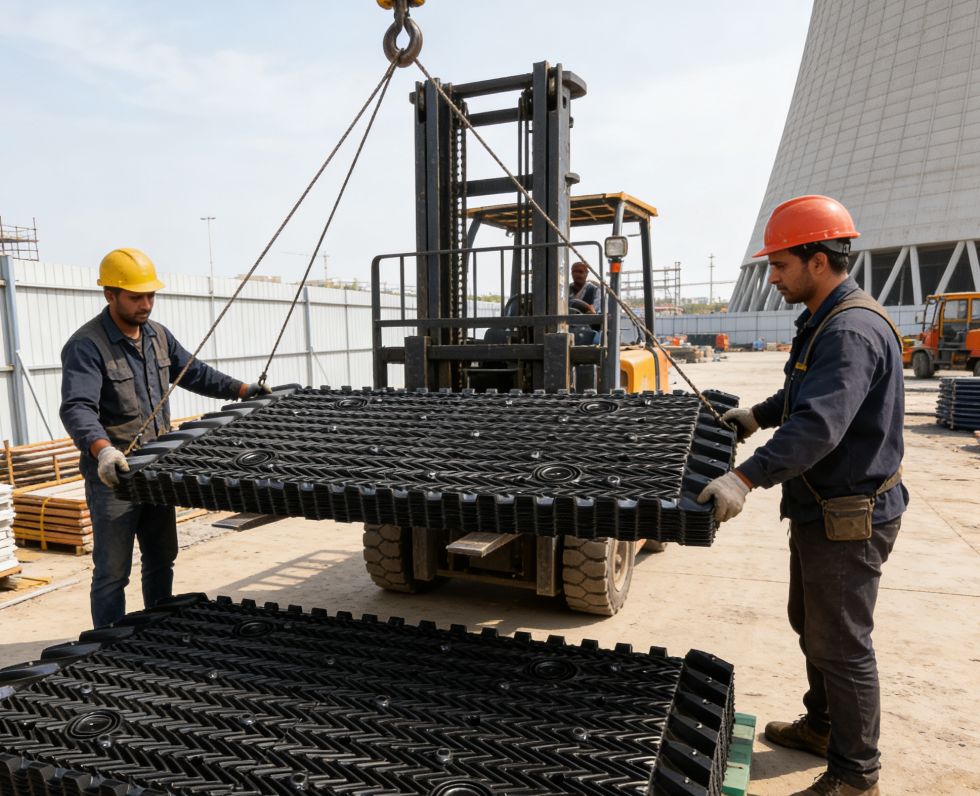
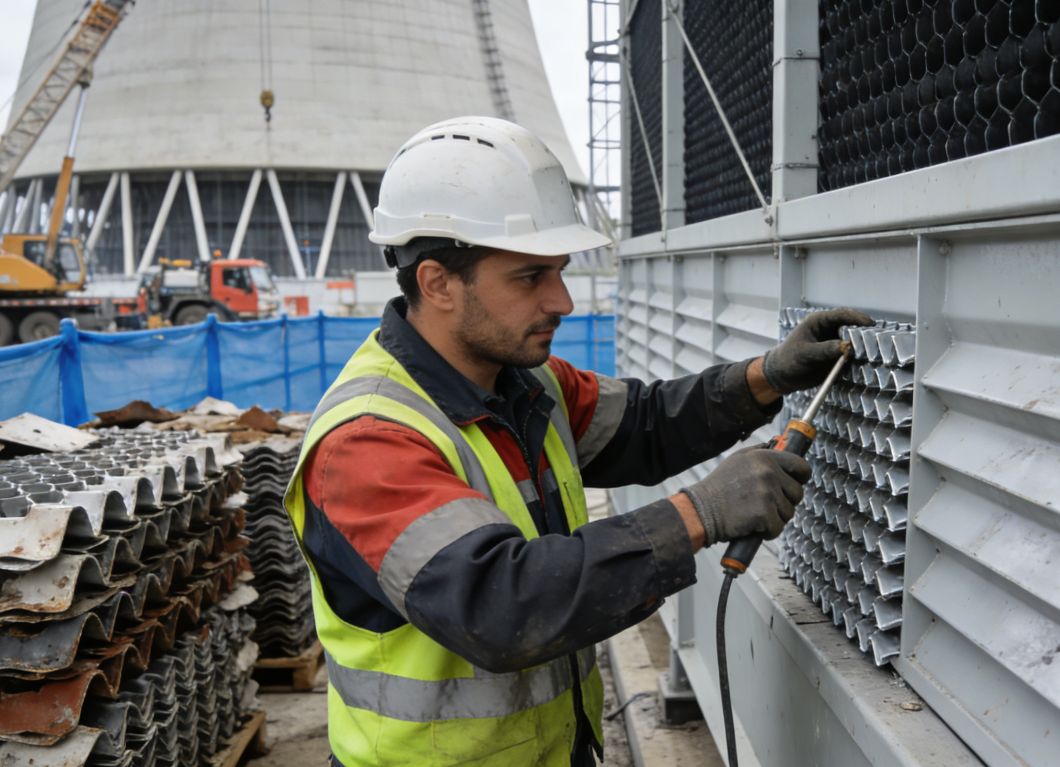
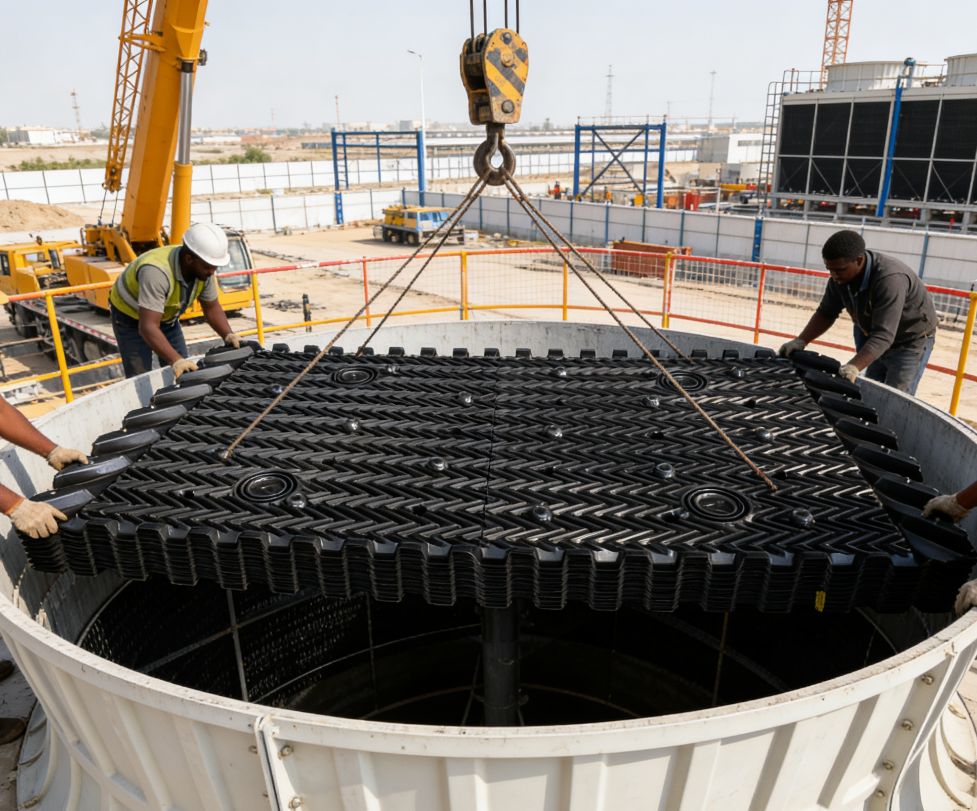
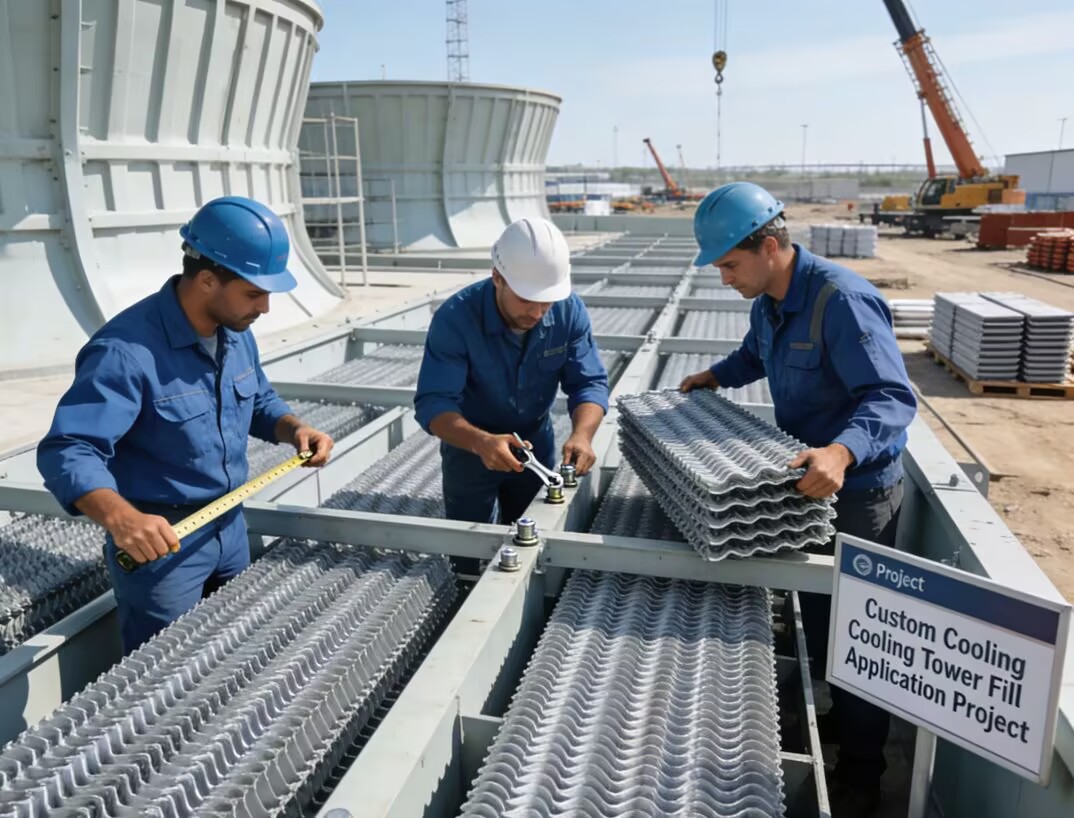
Cooling tower fill maintenance is often viewed as a routine housekeeping task, but its impact reaches far beyond the fill itself. In industrial cooling systems, the condition of the fill directly affects water distribution, heat transfer, airflow performance, and the workload placed on pumps and fans. When maintenance is neglected, small deposits and minor operational issues can gradually develop into larger performance concerns.

For plant engineers and maintenance teams, fill maintenance should be considered part of a long-term asset protection strategy. Proper inspection, cleaning, and condition monitoring help support cooling efficiency while reducing unnecessary stress on related equipment throughout the cooling tower system.
The purpose of cooling tower fill is to create a large contact area between circulating water and airflow. This contact area allows heat to be removed efficiently from the system.
Over time, however, fill surfaces may collect:
As these materials accumulate, water movement becomes less uniform and airflow paths may become partially restricted. The result is often a gradual decline in cooling performance that can go unnoticed until operating temperatures begin to rise.
Many operators focus only on the thermal role of the fill, but its condition influences multiple components within the cooling tower.
When deposits restrict airflow through the fill pack, fans may need to work harder to maintain the required air movement. This can increase operating stress and contribute to additional energy consumption.
Uneven water distribution caused by fouling or blockage can affect overall water circulation behavior. Although pumps continue operating, the system may no longer distribute water as efficiently as intended.
Reduced cooling tower performance often results in warmer return water. This may increase the thermal load on downstream heat exchange equipment and affect overall process stability.
Facilities located near industrial zones, construction sites, or dusty environments frequently experience contamination entering the cooling tower through the intake section.
These particles gradually settle inside the fill and contribute to fouling.
Warm water and continuous moisture create favorable conditions for algae and biofilm development. Once biological growth becomes established, additional debris can become trapped within the biofilm structure.
Hard water conditions can lead to mineral accumulation on fill surfaces. Although scaling may initially appear minor, deposits often become more difficult to remove if left unmanaged.
Regular inspection is one of the most effective maintenance tools available. Operators should look for signs of:
Identifying issues early often reduces the complexity of corrective actions.
Cleaning schedules should reflect actual site conditions rather than fixed calendar intervals.
Factors influencing cleaning frequency include:
Effective maintenance begins with understanding water quality trends. Monitoring helps identify conditions that may accelerate fouling, scaling, or biological growth.
Consistent water management often reduces the maintenance burden placed on the fill itself.

Film Fill Cooling Tower systems provide extensive water-air contact area through structured surfaces.
Because of their design, routine maintenance is particularly important when water quality fluctuates or contamination levels increase.
Splash fill systems use larger open spaces and are often selected where water contains suspended solids.
Although splash fill generally offers greater fouling tolerance, periodic inspection remains important for maintaining long-term performance.
Cooling Tower Media with corrugated geometry can support efficient water distribution while balancing maintenance requirements.
The effectiveness of maintenance programs often depends on selecting a fill design that matches actual operating conditions.
A manufacturing facility experienced a gradual increase in cooling water temperature over several operating seasons.
Initial investigations focused on mechanical equipment, but inspections later revealed significant contamination within the fill section.
Following cleaning and implementation of a structured maintenance program, cooling performance stabilized and inspection intervals became more predictable.
This project demonstrated that maintenance planning can often provide meaningful operational benefits without requiring major equipment modifications.
An industrial facility located near material handling operations experienced frequent contamination entering the cooling tower.
Dust accumulation affected fill performance and increased cleaning requirements.
The facility improved results by combining regular maintenance with upgraded intake protection components, reducing the amount of airborne material entering the tower.
A process plant operating with recycled water faced recurring fouling issues due to suspended solids.
Rather than focusing solely on cleaning frequency, engineers reviewed the entire maintenance strategy, including filtration, inspection routines, and fill condition monitoring.
The revised approach improved operational consistency and reduced unexpected maintenance events.
Fill maintenance should be coordinated with inspection of other tower components.
Maintaining these components helps reduce contamination and supports overall cooling tower reliability.
Addressing these signs early often helps prevent larger operational issues from developing.
Cooling tower fill maintenance plays an important role in protecting the performance of the entire cooling system. Effective maintenance supports heat transfer, improves operational stability, and helps reduce unnecessary stress on related equipment.
Rather than viewing maintenance as a corrective activity, industrial facilities often achieve better results when maintenance becomes part of a proactive operating strategy. Consistent inspection, cleaning, and monitoring help support long-term reliability across a wide range of cooling tower applications.
Maintenance helps preserve heat transfer performance, supports proper water distribution, and reduces fouling-related operational issues.
The appropriate frequency depends on water quality, environmental conditions, and operating requirements.
Yes. Airflow restrictions caused by fouled fill may increase the workload placed on cooling tower fans.
Yes. Water containing suspended solids, minerals, or biological activity often requires more frequent inspection and maintenance.
Gradual performance decline, uneven water distribution, or visible contamination are common early indicators.
We are professional cooling tower fills manufacturer, which can supply wide ranges of cooling tower fills with PVC, PP or CPVC materials.
The brake oil pipes we provide have multiple monitoring certifications and complete compliance documents to help your business smoothly enter the global market.
Fully automated production line, supporting individual customization. Combined with just-in-time logistics solutions, ensuring stable inventory.
A professional foreign trade technical team provides rapid response and is a trustworthy partner, offering everything from technical Q&A to market insights.

The cooling tower fill from this company has performed reliably in our systems. We appreciate the consistent quality and noticeable efficiency improvement.
CEO & Founder

As a CEO, I value partners who deliver on their promises. Their cooling tower fill is a solid product that contributes to stable operations.
CEO & Founder

We are satisfied with the performance of this cooling tower fill. It has integrated well into our existing setup with good results.
Manager

This company provides quality cooling tower fill that meets our operational needs. It's a dependable component in our infrastructure.
CEO & Founder

We are professional cooling tower fills manufacturer, which can supply wide ranges of cooling tower fills with PVC, PP or CPVC materials.

Instant Chat Support
+8615303180686
packingesale@gmail.com
Get the latest information
Scan the code to follow
Return to the top of the page