Cooling tower fill selection often begins with dimensions, material, and tower type, but experienced engineers usually start with a different question: what is the quality of the circulating water? In many industrial projects, the long-term performance of the fill is influenced as much by water characteristics as by the fill design itself.
Water quality is not a fixed value. It changes with production processes, seasonal conditions, make-up water sources, and maintenance practices. If these factors are ignored during the design stage, the cooling tower may require more frequent cleaning, experience unstable operation, or face earlier fill replacement than originally expected.
For procurement teams and project engineers, understanding water quality before installation helps reduce uncertainty and supports more practical equipment selection.
The fill section is continuously exposed to circulating water. As water flows across the fill surface, it carries minerals, suspended particles, organic matter, and other process-related contaminants.
Different water conditions can influence:
In actual engineering work, water quality assessment often helps determine whether a compact fill structure or a more open arrangement is appropriate.
Industrial cooling systems may contain sand, dust, corrosion products, or process particles. When these materials enter the cooling tower, they can settle inside the fill pack and gradually affect water flow.
If suspended solids are expected to remain at relatively high levels, engineers often pay closer attention to cooling tower fill design and cleaning accessibility.
Water with elevated mineral concentration may increase the possibility of scale formation. Over time, deposits can develop on fill surfaces and influence water distribution.
A proper water treatment program remains essential, but the fill configuration should also be selected with operating conditions in mind.

Warm water combined with sunlight and nutrients can encourage biological growth. Algae and biofilm may appear in some cooling systems, especially where maintenance intervals are extended.
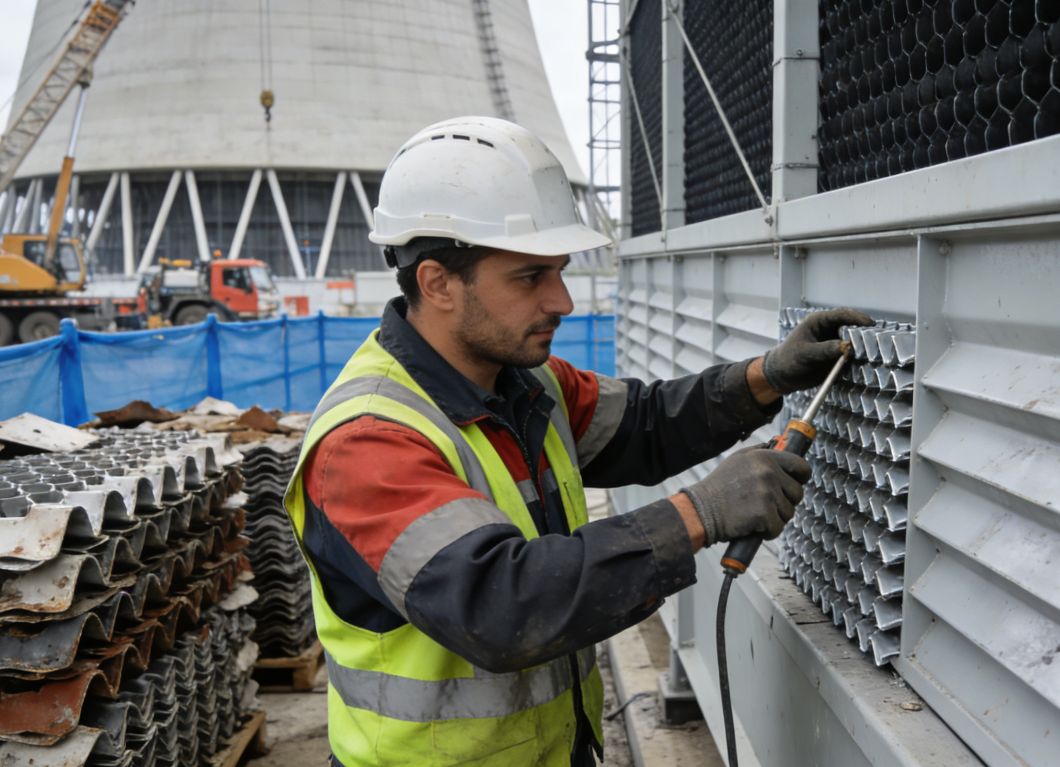
Engineers often consider this factor when evaluating cooling tower fill maintenance requirements.
Some facilities use municipal water, while others rely on wells, rivers, recycled process water, or mixed water sources.
When source water changes throughout the year, the cooling tower should be prepared to handle those variations.
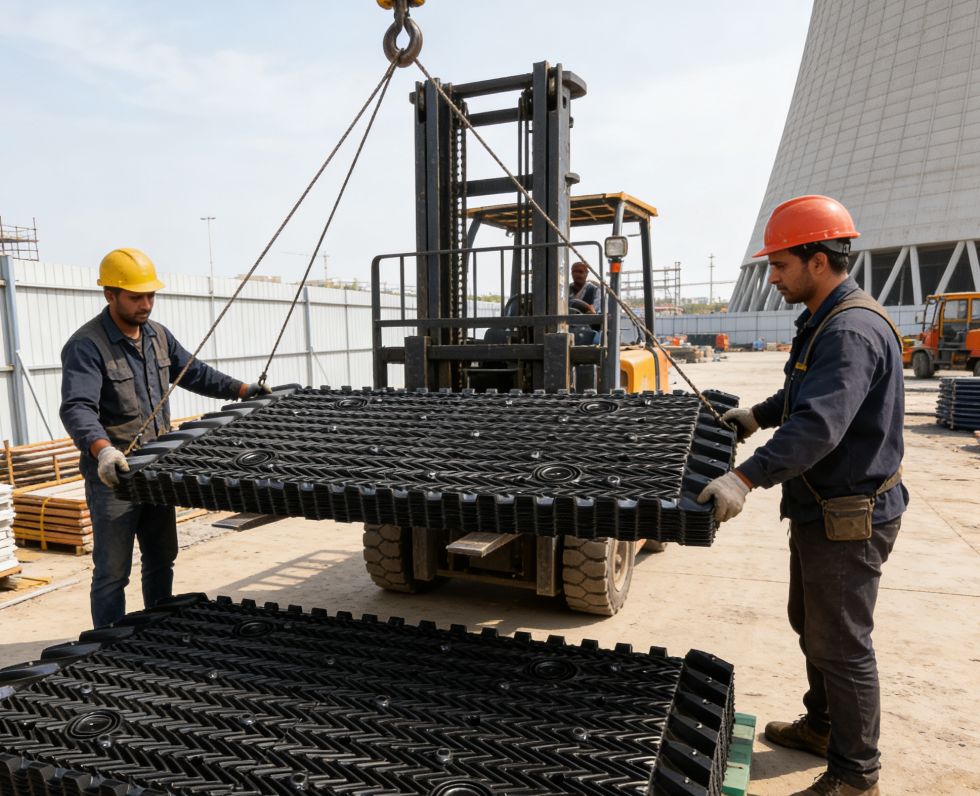
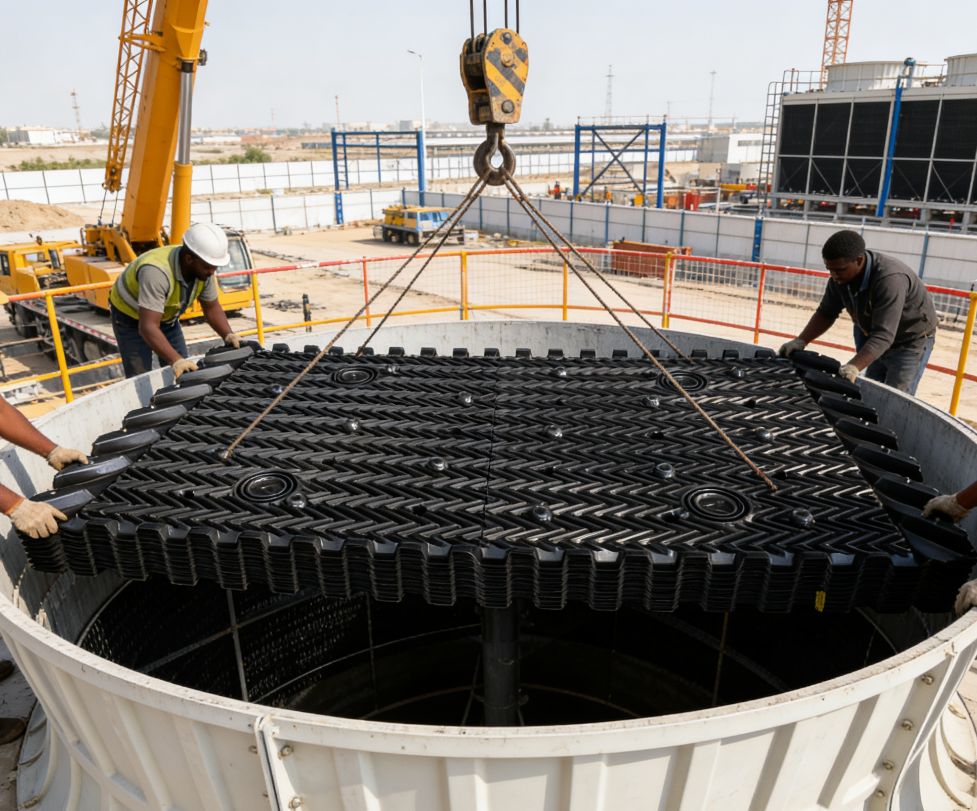
Film Fill Cooling Tower systems create a large water-air contact area through thin water films. This arrangement is widely used in many industrial applications where water conditions remain reasonably controlled.
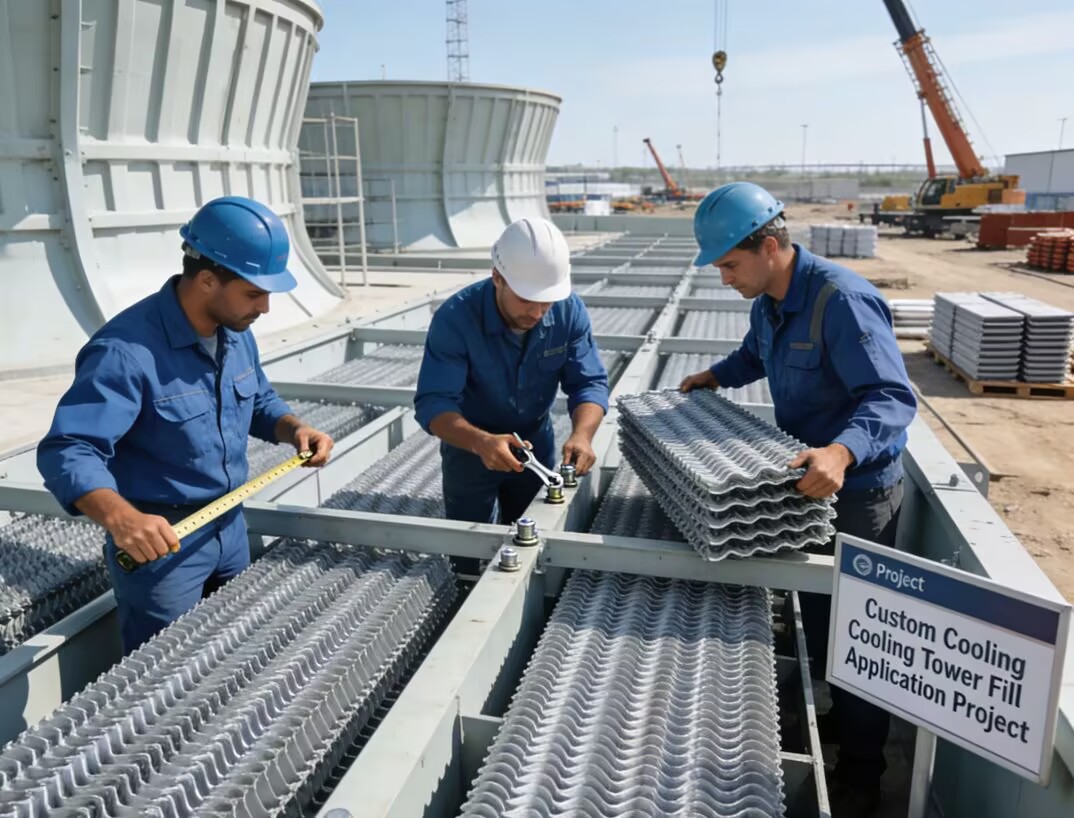
Before installation, engineers usually review water quality data to determine whether the operating environment is suitable for this type of fill structure.
Tower Fill configured as splash fill is often considered for applications where suspended solids or contamination levels are expected to be more challenging.
The open structure may simplify maintenance and provide additional operating flexibility under certain conditions.
Cooling Tower Media should be selected according to both thermal requirements and water characteristics.
Looking at only one factor may lead to an imbalance between performance and maintenance needs.
Projects that skip water quality evaluation may encounter several operational issues after installation.
These issues do not necessarily indicate poor product quality. In many cases, they reflect a mismatch between fill selection and actual operating conditions.
A manufacturing facility planned to install a new cooling tower during production expansion. Initial design documents assumed relatively clean make-up water, but site investigation found that seasonal rainfall changed water quality throughout the year.
Engineers adjusted the fill selection strategy to account for these variations and incorporated maintenance access into the project design.
The result was a system that could adapt more easily to changing operating conditions.
An industrial site using groundwater noticed that mineral concentration varied between seasons. Rather than selecting fill based only on thermal calculations, engineers reviewed long-term water chemistry trends.
This information helped the project team balance cooling requirements with future cleaning needs.
A processing facility planned to increase the use of recycled water to support production goals. The engineering team understood that recycled water could introduce additional suspended solids and organic matter into the cooling tower.
Instead of applying a standard solution, the fill arrangement and maintenance plan were developed together, creating a more practical long-term operating strategy.

PVC cooling tower fill is frequently used in industrial cooling systems where operating conditions are relatively stable.
Water quality analysis helps determine whether PVC is suitable for the planned application and maintenance schedule.
PP cooling tower fill may be evaluated for projects involving more demanding operating conditions.
As with any material choice, engineers should consider actual site conditions rather than relying only on general specifications.
Before ordering cooling tower fill, many engineering teams recommend reviewing the following information:
These factors help support a more balanced and sustainable cooling tower design.
Water quality affects not only the fill but also other internal cooling tower components.
Reviewing these components together with water quality helps create a more coordinated cooling system.
If you are planning a new cooling tower project or reviewing an existing system, technical discussions based on water quality, operating conditions, and maintenance objectives can help support more suitable fill selection.
Cooling tower fill performance begins long before installation. Water quality analysis provides valuable information that helps engineers choose appropriate fill structures, materials, and maintenance strategies.
By understanding how water characteristics interact with cooling tower operation, project teams can make decisions that support stable long-term performance and practical maintenance planning.
Because water characteristics influence fouling, scaling, maintenance requirements, and overall fill performance.
Unsuitable water conditions may increase deposits and maintenance needs, which can affect long-term operation.
No. Water quality should always be reviewed before selecting a fill configuration.
Suspended solids, mineral content, biological activity, and source water stability are commonly evaluated.
Yes. Material selection is usually more effective when actual operating conditions are considered during project planning.
We are professional cooling tower fills manufacturer, which can supply wide ranges of cooling tower fills with PVC, PP or CPVC materials.
The brake oil pipes we provide have multiple monitoring certifications and complete compliance documents to help your business smoothly enter the global market.
Fully automated production line, supporting individual customization. Combined with just-in-time logistics solutions, ensuring stable inventory.
A professional foreign trade technical team provides rapid response and is a trustworthy partner, offering everything from technical Q&A to market insights.

The cooling tower fill from this company has performed reliably in our systems. We appreciate the consistent quality and noticeable efficiency improvement.
CEO & Founder

As a CEO, I value partners who deliver on their promises. Their cooling tower fill is a solid product that contributes to stable operations.
CEO & Founder

We are satisfied with the performance of this cooling tower fill. It has integrated well into our existing setup with good results.
Manager

This company provides quality cooling tower fill that meets our operational needs. It's a dependable component in our infrastructure.
CEO & Founder

We are professional cooling tower fills manufacturer, which can supply wide ranges of cooling tower fills with PVC, PP or CPVC materials.

Instant Chat Support
+8615303180686
packingesale@gmail.com
Get the latest information
Scan the code to follow
Return to the top of the page