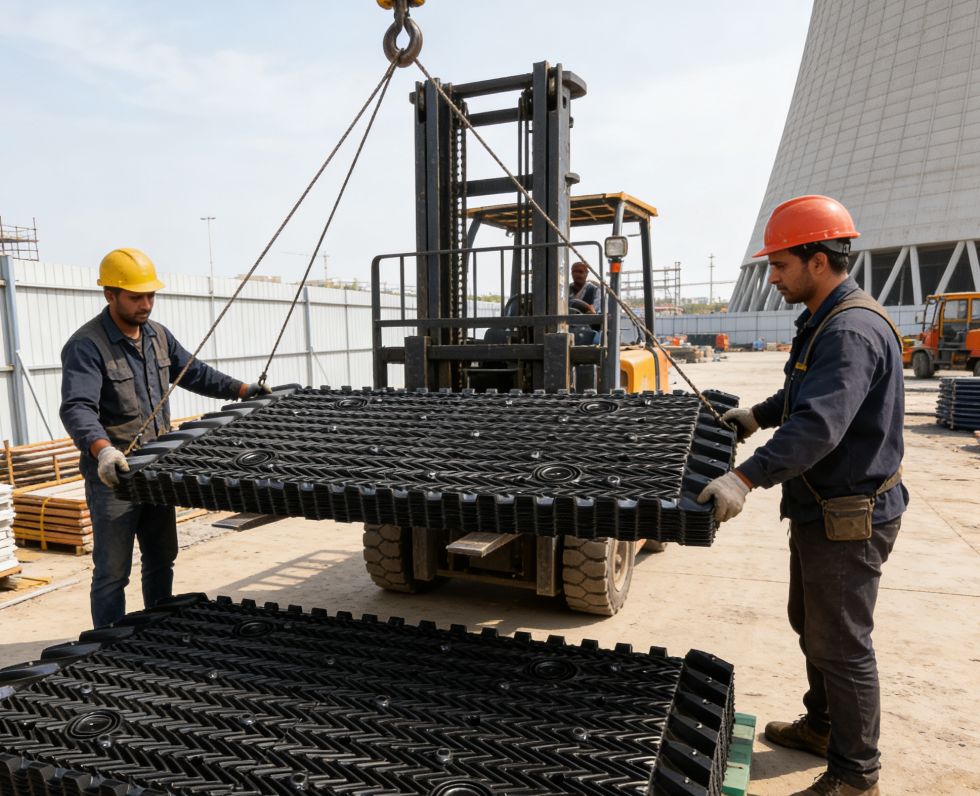
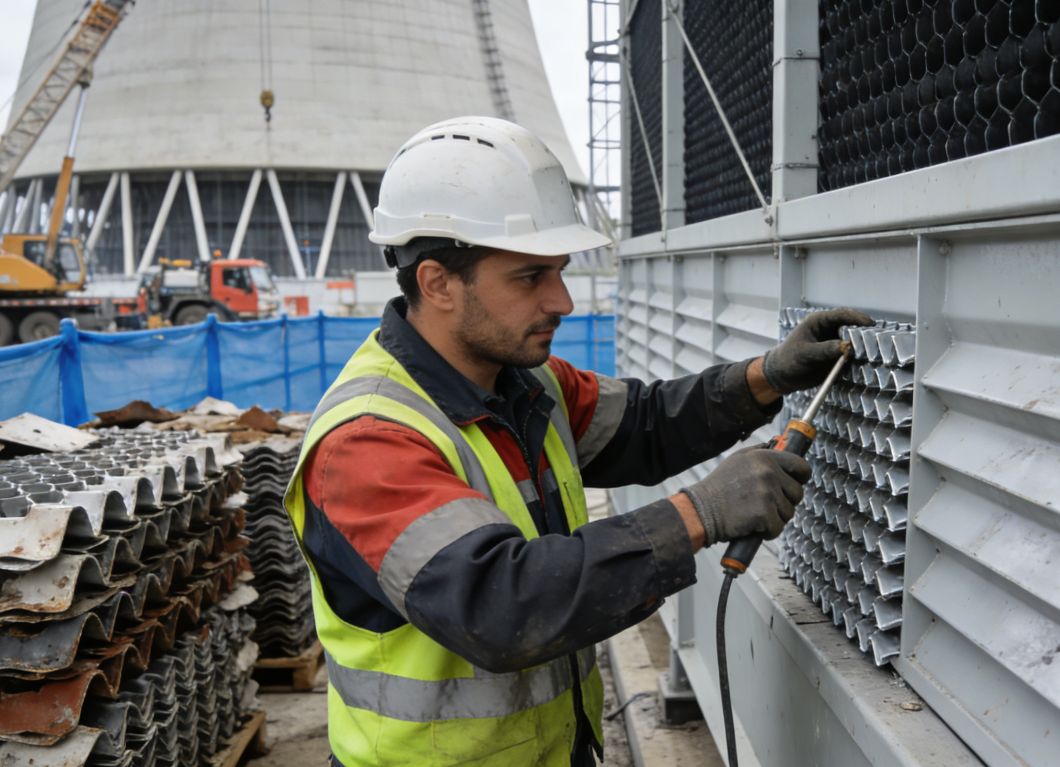
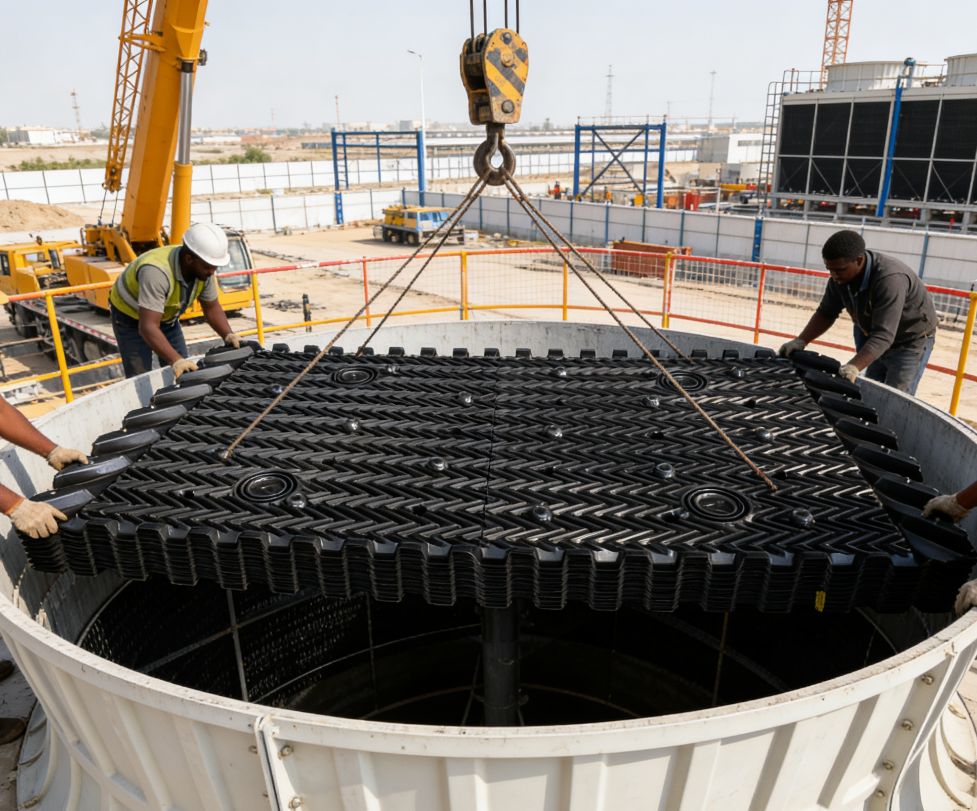
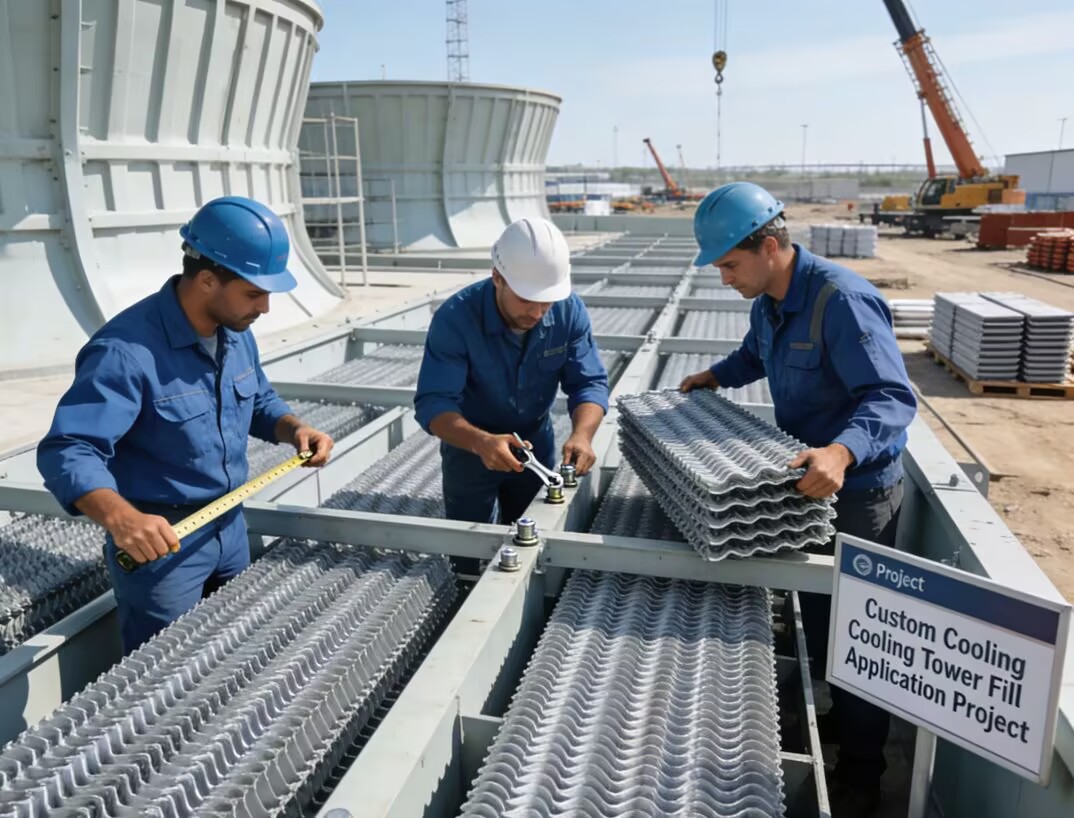
Cooling tower fill is often discussed in terms of water distribution, material selection, and maintenance requirements. However, airflow is equally important. Even the most carefully selected fill media cannot perform effectively if air does not move uniformly through the tower. In industrial cooling systems, airflow patterns directly influence heat transfer, evaporation efficiency, and the overall operating stability of the tower.
Many cooling performance issues that appear to be related to fill quality are actually caused by airflow imbalances. Understanding how air moves through the fill section helps engineers identify hidden causes of efficiency loss and develop more effective maintenance strategies.
The cooling process inside a tower depends on continuous contact between air and water. The fill creates surface area for water distribution, while airflow removes heat and facilitates evaporation.
If airflow becomes uneven, several problems may occur:
For this reason, airflow should always be evaluated together with fill performance rather than as a separate operating parameter.
Air moving through a cooling tower encounters resistance from multiple internal components. The fill itself represents one of the largest airflow paths within the system.
Several factors influence resistance:
When resistance increases beyond expected levels, airflow distribution may become less uniform and cooling performance can gradually decline.
Film Fill Cooling Tower configurations use closely spaced surfaces to maximize water-air contact.
This design can provide effective heat transfer when operating conditions remain suitable. However, airflow behavior depends heavily on maintaining clean flow passages and proper water distribution.
If fouling develops, airflow restriction may increase more rapidly than expected.
Tower Fill configured as splash fill generally contains larger open spaces between structural elements.
This arrangement often allows airflow to remain relatively stable even when contamination levels increase.
As a result, splash fill may be preferred in certain industrial environments where water quality or airborne contamination presents ongoing challenges.
Cooling Tower Media using corrugated structures can guide both water and airflow through organized pathways.
Proper corrugation design helps balance thermal performance with manageable airflow resistance.
Airflow issues do not always produce immediate or obvious symptoms. Instead, operators may observe gradual performance changes over time.
Common indicators include:
These symptoms should prompt further investigation of both airflow and fill condition.
Air entering the tower must be distributed as evenly as possible before reaching the fill section.
Several intake components influence this process:
These components help manage airflow patterns while limiting debris entry into the cooling tower.
If intake areas become blocked or damaged, airflow may become uneven before reaching the fill section.
Fouling affects more than water movement. Deposits accumulating on fill surfaces also influence air passage through the fill pack.
Examples include:
As deposits increase, airflow pathways may narrow, creating localized resistance and uneven cooling performance.
Regular cooling tower fill maintenance helps minimize these effects.

An electronics manufacturing plant observed seasonal fluctuations in cooling performance despite stable production loads.
Initial inspections focused on pumps and fans, but detailed investigation revealed airflow imbalance caused by contamination near intake sections.
After cleaning intake components and inspecting fill condition, airflow became more uniform and cooling stability improved.
The project highlighted the importance of considering airflow pathways throughout the entire tower.
A processing facility operating with recycled water experienced recurring cooling performance variation.
Although water treatment remained consistent, fouling gradually altered airflow behavior inside the fill section.
Engineers adjusted maintenance schedules and improved monitoring of airflow-related indicators. This helped reduce unexpected performance fluctuations.
A facility located near bulk material handling operations experienced significant airborne dust exposure.
Fine particles entered the cooling tower and accumulated within the fill section over time.
By improving intake protection and increasing inspection frequency, the facility reduced airflow restriction and maintained more stable operating conditions.
Increasing airflow is not always the solution to cooling performance concerns.
Effective operation depends on balancing:
When these elements work together, the cooling tower is more likely to achieve stable long-term performance.
Several additional components contribute to effective airflow management and fill operation.
Although these components serve different functions, maintaining them properly helps support consistent airflow and overall tower efficiency.
Routine inspections often identify airflow-related issues before significant performance loss occurs.
Cooling tower fill performance depends on more than water quality and material selection. Airflow patterns play a central role in determining how effectively heat is removed from the circulating water.
By understanding airflow behavior, maintaining intake components, controlling fouling, and selecting appropriate fill configurations, industrial facilities can support stable cooling tower operation and improve long-term reliability.
Airflow enables heat removal and evaporation. Without proper airflow, cooling tower efficiency can decline significantly.
Yes. Fouling can restrict airflow pathways inside the fill pack and reduce cooling performance.
Yes. Intake louvers, grilles, and screens help create more consistent airflow before air reaches the fill.
Common indicators include uneven cooling, increased fan workload, and unusual temperature variations.
Yes. Airflow and fill condition are closely connected and should be assessed together during maintenance reviews.
We are professional cooling tower fills manufacturer, which can supply wide ranges of cooling tower fills with PVC, PP or CPVC materials.
The brake oil pipes we provide have multiple monitoring certifications and complete compliance documents to help your business smoothly enter the global market.
Fully automated production line, supporting individual customization. Combined with just-in-time logistics solutions, ensuring stable inventory.
A professional foreign trade technical team provides rapid response and is a trustworthy partner, offering everything from technical Q&A to market insights.

The cooling tower fill from this company has performed reliably in our systems. We appreciate the consistent quality and noticeable efficiency improvement.
CEO & Founder

As a CEO, I value partners who deliver on their promises. Their cooling tower fill is a solid product that contributes to stable operations.
CEO & Founder

We are satisfied with the performance of this cooling tower fill. It has integrated well into our existing setup with good results.
Manager

This company provides quality cooling tower fill that meets our operational needs. It's a dependable component in our infrastructure.
CEO & Founder

We are professional cooling tower fills manufacturer, which can supply wide ranges of cooling tower fills with PVC, PP or CPVC materials.

Instant Chat Support
+8615303180686
packingesale@gmail.com
Get the latest information
Scan the code to follow
Return to the top of the page