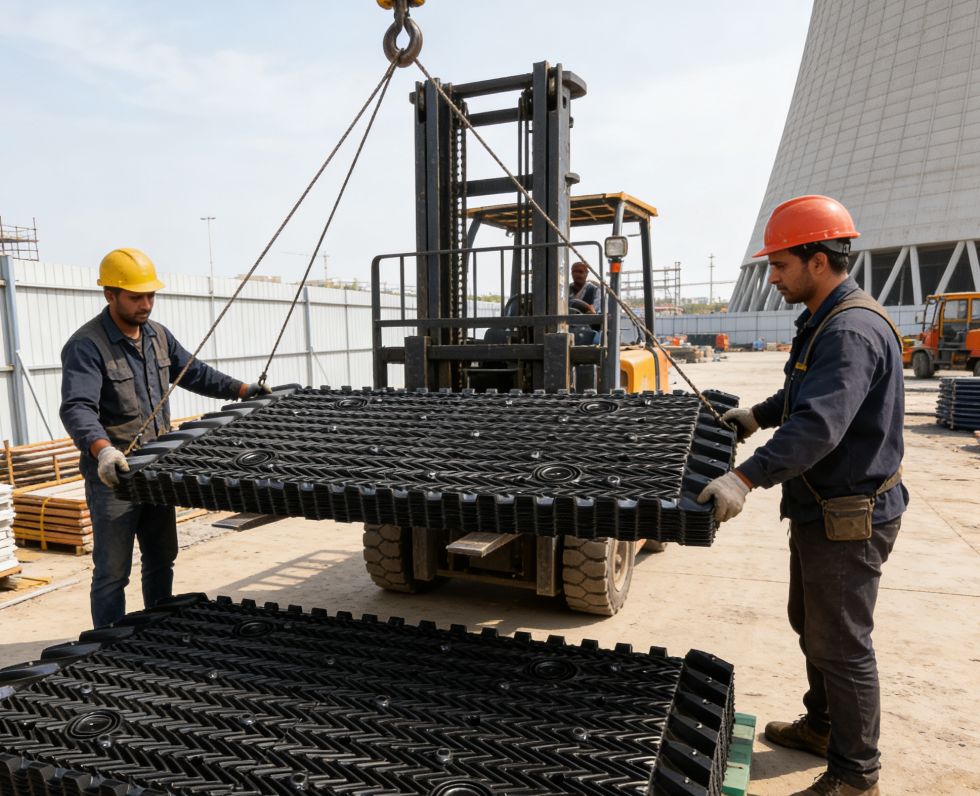
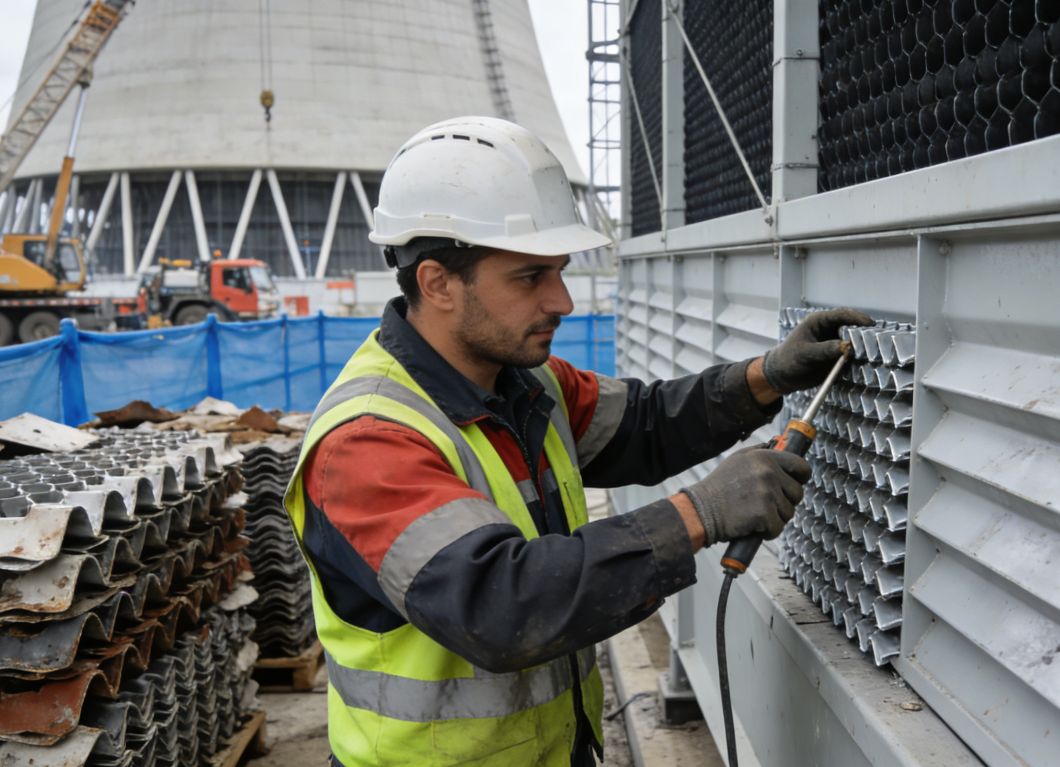
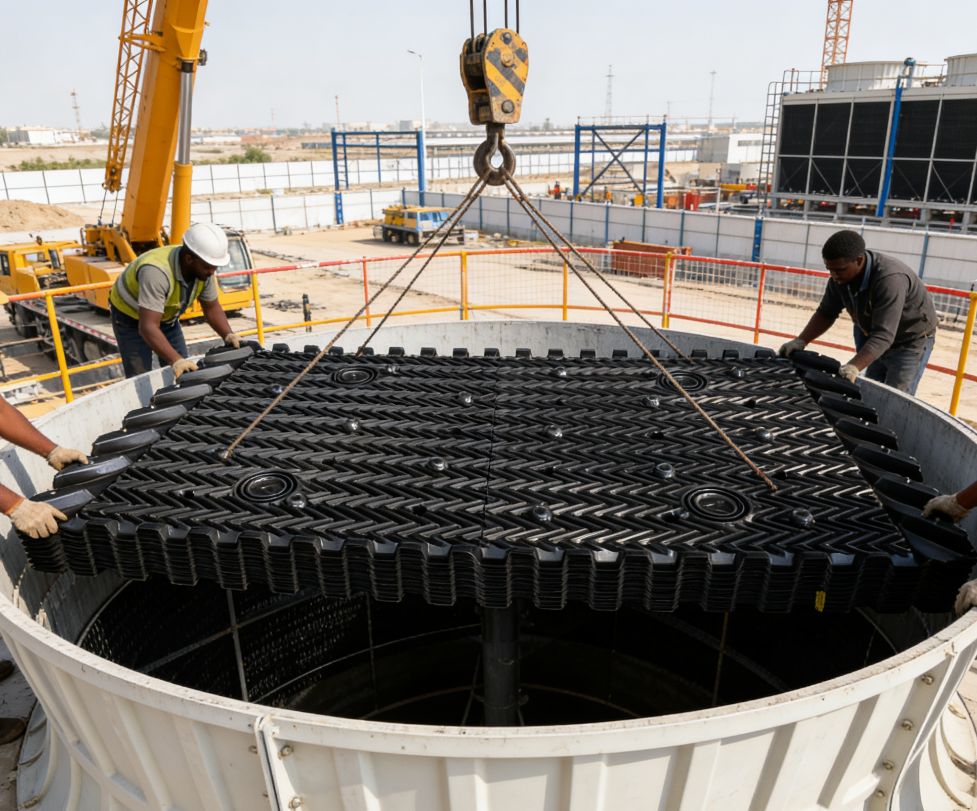
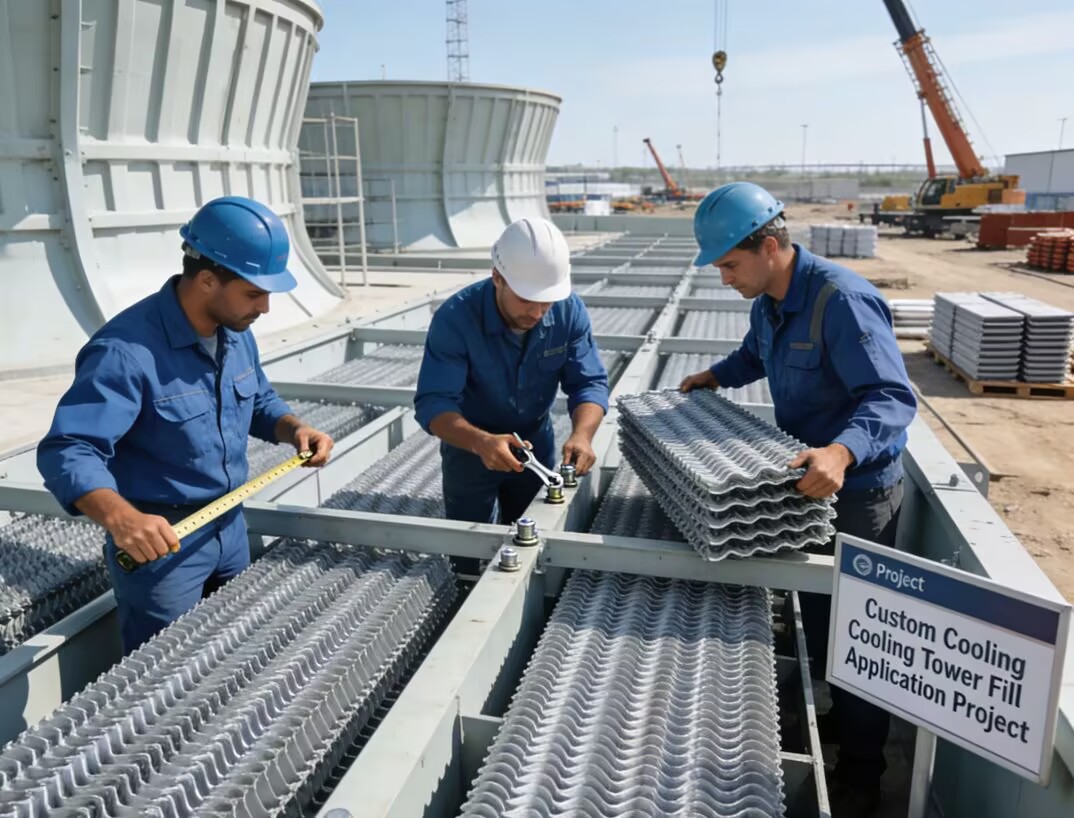
Cooling tower fill replacement planning is an important part of industrial cooling system management. In many factories across Southeast Asia, the Middle East, and East Asia, cooling performance issues appear because replacement decisions are made only after serious performance decline occurs.
The fill section works continuously under water flow, airflow, temperature changes, and chemical exposure. Over long periods, these conditions gradually affect the internal structure and heat transfer performance.
A planned replacement strategy allows engineers to evaluate system conditions, select suitable materials, and maintain stable cooling operation without unexpected downtime.
Cooling tower fill is not a simple consumable component that can always be replaced at a fixed time. Its actual condition depends on:
A professional cooling tower fill replacement plan focuses on actual performance conditions rather than replacement based only on operating years.
One of the most common reasons for replacement is gradual reduction in cooling capability.
When the fill structure can no longer maintain effective air and water contact, the cooling tower may struggle to achieve expected operating conditions.
Long-term exposure to thermal cycling, water flow, and mechanical stress may affect the physical condition of the fill.
Cracking, deformation, or collapse of internal structures can influence airflow and water distribution.
Some fouling problems cannot be fully solved through cleaning.
When deposits become permanent or heavily affect flow channels, replacement may become a more practical solution.
Industrial facilities sometimes replace fill during cooling tower upgrades.
The purpose may include improving compatibility with new operating conditions or adjusting system performance.
Professional evaluation usually includes several inspection points:
These factors help determine whether cleaning, repair, or complete replacement is appropriate.
Film Fill Cooling Tower replacement is commonly considered for systems requiring efficient heat transfer through continuous water film formation.
Engineers need to confirm that water quality and operating conditions are suitable before installation.
Corrugated fill replacement provides a structured solution for many industrial cooling applications.
The wave-shaped design helps maintain stable airflow and water movement inside the tower.
Tower Fill solutions are often considered when durability and tolerance to variable water conditions are important.
A manufacturing plant in Southeast Asia noticed increasing cooling water temperature during high production periods.
Initial checks showed that fans and pumps were operating normally.
Further inspection found that the existing fill had experienced long-term fouling and reduced water distribution performance.
After a planned cooling tower fill replacement project, the system returned to more stable operation.
A cooling tower operating in a hot and dusty environment experienced frequent maintenance requirements.
The original fill structure had accumulated deposits that affected airflow channels.
Engineers selected a replacement solution based on environmental conditions rather than simply copying the previous design.
The new configuration improved operational stability.
A production facility required continuous cooling reliability with limited shutdown opportunities.
Engineers evaluated fill condition during scheduled maintenance and identified early signs of structural aging.
By replacing the fill before severe failure occurred, the facility avoided unexpected production interruption.
Before replacement, engineers should review current performance, water conditions, and fill damage level.
The replacement fill should match tower design, airflow conditions, and operating requirements.
Proper installation is essential because incorrect arrangement may affect water distribution and airflow balance.
Post-installation inspection helps confirm that the new fill operates correctly.
PVC cooling tower fill is widely used for many industrial applications because it provides stable forming characteristics and reliable performance under suitable conditions.
PP cooling tower fill is considered for applications where higher temperature resistance and material stability are important.
Replacement should be considered when performance decline, structural damage, or severe fouling affects operation.
Sometimes cleaning is enough, but severely damaged or aged fill may require replacement.
Selection depends on tower design, water quality, temperature, and operating conditions.
The complexity depends on tower size, access conditions, and replacement requirements.
Suitable replacement fill can help restore stable heat transfer performance.
We are professional cooling tower fills manufacturer, which can supply wide ranges of cooling tower fills with PVC, PP or CPVC materials.
The brake oil pipes we provide have multiple monitoring certifications and complete compliance documents to help your business smoothly enter the global market.
Fully automated production line, supporting individual customization. Combined with just-in-time logistics solutions, ensuring stable inventory.
A professional foreign trade technical team provides rapid response and is a trustworthy partner, offering everything from technical Q&A to market insights.

The cooling tower fill from this company has performed reliably in our systems. We appreciate the consistent quality and noticeable efficiency improvement.
CEO & Founder

As a CEO, I value partners who deliver on their promises. Their cooling tower fill is a solid product that contributes to stable operations.
CEO & Founder

We are satisfied with the performance of this cooling tower fill. It has integrated well into our existing setup with good results.
Manager

This company provides quality cooling tower fill that meets our operational needs. It's a dependable component in our infrastructure.
CEO & Founder

We are professional cooling tower fills manufacturer, which can supply wide ranges of cooling tower fills with PVC, PP or CPVC materials.

Instant Chat Support
+8615303180686
packingesale@gmail.com
Get the latest information
Scan the code to follow
Return to the top of the page