Energy efficiency has become one of the most important topics in industrial cooling technology. As industries continue to expand, companies are paying more attention to reducing energy consumption while maintaining stable production performance.
Cooling towers are widely used in power plants, chemical factories, manufacturing facilities, commercial buildings, and many other industries. Because these systems often operate for long hours, even small improvements in efficiency can have a meaningful impact on operating costs.
A cooling tower is not only about removing heat. It is a complete system where fans, pumps, water distribution systems, and internal components work together. Among these components, the selection of cooling tower fill plays an important role in improving heat transfer efficiency.
A properly designed cooling tower packing can help improve the contact between air and water, allowing the cooling tower to achieve better performance under the same operating conditions.
Many people think cooling towers mainly consume energy through the fan system, but actual energy consumption comes from multiple areas of operation.
The main energy-consuming parts include:
The fan system is usually one of the most visible energy consumers because it continuously moves air through the tower. However, the internal design of the cooling tower also affects how much energy is required to achieve the desired cooling effect.
If the fill design creates poor airflow conditions or insufficient heat exchange, the system may need additional energy input to achieve the same cooling result.
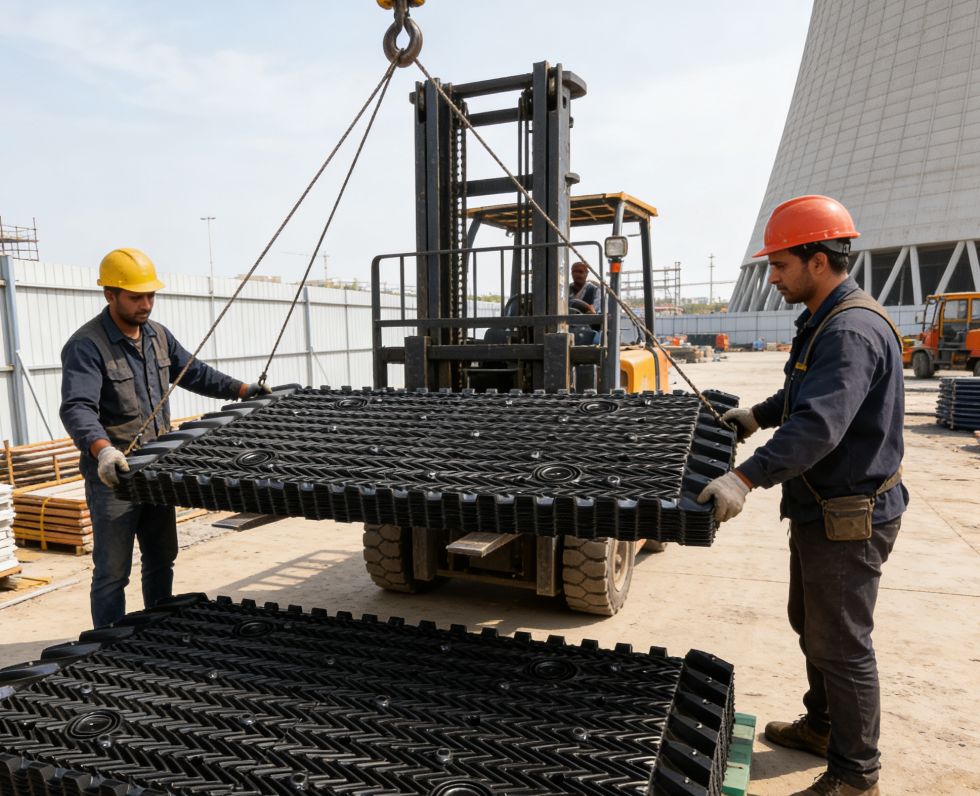
The purpose of cooling tower fill media is to maximize the contact area between air and water.
When water and air have better contact, heat can transfer more effectively. This means the cooling tower can achieve better cooling performance without unnecessary increases in fan speed or water flow.
A good cooling tower fill design helps with:
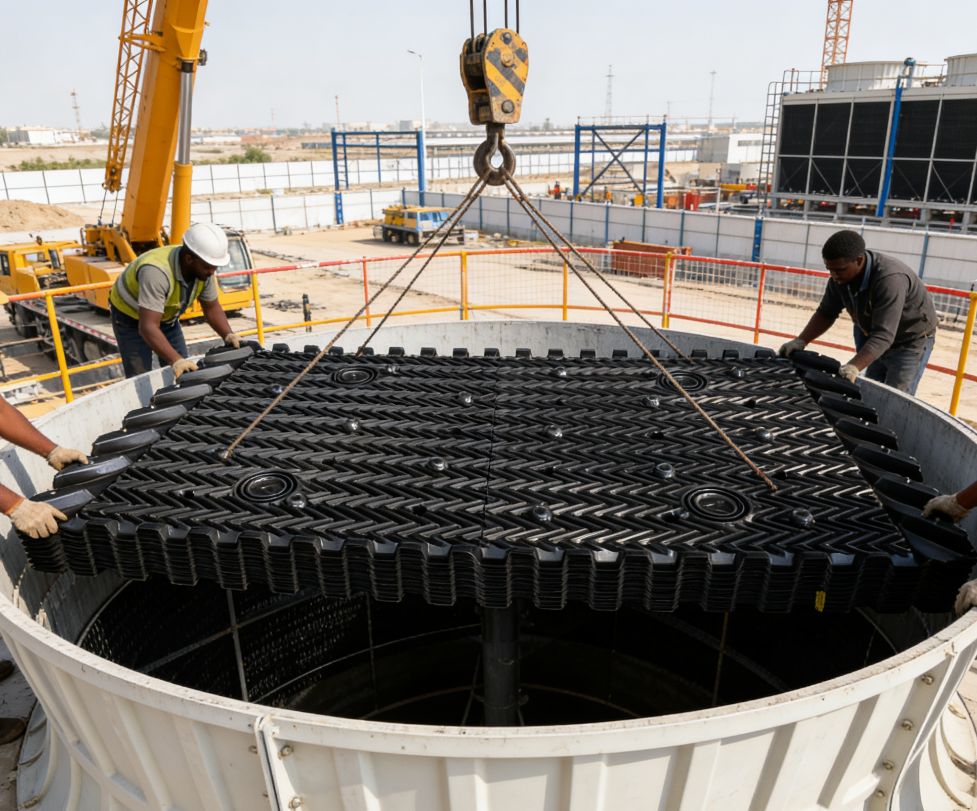
Film Fill is one of the most commonly used designs in modern cooling tower systems because of its efficient heat exchange characteristics.
The structure of Film Fill creates many channels that allow water to spread across the surface while air passes through the same area. This increases the interaction between air and water.
A film fill cooling tower design is often used when the project requires:
For commercial HVAC systems and many industrial cooling applications, film fill provides a practical balance between cooling performance and energy consumption.
The structure of the fill directly influences heat exchange performance. Different designs provide different surface areas, airflow channels, and water distribution characteristics.
Selecting the correct tower fill according to the application is an important step toward improving overall efficiency.
Cooling towers rely on proper airflow to remove heat. If airflow is restricted, the system may require more fan power to maintain cooling performance.
Components such as air intake systems should also be considered during cooling tower design and maintenance.
Uneven water distribution can create areas with poor heat exchange. A well-designed water distribution system helps the fill media work more effectively.
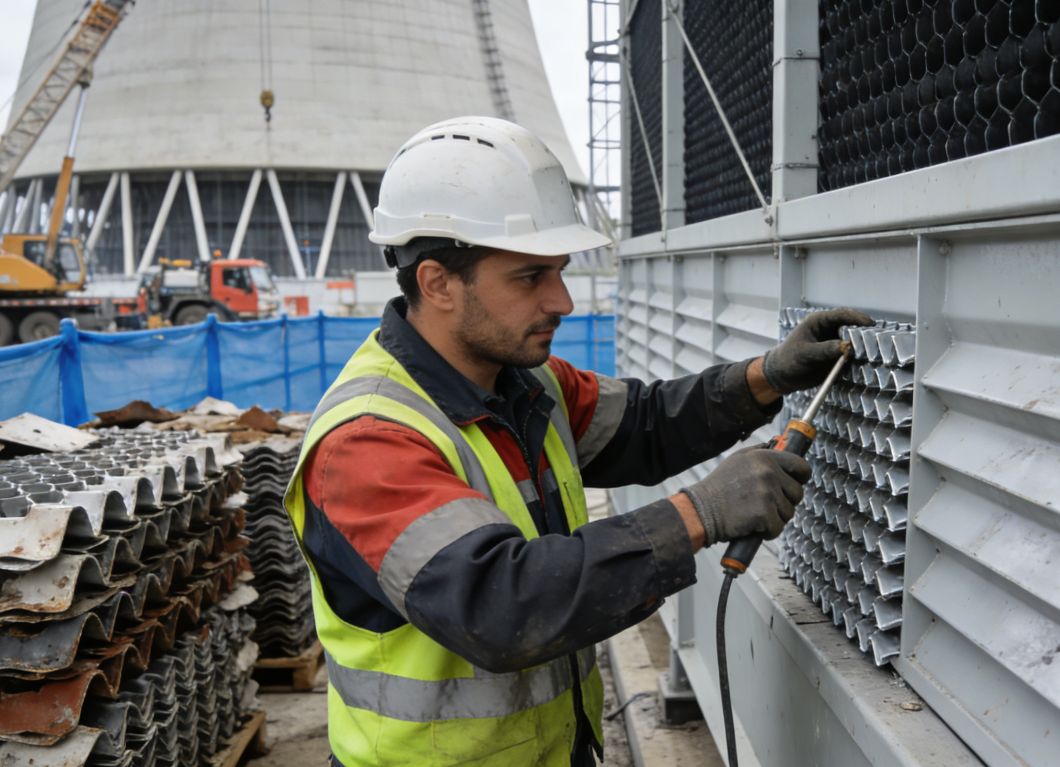
Even a well-designed cooling tower may lose efficiency if maintenance is ignored.
Scaling, dirt accumulation, biological growth, or damaged fill materials can reduce heat transfer performance over time.
Many countries in Southeast Asia have tropical climates with high temperatures and humidity. Cooling towers in these regions often operate for long periods throughout the year.
For these applications, selecting suitable cooling fill materials and maintaining stable airflow are important factors for energy-efficient operation.
Cooling systems in the Middle East face extremely hot weather conditions. Industrial facilities and commercial buildings require reliable cooling performance even under high ambient temperatures.
Material selection becomes especially important in these environments. PP cooling tower fill is often considered for applications where higher temperature resistance is required.
Japan and South Korea have advanced manufacturing industries with strong requirements for energy management and equipment reliability.
Factories in these regions often focus on improving cooling efficiency through optimized system design and high-quality components.
The first step is choosing fill media that matches the actual operating conditions.
Engineers should consider:
Good water treatment helps prevent scaling and blockage. Cleaner fill surfaces allow better heat exchange and more stable operation.
Regular inspection can identify problems before they affect efficiency.
Important inspection items include:
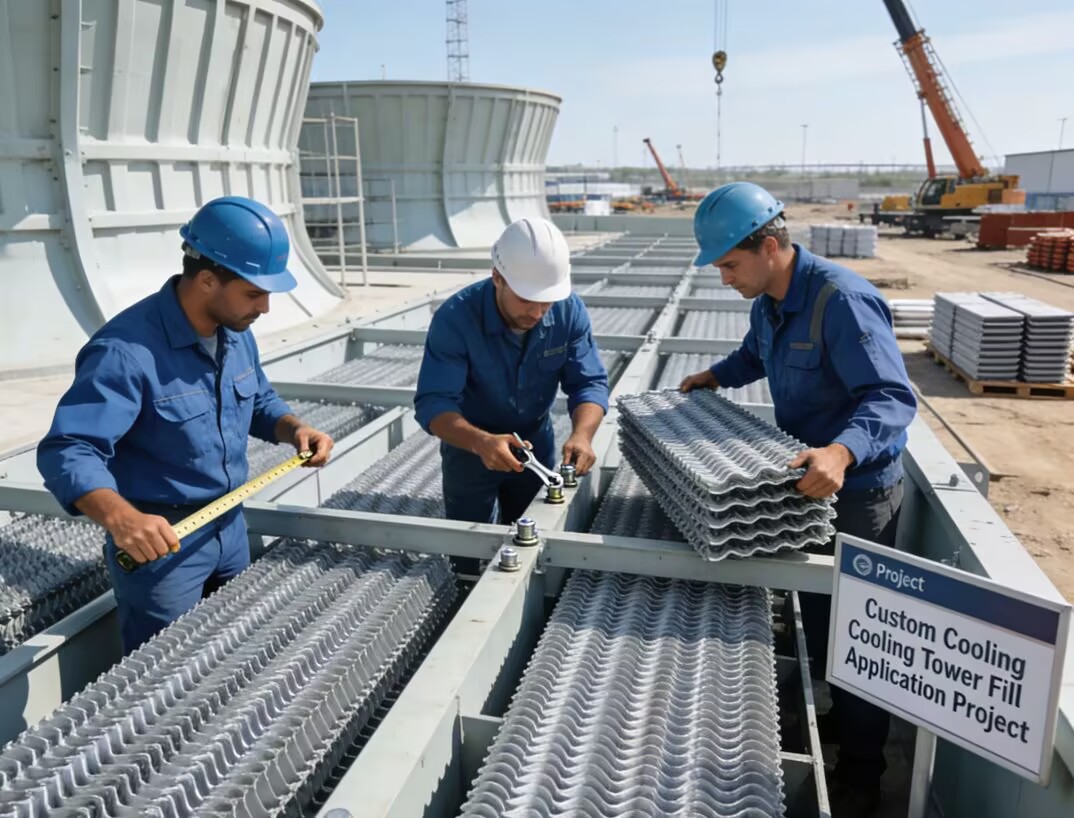
Older cooling towers may use outdated fill designs that no longer provide efficient heat transfer.
Replacing old fill with modern cooling tower packing can improve system performance without rebuilding the entire cooling tower.
Energy efficiency depends on the complete cooling tower system. Each component contributes to overall performance.
The cooling tower fill provides the main heat exchange area and influences cooling efficiency.
The Air intake grille helps manage airflow entering the tower. Proper airflow conditions support better heat exchange.
The Water Collector helps reduce water droplets leaving the cooling tower and improves water-saving performance.
The future development of cooling tower technology will continue to focus on reducing energy consumption and improving sustainability.
Several trends are becoming more important:
As industries continue to focus on environmental responsibility, energy-efficient cooling systems will become increasingly important.
For industrial companies, cooling tower efficiency is not only related to energy consumption. It also affects production stability, maintenance requirements, and equipment service life.
A reliable cooling system can help reduce unexpected downtime and support continuous operation.
This is why many engineers consider cooling tower fill selection, maintenance planning, and system optimization as important parts of industrial management.
Energy efficiency is becoming a key direction in the development of modern cooling tower technology. Improving efficiency requires attention to every part of the system, from fill media design to airflow management and regular maintenance.
Choosing suitable tower fill products and optimizing cooling tower operation can help industries achieve more stable performance while reducing unnecessary energy consumption.
For power plants, chemical factories, manufacturing facilities, and commercial buildings, efficient cooling systems will continue to play an important role in future industrial development.
We are professional cooling tower fills manufacturer, which can supply wide ranges of cooling tower fills with PVC, PP or CPVC materials.
The brake oil pipes we provide have multiple monitoring certifications and complete compliance documents to help your business smoothly enter the global market.
Fully automated production line, supporting individual customization. Combined with just-in-time logistics solutions, ensuring stable inventory.
A professional foreign trade technical team provides rapid response and is a trustworthy partner, offering everything from technical Q&A to market insights.

The cooling tower fill from this company has performed reliably in our systems. We appreciate the consistent quality and noticeable efficiency improvement.
CEO & Founder

As a CEO, I value partners who deliver on their promises. Their cooling tower fill is a solid product that contributes to stable operations.
CEO & Founder

We are satisfied with the performance of this cooling tower fill. It has integrated well into our existing setup with good results.
Manager

This company provides quality cooling tower fill that meets our operational needs. It's a dependable component in our infrastructure.
CEO & Founder

We are professional cooling tower fills manufacturer, which can supply wide ranges of cooling tower fills with PVC, PP or CPVC materials.

Instant Chat Support
+8615303180686
packingesale@gmail.com
Get the latest information
Scan the code to follow
Return to the top of the page