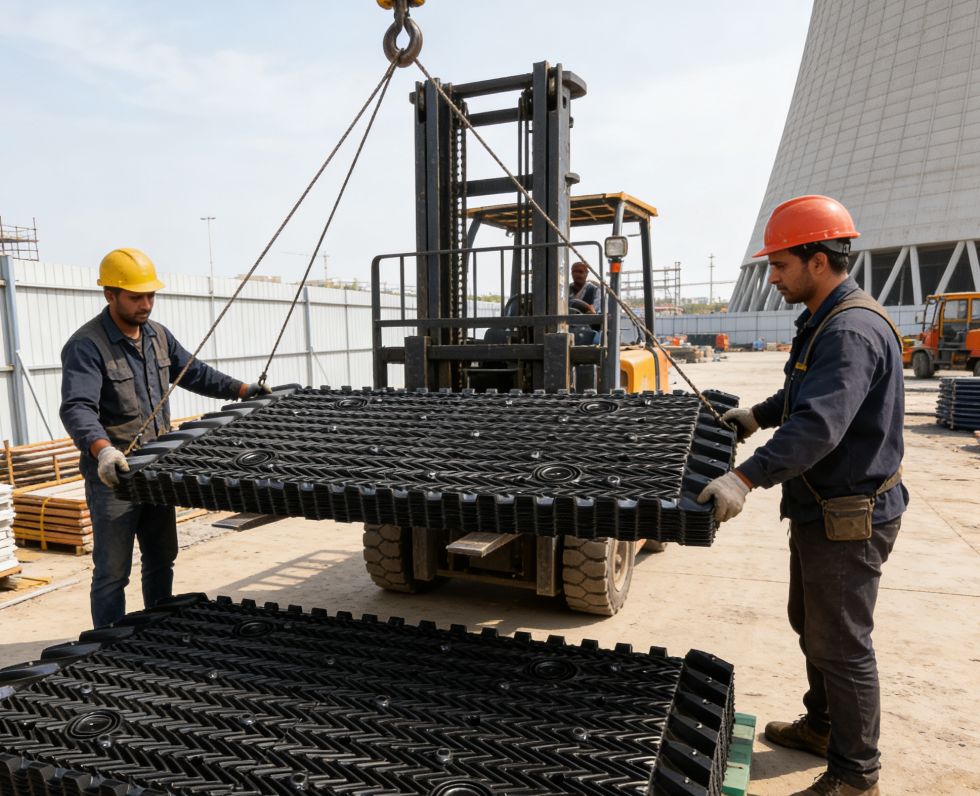
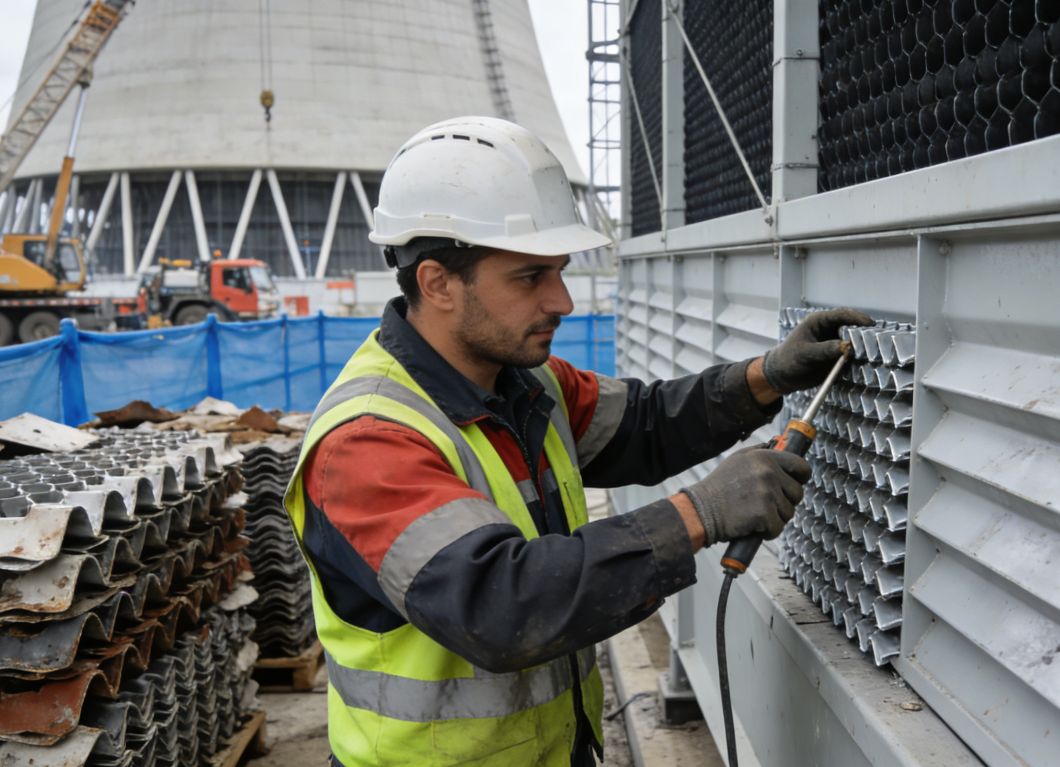
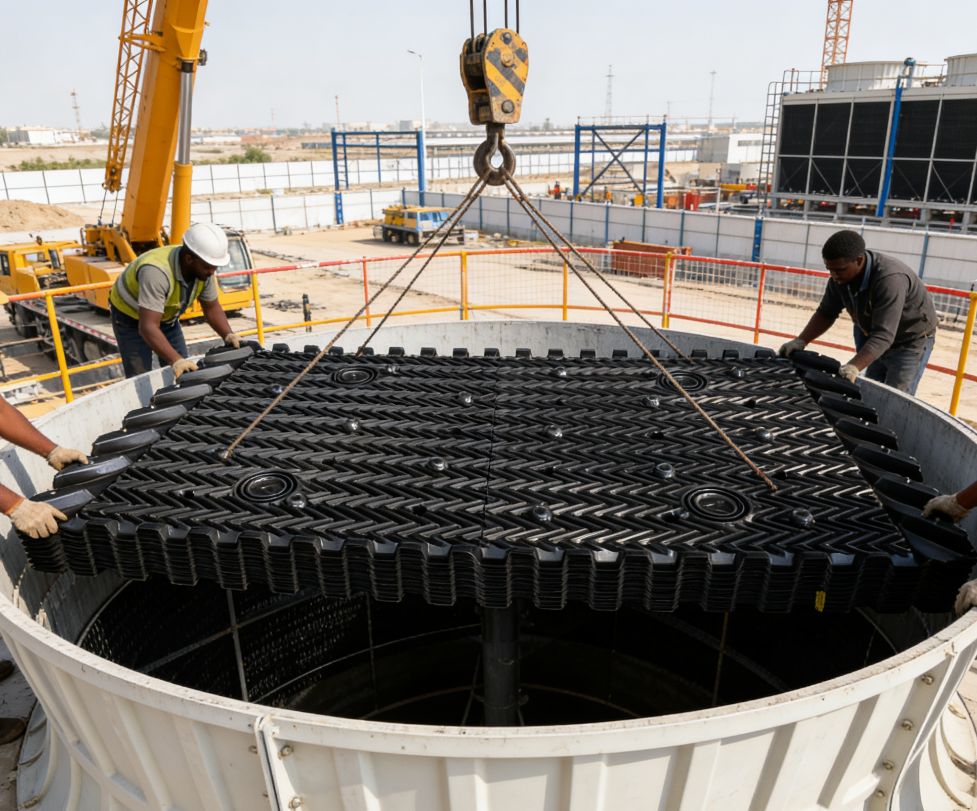
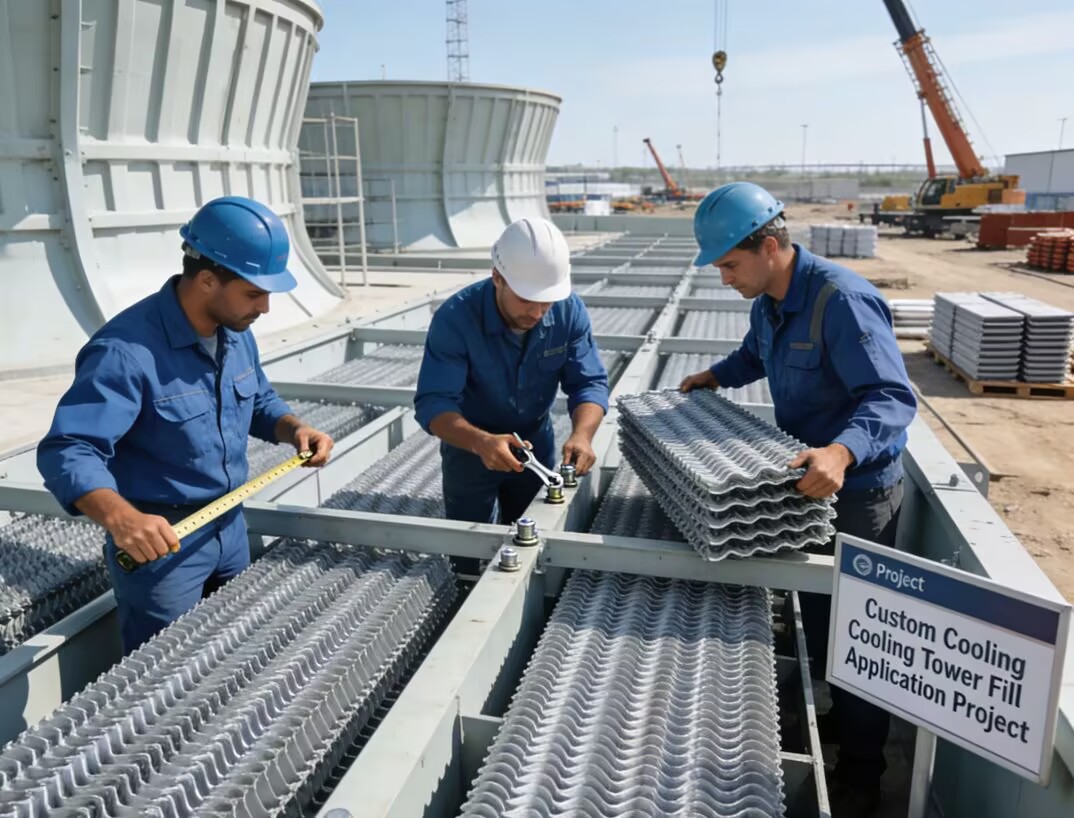
The cooling tower market is experiencing significant growth in 2026, driven largely by the rapid expansion of hyperscale data center campuses and continued capital formation in power generation. The global cooling tower market size in 2026 is estimated at USD 4.59 billion, growing from the 2025 value of USD 4.37 billion, with 2031 projections showing USD 5.89 billion, representing a compound annual growth rate of 5.09**[reference:37]. For Cooling Tower Fill Manufacturer products, this market growth translates directly into sustained demand for high-performance fill media. Suppliers who can validate real-world energy savings through CTI-certified performance testing gain a procurement advantage when property investors audit sustainability metrics[reference:38].

Continued capital formation in power generation and the build-out of hyperscale data-center campuses keep high-capacity evaporative systems in demand, while hybrid wet-dry designs scale faster as operators react to tightening water-use and energy-efficiency regulations. The accelerated adoption of counter-flow configurations, growth in installations exceeding 20 MW, and the shift to PFAS-free fill materials further reinforce the cooling tower market's growth trajectory[reference:39].
Johnson Controls reported a USD 13.1 billion order backlog as smart-building owners specify cooling towers equipped with demand-responsive controls that synchronize with building automation servers. The integration of IoT sensors enables predictive maintenance routines that reduce downtime[reference:40]. For cooling tower fill, this means demand for high-efficiency media at sustained high volumes. Data center operators prioritize low PUE and low water usage. Fill selections have shifted toward low-pressure-drop designs and direct-drive fan technologies. The fill must be compatible with variable-speed operation and support real-time monitoring through IoT sensors.
Data center cooling also requires tight temperature control and fault tolerance, driving demand for N+1 and 2N cooling tower configurations. Counter-flow installations captured 43.10** of revenue in 2025 and are growing at a 7.69** CAGR, as data-center and pharmaceutical clients prioritize high liquid-to-gas ratios and smaller footprints[reference:41].
The transition toward PFAS-free materials, along with the adoption of digital technologies such as predictive maintenance and smart monitoring, is further strengthening the competitive advantage of suppliers focused on sustainability and operational efficiency[reference:42]. The shift to PFAS-free fill materials is reinforcing the cooling tower market's growth trajectory as operators replace older fill to meet sustainability mandates. If your cooling tower fill contains PFAS, you may need to replace it in the coming years to remain compliant with emerging regulations. Plan for this.
Utilities in China, India, and the Gulf states are scaling nuclear, gas-fired, and renewable-hybrid plants that require high-capacity counter-flow towers to manage variable steam loads. China's Heqi-1 industrial steam linkage delivers 4.8 million tonnes of process steam annually, underscoring the commercial benefits of integrating cooling towers into industrial heat-recovery loops. GCC utilities adopt seawater-cooled towers at coastal Combined Cycle Gas Turbine sites, reducing freshwater withdrawal and enabling capacity factors above 40** in extreme ambient temperatures. The Middle East's move toward solar-thermal augmentation further positions hybrid systems as compliance-ready for future carbon pricing schemes[reference:43].
For cooling tower fill suppliers, this means demand for high-temperature and seawater-capable fill materials. Standard PVC fill is not suitable for these applications – you need polypropylene fill with enhanced chemical resistance, wide-flute designs that resist clogging, and corrosion-resistant support materials like stainless steel 316.
Hybrid wet-dry cooling systems, which combine evaporative cooling with dry cooling, reduce water consumption by 30-70** while maintaining most of the efficiency of wet cooling. These systems are scaling faster as operators react to tightening water-use and energy-efficiency regulations[reference:44]. Facilities in Australia and the Middle East, where water charges exceed USD 5 per 1,000 gallons, are increasingly justifying dry cooling or hybrid designs despite efficiency penalties[reference:45].
If you are in a water-scarce region, hybrid towers are worth evaluating. The upfront cost is higher, but total cost of ownership over ten years can be lower when water prices are high. Even in hybrid systems, cooling tower fill remains a critical component for the evaporative portion of the system.
Suppliers capable of integrating digital twin analytics, predictive maintenance, and alternative make-up-water schemes hold an execution edge as sustainability mandates intensify[reference:46]. For cooling tower fill, this means that your fill should be compatible with IoT sensors that track approach temperature, pressure drop, fan power, and water flow in real time. That data feeds into predictive algorithms that alert you when cleaning or replacement is needed. I have seen facilities reduce fill-related downtime by 70** using predictive maintenance. The cost of sensors and software has dropped dramatically. If your fill supplier cannot provide compatibility with standard monitoring systems, consider a different supplier.
Stricter environmental and health regulations are accelerating upgrades to existing cooling tower systems. Facility owners are investing in improved fill designs, automation, and chemical control to meet higher efficiency and safety expectations. Concerns around plume control and water quality are also steering adoption toward closed-loop and hybrid configurations. In response, manufacturers are focusing on independent performance validation and new material innovations to stay ahead of regulatory demands[reference:47].
For cooling tower fill suppliers, this means that CTI certification and independent performance testing are no longer optional. Buyers are demanding proof of performance, not just claims. We provide CTI-certified fill with full test documentation and can assist with field verification testing.
The total cost of ownership for cooling towers is rising because chemical conditioning and discharge fees now exceed electricity costs in many arid markets. Pacific Northwest National Laboratory case studies show that military installations are lowering makeup water demand by recovering HVAC condensate and rainwater; however, capital outlays for integrated storage push payback periods beyond five years[reference:48]. Suppliers that bundle performance guarantees with water-saving retrofits secure longer-term service contracts that smooth revenue volatility during new-build lulls[reference:49].
If you are in an arid region, plan for stricter blowdown regulations in the next 2-3 years. Higher cycles of concentration require better water treatment and more scale-tolerant fill, which means polypropylene with wide flutes, not standard PVC. Plan your next fill replacement accordingly.
We supply CTI-certified fill designed for hyperscale data centers and power plant applications. Free market trends briefing for your facility – tailored to your industry and region.
Contact Us Here →We are professional cooling tower fills manufacturer, which can supply wide ranges of cooling tower fills with PVC, PP or CPVC materials.
The brake oil pipes we provide have multiple monitoring certifications and complete compliance documents to help your business smoothly enter the global market.
Fully automated production line, supporting individual customization. Combined with just-in-time logistics solutions, ensuring stable inventory.
A professional foreign trade technical team provides rapid response and is a trustworthy partner, offering everything from technical Q&A to market insights.

The cooling tower fill from this company has performed reliably in our systems. We appreciate the consistent quality and noticeable efficiency improvement.
CEO & Founder

As a CEO, I value partners who deliver on their promises. Their cooling tower fill is a solid product that contributes to stable operations.
CEO & Founder

We are satisfied with the performance of this cooling tower fill. It has integrated well into our existing setup with good results.
Manager

This company provides quality cooling tower fill that meets our operational needs. It's a dependable component in our infrastructure.
CEO & Founder

We are professional cooling tower fills manufacturer, which can supply wide ranges of cooling tower fills with PVC, PP or CPVC materials.

Instant Chat Support
+8615303180686
packingesale@gmail.com
Get the latest information
Scan the code to follow
Return to the top of the page