Name: Cooling tower film fill(civil tower)
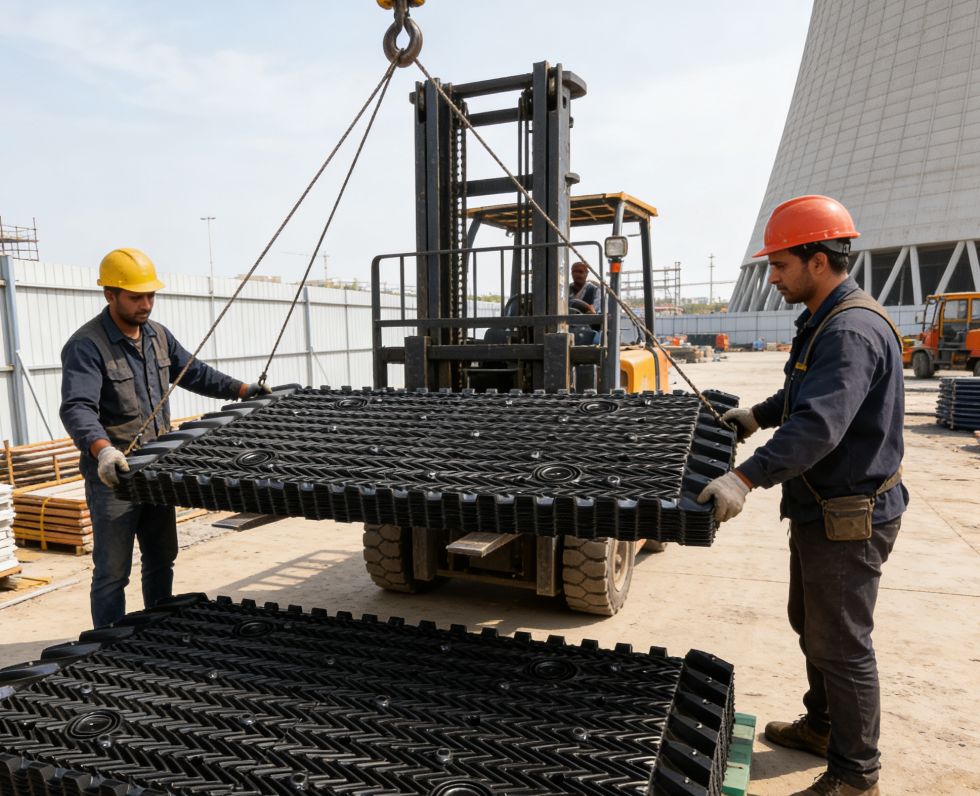
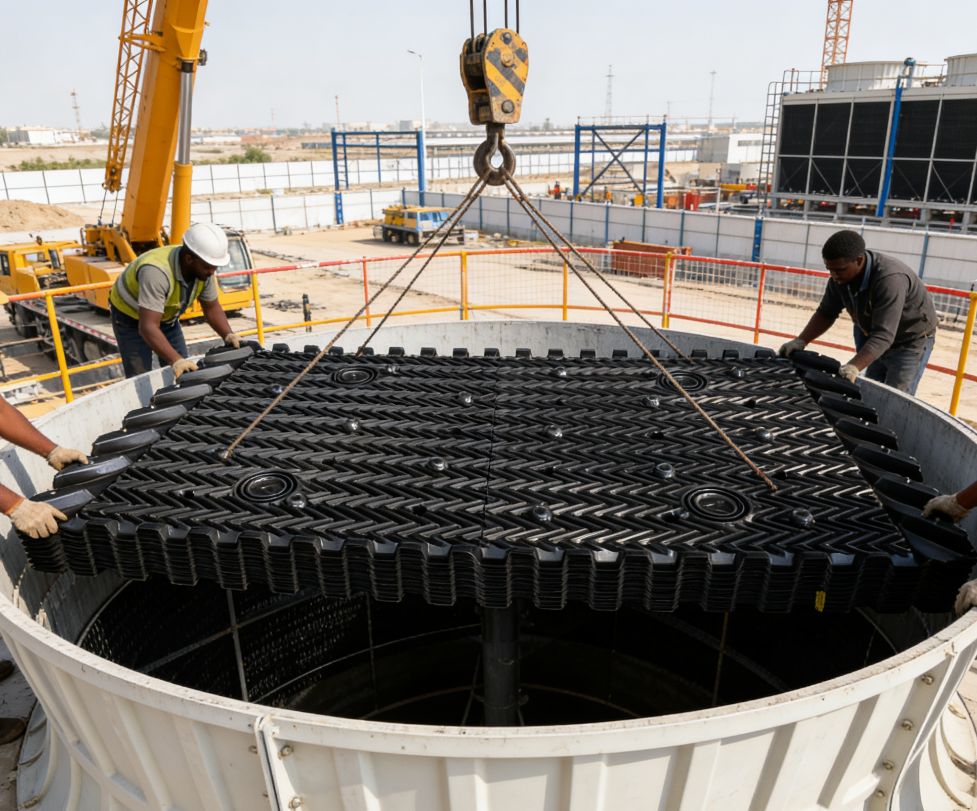
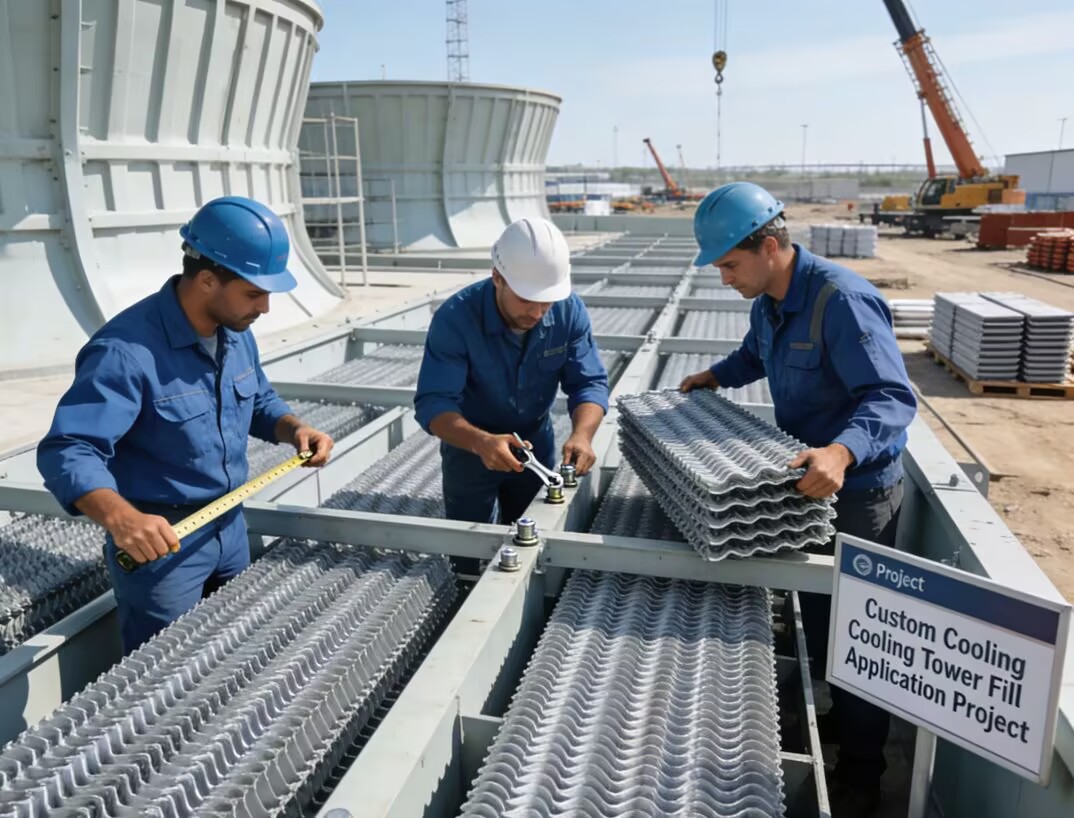
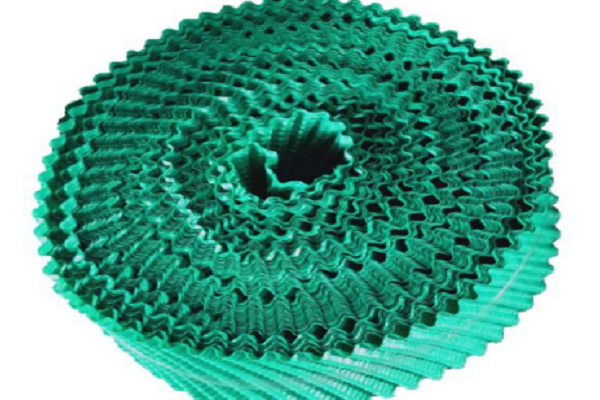
Description: Our cooling tower film fill is specifically engineered for civil applications, including HVAC and light industrial towers. Manufactured from high-grade, flame-retardant PVC, the fill features a corrugated surface that spreads water into a thin, continuous film, maximizing air-to-water contact area for superior heat rejection. The open-channel design resists fouling and scaling while minimizing pressure drop, ensuring reliable performance with low pump head requirements. This film fill significantly increases cooling capacity within existing tower footprints, reduces energy consumption, and extends maintenance intervals—making it the ideal retrofit or replacement solution for civil cooling towers demanding efficiency and long service life.
Film fill is the most widely used fill media in modern cooling towers, particularly in civil applications such as commercial HVAC systems, chiller plants, office buildings, data centers, and hospital cooling systems. Unlike splash fill, which relies on breaking water into droplets, film fill spreads water into an extremely thin film across corrugated sheets, maximizing the contact surface area between water and air. This design enables significantly higher heat transfer efficiency in a compact footprint, making film fill the preferred choice for clean water applications.
Film fill consists of multiple layers of thin PVC sheets, arranged in closely spaced, structured packs. As hot water from the cooling tower’s distribution system flows downward over these sheets, it forms a continuous film. Meanwhile, air moves either horizontally (crossflow configuration) or vertically upward (counterflow configuration) across the fill surface. The interaction between the water film and the air stream drives evaporative cooling, which accounts for approximately 80** of the total heat rejection in a wet cooling tower.
Film fill structures can be broadly categorized into three flute geometries: cross‑fluted, offset‑vertical fluted, and vertical fluted. Cross‑fluted designs, where the flutes are oriented at approximately 30° from vertical and adjacent sheets have opposing 30° angles, maximize water-to-air mixing and turbulence. This geometry has been the industry standard for over three decades, delivering the highest thermal efficiency among film fill designs. In applications with clean water containing low levels of total suspended solids (TSS)—such as typical HVAC systems, chiller plants, and data center cooling loops—cross‑fluted film fill is generally the optimal choice.
For civil cooling towers, the circulating water typically comes from municipal supplies or closed-loop systems with proper chemical treatment. Under these conditions, total suspended solids are minimal, and biological fouling is well controlled. Therefore, the primary performance consideration is achieving the highest possible heat transfer efficiency, not fouling resistance.
Cross‑fluted film fill is ideally suited for such applications. In clean water environments, a cross‑fluted film fill can achieve approach temperatures 2‑3°C lower than comparable offset‑fluted designs under the same airflow and water flow conditions. Lower approach temperature directly translates to lower chiller condenser water temperature, which reduces chiller compressor work and saves energy. Industry data indicates that each 1°C reduction in approach temperature can lower chiller power consumption by 2 to 3 percent.
Flute spacing is also critical for clean water applications. A 12 mm flute spacing provides the highest surface area density for heat exchange but demands extremely clean water to maintain performance. For typical HVAC chiller systems, a 19 mm flute spacing offers the best balance—delivering high thermal performance while providing adequate clearances for routine maintenance and occasional particulate carryover. For applications with slightly higher particulate loading, 23‑27 mm spacing may be considered, though with some thermal efficiency tradeoff.
Cross‑fluted film fill achieves its superior thermal performance through a combination of three mechanisms: turbulence, lateral water redistribution, and extended air‑water contact path. The angled flute geometry forces the descending water to alternately impinge on left‑ and right‑bending sheets, creating constant mixing action that refreshes the water film surface and enhances evaporative mass transfer. Additionally, the cross‑corrugated pattern redistributes water laterally as it falls, ensuring that the entire fill pack volume remains fully wetted. This prevents dry spots that would otherwise reduce overall cooling capacity.
While cross‑fluted designs are more prone to fouling than vertical‑fluted alternatives—due to lower water film velocity and increased solids retention—this limitation is irrelevant when water is consistently clean. For civil cooling towers where makeup water quality is controlled and water treatment programs are in place, the increased fouling potential of cross‑fluted fill is not a meaningful concern.
PVC (polyvinyl chloride) is the overwhelming material of choice for civil cooling tower film fill. PVC offers a combination of favorable performance characteristics: low cost, ease of thermoforming into complex corrugated shapes, rigidity with minimal creep, and inherent low flammability. For clean water applications with inlet temperatures not exceeding 55‑60°C, standard PVC film fill is entirely suitable. In situations where hot water temperatures exceed 55‑60°C—such as industrial process cooling—alternative materials like CPVC (chlorinated PVC) or PP (polypropylene) should be considered, as standard PVC can soften and deform at higher temperatures. Virtually all quality film fill products comply with Cooling Technology Institute (CTI) Standard 136, which specifies physical properties and flammability requirements for thermoplastic fill materials.
For civil cooling towers operating with clean water and moderate inlet temperatures, cross‑fluted PVC film fill remains the recommended choice. Owners and specifiers should select 19 mm flute spacing for balanced efficiency, ensure CTI‑136 compliance, and maintain proper water treatment to preserve long‑term performance. When water quality is exceptionally clean and maximum efficiency is required, 12 mm spacing may be used. Conversely, when water quality is questionable or future fouling is a concern, offset‑vertical designs offer a prudent compromise between efficiency and fouling resistance.
We are professional cooling tower fills manufacturer, which can supply wide ranges of cooling tower fills with PVC, PP or CPVC materials.
The brake oil pipes we provide have multiple monitoring certifications and complete compliance documents to help your business smoothly enter the global market.
Fully automated production line, supporting individual customization. Combined with just-in-time logistics solutions, ensuring stable inventory.
A professional foreign trade technical team provides rapid response and is a trustworthy partner, offering everything from technical Q&A to market insights.

The cooling tower fill from this company has performed reliably in our systems. We appreciate the consistent quality and noticeable efficiency improvement.
CEO & Founder

As a CEO, I value partners who deliver on their promises. Their cooling tower fill is a solid product that contributes to stable operations.
CEO & Founder

We are satisfied with the performance of this cooling tower fill. It has integrated well into our existing setup with good results.
Manager

This company provides quality cooling tower fill that meets our operational needs. It's a dependable component in our infrastructure.
CEO & Founder

We are professional cooling tower fills manufacturer, which can supply wide ranges of cooling tower fills with PVC, PP or CPVC materials.

Instant Chat Support
+8615303180686
packingesale@gmail.com
Get the latest information
Scan the code to follow
Return to the top of the page